Complete Guide to LLM Agents and Agent Tuning
Complete guide to LLM Agents and Agent Tuning: evolution, implementation, and cost-effective deployment
This guide explores why large language models need Agent capabilities to handle real-time data and complex tasks. It traces the evolution from basic Prompts through RAG to complete Agent systems with memory, planning, tools, and actions. The article details Agent Tuning's necessity for enabling smaller models to achieve agent capabilities cost-effectively, covers the complete implementation process from validation to deployment, and provides decision frameworks for choosing between API calls and custom fine-tuning based on deployment requirements and budget constraints.
Why Large Language Models Need Agent Capabilities
With the rapid adoption of large language models, simple conversational interactions can no longer meet complex business requirements. When users ask questions like "check today's sales figures," "analyze traffic congestion causes," or "calculate a celebrity's current age," traditional LLMs are often powerless—these tasks all depend on real-time data access, while model training data is essentially a historical snapshot.
The temporal limitation of LLM training data: The training process for large language models (LLMs) typically takes months or even years, using historical datasets up to a specific cutoff date. For example, GPT-3.5's knowledge cutoff is September 2021, and GPT-4's is April 2023. This means models have no knowledge of events or data changes after their training cutoff. This "frozen knowledge" characteristic prevents models from answering questions requiring real-time information like "what's today's weather" or "what's the latest stock price." Updating model knowledge requires retraining, which is prohibitively expensive and impractical, making external tool calls necessary for dynamic information.
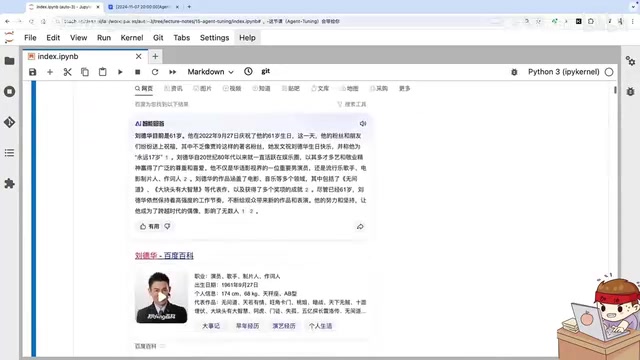
Take querying a celebrity's age as an example: early models based on 2022 data would answer "61 years old," but with Agent capabilities, the system first calls a tool to get the current date, then accurately calculates based on the birth year. This ability to "call external tools to solve problems" is the core value of Agent technology.
Three Core Pain Points Driving Agent Adoption
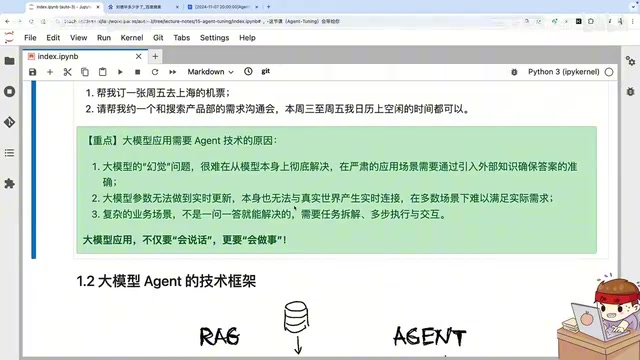
LLM applications need Agent technology support primarily due to these challenges:
- Hallucination problems are hard to eliminate: Probabilistic generative models inherently have biases; serious scenarios require external knowledge base verification
- Static parameters cannot update: Trained models cannot connect to the real world in real-time
- Complex tasks require multi-step execution: Scenarios like booking tickets require task decomposition, multi-turn interaction, payment confirmation, and complete workflows
Deep dive into hallucination problems: Large language models based on Transformer architecture generate text by predicting the next most likely token. When encountering questions without clear answers in training data, this probabilistic generation mechanism will "fabricate" seemingly reasonable but actually incorrect content based on statistical patterns—a phenomenon called "hallucination." For example, models may invent non-existent paper citations, fabricate historical event details, or make up product specifications. In serious scenarios like medical diagnosis, legal consulting, and financial analysis, hallucination problems can lead to severe consequences, requiring fact-checking through retrieving real knowledge bases and calling authoritative APIs.
Large language models already possess language understanding capabilities, and Agent technology enables them to truly "get things done," completing the leap from conversation to execution.
Three-Stage Evolution of Agent Technology Architecture
LLM applications have undergone a clear capability transition:
Stage One: Direct Prompt Interaction
The most primitive question-and-answer mode—users input instructions, models output results as black boxes. Simple but limited in capability, unable to handle complex scenarios.
Stage Two: RAG Retrieval Enhancement
Facing hallucination problems, RAG solutions provide context by retrieving external knowledge bases. When encountering questions requiring precise information, the system first retrieves relevant materials from index databases, document repositories, or web pages, then processes them together with the question through the model, significantly reducing error rates.
RAG technology explained: RAG (Retrieval-Augmented Generation) is a technical architecture proposed by Facebook AI in 2020. The core idea is to retrieve relevant information from external knowledge bases before generating answers. The specific process includes: 1) converting user questions into vector representations 2) retrieving the most relevant document fragments in vector databases 3) inputting retrieval results as context together with questions into the model 4) the model generating answers based on real materials. RAG effectively mitigates hallucination problems, but its capability is limited to passive retrieval, unable to perform active operations (like sending emails, calling APIs, executing calculations)—exactly what a complete Agent system needs to solve.
Stage Three: Complete Agent System
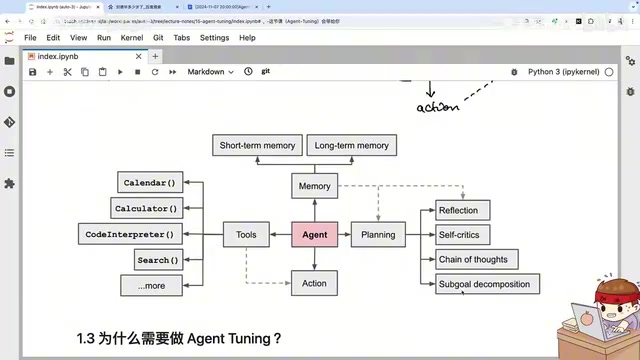
The Agent stage introduces four core modules:
- Memory mechanism: Maintains short-term conversation history and long-term knowledge accumulation
- Planning capability: Supports chain-of-thought reasoning, task decomposition, and self-critique
- Tool integration: Retrieval is just one tool; various business tools can be extended
- Action execution engine: Generates specific tool invocation instructions
Chain-of-thought reasoning background: Chain-of-Thought (CoT) is a prompt engineering technique proposed by Google in 2022 that improves answer quality for complex problems by guiding models to show reasoning processes step by step. For example, when solving math word problems, traditional methods directly request answers, while CoT requires models to first list the complete reasoning chain of "given conditions → intermediate steps → final answer." Research shows that chain-of-thought significantly improves large model performance on tasks like mathematical reasoning, logical judgment, and multi-step planning, especially for models with over 100B parameters. In Agent systems, chain-of-thought is used in task planning modules to help models decompose complex goals into executable subtask sequences.
The key advantage of Agents lies in transparent reasoning processes—fully displaying intermediate thinking steps and phased results, making answers traceable and significantly improving credibility.
Necessity Analysis of Agent Tuning
Since Prompt plus Memory can implement Agents (like AutoGPT), why is specialized agent tuning still needed?
Hidden Barriers of Prompt Solutions
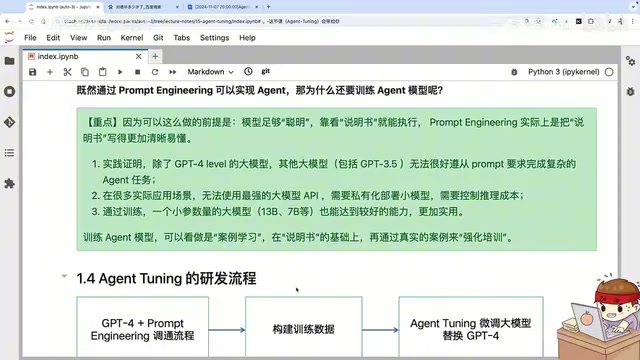
Relying solely on Prompts to implement Agents has an easily overlooked prerequisite: the model must be powerful enough. Complex Prompts essentially write detailed instruction manuals for models, but practice proves:
- GPT-4 level and above models can follow complex instructions relatively well
- GPT-3.5 and smaller models often cannot understand complex processes
- Feeding AutoGPT's Prompt to small models often fails
AutoGPT case analysis: AutoGPT is one of the first open-source autonomous Agent projects released in March 2023, rapidly gaining over 150,000 stars on GitHub. Through carefully designed System Prompts, it enables GPT-4 models to autonomously set goals, decompose tasks, call tools, execute operations, and iteratively optimize. For example, users only need to input "help me research competitors and generate an analysis report," and AutoGPT will automatically execute web searches, content scraping, data analysis, document writing, and other operations. However, AutoGPT's success heavily depends on GPT-4's powerful capabilities; when using GPT-3.5 or open-source models, issues like infinite loops and goal deviation often occur, exposing the high model capability requirements of pure Prompt solutions.
This creates practical dilemmas:
- Cannot use top-tier APIs: Private deployment scenarios cannot call closed-source models like GPT-4
- Inference costs are hard to control: Enterprises need to deploy on internal networks and reduce costs
Core Value of Tuning
Through Agent Tuning specialized training, small parameter models like 3B and 7B can also gain strong Agent capabilities, while having lower deployment costs and faster response speeds.
Model parameter scale interpretation: The parameter count of large language models (in B, billions) directly affects their capability boundaries. Current mainstream model distribution: GPT-4 approximately 1.76T (trillion) parameters, Claude-3 approximately 200B, LLaMA-3-70B, Qwen 7B/14B, ChatGLM-3-6B, etc. Research shows that model capabilities exhibit "emergence" phenomena—when parameter count exceeds a certain threshold (typically 60-100B), advanced capabilities like complex reasoning, instruction following, and multi-step planning suddenly significantly improve. While 3B-7B small models have fluent basic conversations, they struggle to understand complex multi-step instructions. Agent Tuning enables small models to approach large model performance on specific Agent tasks through specialized training, achieving "big capabilities with small models."
Analogy to college graduate employment: general education is equivalent to a model's basic capabilities, while pre-job specialized training is reinforcement training with real business cases—on the foundation of Prompt "instruction manuals," deep reinforcement through practical cases.
Complete Agent Tuning Implementation Process
A standard Agent Tuning development process includes four key steps:
1. Process Validation Phase
Using powerful models like GPT-4, validate the complete Agent process in business scenarios to verify technical feasibility.
2. Training Data Construction
Based on the validated process, use powerful models to automatically generate training data, supplemented by manual verification and correction. Since Prompt design directly affects data quality, this step is crucial.
3. Execute Fine-tuning Training
Use the constructed high-quality data to perform Agent Tuning on the target model, enabling it to learn core capabilities like planning and tool invocation.
4. Model Replacement and Closed Loop
Replace the original powerful model API with the fine-tuned model, complete the business closed loop, and continuously iterate for optimization.
Cost Trade-offs and Decision Recommendations
Tuning Is Not a Universal Solution
The course particularly emphasizes: not all scenarios require Agent Tuning. If business can directly use open APIs and costs are acceptable, no additional training is needed.
Taking a 7B model as an example, training cost assessment:
- Training data approximately 4.7 million tokens
- Training for 5 epochs requires 4 A100 GPUs
- Calculated based on cloud service prices for corresponding duration and fees
- Repeated adjustments will further increase costs
Tokens and training cost explanation: Tokens are the basic units for large models to process text; in English, approximately 1 word corresponds to 1 token; in Chinese, approximately 1 character corresponds to 1.5-2 tokens. The core metric for training cost is total tokens = data volume × training epochs. For example, a 4.7 million token dataset trained for 5 epochs processes a total of 23.5 million tokens. On A100 (80GB memory) GPUs, training a 7B model has a throughput of approximately 3000-5000 tokens per second; completing 23.5 million tokens takes 1-2 hours. Based on 2024 cloud service prices, single A100 hourly rental is approximately 15-25 yuan/hour; 4-card training costs are in the hundreds of yuan range. However, actual projects require repeated adjustments of data ratios and hyperparameters, with total costs potentially reaching tens of thousands of yuan.
Decision Framework
Scenarios for choosing Agent Tuning:
- Requires private deployment
- Pursuing low inference costs
- Has strict data security requirements
- Needs customized Agent capabilities
Private deployment requirements explained: Private deployment refers to enterprises deploying AI models on their own servers or private cloud environments, rather than using cloud APIs from vendors like OpenAI or Baidu. This requirement mainly comes from: 1) data security—industries like finance, healthcare, and government prohibit transmitting sensitive data to external servers 2) compliance requirements—regulations like GDPR and cybersecurity laws require local data storage 3) cost control—large-scale API calls are expensive; self-built inference services have lower long-term costs 4) customization needs—requires deep optimization of models for specific domains. Private scenarios cannot use closed-source models like GPT-4 and must rely on open-source models + fine-tuning solutions, which is exactly the core application scenario for Agent Tuning.
Scenarios for directly using APIs:
- Can accept cloud service calls
- Sufficient cost budget
- Rapid prototype validation
- Relatively general business scenarios
Core Takeaways
From Prompt to RAG, and then to fully functional Agent systems, LLM applications are evolving from "can talk" to "can do." Agent Tuning is the key technical path enabling small and medium parameter models to handle complex agent tasks.
Understanding two core questions—why Agent capabilities are needed and what scenarios require Agent Tuning—is essential foundation for every LLM developer building practical applications. Technology selection should comprehensively consider business requirements, deployment needs, and cost budgets, finding the optimal balance between API calls and model fine-tuning.
Related articles

GPT-6 Astra Completes All 48 Levels of 'I'm Not A Robot' Game
GPT-6 Astra successfully completes all 48 levels of the 'I'm Not A Robot' game, demonstrating remarkable visual understanding, logical reasoning, and task adaptation. This article analyzes the technical capabilities behind this breakthrough and its implications for CAPTCHA verification and AI safety.
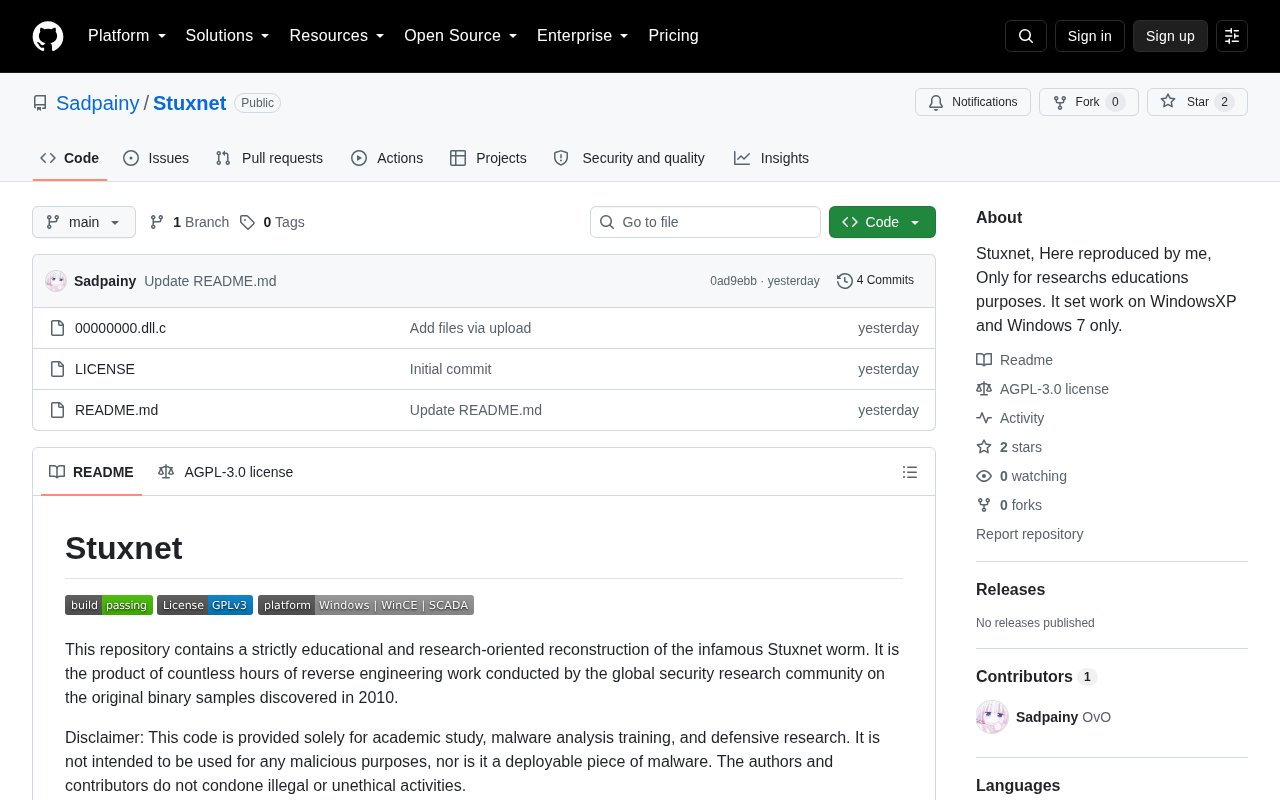
Stuxnet Source Code Reconstruction: Dissecting the Attack Chain of History's Most Complex Cyber Weapon
In-depth analysis of the Stuxnet source code reconstruction open-source project, examining how this cyber weapon targeting Iranian nuclear facilities exploited four zero-day vulnerabilities, stole digital certificates, covertly manipulated PLC centrifuges, and exploring industrial security lessons and ethical controversies of open-source reconstruction.

Minimalist Aesthetic Puzzle Game Development: Insights from Independent Creation
An in-depth analysis of an independent developer's aesthetic puzzle project shared on Hacker News, exploring minimalist design philosophy, Show HN community culture, and aesthetics-first product thinking in independent development.