Coolify: A New Self-Hosted PaaS Alternative to Vercel and Heroku

Coolify is an open-source, self-hostable PaaS alternative to Vercel, Heroku, and Netlify.
Coolify is an open-source, self-hostable Platform-as-a-Service (PaaS) alternative to Vercel, Heroku, and Netlify. It supports deploying static sites, databases, and full-stack apps on your own servers, and offers 360+ one-click services, returning deployment convenience and infrastructure control to developers. The project has 63,817 GitHub stars and 5,750 forks, with 150 new stars in a single day. Built in PHP, Coolify emphasizes practicality and maintainability. The article notes that self-hosting brings full control but also responsibility for server ops, security updates, and backups; it offers advantages in cost predictability and data sovereignty while requiring more effort for out-of-the-box experience and auto-scaling—suited to teams with data compliance needs and basic Linux ops skills, as well as independent developers.
What Is Coolify?
Coolify is an open-source, self-hostable Platform-as-a-Service (PaaS) alternative aimed squarely at mainstream cloud platforms like Vercel, Heroku, and Netlify. According to its GitHub repository, the project has garnered 63,817 stars and 5,750 forks, with 150 new stars in a single day—a clear sign of its popularity.
Unlike traditional PaaS offerings that rely on third-party cloud services, Coolify lets you deploy static sites, databases, and full-stack applications on your own servers, and even quickly set up common tools through 360+ one-click services. Its core value: it hands the convenience of deployment and control over infrastructure back to developers.
PaaS (Platform-as-a-Service) is a cloud computing service model in which the cloud provider manages the underlying infrastructure—servers, runtimes, networking, and storage—so developers only need to push code to build and deploy, without worrying about OS or hardware operations. Vercel, Heroku, and Netlify are all managed PaaS offerings; their convenience comes from the vendor managing infrastructure on your behalf, at the cost of deployment environments constrained by the vendor, usage-based billing, and vendor lock-in risk.
Self-hosted means the software runs on servers you own or rent, rather than in a vendor's cloud environment. A self-hosted PaaS combines the automated deployment experience of PaaS with infrastructure ownership: the platform software itself is open source and deployed on your own machines, so data, configuration, and costs are under your control—but server maintenance, security patches, and backups are delegated to you as well. Coolify is a prime example of this model.
Core Features and Boundaries
Coolify's feature coverage is quite broad:
- Static site deployment: A Netlify-like experience, but running on your own hardware.
- Database management: One-click deployment and management of multiple databases.
- Full-stack applications: From backend APIs to frontend frameworks, all orchestrated through Coolify.
- 360+ one-click services: Covering common development tools and middleware, lowering the barrier to self-hosting services.
Combined, these capabilities make Coolify more than just a deployment tool—it's closer to a lightweight private cloud platform. For teams looking to escape vendor lock-in and reduce long-term cloud costs, this model holds clear appeal.
Tech Stack and Community Ecosystem
Coolify is developed in PHP, which is uncommon among modern PaaS tools—but it also shows that it isn't chasing tech trends, but focusing on practicality and maintainability. The huge star count and active fork numbers indicate a solid community base and high user stickiness.
The 150 new stars in a single day show the project is still in a rapid growth phase, possibly due to a recent major release or community promotion efforts. For open-source projects, this kind of growth usually means active feature iteration and responsive issue handling.
Coolify's choice of PHP as its development language is closely tied to how it operates. PHP is mature for deployment on web servers with a low operational barrier, and with frameworks like Laravel it can quickly build backend services with queues, scheduling, and real-time communication; meanwhile, the PHP ecosystem already has many mature components for server management and process orchestration, making it easy to implement container orchestration, reverse proxy configuration, and deployment pipelines. Compared with similar tools written in Go or Rust, the PHP approach is friendlier in terms of single-machine resource usage and onboarding cost, which explains why it emphasizes practicality and maintainability over tech trends.
Trade-offs and Use Cases of Self-Hosted PaaS
Choosing Coolify means you gain complete control over your infrastructure, but you also take on responsibility for server operations, security updates, and backups. Compared with managed services like Vercel, self-hosted solutions have advantages in cost predictability and data sovereignty, but require more effort in out-of-the-box experience and elastic scaling.
Typical scenarios suited to Coolify include: enterprises with data compliance requirements, ops teams looking to manage multiple servers uniformly, and independent developers who need frequent deployments but don't want to pay high cloud platform fees. If a team already has basic Linux ops capabilities, Coolify can significantly reduce the complexity of building a self-hosted PaaS.
Auto-scaling is one of the core selling points of managed PaaS: the platform automatically adds or removes instances based on traffic, bills by actual usage, and developers don't need to plan capacity in advance. Self-hosted solutions typically lack this on-demand scaling capability—capacity depends on your own server specs, and scaling requires manually adding machines or adjusting resource allocation, making them better suited to scenarios with relatively stable, predictable loads. Correspondingly, self-hosting represents a fixed cost (server fees) rather than fluctuating with traffic, which is exactly the source of the cost predictability advantage mentioned in the article.
Conclusion
With open source and self-hosting as its core selling points, Coolify has carved out a differentiated path in a PaaS market dominated by Vercel and Heroku. Its 63k+ stars and continuously growing community attention validate market demand for its product direction. For developers seeking deployment autonomy, Coolify deserves a spot on the technical evaluation shortlist.
Related articles
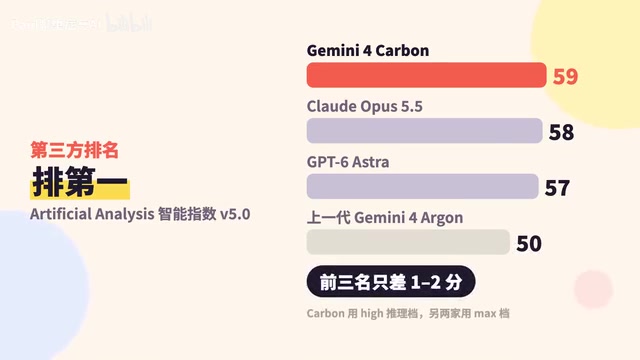
Google Releases Gemini 4 Carbon: Its Strongest Model Yet, Debuting with a Cybersecurity Focus
Google releases Gemini 4 Carbon, calling it its strongest model, with a cybersecurity focus. It tops the third-party composite ranking at 59 points but leads by only one or two. This article analyzes its security test results, staged rollout, token pricing, and the divergence between self-reported and third-party tests on hallucinations.

LangChain Adds SchemagateRetriever: On-Demand Table Retrieval Cuts Text-to-SQL Prompts by 92.9%
LangChain docs add SchemagateRetriever: retrieves only the tables needed for text-to-SQL with permission filtering, cutting median prompt size by 92.9% on Spider 2.0 large schemas via offline BM25 selection with no model calls.

Multi-Step AI Agent Guardrail in Practice: Fact-Change Detection Drives False-Alarm Rate to 0%
Developer shares first version of a multi-step AI Agent guardrail: re-verifying dependency facts before irreversible actions cut false alarms from 50% to 17% across 23 scenarios, then to 0% via conservative normalization without lowering catch rate. Runs on local qwen2.5-7b.