CriticGen: A New Framework That Transforms AI Evaluation into Actionable Improvement Feedback
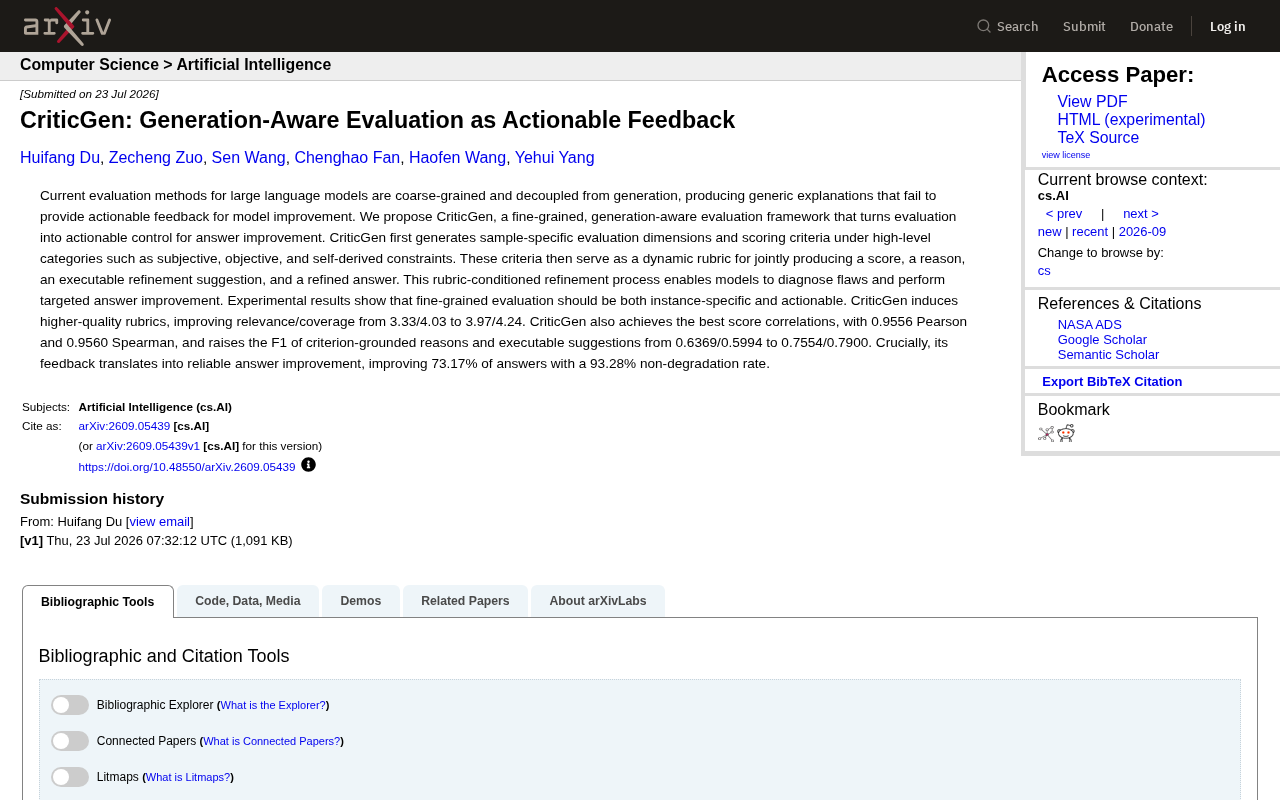
CriticGen turns LLM evaluation into actionable improvement feedback via dynamic rubrics and targeted refinement.
CriticGen is a generation-aware evaluation framework that replaces fixed scoring templates with dynamic, instance-specific rubrics. It produces not just scores and reasons, but executable refinement suggestions and improved answers, creating a complete diagnose-and-repair loop. Experiments show 73.17% answer improvement rate, 93.28% non-degradation rate, and 0.95+ correlation with human judgment, marking a shift from passive evaluation to active coaching.
The LLM Evaluation Dilemma: Scoring Is Easy, Improving Is Hard
While there are many methods for evaluating LLM output quality, they all share a critical flaw: coarse granularity and disconnection from the generation process. Current mainstream LLM evaluation methods fall into roughly three categories: benchmark-based automated evaluation (e.g., MMLU, HumanEval), model-based evaluation (e.g., LLM-as-a-Judge, where powerful models like GPT-4 act as judges to score other models' outputs), and human evaluation. LLM-as-a-Judge has become widely adopted due to its low cost and scalability, but its core problem lies in coarse evaluation granularity — when an evaluation model scores a response, it typically only provides a vague score and fuzzy explanation, such as "the answer isn't comprehensive enough" or "the logic is confused."
This kind of feedback has virtually no practical value for improving model outputs. It neither identifies specific problems nor provides a path to fix them. Evaluation and generation run on parallel tracks — evaluation serves only as an after-the-fact referee, not an improvement engine. This chasm between "evaluation" and "improvement" means developers know a model is underperforming but have no idea where to begin optimizing.
The newly published arXiv paper CriticGen: Generation-Aware Evaluation as Actionable Feedback directly addresses this pain point, proposing a novel framework that transforms "evaluation" into "actionable control."
CriticGen's Core Mechanism: Dynamic Criteria Driving Targeted Improvement
Instance-Level Scoring Dimensions Replace Fixed Standards
CriticGen is a fine-grained, generation-aware evaluation framework. "Generation-aware" means the evaluation process deeply understands the generation mechanism, capable of tracing how each part of an answer was produced and which steps may have introduced errors. This philosophy echoes the recent trend of Process Reward Models (PRM) — PRMs don't just judge whether the final answer is correct, but score each step in the reasoning chain to provide more granular feedback signals. CriticGen pushes this idea further by not only focusing on process evaluation but also directly converting evaluation results into actionable modification instructions.
Its first step isn't to score directly, but to generate dedicated evaluation dimensions and scoring criteria for each individual sample. In traditional LLM evaluation, scoring criteria are typically predefined fixed templates — for example, uniformly using dimensions like "helpfulness, relevance, accuracy, depth, creativity" to score all responses. The problem with this approach is obvious: a math problem and a creative writing piece have entirely different evaluation priorities, and fixed criteria cannot adapt to diverse task requirements. CriticGen's dynamic rubric draws on the concept of "analytic rubrics" from educational assessment — analyzing the implicit quality dimensions and expected standards for each specific question, then building a customized scoring framework accordingly.
These criteria are organized under several high-level categories:
- Subjective constraints: subjective requirements around expression, style, etc.
- Objective constraints: verifiable requirements around facts, logic, etc.
- Self-derived constraints: implicit requirements the model infers from the question
Self-derived constraints are a particularly noteworthy design choice. Many quality requirements for a question aren't all explicitly stated in the instructions — they need to be inferred from context. For example, when a user asks "How would you explain quantum mechanics to a 5-year-old?", the instruction doesn't explicitly require "avoid technical jargon" or "use analogies," but these are implicit requirements for a high-quality answer. Self-derived constraints give the evaluation model a kind of "metacognitive" ability — it not only understands the surface-level requirements of a question but can also infer quality standards that are unstated yet crucial. This shares common ground with Chain-of-Thought prompting techniques: both improve final output quality by having the model explicitly perform intermediate reasoning.
The key point is that evaluation criteria are no longer generic templates but dynamic rubrics customized for each specific question.
A Complete "Diagnose–Repair" Closed Loop
With the dynamic rubric in place, CriticGen uses it as a condition to jointly produce four outputs:
- Score
- Reason
- Executable refinement suggestion
- Refined answer
This is CriticGen's most valuable design — it upgrades evaluation from mere "scoring" to a complete closed loop of "diagnosing deficiencies and targeted repair." The model not only knows what's wrong but also receives a concrete modification plan and directly generates an optimized answer. This rubric-conditioned refinement process makes evaluation a genuine tool for driving quality improvement.
Experimental Validation: Instance-Specific and Actionable Evaluation Works Better
The paper experimentally validates its core thesis: fine-grained evaluation must simultaneously be instance-specific and actionable.
Significantly Improved Rubric Quality
CriticGen-generated rubrics are significantly better than baselines. Relevance and coverage improved from 3.33/4.03 to 3.97/4.24, respectively, indicating that the generated evaluation dimensions are both more aligned with the question and more comprehensive in coverage.
Scores Highly Consistent with Human Judgment
In terms of agreement with human judgment, CriticGen achieved a Pearson correlation coefficient of 0.9556 and a Spearman correlation coefficient of 0.9560 — meaning its scores are highly aligned with human evaluations, approaching the level of a trustworthy judge. It's worth noting that Pearson correlation measures the degree of linear correlation between two variables, while Spearman correlation measures monotonic correlation (i.e., ranking consistency). In LLM evaluation scenarios, a high Pearson score means the model's numerical scores are highly consistent with human scores on the value scale, while a high Spearman score means the model's ranking of different answers closely matches human rankings. For reference, GPT-4 as a judge typically achieves correlation coefficients of 0.7–0.85 with humans. CriticGen's 0.95+ level means its scoring can serve as a reliable substitute for human evaluation.
Reasons and Suggestions Are Actionable
More importantly, CriticGen's F1 scores for "criterion-grounded reasons" and "executable suggestions" improved from 0.6369/0.5994 to 0.7554/0.7900, respectively. This indicates that its explanations are grounded in specific scoring criteria rather than empty platitudes, and its suggestions are more actionable.
Feedback Reliably Translates to Quality Improvement
Most crucially, this feedback reliably translates into answer quality improvement. Experiments show that CriticGen improved 73.17% of answers while maintaining a 93.28% non-degradation rate — in the vast majority of cases, modifications don't make the answer worse.
This set of numbers is particularly significant because the self-refinement field faces a serious "degradation problem." Multiple studies (such as Huang et al., 2023) have pointed out that LLM self-refinement isn't always effective — without external feedback, models can easily "get worse with each revision," especially on reasoning tasks. The non-degradation rate measures exactly the probability that a revised answer is no worse than the original. CriticGen's 93.28% non-degradation rate means that out of every 100 revisions, only about 7 lead to quality degradation — quite robust performance for self-improvement methods. However, in high-stakes domains like medical diagnosis or legal consultation, that 7% degradation risk could still lead to serious consequences.
The Value and Significance of This Work
A Paradigm Shift in Evaluation
CriticGen represents a directional shift in LLM evaluation: from passive referee to active coach. Traditional evaluators are only responsible for saying "right" or "wrong," while CriticGen attempts to answer "how to get better."
This approach of coupling evaluation with improvement aligns with recently emerging technical directions like self-refinement and Constitutional AI. Constitutional AI (CAI), proposed by Anthropic in 2022, centers on using a set of explicit principles (a "constitution") to guide a model's self-critique and self-correction, thereby reducing dependence on human annotation. The CAI workflow is: the model first generates a response, then critiques the response based on preset principles, and finally revises the response based on that critique — the revised data is then used for reinforcement learning training. CriticGen is conceptually similar to CAI — both try to integrate evaluation feedback directly into the improvement process — but CriticGen goes further: it doesn't rely on fixed constitutional principles but dynamically generates evaluation criteria for each specific question, offering finer granularity and stronger targeting. Additionally, the self-correction field has recently seen methods like CRITIC, Self-Refine, and Reflexion emerge. CriticGen can be viewed as the latest advance in this technical lineage.
Impact on Model Training and Inference
The value of actionable feedback extends beyond the inference stage. High-quality, implementable critique signals are an excellent source of training data — they can be used for reward modeling in reinforcement learning, or as filtering criteria for rejection sampling and iterative optimization.
RLHF (Reinforcement Learning from Human Feedback), widely used in current LLM training, relies on reward models to score model outputs, but reward models typically provide only scalar signals (a single score) without explanations. This has led to problems like "reward hacking" — models learn shortcuts to please the reward model rather than genuinely improving answer quality. The structured feedback produced by CriticGen (including dimension-specific scores, reasons, and modification suggestions) can serve as richer reward signals. For example, in newer alignment training methods like DPO (Direct Preference Optimization) or KTO, CriticGen can automatically generate high-quality preference pairs: the original answer as the rejected sample and the revised answer as the chosen sample, enabling large-scale training data production without expensive human annotation. An evaluator that can both precisely diagnose issues and provide repair plans has the potential to become a critical component in the model's self-evolution loop.
Limitations to Consider
The paper's results are still at the research stage, and several points deserve attention: First, dynamically generating rubrics introduces additional computational overhead. Second, the evaluator's capability ceiling is limited by its own model capacity — when the evaluated answer's quality exceeds the evaluator's level, feedback effectiveness may decline. Third, while the 93.28% non-degradation rate is high, the remaining ~7% degradation risk still warrants caution in high-stakes scenarios.
Conclusion
CriticGen's core contribution lies in redefining "what constitutes good evaluation": good evaluation shouldn't be just an isolated score, but rather an instance-specific, actionable feedback loop that directly drives improvement. In an era where large models increasingly rely on self-evaluation and self-optimization, frameworks like this — ones that transform evaluation into actionable control — may well become critical infrastructure for improving model output quality.
Related articles
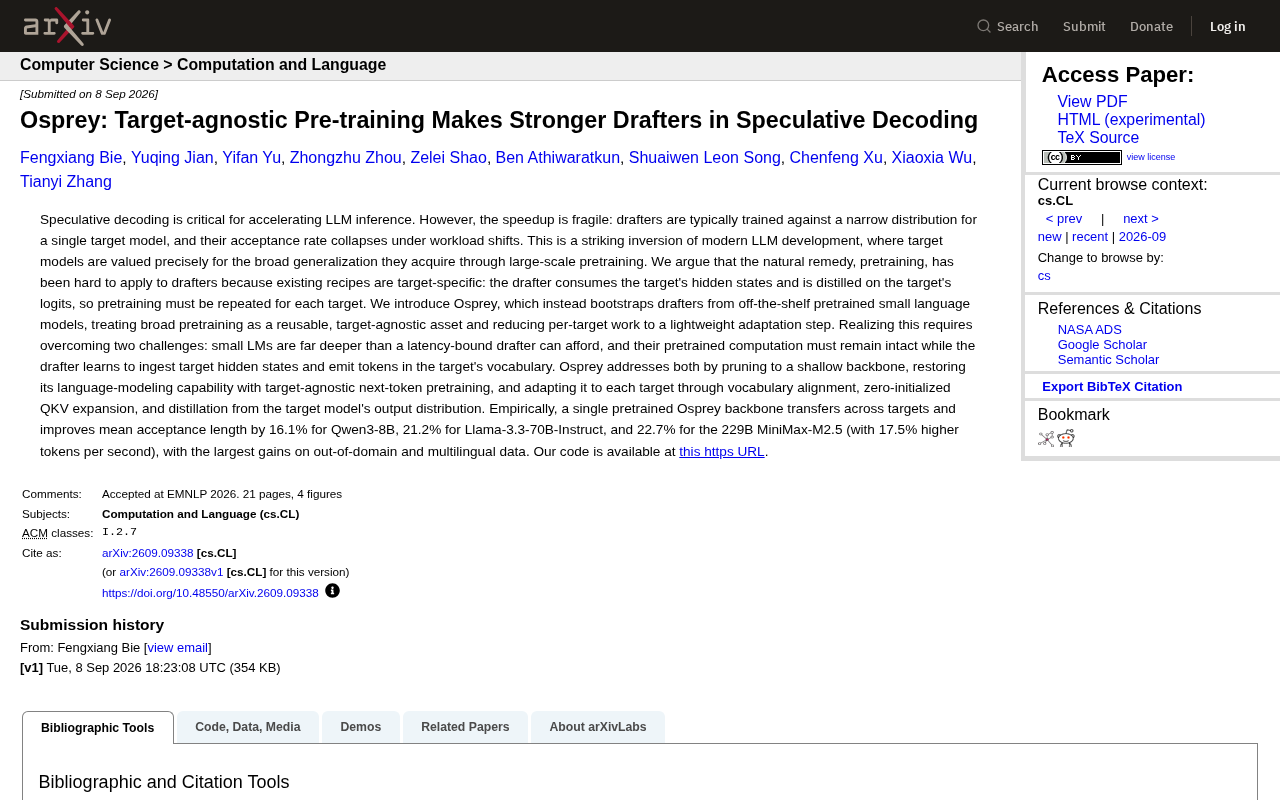
Osprey: General-Purpose Pretraining Makes Speculative Decoding Draft Models More Efficient
Osprey treats pretraining as a reusable, target-agnostic asset. Through pruning and lightweight adaptation, a single draft model transfers across multiple LLMs, boosting mean acceptance length by 16%-22%.
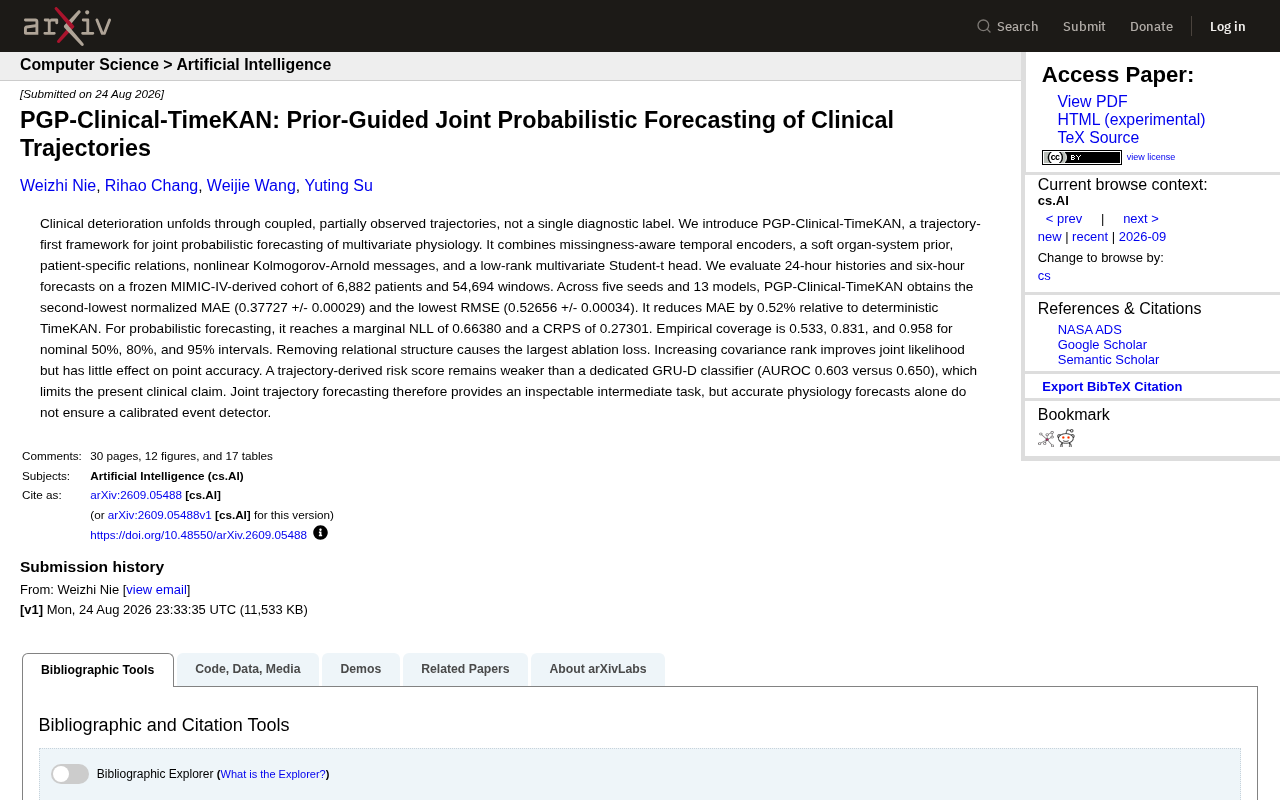
PGP-Clinical-TimeKAN: A Detailed Guide to the Multivariate Physiological Indicator Joint Prediction Framework
An in-depth analysis of the PGP-Clinical-TimeKAN framework for joint probabilistic prediction of multivariate physiological indicators, covering trajectory-first paradigm, KAN message passing, MIMIC-IV validation, and ablation studies.
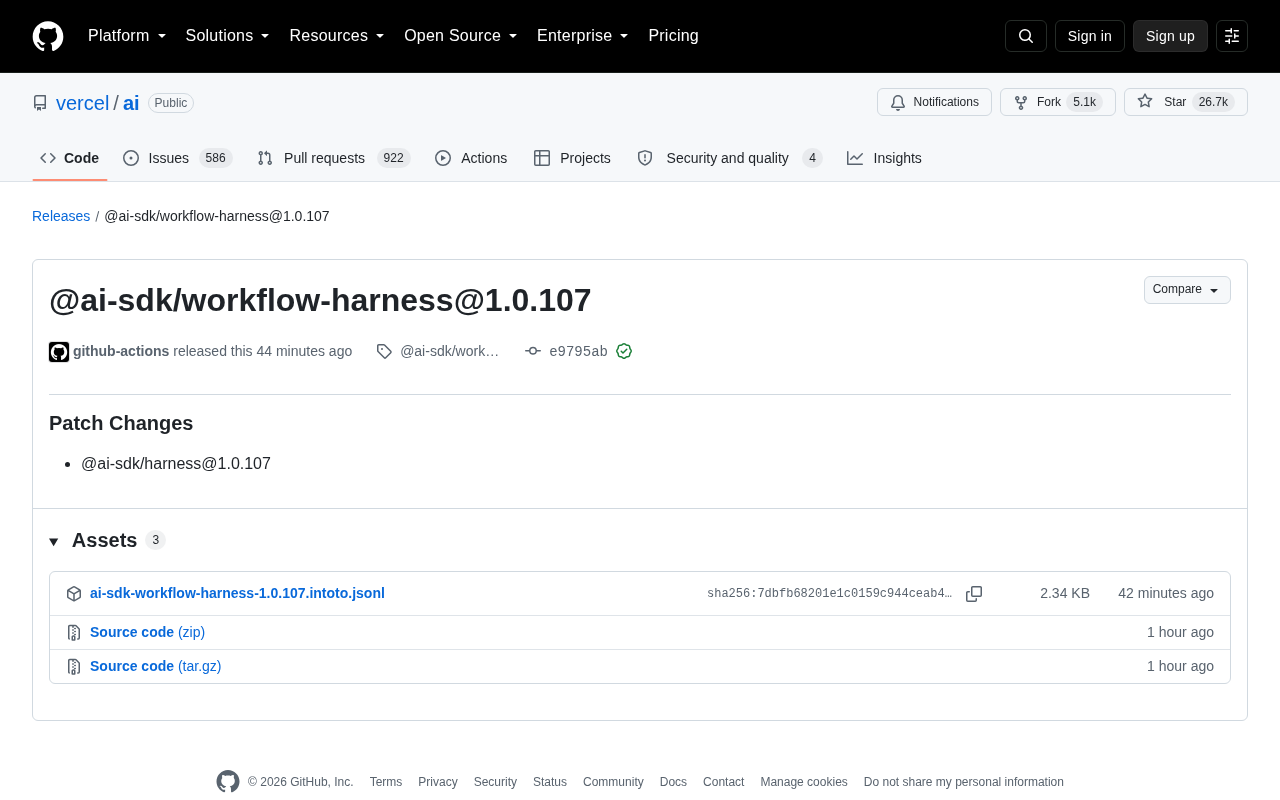
Vercel AI SDK workflow-harness Update Analysis
Deep analysis of Vercel AI SDK workflow-harness 1.0.107 update: architecture design, engineering practices, and developer value for building reliable AI apps.