CrowdStrike's $44 Billion Acquisition of Zscaler Puts AI Agent Security in the Spotlight

CrowdStrike acquires Zscaler for $44B, betting on Zero Trust architecture for AI Agent security.
CrowdStrike announced a $44 billion acquisition of Zero Trust vendor Zscaler, officially aimed at helping customers better use AI Agents. The article analyzes the deal's logic: Zero Trust's "continuous verification" naturally constrains every AI Agent tool call and data access, and combining CrowdStrike's endpoint security with Zscaler's network-side Zero Trust could close the loop on AI Agent behavior monitoring and access control. The $44 billion scale signals leading vendors are filling capability gaps through M&A, potentially accelerating industry consolidation around AI Agent security. But closing timeline, regulatory approval, integration approach, and product forms remain unclear.
A Massive Deal That Shakes Up the Security Industry
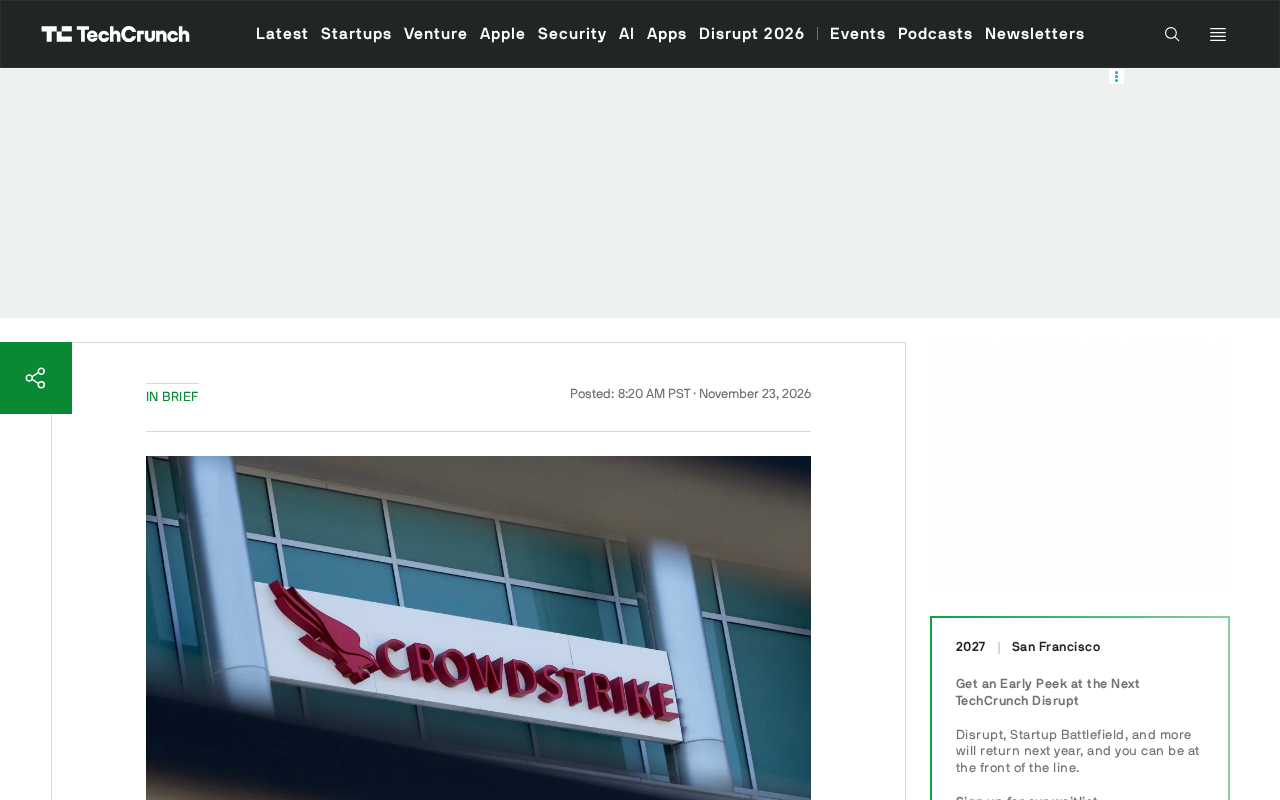
According to RSS sources, cybersecurity giant CrowdStrike has announced it will acquire Zscaler for $44 billion. The latter provides Zero Trust products to large enterprises, and the deal has been officially framed as "enabling customers to better use AI Agents." The news immediately sparked a rethink of security architecture in the AI era.
Why Zero Trust? And Why Now?
Zscaler's core business is Zero Trust network access—no longer trusting any internal or external request by default, but continuously verifying every access behavior. In traditional enterprise networks, this is already a mature security paradigm. But CrowdStrike's statement directly ties this acquisition to AI Agents, hinting at a deeper intent: when AI Agents begin performing tasks, accessing data, and calling APIs on behalf of human employees, traditional perimeter defenses and identity verification mechanisms may no longer be sufficient.
The New Security Challenge Posed by AI Agents
The original statement explicitly points out that the deal will "better equip customers to use AI Agents." The subtext is that enterprises are delegating more and more automated decisions to AI Agents, and these Agents need access to sensitive systems and data. Zero Trust's philosophy of "continuous verification" is naturally suited to constraining AI Agent behavior—every tool call and every data read can be treated as an access request requiring verification. Combining CrowdStrike's endpoint security capabilities with Zscaler's network-side Zero Trust is expected to form a closed loop of AI Agent behavior monitoring and access control covering both endpoints and networks.
Zero Trust was introduced by Forrester analyst John Kindervag around 2010, with the core principle of "never trust, always verify"—completely abandoning the perimeter assumption that "the internal network is trustworthy and the external network is not." Its technical implementation typically includes several pillars: identity-centric policy engines (such as dynamic authorization based on user, device, and application attributes), micro-segmentation that divides the network into fine-grained zones to limit lateral movement, and continuous monitoring with the principle of least privilege. Zscaler belongs to the Zero Trust Network Access (ZTNA) and Security Service Edge (SSE/SASE) camp, using a cloud proxy so that connections between users and applications no longer route back to the corporate intranet through traditional VPNs, but are authenticated policy by policy on each occasion. Understanding this is essential to seeing why the "continuous verification" architecture aligns so well with how AI Agents operate—calling tools one at a time and accessing data item by item.
AI Agents refer to AI systems capable of autonomously planning steps, calling external tools and APIs, and completing multi-step tasks with minimal human intervention. Common forms include LLM-based coding assistants, customer service automation, and "digital employees" that connect to enterprise systems to perform operations. The new security issues they bring are fundamentally different from traditional software: first, identity ambiguity—Agents often run as service accounts or proxy identities, and permissions tend to be over-granted; second, behavioral non-determinism—the same input may trigger different tool chains, making static rule-based auditing difficult; third, prompt injection and tool misuse risks—malicious content can induce Agents to read data or initiate operations beyond their authority. As a result, the industry proposes giving Agents identities (assigning traceable independent identities with least privilege), applying policy checks to every tool call, and recording complete behavior chains for auditing and traceability—which precisely corresponds to Zero Trust's continuous verification approach.
Industry Impact: Security Platform Consolidation Accelerates
The $44 billion acquisition is a heavyweight deal in the cybersecurity space. It sends a clear signal: leading security vendors are filling out their capability portfolios through M&A to address the composite security needs brought by the proliferation of AI Agents. For enterprise customers, the short term may bring a transition period of product integration and contract adjustments; in the long run, if integration goes smoothly, they can expect a more unified AI Agent security governance platform.
Chain Reactions in the Competitive Landscape
The deal may also force other security vendors to accelerate consolidation or strengthen their AI Agent security capabilities. The convergence of Zero Trust and endpoint security is not a new topic, but an acquisition narrative driven primarily by AI Agents is a first. It pushes "AI Agent security" from conceptual discussion to substantive capital-level investment.
Questions to Watch
Information disclosed so far is limited: the specific closing timeline, regulatory approval progress, and how Zscaler's product line will be integrated all remain unclear. The specific product form for AI Agent security has also not been announced—whether a new unified console will be launched or the Zero Trust policy engine will be embedded into the CrowdStrike platform remains to be seen. What is certain is that competition in the security industry around AI Agents has entered a new phase.
One-line Summary
CrowdStrike acquires Zscaler for $44 billion to stake out AI Agent security through Zero Trust architecture.
Paragraph Summary
CrowdStrike has announced a $44 billion acquisition of Zero Trust vendor Zscaler, officially framed as enabling customers to better use AI Agents. The article analyzes the logic behind the deal: Zero Trust's "continuous verification" philosophy naturally constrains every tool call and data access by AI Agents, and combining CrowdStrike's endpoint security with Zscaler's network-side Zero Trust could form a closed loop of AI Agent behavior monitoring and access control spanning endpoints and networks. The $44 billion scale signals that leading security vendors are filling out their capability portfolios through M&A to meet composite security needs, potentially accelerating industry consolidation around AI Agent security. However, the closing timeline, regulatory approval, integration approach, and specific product forms all remain unclear and warrant further observation.
Related articles

Nothing CMF Buds 2A Drops to $17.89 on Black Friday: A New Low for ANC Earbuds
Nothing CMF Buds 2A wireless earbuds Black Friday deal: just $17.89 on Amazon, about $11 off retail and a record low. ANC earbuds at an entry-level price.

When AI Creation Gets Accused of "Spitting": Hacker News Heats Up Over the Glaude Controversy
A Hacker News post, "Spitting in the Face of Glaude," sparks debate on AI creation transparency and attribution ethics. This analysis examines the blurred creator identity behind the controversy and offers practical advice for AI content production.

Akai Embraces Custom Firmware: MPC Sample 1.4 Lets Users AI-Program Their Sampler
Akai embraces the modding community with MPC Sample 1.4 firmware, supporting vibe-coded custom firmware and effects. We analyze the impact of this open strategy on music hardware and AI-assisted programming.