CUDA 13.4 Memory Enforcement: A New Solution for Kubernetes GPU Sharing

CUDA 13.4 adds hard memory isolation for GPU sharing, giving Kubernetes multi-tenant sharing hard boundaries.
The article discusses how the memory enforcement isolation mechanism introduced in NVIDIA CUDA 13.4 strengthens GPU sharing on Kubernetes. Traditional sharing approaches only place multiple Pods on the same card at the scheduling layer, with no hard constraints at the memory level—a single overrunning process can drag down other tenants on the same card. CUDA 13.4 enforces memory limits on the runtime side, forming a two-layer coordination with Kubernetes declarations and scheduling to make sharing operationally viable. The article notes that this mechanism best fits three scenarios—online inference, development sandboxes, and multi-tenant platforms—but also emphasizes that it only solves overruns, not the tail latency caused by contention for compute and bandwidth, and that overly fine quotas introduce fragmentation and management complexity. The outcome depends on the coordination of quota granularity, scheduling policies, and monitoring systems.
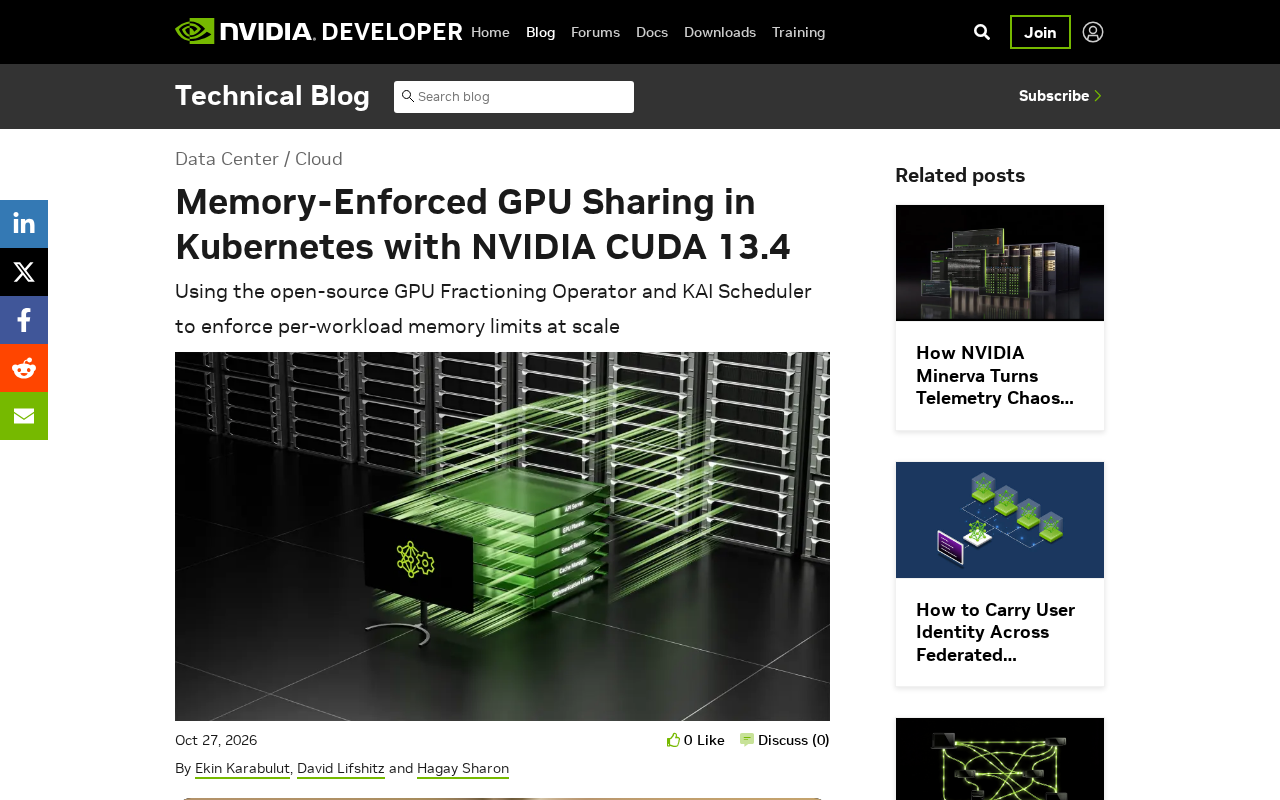
When running AI inference or training workloads on Kubernetes, GPU resource allocation has long suffered from a structural inefficiency: many workloads actually only need a fraction of a card's memory and compute, yet they are forced to occupy an entire device. The memory enforcement mechanism introduced in NVIDIA CUDA 13.4 is a reinforcement aimed squarely at this pain point—it moves GPU sharing from "self-discipline" to "hard boundaries."
The Old Problem with GPU Sharing: Logical Partitioning Lacks Hard Constraints
Traditional GPU sharing approaches mostly stay at the scheduling layer or the time-slicing level. Platform teams can use Kubernetes device plugins and resource requests to schedule multiple Pods onto the same GPU, but there is no real isolation at the memory level: a process with a memory leak or misconfiguration can consume all of the card's memory and affect other tenants on the same card.
For multi-tenant inference services, development sandboxes, and CI environments, this "soft sharing" means the platform must reserve a large amount of redundant memory, which actually lowers real utilization. Part of the economic value of sharing is offset by the lack of isolation.
Kubernetes Device Plugin Mechanism
Kubernetes itself does not recognize GPUs; it relies on the Device Plugin extension mechanism to expose vendor devices as schedulable resources. NVIDIA's GPU Device Plugin runs as a DaemonSet on each node, registers extended resources such as nvidia.com/gpu with kubelet, and reports the number of GPUs visible on the node to the scheduler. After a Pod declares an integer number of GPUs in resources.limits, the scheduler allocates by count, and the device plugin injects the corresponding device nodes and environment variables when the container starts. The key limitation of this model is that the resource granularity is fixed to "whole card"; the plugin cannot express finer-grained requests such as "half a card" or "8GB of memory." Precisely for this reason, the logical partitioning described in this article can only go as far as placing multiple Pods on the same card, without establishing a memory-level correspondence between scheduling declarations and runtime. To achieve memory quota scheduling on Kubernetes, additional resource reporting mechanisms or custom scheduler extensions are usually required.
CUDA 13.4's Memory Enforcement Mechanism
The update in CUDA 13.4 is the introduction of memory-level enforcement for shared scenarios. According to NVIDIA's official blog, the goal is to let platform teams safely host more workloads on a single GPU without worrying about a process overrunning its memory allocation.
The core focus of this article is how this mechanism works with Kubernetes: Kubernetes handles resource boundaries at the declaration and scheduling layer, while the CUDA runtime enforces memory limits on the device side. Only with both layers working together does sharing become operationally viable.
Alignment with the Kubernetes Resource Model
In Kubernetes, GPUs are typically requested as integers through a device plugin. For sharing to truly take hold, the platform side needs to incorporate fine-grained resources such as "memory quotas" into scheduling decisions while ensuring that actual execution on the node matches the scheduling declaration. CUDA 13.4's memory enforcement capability fills in the latter half—otherwise the scheduler thinks it has allocated 8GB, but the runtime allows the process to consume more.
For platform engineers, this means multiple inference instances or interactive development environments can be co-located on a node, and a single instance exceeding its memory limit will surface as a runtime error rather than silently dragging down the entire card.
The Difference Between MIG and Memory Enforcement Isolation
When discussing GPU sharing, it is easy to confuse this with NVIDIA's MIG (Multi-Instance GPU). MIG physically partitions a card into multiple independent instances at the hardware level, each with its own dedicated memory slice, compute units, and bandwidth. It offers the strongest isolation, but the partition specifications are fixed by the GPU architecture, flexibility is limited, and not all models support it. CUDA 13.4's memory enforcement takes a different path: it does not change the physical partitioning of the hardware, but instead imposes a hard upper limit on the memory available to a process at runtime—a form of enforcement isolation at the software layer. The two can be used together, but they serve different purposes—MIG provides physical-level determinism and performance isolation, while memory enforcement draws memory boundaries between processes sharing the same physical device, making it better suited to scenarios that need flexible quotas without requiring complete bandwidth isolation. When choosing a platform, teams should weigh the two based on isolation strength requirements and hardware support.
Applicable Scenarios and Benefit Directions
Looking at workload characteristics, this mechanism best fits three types of scenarios: online inference with clear and stable memory requirements; development and Notebook environments with highly variable usage; and multi-tenant platforms that require isolation. The benefits are mainly reflected in two directions: increased sharing density and a reduced blast radius of failures. Specific numbers depend on model size and traffic patterns; the official blog does not provide a unified performance benchmark.
Practical Considerations for Implementation
Memory enforcement isolation solves the "overrun" problem, but not the "contention" problem. Once memory is hard-limited, multiple workloads competing for compute and bandwidth at the same time can still cause tail latency to rise, and the platform side still needs to coordinate scheduling policies, priorities, and rate limiting.
In addition, there is runtime overhead and fragmentation between memory quotas and actual memory usage. If quotas are sliced too finely, fragmentation and management complexity will offset the benefits of sharing. Platform teams need to set reasonable quota granularity based on their own workload profiles, rather than relentlessly pursuing higher partitioning density.
Memory Fragmentation and Quota Granularity
Memory allocation is not simple arithmetic. The CUDA runtime and various frameworks have their own memory pools and caching allocators, and the memory a process actually occupies is often higher than what its active tensors require; reservations and caching cause additional usage. When multiple workloads share the same card with fine-grained quotas, each process's memory pool retains some idle memory, and the portion that cannot be reused by other processes becomes fragmentation. The finer the quota slicing, the higher the fragmentation ratio, and the lower the effective utilization of available memory. Moreover, enforcing memory limits requires the runtime to check on every allocation; the denser the quotas and the more frequent the allocations, the more noticeable the management overhead. Therefore, quota granularity should be set based on a combination of workload peak memory, framework memory pool behavior, and the number of concurrent instances—not with the goal of maximizing the number of partitions.
Conclusion
CUDA 13.4's memory enforcement capability moves GPU sharing on Kubernetes from a scheduling-layer "agreement" to a runtime-layer "constraint," which is a key step toward making sharing operationally viable. It will not automatically improve utilization; what really determines the outcome is the design of quota granularity and the coordination of scheduling policies and monitoring systems. For teams building multi-tenant AI platforms, this mechanism is worth including in technical selection evaluations.
One-line Summary
CUDA 13.4 adds hard memory isolation for GPU sharing, giving Kubernetes multi-tenant sharing hard boundaries.
Paragraph Summary
The article discusses how the memory enforcement isolation mechanism introduced in NVIDIA CUDA 13.4 strengthens GPU sharing on Kubernetes. Traditional sharing approaches only place multiple Pods on the same card at the scheduling layer, with no hard constraints at the memory level—a single overrunning process can drag down other tenants on the same card. CUDA 13.4 enforces memory limits on the runtime side, forming a two-layer coordination with Kubernetes declarations and scheduling to make sharing operationally viable. The article notes that this mechanism best fits three scenarios—online inference, development sandboxes, and multi-tenant platforms—but also emphasizes that it only solves overruns, not the tail latency caused by contention for compute and bandwidth, and that overly fine quotas introduce fragmentation and management complexity. The outcome depends on the coordination of quota granularity, scheduling policies, and monitoring systems.
Related articles
Ollama+RAG Local Knowledge Base Setup: A Step-by-Step AnythingLLM Tutorial
Based on a Bilibili tutorial, this guide details building a local RAG knowledge base with Ollama + AnythingLLM: from general LLM knowledge limits and RAG principles to document upload, vector storage, and verification.
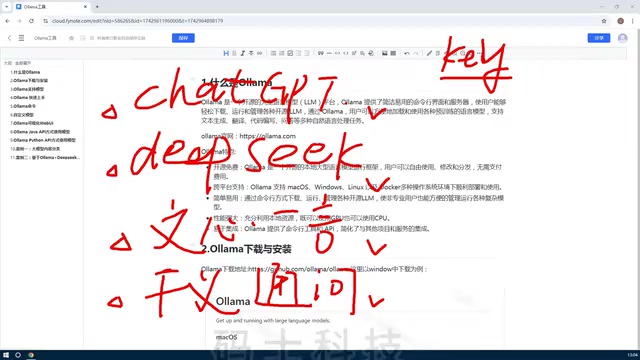
The Ultimate Ollama Tutorial: A Beginner's Guide to Running Large Models Locally for Free
Ollama is an open-source local large model management tool supporting free download and deployment of models like DeepSeek, with command-line and Web UI, cross-platform, automatic GPU/CPU scheduling — ideal for AI beginners and private deployment.
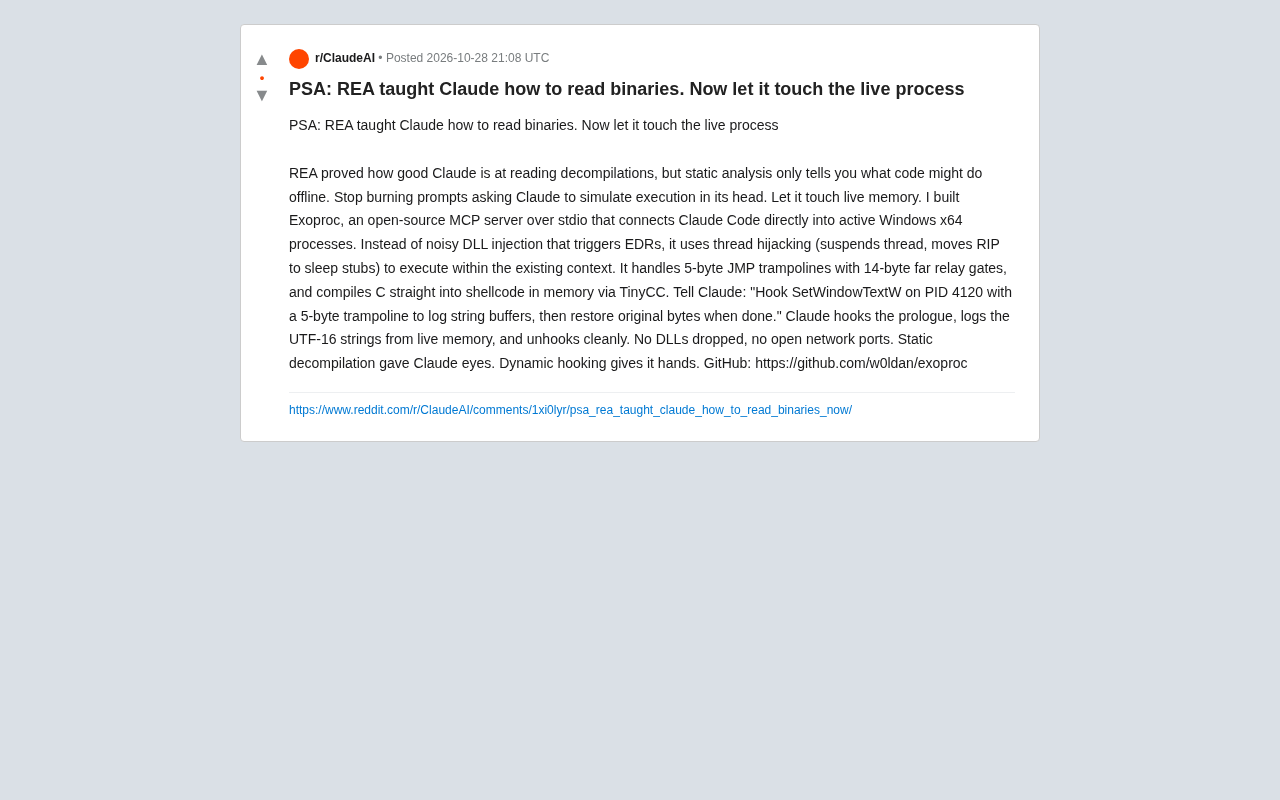
Giving Claude "Hands": Exoproc Open-Source MCP Server Enables Live Process Hooking
Exoproc is an open-source MCP server enabling Claude Code to hook live Windows x64 processes via thread hijacking, bypassing EDR for dynamic analysis. Static decompilation gave Claude eyes; dynamic hooking gives it hands.