Cursor Pay-Per-Use vs. Refill Plans: A Comprehensive Comparison of Cost, Risk, and Experience

Deep analysis of Cursor pay-per-use model: principles, costs, and risks compared to traditional refills
This article analyzes the Cursor pay-per-use refill model, comparing it against traditional trial account rotation with its issues of wasted quotas, ban risks, and instability. It explains how the pay-per-use model works through dynamic allocation of dedicated Pro account pools with per-token billing. Offering services at 10-30% of official prices with transparent billing and non-expiring balances, the model still carries compliance, stability, and data security risks. It suits light and intermittent users, while sensitive projects should stick with official subscriptions.
Introduction
For developers who heavily use Cursor, the Pro membership at $20/month represents an ongoing expense. This has spawned various "refill" solutions on the market—from trial account rotation to third-party plugins, you name it. Recently, a pay-per-use model has attracted considerable attention, claiming to offer a genuine Pro Plan experience at 10-30% of the official price.
Is this Cursor pay-per-use model actually reliable? How does it differ from traditional refill solutions? This article provides an in-depth analysis from three perspectives: technical principles, usage costs, and real-world experience.
Pain Points of Traditional Cursor Refill Solutions
Limitations of Trial Account Rotation
The most common Cursor refill method on the market today essentially works by continuously switching between trial accounts. These solutions are typically sold as monthly or quarterly passes, with some offering only a few days of trial access.
This approach has several obvious problems:
- Wasted quotas: Purchased quotas have time limits—any unused portion simply expires
- Cumbersome operations: Requires frequent website logins and manual account switching
- Ban risk: Accounts may get banned, or even your machine ID could be blacklisted
- Unstable experience: Some solutions actually use API proxies or modified frontend code, potentially resulting in degraded model performance
Hidden Risks of Cheap Cursor Pro Accounts
On platforms like Xianyu (闲鱼), you can buy a Pro account for as little as 50-60 RMB. While it seems like a bargain, these accounts often have questionable origins, short lifespans, and get banned once the platform detects anomalies. More critically, you can never be sure whether you're actually calling the real official models.
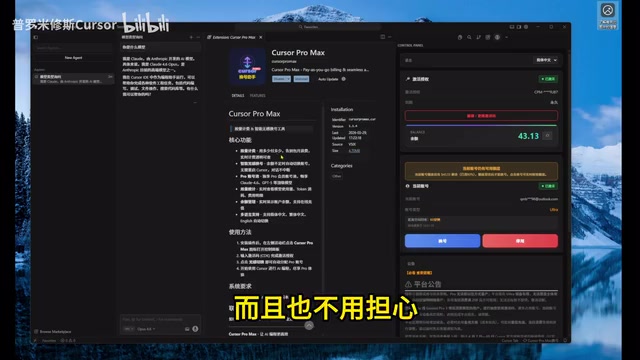
How the Cursor Pay-Per-Use Model Works
Core Mechanism: Dedicated Pro Accounts + Usage-Based Billing
The core logic of the pay-per-use model is straightforward: the platform bulk-purchases official Pro Plan accounts and dynamically allocates them to users through a "pool consumption system." Users pay based on actual usage rather than time.
Here's the specific workflow:
- Account allocation: The system assigns each user a genuine Pro Plan account ($20/$60/$200 real accounts)
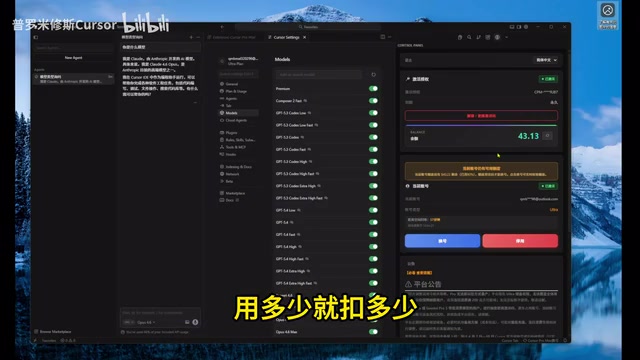
- Usage-based deduction: Each request records the number of tokens consumed, deducting from the balance at a discounted rate of the official pricing
- Automatic rotation: When a user becomes inactive, the system automatically releases the account; a new one is matched upon next use
- Balance never expires: Topped-up balance doesn't expire—it lasts until fully consumed
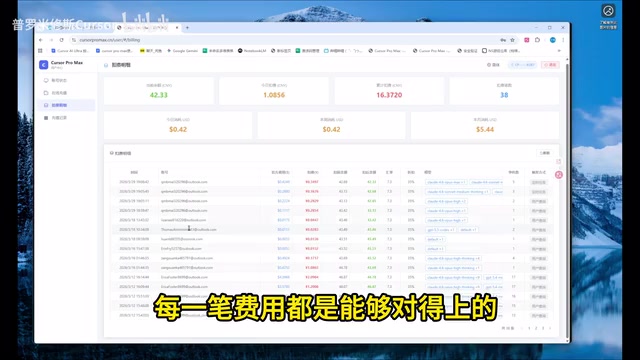
Billing Transparency
One noteworthy aspect of the pay-per-use model is billing transparency. Every request logs the following information:
- Model name used
- Input/output token count
- Actual amount charged by the official platform
- Exact time of the request
- Remaining balance
Users can cross-reference this data with Cursor's official backend billing at any time to verify the authenticity of charges. This largely addresses the trust issue of "am I actually using the real model?"
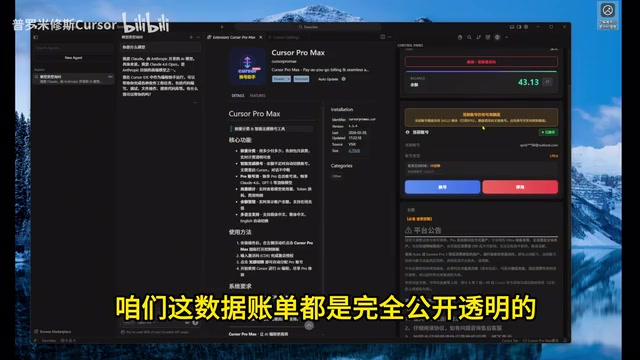
Cost Analysis of Cursor Pay-Per-Use
A Simple Calculation
Taking a top-up of 100 RMB as an example, with a 90% discount off official pricing:
- 100 RMB ≈ equivalent to 1,000 RMB worth of official quota
- 1,000 ÷ 7.3 (exchange rate) ≈ $137 USD
- Meaning 100 RMB can consume approximately $137 worth of official quota
For reference, Cursor Pro's official monthly fee is $20, which means 100 RMB could theoretically cover about 6-7 months of normal usage (depending on actual call frequency).
Which Developers Suit Pay-Per-Use?
The pay-per-use model isn't for everyone—developers with different usage patterns need to evaluate accordingly:
- Light users: Developers who only use Cursor a few times a day may find pay-per-use cheaper than a monthly subscription
- Intermittent users: Project-based workers who use it heavily some months and not at all others benefit greatly from the non-expiring balance
- Heavy users: If you heavily use premium models (like Claude Opus) daily, pay-per-use costs may actually exceed a direct official Pro subscription
Key Technical Considerations
No Modification to the Cursor Client Code
This solution claims the plugin only handles account rotation and billing tracking without modifying any of Cursor's own code. This means:
- Users can update Cursor to the latest version at any time without waiting for plugin compatibility
- All model calls go through the official native channel, eliminating latency or quality degradation from API proxying
- All models supported by Cursor (including Claude Sonnet, Opus, Gemini, etc.) work normally
Potential Risks to Be Aware Of
Although the pay-per-use model appears more standardized than traditional refill solutions, the following risks should still be noted:
- Compliance concerns: Whether sharing an account pool among multiple users violates Cursor's Terms of Service remains uncertain
- Service stability: Relying on a third-party platform's pool system means service could be interrupted if the platform encounters issues
- Data security: When using accounts provided by others, privacy protection for your code and conversation content deserves attention
Conclusion and Recommendations
Compared to traditional refill solutions, the Cursor pay-per-use model offers clear improvements in transparency, flexibility, and cost control. The three key features—verifiable billing, non-expiring balance, and no client code modification—address many developers' core pain points.
However, it's important to be realistic: any third-party solution carries some degree of risk. If your work involves sensitive code or commercial projects, subscribing directly to the official Cursor Pro Plan remains the safest choice. For personal learning, side projects, and similar scenarios, the pay-per-use model can serve as a cost-effective alternative.
Ultimately, which solution you choose depends on your usage frequency, budget, and risk tolerance. Before making a decision, assess your actual monthly token consumption first, then compare the total costs of different options to find the Cursor usage approach that best fits your needs.
Related articles
 Tech Frontiers
A Rare Quiet Day in AI: Recursive Self-Improvement Stirs Beneath the Surface
A rare quiet day in AI sees multiple sources go silent simultaneously. Behind the calm, Recursive Self-Improvement (RSI) research continues. What this means for the industry.
 Tech Frontiers
Reve 2 vs. Ideogram 4: A Deep Dive into Layout Control in AI Image Generation
A deep comparison of Reve 2 and Ideogram 4's layout control capabilities, covering technical approaches, real-world use cases, and industry trends for designers and creators.
 Tech Frontiers
In the Weights: Check Your Influence Score in the AI World
In the Weights is an AI influence search engine that quantifies your presence in the AI world with a score. Explore how it evaluates practitioners and what it means for digital identity.