Cursor Tutorial: AI-Powered Development of a Xiaohongshu-Style Mini Program

Cursor AI programming course: build a Xiaohongshu-style mini program to boost development efficiency.
This article introduces a hands-on Cursor AI programming course, outlining three pain points of traditional programming—high entry barriers, low efficiency, and difficulty ensuring code quality—and explaining how Cursor combined with Claude 3.7 addresses these through natural language-driven code generation. The course centers on building a Xiaohongshu-style WeChat mini program, covering the complete workflow from beginner basics to enterprise-level development, helping developers master AI programming as an essential career skill.
Why Must Programmers Master AI Programming Tools?
After ChatGPT took off, AI-powered programming has been gaining momentum at a staggering pace. Many people assumed that with AI tools, all you need to do is say a few words to your computer and code would generate itself automatically, making project delivery effortless. But reality is far from that simple.
The programming industry has entered a phase of intense competition—major tech companies see thousands of applicants competing for a single developer position, and even small companies' technical roles are flooded with candidates armed with various certifications and proficiency in multiple tools. When HR screens resumes, they've started paying close attention to experience with AI tools. If you can't use mainstream AI programming tools like Cursor or ChatGPT, you won't even get past the interview threshold.

Cursor is an AI-native code editor developed by Anysphere, deeply rebuilt on top of the VSCode architecture. Unlike plugin-based solutions such as GitHub Copilot, Cursor embeds AI capabilities directly into the editor's core, supporting multi-file context understanding and codebase-level Q&A and refactoring. It's currently one of the most tightly integrated AI programming tools on the market. However, Cursor isn't the kind of tool you can just pick up and master instantly. It handles code framework auto-completion, bug detection, and performance optimization, but to use these features effortlessly, you still need to invest time in learning the commands thoroughly. It's like buying a supercar—if you can't drive it, it just sits in the garage.
Three Pain Points of Traditional Programming: Why AI-Assisted Development Is Needed
Pain Point 1: High Entry Barrier for Beginners
Programming has always been a high-barrier field that intimidates many beginners. Traditional development requires mastering a vast amount of foundational knowledge just to complete simple features, which significantly hinders innovation and talent development. AI programming tools like Cursor have dramatically lowered this entry barrier. The underlying Natural Language to Code technology leverages large language models' joint modeling capabilities across programming languages and natural language. Through pre-training on massive code corpora, these models learn the mapping relationships between code structures, API call patterns, and natural language descriptions, allowing developers to describe requirements in everyday language while AI handles the initial code implementation.
Pain Point 2: Low Efficiency, Unable to Keep Up with Rapid Iteration
In an era of rapid digital transformation, software demands are exploding, and traditional manual coding can no longer keep pace. Developers spend enormous amounts of time writing repetitive code, debugging errors, and consulting documentation, drastically reducing development efficiency. Meanwhile, technology evolves faster than ever, leaving developers exhausted from learning new frameworks and unable to focus on business logic and innovative features—ultimately causing project delays and cost overruns. Cursor introduces a Codebase Indexing mechanism that enables AI to understand the overall context of the current project, generating new code that's consistent with existing code style and architecture rather than isolated code snippets, truly achieving project-level intelligent assistance.
Pain Point 3: Difficulty Ensuring Code Quality
In traditional programming, developers frequently produce code with basic issues like inconsistent naming conventions and type leaks. In software engineering, these issues are known as "Technical Debt"—an important concept introduced by Ward Cunningham in 1992, referring to the accumulated problems that arise when development teams adopt non-standard implementation approaches for short-term delivery speed, requiring more time and cost to fix or refactor in the future. When using Cursor to write code, as long as you establish naming rules for the project, the AI tool reads the rules document and generates consistently high-quality code without these basic issues. The long-term accumulation of technical debt from such basic problems becomes a heavy burden on a project's sustainable development.

Core Content and Direction of the Cursor Practical Course
This course is built around three core principles:
Principle 1: AI-driven programming revolution, advancing development into a new era of intelligence. Through the first two chapters, gain deep understanding of how AI fundamentally changes traditional development models—from the code generation revolution to intelligent auto-completion and other core skills—comprehensively demonstrating the dramatic efficiency gains under AI-driven programming.
Principle 2: Emphasis on hands-on practice, training students to independently complete enterprise-level projects. The course features a complete Xiaohongshu-style mini program project. WeChat Mini Programs are a lightweight application development platform launched by Tencent in 2017, built on the JavaScript/WXML/WXSS technology stack. They run within WeChat without installation, with over 900 million monthly active users, making them one of the most important traffic entry points on mobile. Their development covers a complete full-stack technology chain including frontend pages, cloud functions, databases, and media uploads—making it an ideal practical scenario for validating AI-assisted development capabilities. The course guides students through the entire process from requirements analysis and architecture design to feature implementation.
Principle 3: Integrating Cursor AI into the development workflow, enhancing team collaboration and delivery quality. Beyond teaching how to use AI tools, the course emphasizes integrating them into actual development workflows, extending to web scraping, API interfaces, and more business scenarios.

Course Structure: From Getting Started to Xiaohongshu Project Practice
Phase 1: Getting Started with AI-Driven Development
Master the full workflow of Cursor development, understanding Cursor's fundamental concepts, foundational knowledge, and AI-related basics. Currently, Cursor works best with Claude 3.7—a large language model from Anthropic that excels in code generation, logical reasoning, and long-context processing. Anthropic introduced Constitutional AI methodology during training, making the model more reliable in terms of code safety and instruction following. This is the core reason it outperforms some general-purpose models in programming scenarios, with targeted optimizations for code that distinguish it from other general AI tools.
Phase 2: Mastering Cursor Core Skills—Xiaohongshu-Style Mini Program Development
Through hands-on development of an enterprise-level Xiaohongshu-style WeChat mini program with features matching the actual Xiaohongshu mini program. The entire development process covers: page design, database design, API calls, video/image uploads, comments, likes, and more—all completed through AI automation rather than hand-written code.
Phase 3: Multi-Scenario Practical Extensions
Beyond mini programs, the course covers games, backend, operations, and other domains, demonstrating how Cursor accelerates development across these fields. Includes operations scripts, web scrapers, and other examples built from scratch.
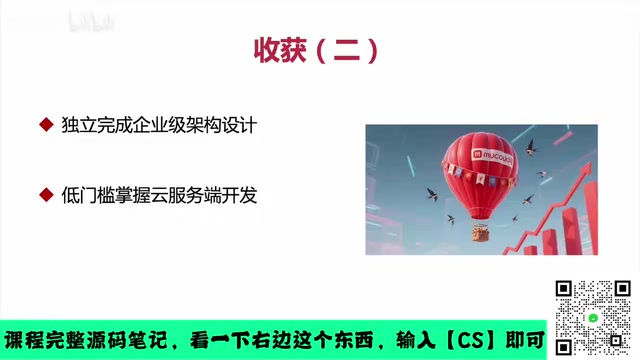
What Will You Gain from This Cursor Practical Course?
Core Takeaways
- Master the full workflow of Cursor-assisted development tools
- Systematically improve core AI-driven development skills
- Gain the ability to independently complete enterprise-level projects
- Master enterprise-level architecture design thinking
- Learn cloud server deployment and development with a low barrier to entry
- Own a high-quality Xiaohongshu-style portfolio piece for interviews
Study Recommendations
Learn by doing: Master core AI development skills through project practice, converting theory into actual development capability, and deepening your understanding of code logic and algorithm application by solving real problems.
Leverage the Cursor assistant: For any questions you encounter, get help directly within Cursor—it's not just a programming tool, but a general-purpose AI assistant.
Expand application scenarios: Try applying AI development to different scenarios such as e-commerce, education, healthcare, and more. Exposure to diverse development requirements broadens your technical perspective and enhances your comprehensive development capabilities.
Conclusion
AI-assisted programming is no longer a future trend—it's the present reality. As one of the most powerful AI programming tools available today, Cursor, combined with Claude 3.7's targeted code optimizations, truly delivers a "natural language-driven code generation" development experience. The foundational support for this capability is the deep mapping relationship between natural language and programming languages established through large language models' pre-training on massive code corpora. For developers looking to stand out in the highly competitive programming industry, mastering AI programming tools like Cursor has shifted from being a "nice-to-have" to a "must-have." Through a complete Xiaohongshu-style mini program project, you'll not only learn how to use the tool but also accumulate real enterprise-level project experience, building a solid foundation for job hunting and career development.
Key Takeaways
- Cursor combined with Claude 3.7 drives code generation through natural language, significantly boosting programming efficiency
- The course builds a Xiaohongshu-style mini program from scratch, covering page design, database design, API calls, and the complete workflow
- AI programming tools solve three major pain points of traditional development: high entry barrier for beginners, low programming efficiency, and difficulty ensuring code quality
- The course extends to games, backend, operations, and other scenarios, demonstrating Cursor's value across different domains
- AI tool experience has become an important screening criterion in job interviews—mastering tools like Cursor is an essential skill for developers
Related articles
 Tech Frontiers
A Rare Quiet Day in AI: Recursive Self-Improvement Stirs Beneath the Surface
A rare quiet day in AI sees multiple sources go silent simultaneously. Behind the calm, Recursive Self-Improvement (RSI) research continues. What this means for the industry.
 Tech Frontiers
Reve 2 vs. Ideogram 4: A Deep Dive into Layout Control in AI Image Generation
A deep comparison of Reve 2 and Ideogram 4's layout control capabilities, covering technical approaches, real-world use cases, and industry trends for designers and creators.
 Tech Frontiers
In the Weights: Check Your Influence Score in the AI World
In the Weights is an AI influence search engine that quantifies your presence in the AI world with a score. Explore how it evaluates practitioners and what it means for digital identity.