Cursor vs OpenCode? A Deep Dive into AI Coding Tool Selection

Deep analysis of Cursor vs OpenCode: choosing between IDE-first and Agent-first AI coding approaches.
This article provides a deep comparison between Cursor (an AI-enhanced code editor) and OpenCode/Claude Code (command-line AI agents), analyzing their core architectural differences, use cases, token costs, and collaboration experiences. It argues they serve complementary rather than competing roles, and offers practical selection advice for developers based on their workflow needs.
A Question That's Troubling Developers
As AI coding assistants continue to evolve, a question on more and more developers' minds has surfaced: if you can hand off code writing and management directly to a command-line Agent, why would you still need an AI editor like Cursor?
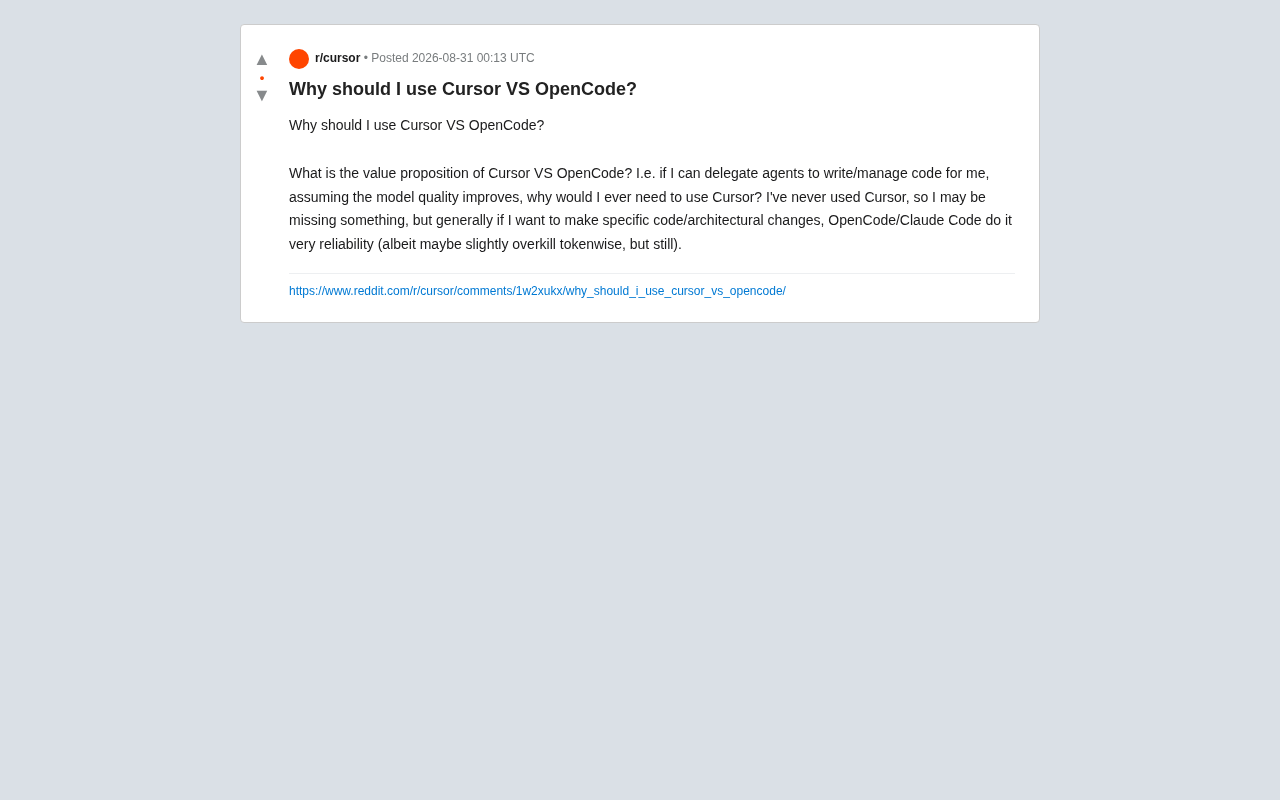
Recently, a developer on Reddit posed this pointed question: "If I can delegate code to an agent to write and manage, and assuming model quality keeps improving, why would I still need Cursor?" This developer said they'd never used Cursor, but found OpenCode and Claude Code very reliable for specific code or architectural changes — perhaps a bit wasteful on token consumption, but excellent overall.
Behind this question lies a paradigm divergence currently playing out in AI coding tools: the competition between IDE-first and Agent-first approaches.
The Fundamental Difference Between Cursor and OpenCode
Cursor: An AI-Enhanced Code Editor
At its core, Cursor is a deeply customized code editor built on VS Code, seamlessly embedding AI capabilities into the traditional coding workflow. Specifically, Cursor is forked from VS Code's open-source version (Code - OSS), inheriting VS Code's vast extension ecosystem, Language Server Protocol (LSP) support, and mature editor infrastructure. Unlike ordinary AI coding plugins, Cursor makes deep modifications at the editor kernel level, embedding the AI inference pipeline directly into the text buffer and rendering layer rather than interacting indirectly through extension APIs. This architecture-level integration is its core technical advantage over plugin-based solutions like GitHub Copilot.
Its core value propositions include:
-
Real-time context-aware completions: Tab completions and multi-line predictions as you type, with instant, low-latency interaction. Cursor's completion system uses specially optimized fast inference models (rather than directly using large models like GPT-4 or Claude), ensuring suggestions are returned within 100-300 milliseconds of each keystroke. It analyzes not just the syntactic context at the current cursor position, but also leverages recently edited files, project structure, and user editing patterns for predictions. Multi-line prediction goes even further, automatically generating complete function bodies after you write a function signature — powered by "Fill-in-the-Middle" (FIM) training techniques that teach the model to infer missing code based on both preceding and following context.
-
Visual diff review: All AI modifications are presented as clear diffs, allowing developers to accept or reject changes line by line. Diff (difference comparison) is a foundational tool for code review in software engineering, originating from the Unix
diffcommand and later evolving into a core feature in version control systems like Git. Cursor places AI-generated code changes into the same review workflow as human collaborators, where developers can see line-by-line annotations in green (additions) and red (deletions), selectively accepting partial modifications. The deeper significance of this design is that it transforms AI from a "black-box generator" into an "auditable collaborator," significantly reducing the risk of AI introducing subtle bugs or security vulnerabilities. -
Human-AI collaborative editing experience: You're always in the "driver's seat," with AI as your co-pilot helping with completions, refactoring, and code explanations.
In other words, Cursor's design philosophy is to keep humans in direct control of the code, with AI simply accelerating your existing coding habits.
OpenCode / Claude Code: Command-Line Agents
OpenCode, Claude Code, and similar tools take a different path — they are autonomous agents running in the terminal. Claude Code is Anthropic's official command-line AI coding tool that directly calls the Claude model series API, running in the terminal environment as an agentic loop — where the model repeatedly executes a cycle of "think → tool call → observe results → think again" until the task is complete. OpenCode is an open-source terminal AI coding assistant that supports multiple large language models. The core architecture of these tools typically includes: file system read/write tools, command execution sandboxes, code search indexes, and a task planning engine based on the ReAct (Reasoning + Acting) paradigm. ReAct is a framework proposed by Yao et al. in 2022, with the core idea of having large language models alternate between "reasoning" (generating chains of thought) and "acting" (calling external tools), adjusting their next strategy based on "observations" returned by the tools.
You provide a task description, and the agent autonomously reads the codebase, plans steps, edits multiple files, runs commands, and ultimately delivers a complete set of changes. The fundamental difference from traditional IDEs is that the interaction interface is natural language conversation rather than a graphical editor, and the granularity of code modification is "task" rather than "keystroke."
As that Reddit developer put it, these tools are very reliable when handling "specific code or architectural changes." Their value lies in:
- Task-level delegation: You describe the goal, not the process, and the agent completes it autonomously.
- Holistic cross-file operations: Ideal for complex tasks requiring modifications across multiple files. For example, migrating an API from REST architecture to GraphQL — REST (Representational State Transfer) uses fixed URL endpoints returning predefined data structures, while GraphQL is a query language open-sourced by Facebook in 2015 that allows clients to specify exactly which data fields they need. Such migrations involve defining schemas, creating resolvers, modifying client-side calling code, updating test cases, and other coordinated changes across multiple files — exactly the scenario where command-line agents excel.
- Editor-agnostic: Not tied to any specific IDE, integrable into any workflow.
Why Cursor and OpenCode Aren't an Either-Or Choice
A key insight from this discussion is that Cursor and OpenCode don't fully occupy the same competitive dimension — they serve different coding scenarios.
Use Case Determines Tool Choice
For exploratory, highly interactive coding work — like debugging complex logic, incrementally building a new feature, or wanting to understand code as you write it — Cursor's real-time collaborative experience is often more efficient. You can immediately see AI suggestions, quickly accept or modify them, and maintain continuity of thought.
For well-defined, fully delegatable tasks — like "add unit tests to this module" or "convert this API from REST to GraphQL" — agent-first tools can complete large amounts of work in one go, reducing manual effort.
Interestingly, Cursor itself has a built-in Agent mode (Composer), attempting to cover both scenarios simultaneously. Composer essentially integrates a Claude Code-like agent workflow inside the editor — users can describe tasks in natural language in the Composer panel, and the AI autonomously plans and modifies multiple files, while all changes are still presented as diffs in the editor's visual interface for developers to review one by one. This hybrid "editor shell + agent core" architecture represents the current convergence trend in AI coding tools. It's worth noting that JetBrains' Junie, Windsurf's (formerly Codeium) Cascade, and other competitors are taking similar approaches, indicating the industry is reaching a consensus: the optimal solution isn't choosing one over the other, but providing both "human-driven" and "agent-driven" modes within a unified interface.
The Trade-off Between Token Cost and Reliability
The original poster mentioned that OpenCode can be "a bit wasteful" on token consumption, and this is a real trade-off. In the billing structure of large language models, tokens are the basic pricing unit (roughly 1-1.5 tokens per English word, about 1-2 tokens per Chinese character). Taking Claude 3.5 Sonnet as an example, input tokens cost approximately $3 per million tokens, and output approximately $15.
To ensure reliability, autonomous agents often read large amounts of context and perform multi-round reasoning, leading to higher API call costs. When a command-line agent executes a complex task, it may need to read dozens of files as context (massive input tokens), perform multiple rounds of tool calls and reasoning (repeated input and output), and consuming tens of thousands or even hundreds of thousands of tokens per task is not uncommon, with costs potentially reaching several dollars. The root cause of this high consumption lies in the inherent characteristics of the ReAct paradigm — when the model makes an error in one step, the error can be amplified in subsequent steps (error compounding). To improve reliability, the agent needs more reasoning steps and context verification, essentially trading computational resources for accuracy.
Cursor's completion-based interaction is much more economical in many lightweight scenarios — Tab completions use lightweight models, with each inference typically involving only hundreds to thousands of tokens, costing orders of magnitude less. Cursor's subscription pricing (approximately $20/month) also helps users smooth out these cost fluctuations. This difference in cost structure is a factor that shouldn't be overlooked when making your selection.
Will Model Improvements Make AI Code Editors Obsolete?
The deeper assumption in the original post is: "assuming model quality keeps improving," does that mean agents will eventually replace editors entirely?
This is a question worth serious consideration. From a trend perspective, as model capabilities improve, more and more coding tasks can indeed be fully delegated. But even so, the need for human review, intervention, and guidance won't disappear, especially in cases involving:
- Critical business logic or security-sensitive code
- New team members who need to understand and learn the codebase
- Frequent direction changes during rapid prototype iteration
The visualization, controllability, and immediate feedback that editors provide are precisely what pure command-line agents struggle to fully replace. By contrast, command-line agent modifications typically require developers to manually review changes after the fact via git diff, with differences in both immediacy and granularity of review. Therefore, the more likely future isn't "agents replacing editors" but rather a continuous convergence of capabilities between the two — editors becoming more agent-like, and agents gaining better visual interfaces.
AI Coding Tool Selection Advice for Developers
All things considered, your choice depends on how you work:
- If you value direct control over code and prefer seeing changes as you write, Cursor's collaborative experience is worth trying.
- If your tasks have clear boundaries and you want to maximize delegation, agent tools like OpenCode / Claude Code are a better fit.
- If you want flexibility, you can absolutely use both — Cursor for fine-grained editing, agents for batch tasks.
For the developer who has never used Cursor, the answer might be: if OpenCode already meets all your needs, there's no compelling reason to switch. But giving Cursor's real-time completions and visual review a try might reveal the value of a different coding rhythm. No tool is inherently superior — what matters is whether it fits your way of thinking and your project's needs.
Key Takeaways
Related articles
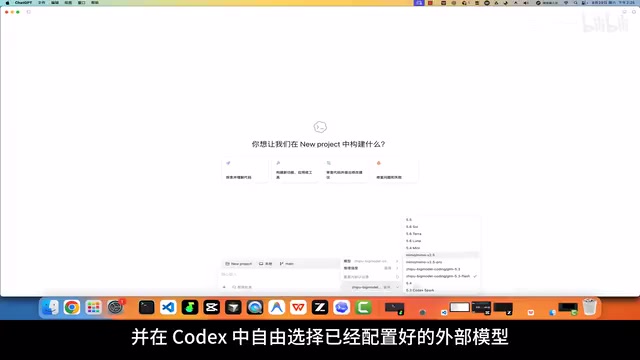
OpenCodex and CodexBar: Solving Two Key Pain Points — Model Switching and Quota Tracking in Codex
Discover OpenCodex and CodexBar — two tools that solve Codex's model switching and quota tracking pain points, enabling tool-model decoupling and centralized quota visibility.
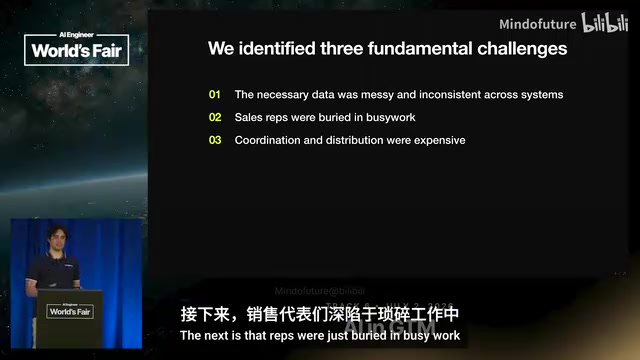
How Ramp Rebuilt Its GTM Orchestration System with AI Agents: From Intent to Automated Execution
Deep dive into how Ramp built an AI-driven GTM orchestration system from scratch — covering unified CDP, unstructured data, skill libraries, and MCP tooling for intent-to-execution automation.
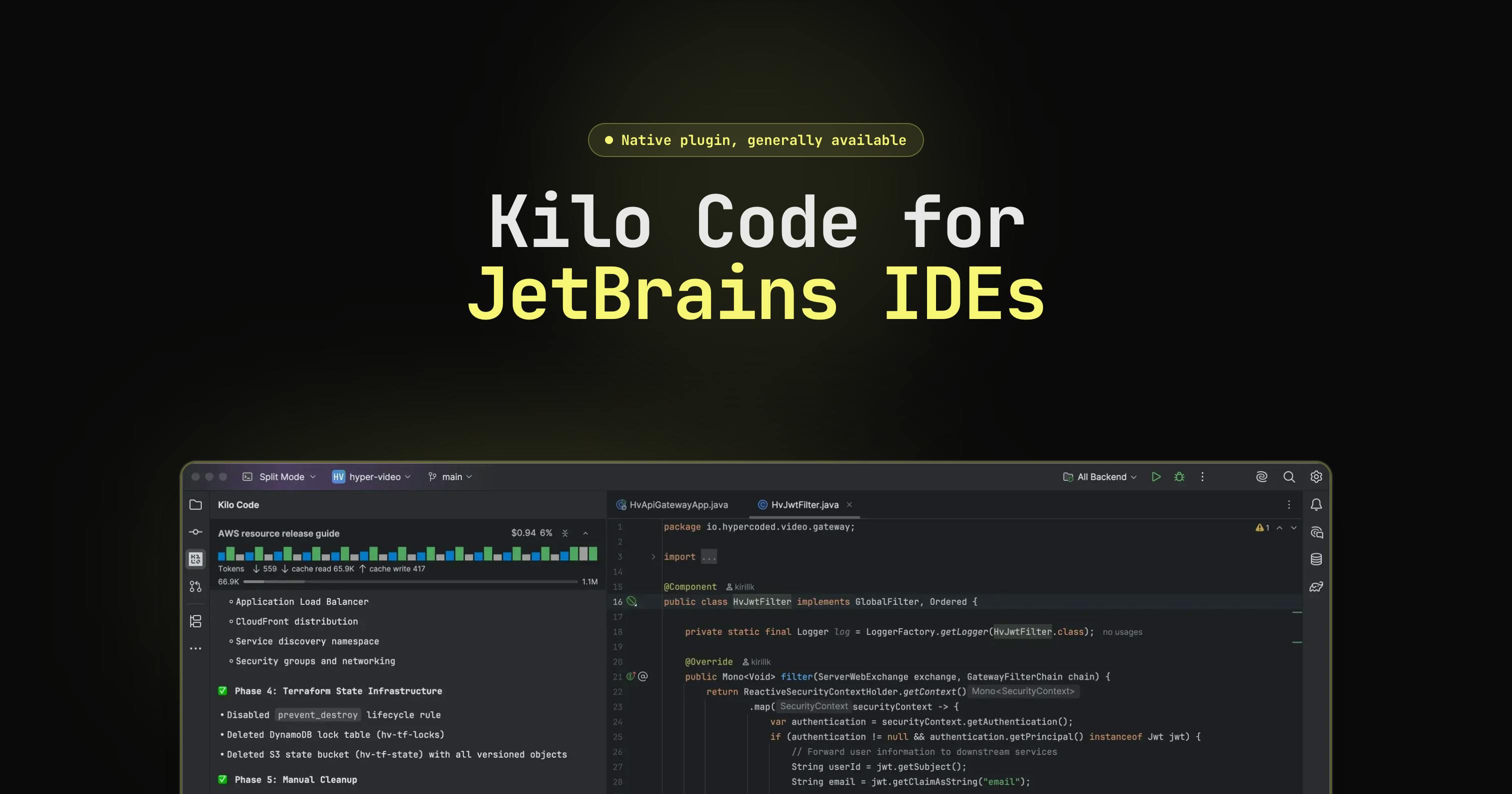
Kilo Code Lands on JetBrains: A Deep Dive into the Open-Source AI Coding Agent
Kilo Code for JetBrains is a fully native, open-source AI coding Agent supporting IntelliJ IDEA, PyCharm and more, featuring parallel Agents, 500+ models, and inline GitHub PRs.