Dana White on Ronda Rousey: The 15-Minute Conversation That Changed His Mind on Women in the UFC

How Ronda Rousey convinced Dana White in 15 minutes — and what it reveals about elite athletes' mindset.
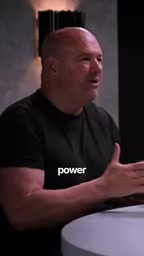
UFC President Dana White recalls resisting women's competition until Ronda Rousey walked up and asked for 15 minutes, winning him over with sheer presence and conviction. White ranks Rousey alongside McGregor and Khabib as rare "unicorns" who combine genuine fighting ability with the psychological power to publicly declare and pursue their goals — what he calls "manifesting." In 25 years, he says, only a handful of people have ever impressed him that way.
UFC President Dana White rarely admits he was wrong — but in one candid interview, he openly acknowledged that he never wanted to bring women into the UFC. What changed his mind was a single face-to-face conversation with Ronda Rousey. This brief yet striking account isn't just a behind-the-scenes industry story; it reflects a rare combination of mental and physical qualities that only the very best athletes possess.
The 15 Minutes That Changed Everything
As Dana White tells it, Ronda Rousey approached him at an event and got straight to the point: "Hey, I'm Ronda Rousey — can I get 15 minutes with you?" By the end of that conversation, White's reaction was "holy shit" — he suddenly realized he was ready to push for women's competition, and that Rousey was the one to make it happen.

What makes this moment worth examining is that the turning point didn't come from market data or business projections — it came from a direct, human collision between two people. White described Rousey walking in with the "whole bravado," carrying that chip on her shoulder. It was that overwhelming confidence and determination that convinced an industry gatekeeper who had previously been skeptical.
Before the UFC, Ronda Rousey was already an iconic figure in American combat sports. She was the first American woman to win an Olympic medal in judo (a bronze at the 2008 Beijing Games), before transitioning to MMA and putting together a jaw-dropping string of rapid finishes in Strikeforce — multiple fights ending in under 60 seconds. This background meant she wasn't walking into that negotiation empty-handed. She brought not just presence, but a legitimate record and genuine market appeal. The UFC officially announced the introduction of a women's bantamweight division in late 2012, with Rousey becoming its inaugural champion. Over the following years, she dominated the division and helped build the UFC's women's competition from nothing into a global audience.
Why Rousey Is a "Unicorn"
White was blunt: plenty of people want to tear Rousey down these days, but in his eyes, she's a "unicorn" — rare to the point of being one of a kind. He places her alongside Conor McGregor and Khabib Nurmagomedov as the true once-in-a-generation figures in this sport.
In his view, these athletes share two core qualities. The first is raw ability: "The number one thing in this business is, can you fight? How good are you?" The second is a psychological capacity — the ability to articulate in advance exactly what they're going to achieve, how they're going to do it, and how the whole thing will unfold. White calls this "manifesting."

Neither quality works without the other. Elite physical skill without mental fortitude rarely holds up on the biggest stage; bold declarations without real ability are just noise. The reason Rousey, McGregor, and Khabib are grouped together is precisely because they possess both of these rare qualities simultaneously.
"Manifesting" as a concept draws from positive psychology and self-actualization theory. The core idea is that vividly visualizing a goal and repeatedly articulating it sharpens the brain's sensitivity to relevant opportunities, thereby increasing the likelihood of actually achieving it. In sports psychology, this aligns closely with Goal-Setting Theory — research shows that athletes who publicly declare specific goals demonstrate higher levels of commitment and follow-through than those who keep goals internal. McGregor famously predicted fight outcomes and career trajectories in a series of interviews long before he was famous; Khabib was known for near-ritualistic pre-fight declarations. When White talks about "manifesting," he's not invoking mystical law-of-attraction thinking — he's describing something closer to a psychological mechanism where public commitment creates social pressure that's difficult to walk back, converting willpower into sustained action.
The Kind of Person You Meet Only a Few Times in 25 Years
White mentioned a detail that carries real weight: in 25 years in this business, the kind of meeting that truly left an impression has happened only a handful of times. That context alone speaks to just how rare Rousey's persuasiveness was in that room.

He offered what amounts to an aphorism as his conclusion: when you decide who you are, what you want to do, and what you want to achieve — and every single day you wake up and work toward that — you cannot fail. This ties everything together into one simple but powerful logic: a clear sense of self, combined with daily action, makes success very nearly inevitable.
What This Story Actually Tells Us
Stripped of the combat sports context, White's account offers a universal framework for personal achievement: skill is the entry ticket, mindset is the multiplier. Most people focus only on building technical ability, while overlooking the psychological discipline required to publicly declare a goal and pursue it with relentless daily action.
Rousey's story is also a reminder that defining moments often come from actively creating your own opportunity. She didn't wait to be discovered — she walked straight up to the decision-maker and asked for those 15 minutes. That assertiveness itself was part of her bravado.
One caveat worth noting: this article is based on a single video interview. White's account carries a strong personal-recollection quality, and for specific factual details, readers are encouraged to cross-reference additional public sources.
Related articles

NVIDIA's 30,000 Developers Use Cursor, Code Commit Volume Triples
Cursor engineer Chris Diaz breaks down five organizational gaps blocking enterprise AI coding scale—strategy, risk tiering, governance, metrics, and operating model. NVIDIA's 30,000 developers use Cursor daily, tripling code commits while defect rates stay flat. The key: rewrite the SDLC, not add tools.

Ponytail: Giving AI Coding Agents a Senior Engineer's Mindset
Ponytail is a free GitHub tool that injects a senior engineer's mindset into AI coding agents, making them ask whether code is even necessary first. According to TamilDeck, it can compress 200 lines of AI-generated code to 30, cutting token costs, with support for Cursor rules and Claude Code skill integration—though security review still requires human oversight.

Complete Guide to Connecting Cursor AI to the GitHub MCP Server
A step-by-step guide to connecting Cursor AI to the GitHub MCP server: create a personal access token, configure mcp.json, store the token in the ENV block, and verify with a PR query.