Data Transformation Explained: A Complete Guide from Raw Data to Actionable Analytical Value
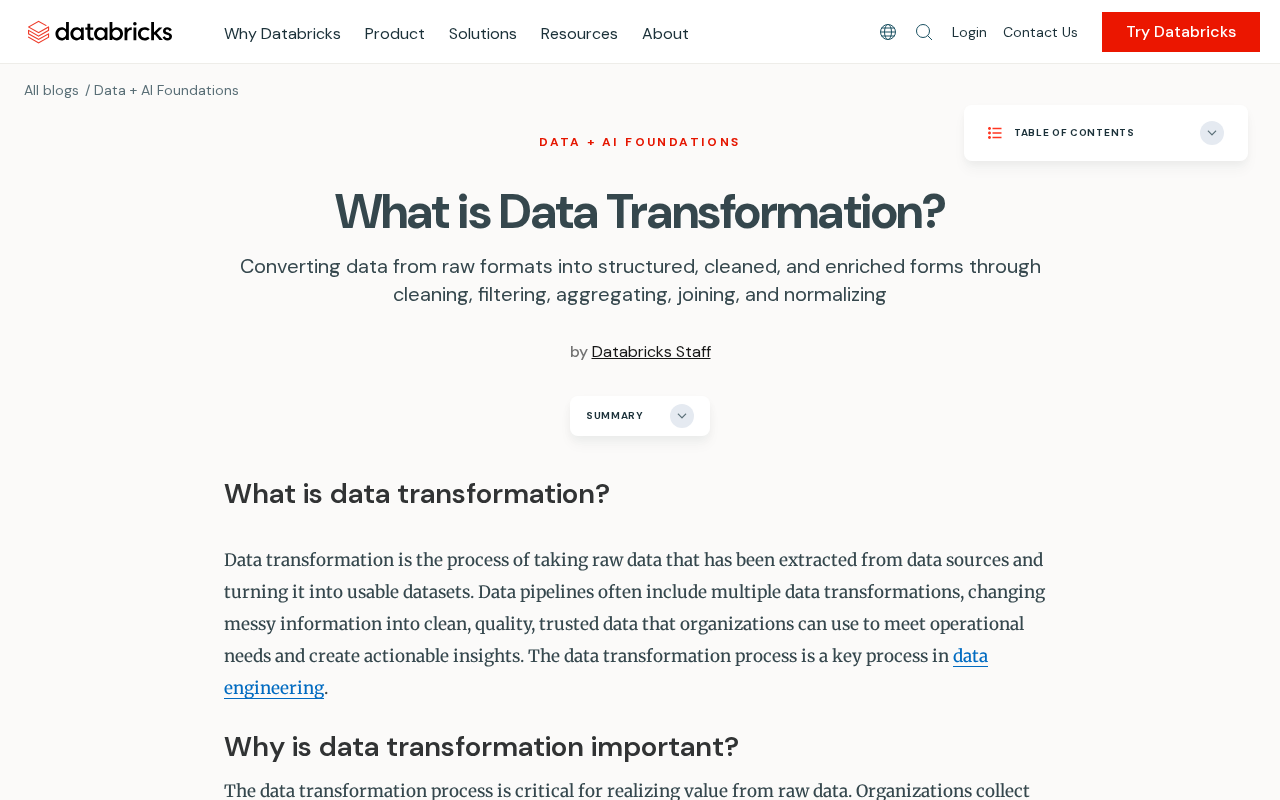
A complete guide to transforming raw data into high-quality, analysis-ready data assets.
This guide explains data transformation—the process of converting raw data into usable, high-quality data. It covers key operations like data cleaning, standardization, normalization, aggregation, and encoding, and compares the ETL and ELT paradigms. Whether you're building a data warehouse or training ML models, understanding data transformation is essential for any data-driven organization.
What Is Data Transformation?
Data Transformation is the process of converting raw data from one format, structure, or representation into another. In modern data engineering and data analytics workflows, this step is indispensable. The raw data that businesses accumulate during daily operations often suffers from messy formats, inconsistent structures, and uneven quality. The goal of data transformation is to refine this "unpolished" raw data into high-quality data suitable for analysis, modeling, or business decision-making.
Put simply, data transformation answers one core question: How do you turn chaotic raw data into something valuable and usable? Whether you're building a data warehouse, training a machine learning model, or generating business intelligence reports, virtually every data application scenario depends on data transformation as a foundational capability.
The Technical Evolution of Data Transformation
The development of data transformation technology is closely tied to the evolution of computing. Early data processing relied primarily on batch processing systems—during the IBM mainframe era, data transformation operations were typically performed through batch jobs written in languages like COBOL. With the advent of relational databases, SQL became the primary tool for data transformation. In the early 21st century, the rise of big data technologies like Hadoop MapReduce and Spark made it possible to process TB- or even PB-scale data through distributed computing frameworks. In recent years, the emergence of cloud-native data warehouses (e.g., Snowflake, founded in 2012) and the Modern Data Stack has driven the popularity of the ELT pattern, enabling data transformation to be executed directly within high-performance warehouses—greatly simplifying the complexity of data engineering.
Why Data Transformation Matters So Much
In the data-driven era, the value of data lies not in its volume, but in its usability and consistency. Data from different systems and channels typically uses different encoding methods, naming conventions, and data types. Without unified transformation, this data cannot be effectively integrated—let alone yield meaningful business insights.
The importance of data transformation is primarily reflected across three dimensions:
Ensuring Data Quality
Raw data is often riddled with missing values, duplicate records, outliers, and formatting errors. Through cleaning operations during data transformation, these issues can be effectively identified and resolved, significantly improving data accuracy and reliability. High-quality data is the fundamental prerequisite for trustworthy analytical conclusions.
Enabling Cross-System Data Integration
Organizations typically run multiple independent business systems—such as CRM, ERP, and marketing platforms—each maintaining its own distinctly structured data.
About CRM and ERP: CRM (Customer Relationship Management) is a software platform for managing a company's interactions with customers. Typical examples include Salesforce and HubSpot, which primarily record customer information, sales opportunities, and service requests. ERP (Enterprise Resource Planning) is a comprehensive management system that integrates core business processes including finance, supply chain, human resources, and manufacturing, with representative products like SAP and Oracle ERP. These two types of systems typically employ different data models and table structures: CRM focuses on customer-oriented relational data, while ERP emphasizes transaction and resource flow data. Therefore, integration requires data transformation to establish unified business entity mappings.
Data transformation breaks down data silos by standardizing fields, unifying data types, and aligning naming conventions, enabling cross-system data to be seamlessly integrated into a unified analytical environment.
Adapting to Downstream Analytics Requirements
Different analytics tools and models have different input format requirements. Data transformation can reorganize, aggregate, or derive new feature fields based on downstream application needs, allowing data to be "tailor-made" for specific analysis and modeling scenarios.
Common Types of Data Transformation
Data transformation encompasses a variety of specific operational techniques, each targeting particular data problems. Understanding these types helps you select the most appropriate processing strategy for real-world projects.
Data Cleaning: The Foundation of Quality Improvement
Data cleaning is the most fundamental and common transformation operation, including:
- Handling missing values: Addressing blank data through default value filling, mean imputation, or direct deletion
- Removing duplicate data: Identifying and merging or deleting redundant records
- Correcting format errors: Unifying case formatting and fixing spelling mistakes
- Handling outliers: Identifying and flagging or correcting anomalous data points
Cleaned data achieves a fundamental improvement in quality, laying a reliable foundation for all subsequent analytical steps.
Data Standardization and Normalization
Standardization and Normalization are primarily used to scale numerical data to a uniform range or distribution. This is particularly critical in machine learning modeling, as many algorithms (such as SVM, KNN, etc.) are highly sensitive to feature scales.
Feature Engineering in Machine Learning: In the machine learning domain, data transformation is a core component of Feature Engineering—the process of extracting, constructing, and selecting the features most useful for model prediction from raw data. Standardization and normalization eliminate scale differences between features, preventing features with larger numerical ranges from dominating model learning. For example, in a house price prediction model, the numerical ranges of house area (possibly 50–500 square meters) and house age (possibly 0–50 years) differ dramatically. Without scaling, the model would disproportionately focus on area while neglecting the influence of age. Min-Max normalization scales data to the [0,1] interval, while Z-score standardization transforms data to a distribution with a mean of 0 and standard deviation of 1—which is especially important in neural network training.
Scaling features of different magnitudes to a comparable scale effectively prevents certain features from dominating the model training process due to their larger numerical values.
Data Aggregation: From Detail to Big Picture
Aggregation operations convert fine-grained raw records into higher-level statistical information through grouping and summarization. For example, aggregating individual transaction records into daily, monthly, or quarterly sales totals and averages. Aggregation not only helps quickly generate visual reports but is also a powerful tool for discovering macro-level business trends.
Data Encoding and Format Conversion
Categorical data often requires encoding transformation for algorithmic processing:
- One-Hot Encoding: Converts categorical variables into multi-column binary representations
- Label Encoding: Maps categorical values to integers
Additionally, unifying date formats, converting currency units, and character encoding conversion (such as between UTF-8 and GBK) are also common operations in this category.
ETL vs. ELT: Two Mainstream Data Transformation Paradigms
In data engineering practice, data transformation is typically incorporated into a more complete data processing pipeline. The two dominant paradigms in the industry are ETL and ELT.
ETL: Transform Before Loading
ETL (Extract-Transform-Load) is the traditional data processing model. Its workflow is: first extract data from source systems, complete all transformation operations in an intermediate stage, and then load the processed data into the target data warehouse. This approach is well-suited for scenarios that demand high data quality and consistency, with relatively limited computing resources.
ELT: Load Before Transforming
ELT (Extract-Load-Transform) is a newer paradigm that gained popularity with the rise of cloud data warehouses (such as Snowflake, BigQuery, etc.). It first loads raw data directly into a powerful cloud-based warehouse, then leverages the warehouse's own computing capabilities to perform transformations internally.
Cloud Data Warehouse Technology Revolution: Cloud data warehouses represent a major paradigm shift in data infrastructure. Traditional on-premises data warehouses (such as Oracle, Teradata) required companies to purchase their own hardware and plan capacity, with high scaling costs and long lead times. Cloud data warehouses like Snowflake, Google BigQuery, and Amazon Redshift adopt a storage-compute separation architecture that enables elastic scaling: the storage layer uses inexpensive object storage (such as S3), while the compute layer can dynamically add or remove nodes based on query workload. This architecture is particularly well-suited for the ELT pattern—companies can first store all raw data in the cloud at low cost, then invoke powerful computing resources for transformation as needed, without worrying about on-premises resource bottlenecks. Snowflake's Virtual Warehouse concept allows multiple teams to simultaneously run independent transformation tasks without interfering with each other.
ELT fully leverages the elastic and scalable computing advantages of modern cloud platforms, making it especially suitable for handling massive datasets and scenarios requiring flexible iteration of transformation logic.
How to Choose?
Each paradigm has its pros and cons, and the choice depends on multiple factors: data volume, real-time requirements, budget constraints, and existing technical architecture. In practice, many teams also mix both paradigms based on the characteristics of different data sources.
Summary
Data transformation is the core bridge connecting raw data to data value. Through a series of operations including cleaning, standardization, aggregation, and encoding, it refines chaotic raw data into trustworthy, consistent, and usable high-quality data assets. Whether in a traditional ETL or modern ELT pipeline, data transformation always occupies the central position in data engineering.
For any organization looking to drive decisions through data, mastering the principles and practices of data transformation is a foundational step toward building reliable data capabilities. As data volumes continue to grow and AI applications become increasingly widespread, establishing efficient and reliable data transformation capabilities will become ever more critical.
Related articles
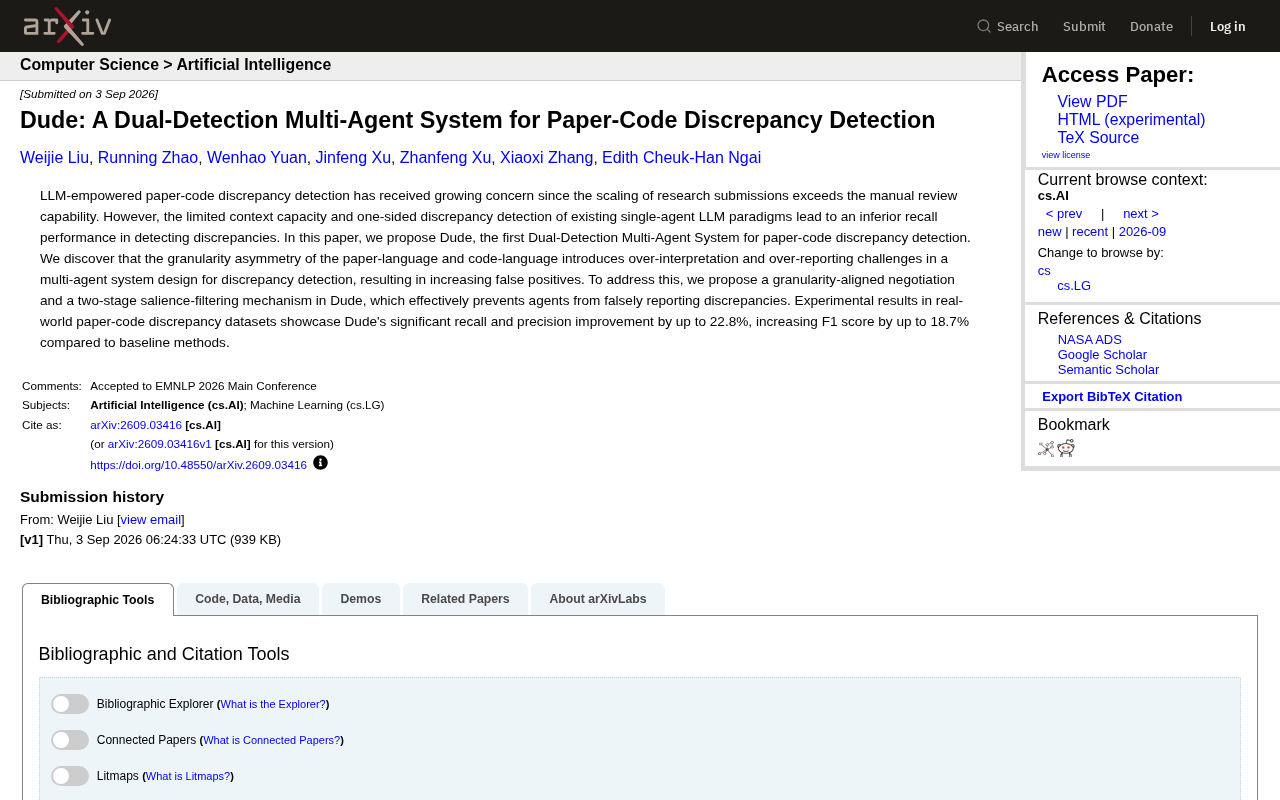
The Dude System: How Dual-Detection Multi-Agent AI Catches Inconsistencies Between Papers and Code
Dude is the first dual-detection multi-agent system for paper-code discrepancy detection, using granularity-aligned negotiation and two-stage salience filtering to boost recall and precision by up to 22.8%.
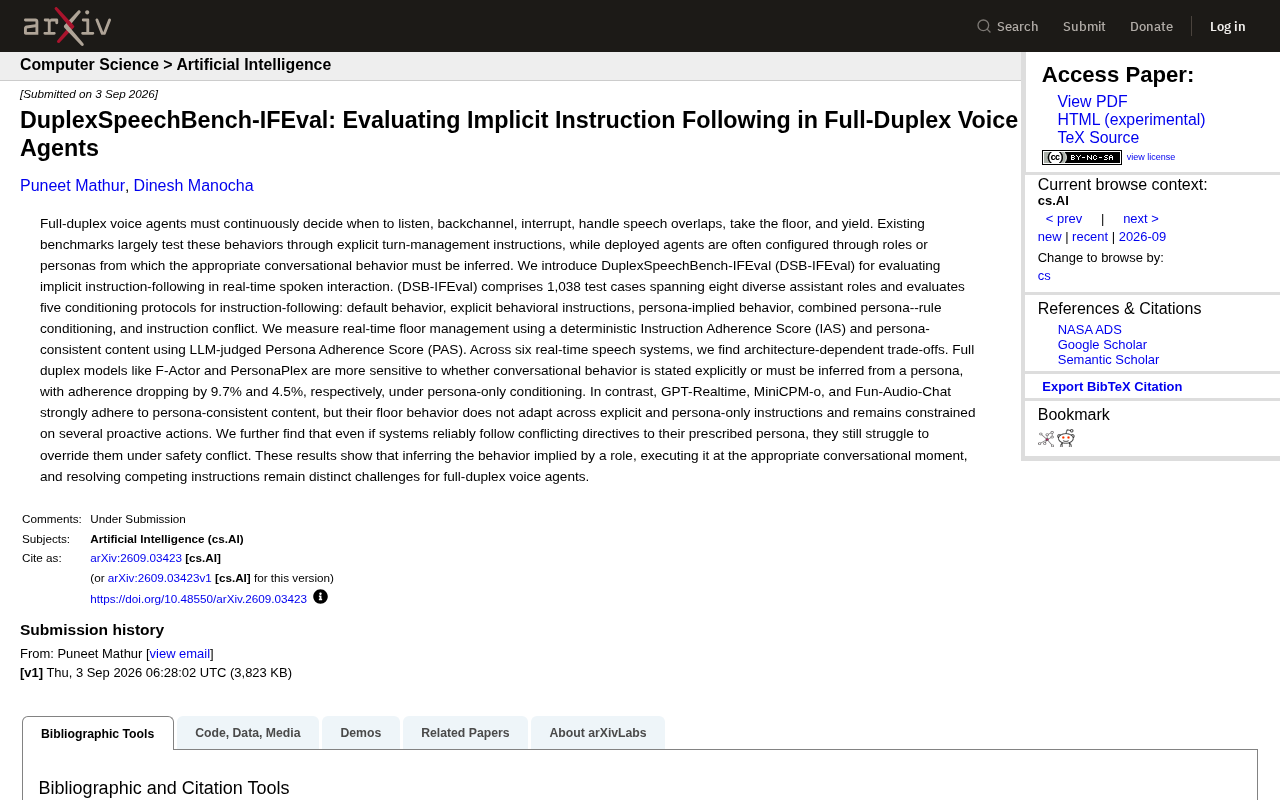
Implicit Instruction Following in Full-Duplex Voice Assistants: DSB-IFEval Benchmark Analysis
In-depth analysis of the DSB-IFEval benchmark reveals full-duplex voice assistants' capability gaps in implicit instruction following, persona reasoning, and conflict resolution. Covers comparative testing of six voice systems and examines behavioral vs. content trade-offs driven by architectural differences.

Personalizing AI Teaching Assistants with Prompt Engineering: A Deep Dive into the Six-Dimension Learner Profile Framework
Explore a prompt engineering framework for AI teaching assistants using six-dimension learner profiles and Bloom's Taxonomy to deliver 96 personalized teaching styles without model retraining.