Deep Dive into Hermes Agent: A Self-Evolving AI Framework That Uses Fewer Tokens Than OpenManus
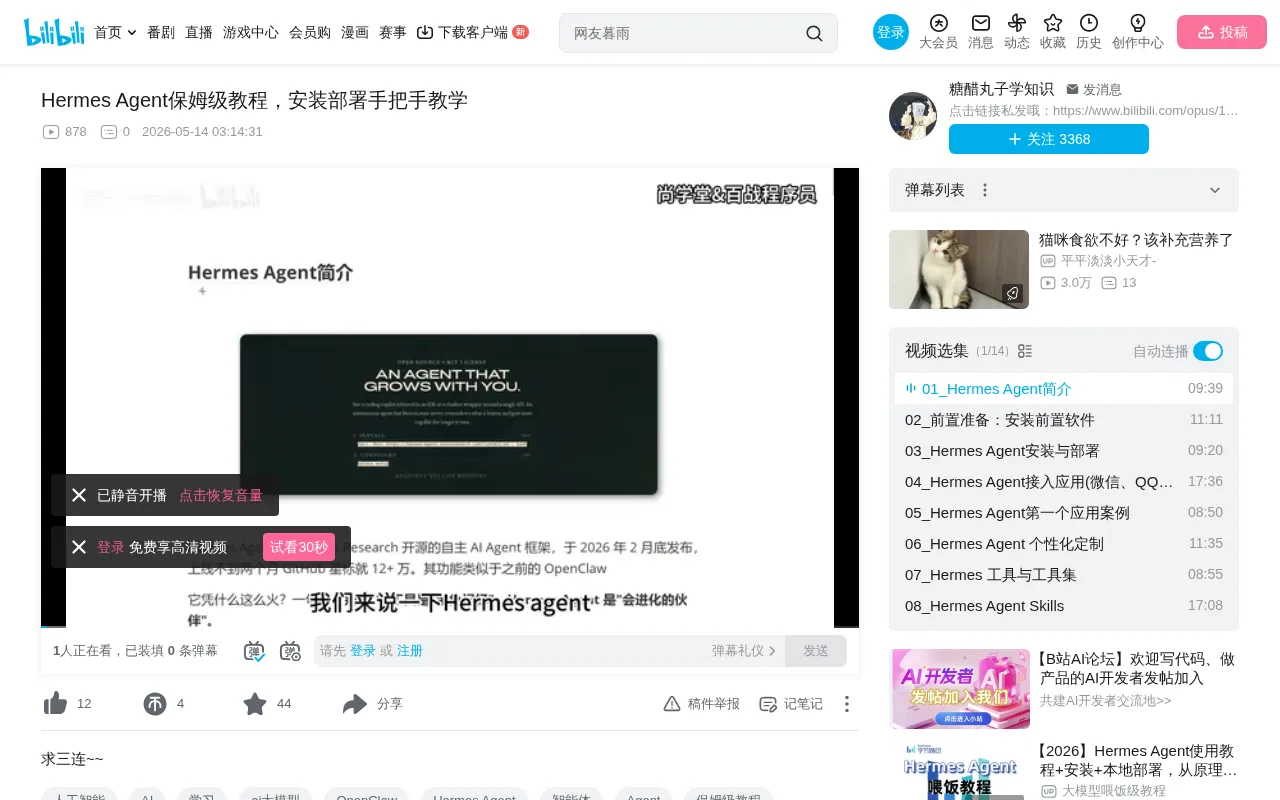
Hermes Agent is an open-source AI Agent framework with self-learning and persistent long-term memory.
Hermes Agent is an open-source AI Agent framework released in February 2026 that gained over 120K GitHub Stars in under two months. Compared to OpenManus, it achieves significant advantages in Token consumption and long-term memory. Its core innovation is a built-in self-learning loop that automatically generates and optimizes skills, persists user preferences, and supports cross-session, cross-platform deep understanding—representing a paradigm shift from disposable tools to continuously evolving AI partners.
What is Hermes Agent?
Hermes Agent is an open-source autonomous AI Agent framework released in late February 2026. In less than two months after launch, it amassed over 120,000 Stars on GitHub—a remarkable growth rate. Its functionality is similar to the previously viral OpenManus (also known as "the Crayfish"), but it surpasses its predecessor in key dimensions such as Token consumption and long-term memory.
To understand Hermes Agent's value, you first need to grasp the concept of AI Agents. AI Agents represent one of the most central development directions in artificial intelligence over the past two years. Unlike traditional Large Language Models (LLMs), AI Agents can not only generate text responses but also perceive their environment, formulate plans, invoke tools, and execute actions. Their technical architecture typically comprises four core components: a Planning module, a Memory module, a Tool Use module, and an Action module. Since 2024, AI Agent frameworks have gone through multiple iterations—from AutoGPT to MetaGPT to OpenManus—gradually evolving from proof-of-concept to practical usability. Hermes Agent is the latest representative born from this technological wave.
Put simply, the AI tools we use daily—like Doubao or DeepSeekAd—are essentially "idea generators." They can help you make plans and answer questions, but they can't actually perform operations. Hermes Agent is different: it can actually execute tasks—organizing documents, creating files, sending and receiving emails, scraping information from browsers, and more. It's an AI Agent that truly gets things done.
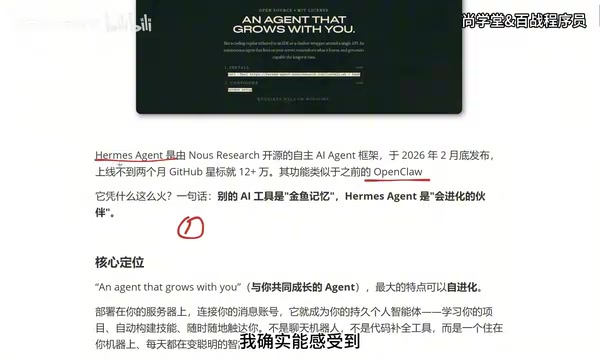
Hermes Agent vs OpenManus: Two Core Advantages Compared
Advantage 1: Significantly Lower Token Consumption
There's a colorful analogy circulating online: "Dude, you burned through 10,000 Tokens just to check the weather—are you a crayfish or a gold vault?" While this is tongue-in-cheek, it genuinely reflects OpenManus's pain point regarding Token consumption.
It's worth explaining why Token consumption matters so much. Tokens are the basic units that large language models use to process text—a single Chinese character typically corresponds to 1-2 Tokens, while an English word corresponds to roughly 1-1.5 Tokens. Every time you call a large model's API, the service provider charges based on the total number of input and output Tokens. Taking OpenAI's GPT-4o as an example, the price per million input Tokens is approximately $2.5-5. When AI Agents execute complex tasks, they often require multiple rounds of reasoning, tool invocations, and context passing, causing Token consumption to balloon dramatically—a seemingly simple task might involve tens or even hundreds of thousands of Tokens. Therefore, optimizing Token efficiency directly impacts an AI Agent's practicality and commercial viability.
From actual usage experience, Hermes Agent consumes noticeably fewer Tokens than OpenManus when completing equivalent tasks. For users who frequently invoke AI Agents, this translates to lower API calling costs and higher execution efficiency. Token optimization isn't just a technical improvement—it directly determines economic feasibility in everyday use.
Advantage 2: Persistent Long-Term Memory and Self-Evolution Capability
OpenManus has an obvious shortcoming: once you close the dialog box or restart your computer, it becomes a completely "fresh" tool upon reopening—all previous interaction memory is lost. It's like having a colleague who needs to get to know you from scratch every single day—the inefficiency is obvious.
The root cause lies in the inherent technical limitations of large language models. LLMs have a Context Window limitation—there's an upper bound on the number of Tokens that can be processed in a single conversation (e.g., 128K Tokens). Once the conversation ends or exceeds this window, previous information is lost. Achieving persistent long-term memory typically requires vector databases (such as ChromaDB or Pinecone) and Retrieval-Augmented Generation (RAG) technology: the system converts historical interaction content into vector embeddings stored in a database, and when a new conversation begins, it retrieves relevant memory fragments via semantic search and injects them into the context. More advanced approaches also implement hierarchical memory management, distinguishing between short-term working memory, long-term factual memory, and user preference memory—achieving a tiered storage and retrieval mechanism similar to the human memory system.
Hermes Agent is completely different—it possesses persistent long-term memory capability. More critically, it can self-evolve: as usage time increases, it progressively learns your preferences, accumulates richer memories, develops more skills, and becomes increasingly intuitive to use.
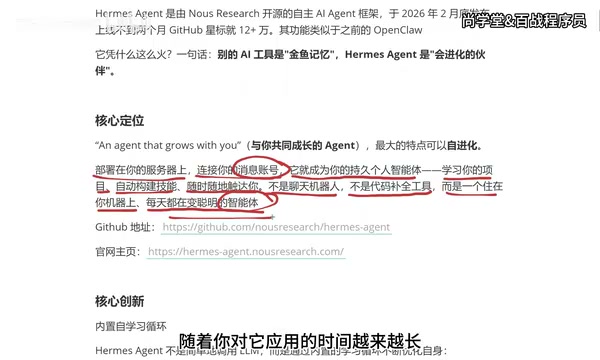
Core Innovation: Built-in Self-Learning Loop Mechanism Explained
Hermes Agent's most core innovation is its built-in self-learning loop mechanism. Rather than simply calling a large model, it continuously optimizes itself through a built-in learning loop.
The Self-Learning Loop is an architectural design that enables an AI Agent to continuously accumulate and refine capabilities during operation. Its core concept draws from Experience Replay and Meta-Learning in reinforcement learning. Specifically, after completing each task, the Agent performs self-reflection, evaluating successes and failures during execution, abstracting effective operation sequences into reusable Skill Templates, and storing them in a skill library. The next time it encounters a similar task, the Agent prioritizes retrieving matching skills from the library rather than reasoning from scratch. This mechanism shares lineage with the skill library concept proposed in Voyager (the Minecraft AI Agent), but Hermes Agent extends it to general-purpose task scenarios.
This mechanism manifests in four key aspects:
1. Automatic Skill Generation from Interactions
During interactions with users, Hermes Agent automatically identifies and generates new skills. You don't need to manually configure or teach it—it autonomously learns and consolidates capabilities while completing tasks.
2. Continuous Iterative Optimization of Existing Skills
Generated skills aren't set in stone. As usage frequency increases and scenarios diversify, Hermes Agent continuously iterates and optimizes these skills, making them increasingly precise and efficient.
3. Automatic Persistence of Knowledge and User Preferences
Based on your personal usage habits, it gradually builds a user profile, remembering your preferences and work patterns to deliver truly personalized service.
4. Cross-Session, Cross-Platform Deep Understanding
You can connect with Hermes Agent through multiple messaging platforms—WeChat, QQ, Feishu (Lark), and more. Regardless of which channel you interact through, it continuously accumulates understanding of you, building a complete user cognition across sessions and platforms.
In terms of technical implementation, multi-platform integration typically uses open-source protocol bridging tools like OneBot or ComWeChatBot to uniformly convert message formats from different platforms into a standardized format the Agent can process. The key challenge in this architecture is cross-platform identity unification—the same user might send instructions through different platforms, and the Agent needs to associate these scattered interactions with a single user profile. Hermes Agent solves this through unified user ID mapping and cross-platform memory fusion mechanisms, ensuring that regardless of which channel a user initiates interaction from, the Agent can access the complete historical memory and preference data.
Practical Demo: Completing a Multi-Step Complex Task with a Single Instruction
To intuitively demonstrate Hermes Agent's real capabilities, here's an actual case of interacting with it via QQ.
The task instruction was:
Search online for the most popular Agents recently, summarize them into a document with links to official websites, important blogs, and GitHub repositories, then generate a tech-styled static webpage to display it, and run it locally when finished.
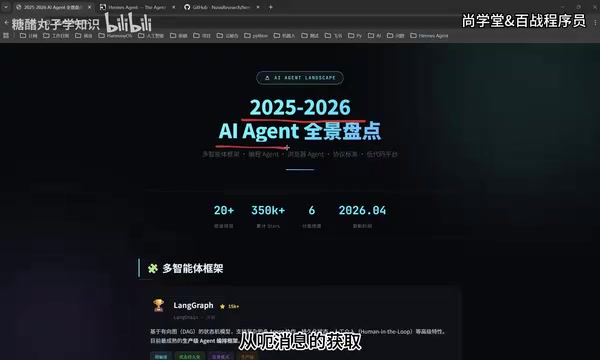
Note that this is a multi-step complex task encompassing information retrieval → document organization → web development → local deployment. Hermes Agent completed the entire process autonomously, with no steps requiring rework or regeneration. This ability to autonomously complete multi-step tasks is precisely what distinguishes AI Agents from traditional chatbots—it needs not only to understand user intent but also to independently decompose tasks, plan execution order, invoke different tools, and handle intermediate results.
The final generated webpage listed popular AI Agent projects from recent years—including Cursor, Claude Code, OpenManus, and others—each with official websites, GitHub addresses, and detailed descriptions. The data accuracy was remarkably high. The webpage ran locally via localhost:8080 with excellent results.
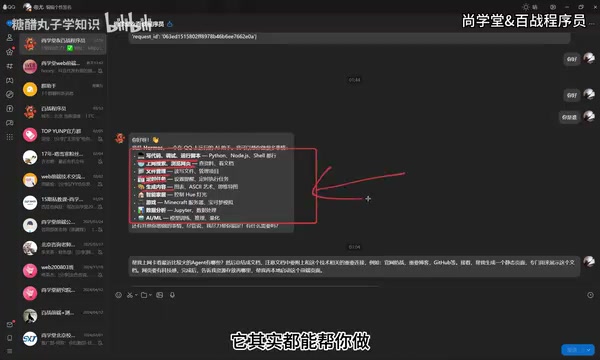
Evidence of Automatic Skill Generation
Even more noteworthy: after this task was completed, Hermes Agent automatically created new Skills while simultaneously updating user information. This is the real-world manifestation of the "automatic skill generation from interactions" mentioned earlier—the user never explicitly asked it to learn anything; it autonomously completed skill extraction and storage during the interaction process.
This means the next time you make a similar request, it will do it faster and better. This is the true value of a self-evolving AI Agent.
Deployment Approach and Product Positioning
Hermes Agent is deployed on your own server, connected to your messaging accounts (QQ, WeChat, Feishu, etc.), becoming a persistent personal intelligent agent.
The local deployment design choice carries significant data privacy implications. Unlike SaaS-model AI services, local deployment means all interaction data, user preferences, generated skills, and documents are stored on the user's own infrastructure and never uploaded to third-party clouds. This is especially important for enterprise users—tasks involving trade secrets, customer data, or internal processes can be safely delegated to the Agent without worrying about data leakage risks. Additionally, local deployment means users can freely choose their underlying large model (such as connecting to locally-running open-source models like Llama or Qwen), further reducing dependency on external APIs and associated costs.
The official positioning is very clear:
- It is not a chatbot
- It is not a code completion tool
- It is an intelligent agent that lives on your machine and gets smarter every day
It can learn your projects, automatically build skills, and serve you anytime, anywhere. In the official team's words, it's "an Agent that grows with you."
Conclusion: The Paradigm Shift from Tool to Partner in AI Agents
The emergence of Hermes Agent represents an important direction in the AI Agent field: the transition from "disposable tool" to "continuously evolving partner." Compared to OpenManus, it achieves significant improvements in two key dimensions—Token efficiency and long-term memory—while its built-in self-learning loop mechanism grants it a unique competitive edge.
From a broader perspective, this trend reflects AI Agent technology moving from "stateless tool invocation" toward "stateful continuous collaboration." Early AI Agents treated each interaction as independent, lacking long-term understanding of users and tasks. The new generation of frameworks represented by Hermes Agent—through memory persistence, skill accumulation, and self-optimization—is constructing an entirely new model of human-machine collaboration. The Agent is no longer a use-and-discard tool but a digital partner that accumulates value over time.
For users who want an AI assistant that truly gets things done and improves with use, Hermes Agent is undoubtedly worth exploring in depth. The growth rate to 120,000 Stars on GitHub says it all—this isn't a simple bandwagon project, but an important open-source framework that's redefining the AI Agent interaction paradigm.
Related articles
Deep Dive into AI Agent Skill Design: …
Deep Dive into AI Agent Skill Design: Engineering Practices from Anthropic and Perplexity
A deep dive into Skill design philosophy from Anthropic's Claude Code team and Perplexity's Agent team, covering the Tax Test, Gotchas Flywheel, progressive disclosure, and Eval-First practices for building high-quality AI Agent skill systems.
Deep Dive into OpenAI's Official GPT-5…
Deep Dive into OpenAI's Official GPT-5.6 Prompting Guide: The Shift from Manual to Automatic
A deep dive into OpenAI's official GPT-5.6 Sol prompting guide: conciseness-first, outcome-oriented design, autonomy boundaries, tool routing, and reasoning intensity tuning.
 Deep Dives
Deep Dive into How OpenClaw (Open-Source Crayfish) AI Agent Works
Deep analysis of OpenClaw AI Agent internals: System Prompt, tool calling, SubAgents, Skill system, memory, and Context Engineering explained.