Deep Dive into Vercel AI SDK Svelte 5.0.93 Release Update
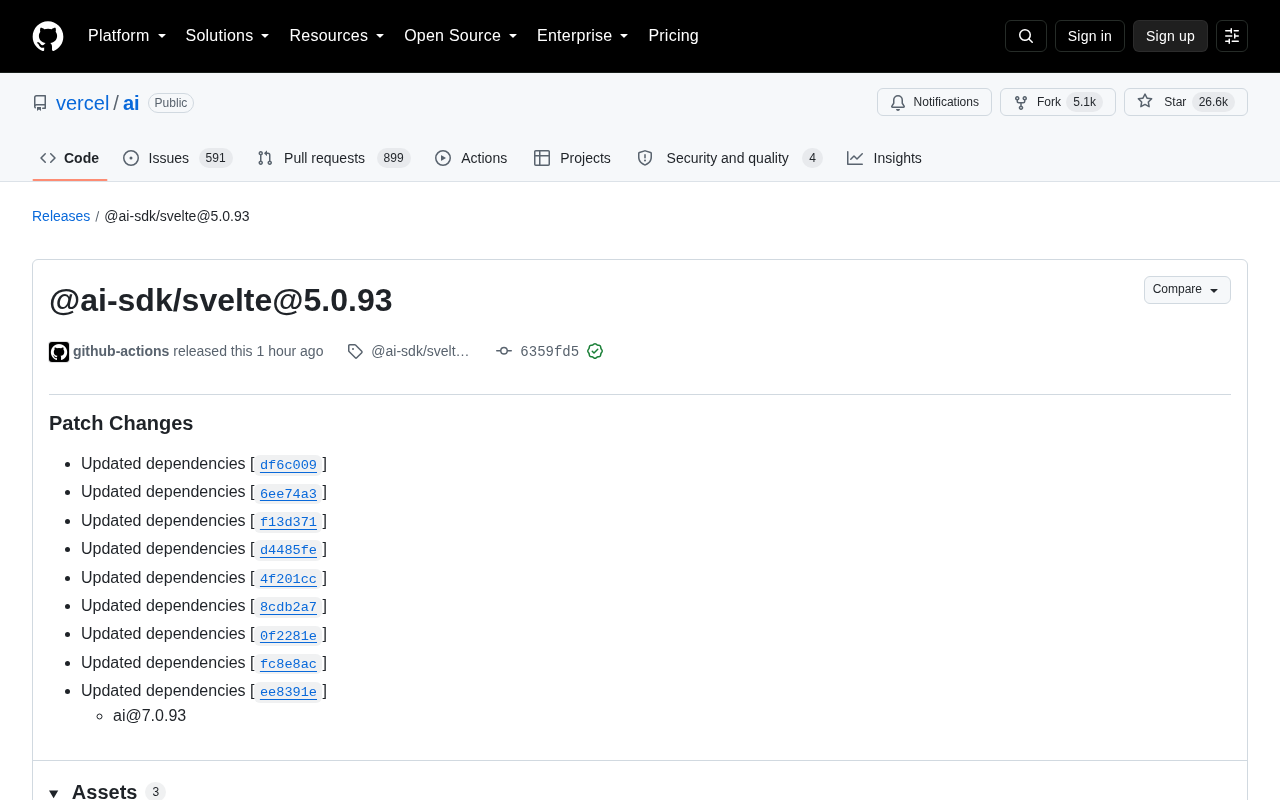
Analyzing the Vercel AI SDK Svelte 5.0.93 patch update and its ecosystem implications.
This article provides a deep dive into the @ai-sdk/svelte 5.0.93 patch release, examining its dependency synchronization with the core AI SDK, the multi-framework adaptation strategy including Svelte 5 Runes integration, automated CI/CD release pipelines with GPG signature verification, and practical best practices for developers managing high-frequency SDK updates in production environments.
The Continuous Evolution of the AI SDK Ecosystem
Vercel's AI SDK is a core piece of infrastructure for frontend and full-stack developers building AI applications today. Designed specifically for JavaScript/TypeScript developers, it abstracts away the complexity of interacting with large language models (LLMs), providing a unified API interface for connecting with multiple AI model providers including OpenAI, Anthropic, Google Gemini, Mistral, and more. Its core value lies in packaging AI interaction patterns like streaming text generation, structured output, and tool calling (function calling) into ready-to-use, frontend-friendly interfaces — enabling developers to rapidly build chatbots, AI writing assistants, intelligent search features, and more without needing to understand the nuances of each model's API.
As an open-source project, the AI SDK has accumulated over 26,600 Stars and 5.1k Forks on GitHub, demonstrating strong community momentum. Recently, @ai-sdk/svelte released version 5.0.93 — a patch update that reflects the ongoing refinement of the broader AI SDK ecosystem in terms of framework adaptation and stability.
This article takes a deep look at the update's contents, examines the AI SDK's support strategy for the Svelte framework, and explores what frequent minor version iterations mean for developers in practice.
Breaking Down the Version Update
Core Content: Dependency Synchronization
According to the GitHub Release page, @ai-sdk/svelte@5.0.93 was automatically published on September 4th via GitHub Actions and verified through a verified signature (GPG key ID: B5690EEEBB952194), ensuring the release source is trustworthy. GPG (GNU Privacy Guard) signature verification is a critical component of software supply chain security — when GitHub Actions automatically publishes a package, it digitally signs the release content using a GPG key associated with GitHub. Developers can use the public GPG key ID to verify that the release genuinely came from the official CI pipeline and hasn't been maliciously tampered with or published under a false identity. This is especially important given the increasing frequency of software supply chain attacks (such as the 2024 xz-utils backdoor incident), as it ensures a complete chain of trust from source code to npm package.
This update is classified as Patch Changes, with the core content being the synchronization of multiple upstream dependency updates involving commits df6c009, 6ee74a3, f13d371, d4485fe, 4f201cc, 8cdb2a7, 0f2281e, fc8e8ac, and ee8391e — nine dependency updates in total — along with a synchronized upgrade of the core package ai@7.0.93.
The Practical Value of Patch Updates
Patch versions typically don't introduce breaking changes and are primarily used for bug fixes, performance optimizations, or syncing underlying dependencies. For production projects, these updates are often the safest and most important to keep up with — they ensure version consistency between the framework adaptation layer and the core SDK, preventing compatibility issues caused by version mismatches.
Interestingly, the version number of @ai-sdk/svelte (5.0.93) shares the same trailing number as the core ai package version (7.0.93), reflecting the unified version release strategy adopted by the Vercel team. Behind this is Changesets — a widely-used version management and publishing tool in Monorepo architectures. In a large-scale project like AI SDK that encompasses a core package (ai), framework adaptation packages (@ai-sdk/svelte, @ai-sdk/vue, etc.), and model provider packages (@ai-sdk/openai, @ai-sdk/anthropic, etc.), Changesets can automatically track dependency relationships between packages. When the core package changes, it automatically cascades version number updates to all downstream dependent packages and generates corresponding changelogs — which explains why a single underlying change can trigger synchronized releases across multiple packages.
AI SDK's Svelte Framework Adaptation Strategy
The Strategic Vision of Multi-Framework Support
Although Vercel is best known for Next.js, the AI SDK is not limited to the React ecosystem. The existence of @ai-sdk/svelte embodies a "framework-agnostic" strategy. Beyond Svelte, the AI SDK also provides adaptation packages for Vue, Angular, and other mainstream frameworks.
For Svelte and SvelteKit developers, this means access to an AI integration experience on par with React developers — including core capabilities like streaming responses, chat state management, and tool calling — without having to wrap low-level API call logic themselves. Among these, streaming response is the core user experience feature of modern AI applications — after a user sends a question, the AI's answer appears on screen word by word, rather than waiting for the complete response to display all at once. Technically, this is typically implemented using Server-Sent Events (SSE) or the ReadableStream API. The AI SDK encapsulates complex underlying logic such as stream parsing, token concatenation, and error recovery, adapting it into reactive data structures for each framework. In Svelte, streaming data is converted into observable reactive state, allowing the UI to automatically update as new tokens arrive — developers only need to focus on rendering logic.
Deep Integration with Svelte 5's Reactivity System
With Svelte 5 introducing the Runes reactivity system, the framework's state management paradigm has undergone significant changes. Svelte 5 was officially released in 2024, and Runes represents the biggest paradigm shift since Svelte's inception. Traditional Svelte (3/4) used compiler magic to automatically convert plain let declarations into reactive variables, while Svelte 5 introduces explicit reactive primitives (Runes) such as $state, $derived, and $effect. This change makes reactive logic more predictable and composable, but it also means the AI SDK's Svelte adaptation layer needs to redesign its state management approach — for example, real-time updates to chat message lists, character-by-character rendering of streaming responses, and loading state transitions all need deep integration with the new Runes API, rather than relying on the old store subscription pattern.
The continuous iteration of the @ai-sdk/svelte 5.x series is precisely aimed at better integrating AI capabilities into Svelte 5's reactive model, allowing developers to handle asynchronous data flows in AI interactions in an idiomatic Svelte way.
Engineering Practices Behind High-Frequency Iteration
Advantages of Automated Release Pipelines
This version was automatically published by github-actions, reflecting the mature CI/CD automation pipeline adopted by Vercel's AI SDK. The AI SDK's automated releases follow Semantic Versioning (SemVer) conventions: the major version number indicates incompatible API changes, the minor version number indicates backward-compatible feature additions, and the patch version number indicates backward-compatible bug fixes. The typical workflow is: developers submit code with changeset files describing the level of change → after PR merge, version number calculation is automatically triggered → automated build, test, and publish to npm → automatic generation of GitHub Release and changelog. This pipeline eliminates the operational risks of manual releases, making high-frequency patch releases like 5.0.93 possible without increasing maintenance burden.
For an SDK with millions of downloads, this high-frequency, small-step release cadence (as opposed to accumulating large batches of changes in major versions) significantly reduces upgrade risk and allows community feedback to be validated and addressed more quickly.
Best Practices for Developers
When dealing with frequently updated dependencies like the AI SDK, here are some recommendations:
- Lock version ranges: Use appropriate version constraints in
package.jsonto avoid unexpected issues from automatic upgrades. Consider using~(tilde) to only allow patch updates, or use lockfiles (such aspnpm-lock.yamlorpackage-lock.json) to pin exact versions. In CI environments, use--frozen-lockfileto ensure consistency. - Monitor changeset logs: Even for patch versions, quickly scan the update contents to determine whether the changes affect feature modules you're using.
- Keep core packages in sync: Ensure
@ai-sdk/svelteand theaicore package versions match to avoid compatibility issues from mixing different versions. You can use tools likenpm outdatedorpnpm update --interactiveto batch check and update related dependencies.
Conclusion
While @ai-sdk/svelte@5.0.93 is just a patch update, it's a microcosm of the healthy functioning of the Vercel AI SDK ecosystem. Frequent and stable iterations, broad multi-framework support, and automated engineering processes together form the core competitive advantages that continue to attract developers to this open-source project.
For teams currently building or planning to build AI applications with Svelte, keeping up with these updates is a wise choice for maintaining project stability and gaining access to the latest capabilities.
Related articles
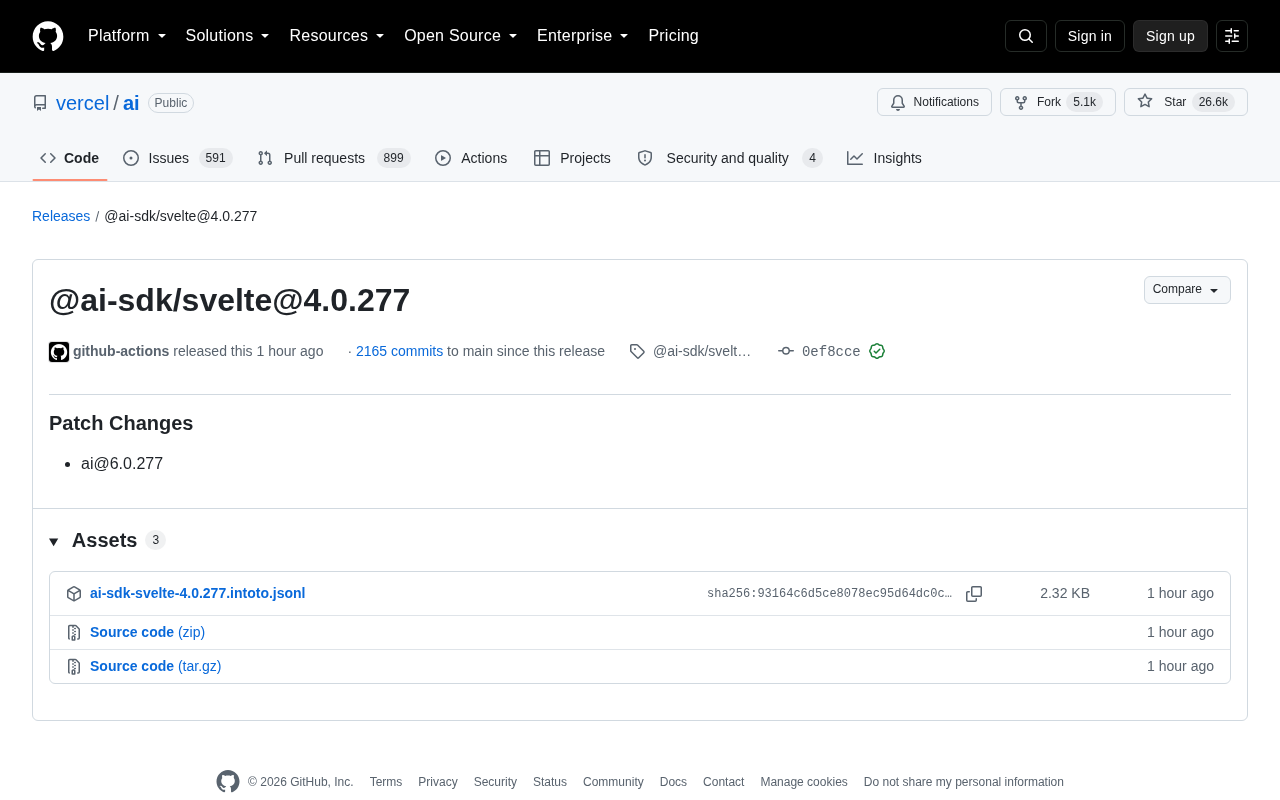
Vercel AI SDK Svelte 4.0.277 Release Update Breakdown
In-depth breakdown of Vercel AI SDK Svelte 4.0.277 patch release core changes, including dependency sync, framework adaptation mechanisms, and upgrade advice.
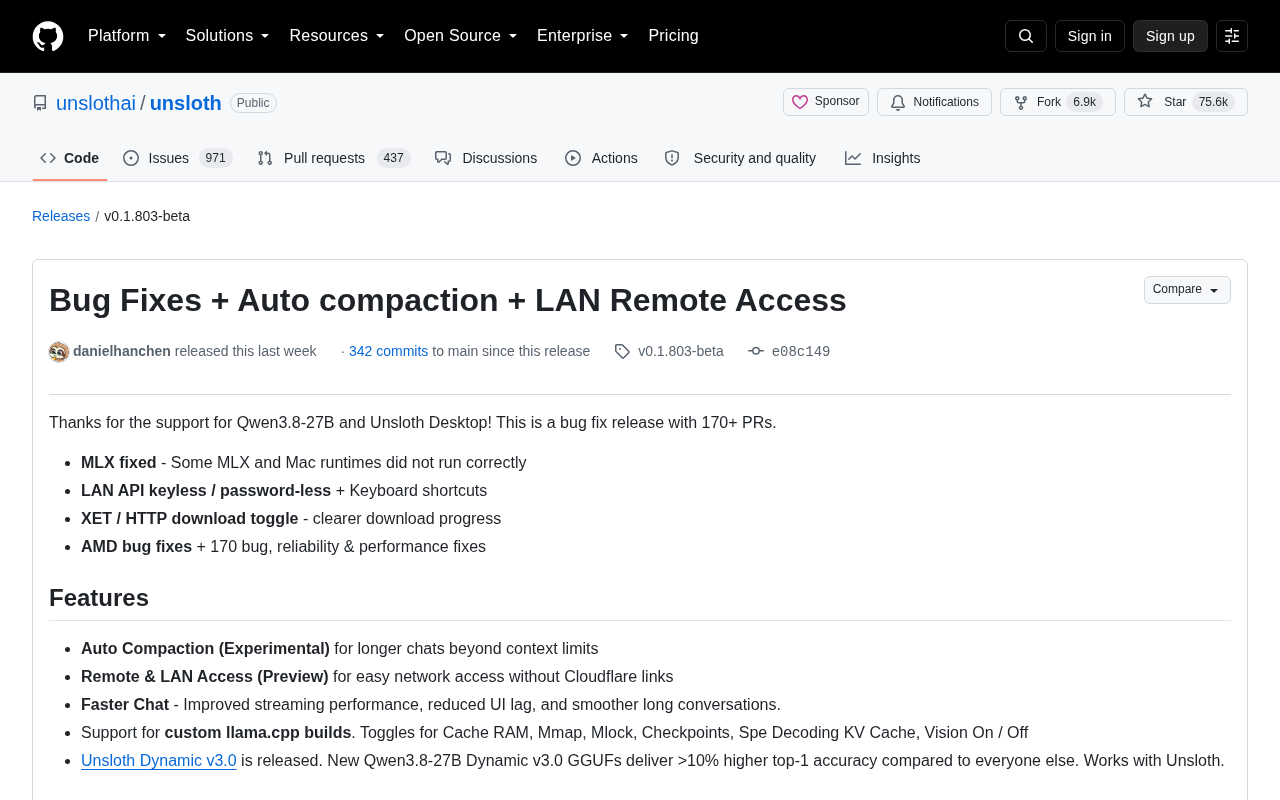
Unsloth v0.1.803 Update: Auto Context Compaction and LAN Remote Access Explained
Unsloth v0.1.803-beta merges 170+ PRs, introducing auto context compaction, native LAN remote access, and Dynamic v3.0 quantization to enhance local LLM deployment.
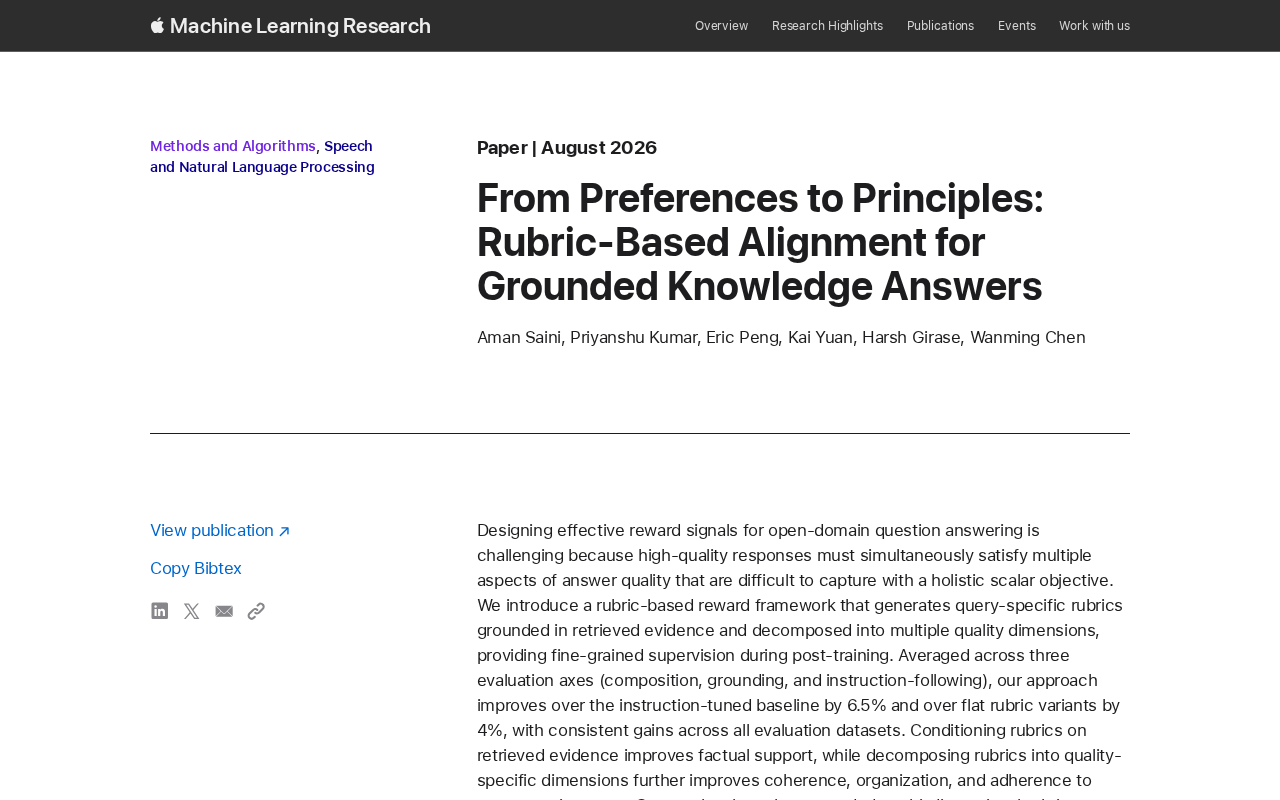
Rubric-Based Alignment for Knowledge QA: A Paradigm Shift from Preferences to Principles
Explore rubric-based alignment for LLMs: a new approach using fine-grained rewards across composition, grounding, and instruction-following to transform implicit preferences into explicit principles.