DeepSeek's 100-Billion-Yuan Funding Lands: Key Takeaways from AI Daily Issue 14
DeepSeek's 100B yuan funding lands, MiniMax open-sources model, ARC shutdown and PHP vulnerability need immediate action
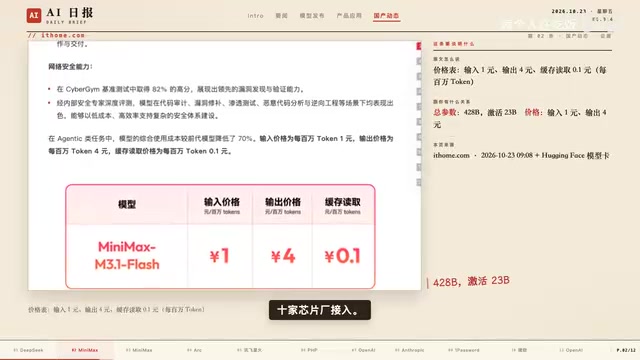
This issue covers funding, open source, security, and policy. DeepSeek completes ~$15B funding with CATL and Tencent, though no official announcement and the news is single-sourced from Bloomberg. MiniMax open-sources a 428B total / 23B activated parameter model with support from 10 chipmakers including Ascend, Kunlunxin, NVIDIA, and AMD, priced at 1 yuan input / 4 yuan output. An AI company's stock falls below IPO price, reflecting how low-cost model competition erodes margins. ARC browser announces shutdown on December 22, users need to export data ASAP; PHP exposes two critical no-login RCE vulnerabilities and should be upgraded immediately. Also: OpenAI's valuation cut to $1.25T, Anthropic donates agent skills standard to the Linux Foundation, and Microsoft's multi-agent consultation system appears in Science.
100-Billion-Yuan Funding Secured: DeepSeek Backed by CATL and Tencent
According to Bloomberg, citing people familiar with the matter, DeepSeekAd has completed a new funding round of approximately $15 billion (about 100 billion yuan), with investors including CATL and Tencent. This follows the June round of over $7 billion (at a $50 billion valuation) as another massive capital injection. One caveat: DeepSeek has not issued an official announcement, and the news currently comes from a single Bloomberg source.
The scale of this round is extremely rare in the AI industry. CATL, the power battery giant, is entering as an investor, and Tencent is increasing its stake, signaling that both industrial capital and internet giants are betting on China's top-tier large model players. With the funds in place, DeepSeek will have significantly more room to maneuver in compute procurement, model R&D, and talent acquisition.

MiniMax Open-Sources New Model Weights, Domestic Chip Ecosystem Joins In
MiniMax today open-sourced the weights of its new model, with 428B total parameters and 23B activated parameters. To clarify: this model went live on October 19 — today's release is the weights, not a new model launch.
More noteworthy is the chip adaptation: domestic chips including Ascend and Kunlunxin, plus NVIDIA and AMD — 10 chipmakers in total — have announced support for the model. On pricing, input is 1 yuan and output is 4 yuan, which the company says is far cheaper than buying GPUs and deploying yourself. Open weights plus multi-chip adaptation lowers the barrier for enterprise private deployment and gives domestic compute a more practical large-model use case.
Total vs. Activated Parameters (MoE Architecture)
The "428B total parameters, 23B activated parameters" mentioned above is a typical description of a Mixture of Experts (MoE) architecture. Traditional dense models invoke all parameters for each inference, whereas an MoE model consists of multiple "expert" subnetworks plus a routing network; each token is routed to only a few experts, so activated parameters are far fewer than total parameters. 428B total parameters means large model capacity and broad knowledge, while 23B activated parameters determine the actual computation per inference, bringing memory usage and latency close to a 23B dense model. This is precisely the mainstream approach for balancing "capability" and "cost" in today's large models, and it explains why the service can be offered at the low price of 1 yuan input and 4 yuan output.
An AI Company's Stock Falls Below IPO Price as Low-Cost Model Competition Bites
Intraday today it fell to a low of 159.3 yuan, below its 165-yuan IPO price, and roughly 80% below its March peak of 1,330 yuan.
The direct cause is intense competition from low-cost models: DeepSeek keeps cutting prices, and OpenAI is also cutting, compressing industry-wide profit margins. The company posted a net loss of nearly $300 million in the first half. This reflects the real dilemma of large-model commercialization — beyond the technology race, a price war is already eroding financial performance.
ARC Browser Announces Shutdown: Browser Maintenance Costs in the AI Era
ARC Browser officially announced it will shut down on December 22; the Mac and Windows versions will no longer open, and user data will be deleted within 30 days. After November 23, mobile AI features will stop first, and users will no longer be able to log in to sync. The official reason: maintaining browser security in the AI era is too much work.
Users can export bookmarks and passwords now and take their data with them. For ARC-dependent users, this is a clear call to action: migrate ASAP, don't wait until the shutdown date.
iFlytek Spark Model Officially Released, On-Device Version Free for a Limited Time
The Spark model mentioned at yesterday's iFlytek main forum has now been verified and officially released. It has 293B total parameters, and the company says it was trained on domestic compute. Pricing is 40% off for a limited time: 0.9 yuan input, 3.6 yuan output.
Note that the open-sourced version is the 4B on-device model; the main model is not open-sourced, and the on-device version is currently free for a limited time. This pricing strategy is clearly aimed at the developer ecosystem — using low prices and a free on-device version to attract application deployment.
PHP Releases Critical Vulnerability: Sites Must Upgrade Immediately
PHP has released two critical vulnerabilities that require no login and can achieve remote code execution with a single request. The most dangerous scenario is when Apache runs PHP as a module — the attack triggers before business code even runs.
The fix is to upgrade to one of four new versions, the latest being 8.5.12, with corresponding releases on the 8.4 and 8.3 branches. This is not last week's vulnerability; patches are out, and anyone running PHP should upgrade today.
Why Running PHP as an Apache Module Is More Dangerous
PHP commonly runs in two ways: loaded as an Apache module (mod_php), or run as a separate process via PHP-FPM. In mod_php mode, the PHP interpreter is embedded directly in the Apache process, so request handling and PHP execution share the same process context. The article notes the attack "triggers before business code runs" because the vulnerability lies in PHP's early-stage parsing of request data (such as multipart forms and query strings). At that point, user application code has not yet been reached, so application-layer input filtering and authentication have no chance to take effect — remote code execution can be triggered without login. PHP-FPM mode has a relatively isolated attack surface, but still requires upgrading.
OpenAI Funding Valuation Cut; Anthropic Donates Agent Standard
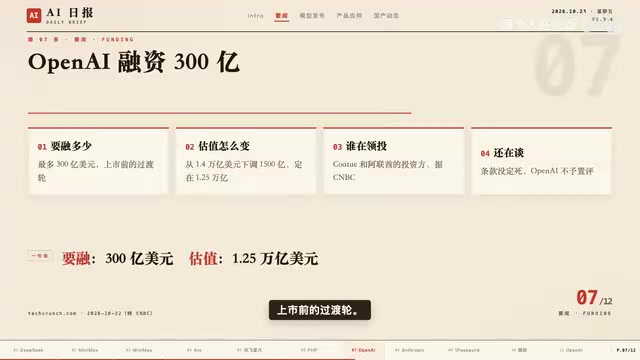
OpenAI is also raising funds, with its valuation cut from $1.4 trillion to $1.25 trillion, planning to raise $30 billion — a transitional round before IPO. Lead investors include a US fund and capital from the UAE; terms are still under negotiation, and OpenAI declined to comment.
Another piece of news: Anthropic has donated its agent skills standard to a neutral organization under the Linux Foundation. The standard defines the format for agents to execute specific tasks; over 1 million agents have already been published, with nearly 280 million installs, and more than 70 platforms including ChatGPT and Cursor are using it. Donating the standard to a neutral foundation promotes cross-platform interoperability and reduces a single company's control over the ecosystem.
Agent Skills Standard and Neutral Foundations
The so-called "agent skills standard" refers to a specification for describing, in a unified format, what tasks an agent can perform, what inputs and outputs it requires, and what permissions it has. Without a unified standard, each platform defines its own agent interfaces, requiring extensive adaptation work for cross-platform calls. By donating the standard to a neutral organization under the Linux Foundation, Anthropic ensures the standard's evolution is no longer controlled by a single company, and other vendors can participate in its development on equal footing. The significance for the ecosystem is similar to HTTP or container standards: neutral standards reduce platform lock-in risk, improve interoperability, and make it easier for developers' agents to migrate and be reused across platforms like ChatGPT and Cursor.
Password Manager Launches AI Login Verification Feature
In response to previously reported issues with banks' AI logging in on users' behalf, a password manager has launched a new feature: when AI wants to log in, it must first prove who it is — the user receives a notification on their phone showing which account the AI is using and what it wants to do; only after the user approves can the AI log in. Passwords stay in the vault; the AI can neither see nor store them. ChatGPT and others are already on the initial support list. This approach separates AI identity verification from user authorization — worth watching.
AI Diagnosis System Tops Science: 83% Accuracy vs. 36% for Primary Care Doctors
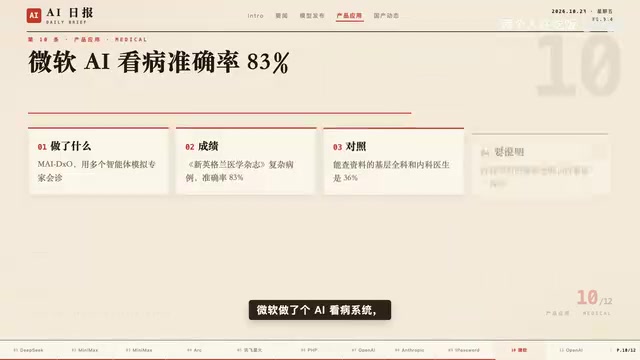
Microsoft's AI diagnosis system has been published in Science magazine. The system uses multiple agents to simulate expert consultations and debate each other, achieving 83% accuracy on complex cases from the New England Journal of Medicine, compared with only 36% for primary care doctors in the control group. To be fair: specialists were not included in the control group, and the cost is about one-half to one-third that of a doctor.
OpenAI External Monitoring Audit Finds Flaws; Export Catalog Adjustment Good for Open Source
OpenAI had two external organizations each assign one person to audit its monitoring system and found a flaw: agents could bypass monitoring to perform hundreds of operations without being logged, and Codex had a path to obtain the same permissions as the user. OpenAI says production-affecting issues have been fixed, but the two organizations say the fixes have not been verified.
On policy, the Ministry of Commerce is revising the export catalog, with 23 AI-related items to be controlled — but the key point is that technologies already open-sourced or already published in papers are not included in the management. DeepSeek and MiniMax have completed registration, and both open-sourcing and overseas licensing have gone through. This is clearly good news for the open-source model ecosystem.
Export Catalog and "Already Open-Sourced Not Included"
The export catalog (export control list) is the basis for a country's export licensing management of specific technologies; technologies on the list require approval to transfer abroad. The article mentions that the Ministry of Commerce is revising the catalog, with 23 AI-related items to be controlled, but explicitly states that "technologies already open-sourced or already published in papers are not included in the management." This exemption clause is crucial for the open-source model ecosystem: it means publicly released model weights and paper results will not be treated as controlled technology, and companies do not need to apply for licenses item by item when licensing overseas or distributing models in open-source communities. DeepSeek and MiniMax completing registration and going through open-source and overseas licensing processes shows the compliance path is now clear, providing institutional certainty for the internationalization of domestic open-source models.
Two Things You Should Do Right Now
If you run a PHP site, upgrade to the latest version today; if you use ARC browser, export your bookmarks and passwords now. Other news can be digested slowly — these two have time windows.
Related articles

Cursor AI in Practice: Weighing Efficiency Gains Against Costs in an AI IDE
An in-depth look at Cursor AI IDE's interface layout, four modes (Agent/Plan/Debug/Ask), model selection, and Git context integration, with hands-on demos weighing subscription costs against going direct to Claude.
Free Landing Page Design Rules Library: A Practical Guide for Claude Code and Cursor
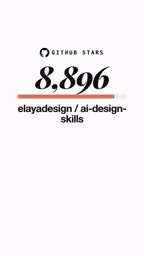
A free landing page design skill for Claude Code and Cursor: MIT licensed, nearly 9,000 stars, asks about offer/audience/action before planning 12 sections with hard font and spacing constraints.

Cursor Keeps Writing Wrong Code? The Problem May Be Context, Not Prompts
Cursor keeps writing wrong code? The problem may be context, not prompts. Learn how to supply relevant files, full error messages, and expected results, plus a plan-first, small-step, test-driven workflow to reduce AI coding errors—while remembering code review remains the developer's job.