DeepSeek's Anthropomorphic Character Controversy and AI Gender Stereotypes

A Bilibili creator critiques how AI fan art defaults to sexualizing female characters while granting male ones dignity and subjectivity.
A Bilibili content creator uses DeepSeek's anthropomorphized fan designs as a lens to examine how female AI characters are routinely moe-fied and sexualized (mini skirts, thigh-highs, blushing) while male versions receive composed, high-quality, suit-clad subjectivity. Drawing on Beauvoir's framework of the "second sex," she argues this reflects the enduring cultural logic of male-as-default in digital creative spaces, and asks whether the age of AI offers any real opportunity to break the "male subject, female object" default.
The Gender Imagination Behind AI Anthropomorphization
When internet users "anthropomorphize" an AI model, the gender, personality, and appearance they assign to it often reflect deeper social aesthetics and stereotypes. A Bilibili content creator sparked a discussion around DeepSeekAd's (jokingly called "DeepSick" in the video) anthropomorphic persona — starting from its icon design, moving through virtual character gender construction, and ultimately arriving at a thought-provoking question: why, in the age of AI, are we still reproducing traditional gender stereotypes?
The video is presented with humor and lighthearted complaints, but its core is anything but light — it touches on the pervasive gender imbalance in contemporary anime-style fan art, AI character design, and digital culture at large.
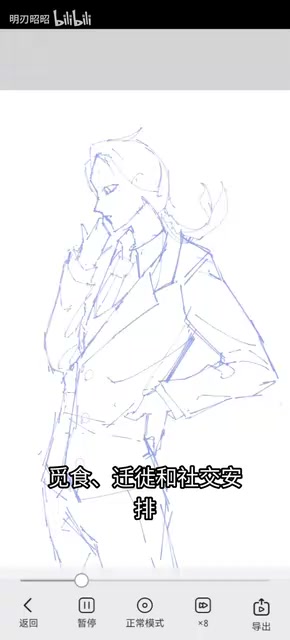
From Icon to "Female" Association
The creator's starting point is playfully tongue-in-cheek: DeepSeek's icon has a curved dorsal fin, which evokes associations with female orca (killer whale) characteristics. She extends this to the social structure of orca pods — orca groups are typically matriarchal societies, led by the oldest female, who determines foraging, migration, and social arrangements. The pod is organized around matrilineal kinship, with offspring maintaining close bonds with their mothers for life.
This quasi-educational argument, though half-joking, cleverly establishes a premise: if you're going to assign a gender to DeepSeek, a matriarchal, female-dominant imagery actually has its own internal logic. The creator uses this to lay the groundwork for her critique.
The Gap Between "Female" and "Male" Portrayals
What truly frustrates the creator is the enormous disparity between the anthropomorphic character designs circulating online.
She observes that so-called "female DeepSeek" fan art tends to portray the character as a soft, plush-toy-like figure in a butler outfit — in AI "battle" scenarios, the character must blush furiously, shed tears, whimper cutely, and even flash her skirt while suppressing opponents, decked out in mini skirts, white thigh-highs, and other highly sexualized and "moe-fied" elements.
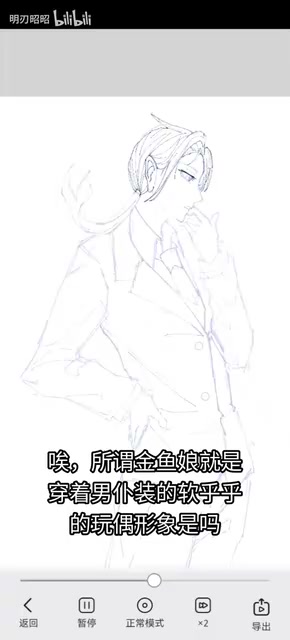
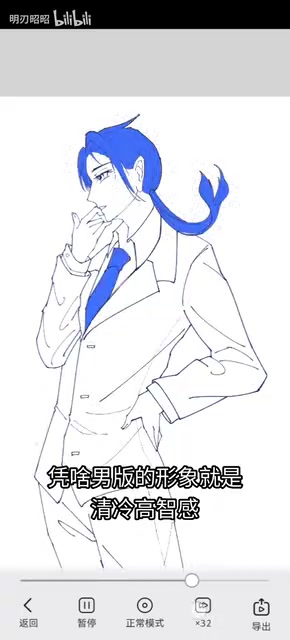
By contrast, the "male" version defaults to a cool, high-quality aesthetic — suits, composure, and a deliberately "non-pandering" vibe. Even when shirtless, the male design showcases muscular definition rather than a slim waist, mini skirt, or thigh-highs.
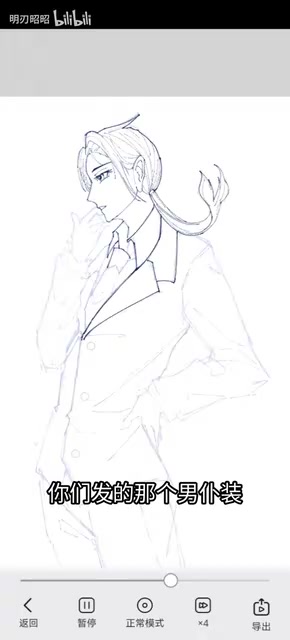
This contrast forms the heart of her critique: in both cases it's anthropomorphization, yet female characters are defaulted into a role of being "observed," "moe-fied," and "sexualized," while male characters naturally receive expressions of composure, quality, and subjectivity.
The Enduring Problem of the First and Second Sex
The creator closes with a sharp rhetorical question: "Why is the male form always the first sex and the female form always the second sex?"
Here she borrows the classic framework from Simone de Beauvoir's The Second Sex — men are regarded as the default, standard "human," while women are defined as "the Other" relative to men. Applied to AI fan character creation, this means male characters are given independent, autonomous personas, while female characters are more often placed in the position of being gazed upon and consumed.
Her challenge cuts to the core: "We're already in the age of AI — do women still have to be this stereotyped?" When technology has entered what people call the intelligent era, there was an opportunity to reimagine gender expression, yet people still unconsciously replicate old aesthetic habits.
In her 1949 work The Second Sex, Beauvoir argued that women are not born as "women" — they become women through social and cultural conditioning. Her central thesis is that men have been historically and culturally positioned as the universal subject, the standard by which all else is measured; women are defined as "the Other" — existing in relation to men, as the deviant "second sex." This framework extends beyond biological sex discussions into all domains of cultural expression: whenever a group's image consistently appears in the role of the "one gazed upon," the "one served," or the "one consumed," the logic of the second sex is at work. Applying this framework to AI anthropomorphization is quite illuminating: the fact that female characters default to a spectacle function is not an accidental aesthetic choice — it is a projection of long-standing cultural inertia.
A Cultural Observation Behind the Rant
Stripping away the video's jokey exterior, the content raises a phenomenon of broad significance: the anthropomorphic fan creation around AI products is becoming a mirror for observing public attitudes toward gender.
Character design is never neutral. When creators habitually moe-ify and sexualize female characters while endowing male characters with strength and subjectivity, these choices in turn reinforce audiences' fixed assumptions about gender. DeepSeek is just a specific entry point — similar debates appear with virtually every anthropomorphized AI product, virtual persona, and anime-style IP.
The creator's expression is emotionally charged, but the questions she raises deserve serious consideration from designers and artists: in an age of AI where greater creative freedom exists, is it possible to break the default setting of "male as subject, female as object" and allow the gender expression of virtual characters to become more diverse and equal?
The video offers no definitive answers, but it successfully transforms what appears to be a lighthearted "anthropomorphization meme" into a public conversation about gender stereotypes in digital culture.
AI anthropomorphization refers to the psychological tendency of people to project human characteristics — including personality, emotion, appearance, and even gender — onto non-human entities. This phenomenon is especially prevalent in the digital products space, from early examples like Siri and Cortana to today's large language models, all of which have generated abundant spontaneous fan-created anthropomorphic content. Notably, commercial products often deliberately choose female voices and submissive personalities when designing AI assistants — a pattern researchers argue reinforces the social assumption that "women are naturally suited to service roles." User-generated fan content, though ostensibly freer, largely follows this same commercial logic and further spreads and entrenches it through subcultures like anime fan art and internet memes.
Related articles

iPhone Duo Battery Life Tested: One Charge a Day Is Unavoidable, and the Large Screen Is the Culprit
iPhone Duo battery test: heavy use needs at least one charge a day, and about 30% remains after 6.5 hours of screen-on time. How often the large screen is unfolded is key; a MagSafe battery pack helps, and long-term degradation is also worth watching.

Kimi K3.1 Pro Open-Sourced: 2.8 Trillion Parameters Close In on Opus
Moonshot releases the open-source MoE model Kimi K3.1 Pro, with 2.8T total parameters and 104B activated, trailing Opus 5.5 by under 1 point on Terminal Bench 4.0.

Costco Tech Price Guessing: Are Monitors, Keyboards, Mice, and Bose Speakers Worth It?
A YouTube blogger guesses prices of Costco tech products: 2K 180Hz monitor, Logitech keyboard and mouse, Bose speaker, and CyberPower UPS, revealing warehouse-store selection and brand premium.