Democrats Boycott Vote, Stalling FCC Nominee Confirmation Process
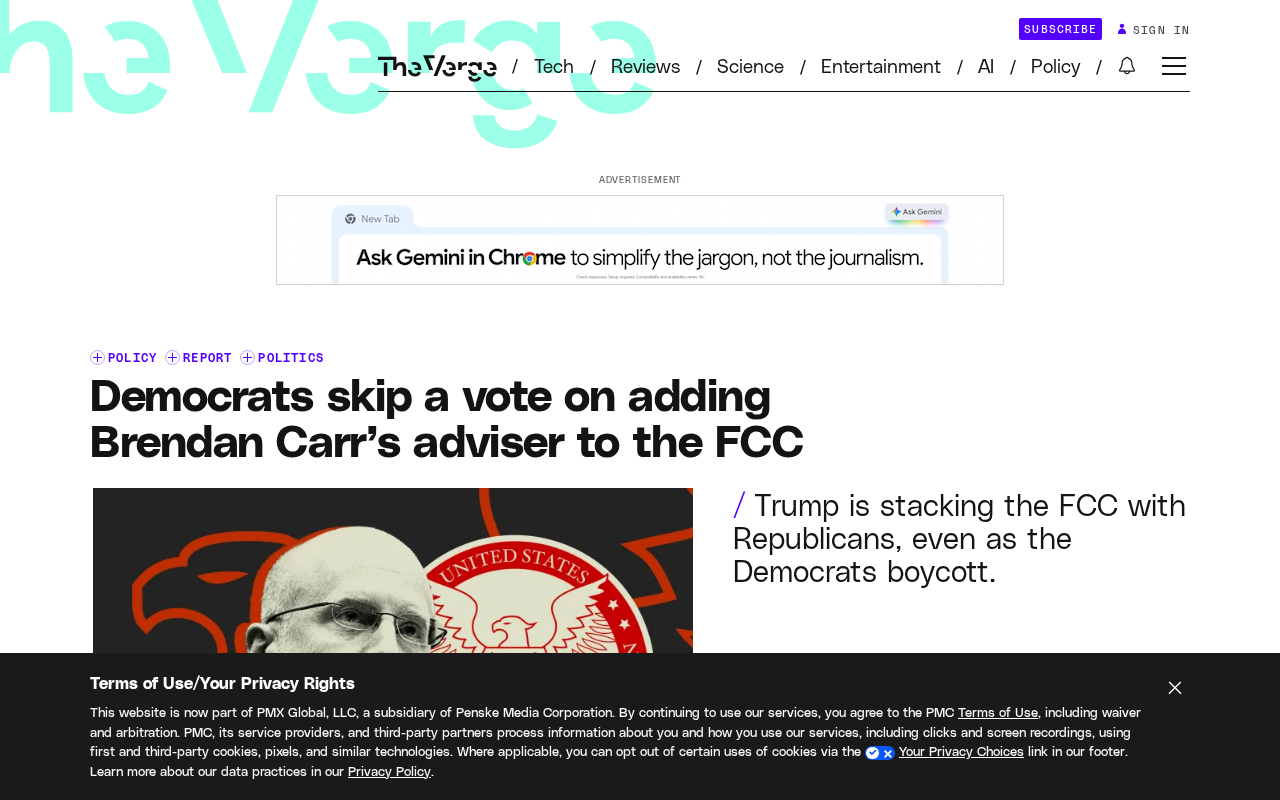
Senate Commerce Committee's FCC nominee vote falls into partisan controversy due to Democrats' collective boycott.
Senate Commerce Committee Chair Cruz convened an FCC nominee confirmation vote, with 14 Republicans present and Democrats collectively absent, preventing normal proceedings. The nomination involves an advisor to Republican Commissioner Brendan Carr, highlighting deep partisan divides over FCC personnel and policy directions including net neutrality and media regulation. Though Republicans hold a 14-12 majority and could force the vote, Cruz's decision to proceed without the minority has sparked legitimacy controversy. The article analyzes committee conventions, the FCC's independent status, and uncertainties over the full Senate vote, reflecting growing politicization of regulatory appointments.
Background: FCC Nominee Confirmation Vote Takes an Unexpected Turn
On Wednesday, Senate Commerce Committee Chair Ted Cruz (R-Texas) convened a meeting aimed at confirming President Donald Trump's nominee for the Federal Communications Commission (FCC). Yet the scene presented a stark contrast: to Cruz's right sat all 14 Republican members, including Senate Majority Leader John Thune (R-S.D.); while some dozen seats on the left sat empty—Democrats collectively boycotted the vote.
The meeting, originally scheduled to vote on adding Brendan Carr's advisor to the FCC, failed to proceed as usual due to the Democrats' absence. Although Republicans hold the majority on the committee, the Democrats' collective boycott still cast doubt on the legitimacy of the vote and the spirit of bipartisanship.
FCC Personnel Contest Amid Partisan Divides
The FCC, as the key independent agency regulating the U.S. communications industry, has long seen its personnel appointments become a focal point of partisan wrangling. This nomination involves an advisor to Brendan Carr, himself an influential Republican commissioner at the FCC who has long held distinct positions on issues such as net neutrality, spectrum allocation, and media regulation. The Democrats' absence is seen as a protest or strategic boycott of this nomination process.
The Senate Commerce Committee oversees legislative and nomination matters in areas including communications, technology, and transportation. By convention, committee votes require participation from both parties to reflect bipartisan consensus. The Democrats' collective boycott not only disrupted the day's agenda but may also plant hidden risks for the subsequent nomination process. The specific reasons for the Democrats' absence remain unclear, but analysts note it is likely related to deep-seated partisan differences over the FCC's policy direction.
The FCC's Independent Agency Status and Bipartisan Seat Structure
The Federal Communications Commission (FCC) was established under the Communications Act of 1934 and is nominally a regulatory agency independent of the executive branch, but all five commissioners are nominated by the president and confirmed by the Senate, with the president's party allowed to hold no more than three seats to prevent complete domination by a single party. The commission chair is designated by the president from among commissioners of the same party and controls the agenda-setting power. This statutory "three-to-two" structure means every vacant seat could tip the policy balance, making personnel nominations a perennial focus of partisan contest.
Background on the Net Neutrality Controversy
Net neutrality refers to the principle that internet service providers should treat all traffic equally and must not throttle specific content or offer paid prioritization. The FCC established strong regulatory rules in 2015 through "Title II" utility classification, repealed them in 2017, and restored them again in 2024, with policy swinging back and forth as parties alternate in power. Brendan Carr has long opposed Title II classification, advocating market self-regulation and congressional legislation in place of agency rulemaking—this is precisely the policy root of Democrats' wariness about his advisor joining the FCC.
Procedural Impact and Future Outlook
Procedurally, Republicans hold a 14-to-12 majority on the committee and could theoretically force the vote through. But Chair Cruz chose to convene the meeting in the Democrats' absence rather than waiting for bipartisan agreement—a move that has itself sparked controversy. If the nomination ultimately passes along party lines, it could further politicize FCC decision-making.
Next, a full Senate vote will determine whether the nominee can formally join the FCC. Given the current political atmosphere, this nomination process is expected to be fraught with twists and turns. For observers focused on tech regulation and communications policy, this event concerns not just the fate of a single position but also reflects the challenges facing the independence of U.S. regulatory agencies amid partisan politics.
(This article is compiled from public reports; further developments await observation.)
Nomination Procedure Conventions of the Senate Commerce Committee
The Senate committees' handling of presidential nominations typically follows the "blue slip" convention and minority consultation mechanisms, with chairs generally scheduling votes only after both parties reach basic consensus on a nominee to avoid the nomination proceeding to the full Senate along party lines. Committee rules allow the majority party to advance votes when a quorum is met, but forcing a vote is often seen as breaking convention and may prompt the minority to counter with procedural delays (such as requesting roll-call reading or extending debate). After a nomination passes committee, it still requires confirmation by the full Senate by simple majority; if a seat remains unresolved, the FCC could face a 2-2 tie deadlock, making it difficult to form majority opinions on major regulatory issues.
One-line Summary
Senate Commerce Committee's FCC nominee vote falls into partisan controversy due to Democrats' collective boycott.
Paragraph Summary
Senate Commerce Committee Chair Cruz convened a vote on an FCC nominee, with 14 Republican members present and Democrats collectively absent, preventing the meeting from proceeding as usual. The nomination involves an advisor to Republican Commissioner Brendan Carr, highlighting deep partisan divides over FCC personnel and policy directions including net neutrality, spectrum allocation, and media regulation. Although Republicans hold a 14-to-12 majority and could theoretically force the vote through, Cruz's decision to convene the meeting without the minority has sparked legitimacy controversy. The article analyzes committee nomination conventions, the FCC's independent agency status, and uncertainties surrounding the subsequent full Senate vote, noting that the event reflects the growing politicization of personnel appointments at U.S. regulatory agencies.
Related articles

Gemini 4 Neon vs Claude Opus 5.5: Who Wins Across Five Real-World Tasks?
Bilibili creator tests Gemini 4 Neon vs Claude Opus 5.5 across 3D video, games, design, writing, and advice. Neon matches Opus daily, but 3D and design still lag.

Former Huawei Genius Youth Open-Sources AI Agent Guide: 90+ Hands-On Case Studies
Former Huawei Genius Youth Li Bojie open-sources AI Agent Book, the most systematic Chinese Agent learning repo on GitHub, with 90+ runnable examples covering context compression, memory frameworks, MCP tool calling, prompt injection attack and defense, and other enterprise-level hands-on content.

The Most Detailed FDE Tutorial on Bilibili: Case-Based Teaching from Business Practice to Interviews
B站UP主推出FDE从入门到面试实战教程,讲师深入业务一线,用马氏学习平台真实案例讲解FDE岗位要求。本文分析案例教学法、笔记策略与私密信息处理,为AI岗位求职者提供参考。