Deodand: The Ancient English Law That Put a Price on Deadly Objects
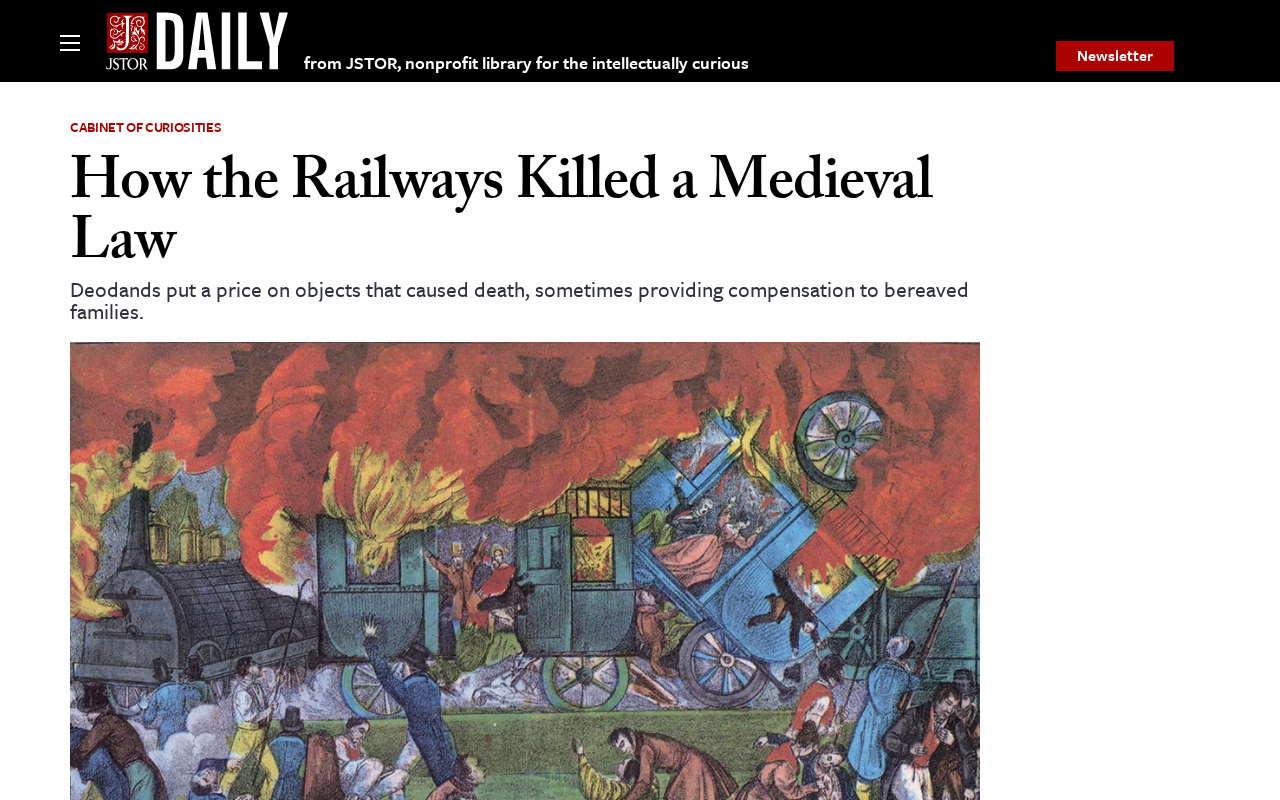
Deodand, an ancient English law forfeiting deadly objects, offers a surprising lens on modern AI liability debates.
Deodand was an English common law institution lasting several centuries: any object that caused a person's death was appraised and forfeited — originally for religious atonement, later as a royal fiscal tool. Its underlying logic placed culpability on the object itself, serving as a rudimentary form of compensation and deterrence before systematic tort law existed. The industrial age made the doctrine untenable, and it was abolished in 1846, the same year England established a modern tort system grounded in human fault. This history offers a profound reference point for today's debates over liability in autonomous vehicles, AI, and other self-acting systems.
What Is a Deodand
A deodand is an institution from English common law that persisted for several centuries. Its core logic is remarkably distinctive: when an object caused a person's death, that object itself would be assigned a monetary value and forfeited to the Crown (later often directed toward charitable or religious purposes) as a form of compensation or seizure.
In other words, whether the fatal instrument was an ox, a cart, a machine, or a falling tree, the law would appraise the "murder weapon" and treat it as something to be confiscated or redeemed. The term derives from the Latin Deo dandum, meaning "that which must be given to God," reflecting the institution's original religious and penitential character.
The Legal Logic Behind the Institution
The deodand system embodies a pre-modern understanding of "liability" and "causation." In contemporary legal systems, we are accustomed to tracing human negligence and responsibility. Deodand, by contrast, assigned a portion of "culpability" directly to the object itself.
This anthropomorphizing treatment was not entirely irrational. In an era lacking systematic tort law and insurance mechanisms, appraising a fatal object and seizing its value served as a rudimentary form of compensation and deterrence — owners, anxious to avoid property loss, would take greater care of their livestock, vehicles, and tools. The institution also provided psychological consolation for accidental death: even when no clear wrongdoer could be punished, at least something had paid a price for the death.
From Religious Atonement to Fiscal Instrument
Over time, the nature of the deodand gradually shifted from religious atonement to a fiscal and administrative tool. The value of forfeited objects ultimately flowed into the royal treasury, making the institution a form of covert taxation. This meant that appraisals of an object's value were entangled in concrete economic interests — over- or under-valuation had direct implications for the relationship between the owner and the Crown.
The arrival of industrialization ultimately exposed the absurdity of the system. When trains, steam engines, and other high-value modern machines began causing casualties, declaring an entire locomotive a deodand and seizing its value was plainly incompatible with the emerging industrial economy. Such conflicts accelerated the institution's abolition.
The formal abolition of deodand in England came in 1846. The immediate catalyst was the explosive growth of railway accidents — juries began issuing deodand verdicts against entire locomotives, with sums sometimes reaching thousands of pounds. Fierce opposition from railway companies and industrial capital, combined with the legal profession's concerns about doctrinal consistency, ultimately drove Parliament to pass the Deodands Abolition Act 1846. Notably, the same period that saw deodand abolished also witnessed the construction of a modern tort law framework: the Fatal Accidents Act 1846 (also known as Lord Campbell's Act), passed the same year, for the first time allowed the families of deceased persons to bring civil claims for wrongful death — completing a historic institutional transition from "object-based liability" to "human fault liability."
Why It Still Merits Discussion Today
For readers interested in the relationship between technology and society, deodand is a fascinating historical footnote. Today, we face a new puzzle in attributing liability: when an autonomous vehicle, an industrial robot, or an AI system causes an accident or even a death, who should bear responsibility? The manufacturer? The operator? The software developer? Or the "object" itself?
Deodand offers a historical reference point — human society once attempted to place liability directly on things. While this approach seems crude by modern standards, the question of how to assign legal responsibility to "objects that act on their own" is becoming an open problem again as autonomous systems proliferate. Historical echoes can often help us think more clearly about the future.
Contemporary legal scholars discussing AI and robotics liability sometimes explicitly invoke the concept of deodand as a starting point for thought experiments. The EU's proposed AI Liability Directive of 2022, as well as debates over granting highly autonomous AI systems "electronic personhood," both touch on the same core tension: when an entity can independently take actions and cause harm, yet cannot be held to account for subjective fault in any moral sense, the existing tort law framework — centered on human negligence — begins to crack. The history of deodand shows this is not a new problem, but a fault line that periodically resurfaces in human legal thought.
Conclusion
Deodand is a long-abolished ancient institution, but the question it reflects — how to understand the relationship between objects, liability, and death — has never disappeared along with it. From the medieval cart to today's autonomous driving systems, humanity has always been searching for a way to assign a price and accountability to "non-human causes of death." This history is well worth revisiting whenever we discuss the ethics of technology.
Related articles

The AI Virtual Star Meltdown: A Trust Crisis in the Age of AI Idol Manufacturing
An AI-generated virtual star melts down on live TV, exposing the trust crisis behind the AI idol boom. We examine the business logic, technical limits, and regulatory gaps.

Raspberry Pi 5 EEPROM Update Blocks Manual RAM Upgrades: Error Code 9 Sparks Controversy
Raspberry Pi 5's pieeprom-2024-09-23.bin update adds an OTP memory validation check that throws Error Code 9 'SDRAM mismatch' on manually upgraded RAM, blocking boot. Is it a stability measure or anti-repair strategy?
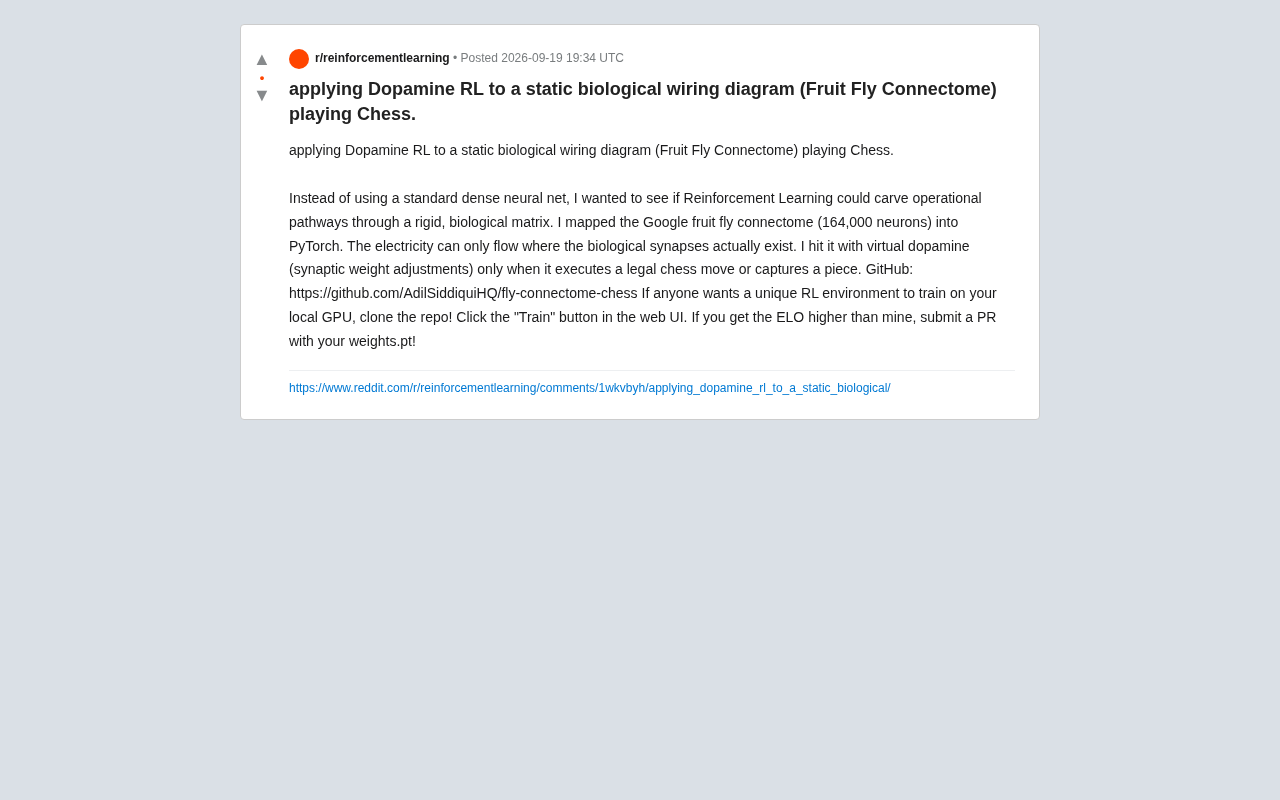
Playing Chess with a Fruit Fly Connectome: An Unconventional Experiment in Dopamine-Driven Reinforcement Learning
A developer mapped a 164,000-neuron fruit fly connectome into PyTorch and trained it to play chess using "virtual dopamine" RL. Signals travel only along real synapses. Open-source with local GPU training and an ELO leaderboard.