Did AI Really Solve a Black Hole Physics Problem? Anthropic's Claim Is Questionable
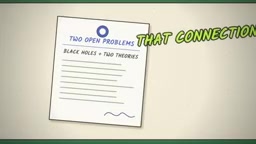
Anthropic claims its model solved black-hole physics problems, but the announcement lacks key details worth questioning.
Anthropic claims Claude Fabel 5.2 helped solve two open theoretical physics problems related to black holes and quantum gravity, but the announcement doesn't name the problems or show the full derivation, so outside researchers can't assess it. The theorem mentioned was already proved by Andrew Wiles; the task was merely formalizing it in Lean, and formalization is not discovery. Judging such claims requires asking: what's the task, what did the AI do, and who checked the answer.
A Viral Claim, and the Gap It Leaves Behind
Anthropic claims its latest model, Claude Fabel 5.2, helped solve two open problems in theoretical physics—both related to black holes and to the connection between general relativity and quantum theory. The claim sounds like a genuine breakthrough. But the discussion around "AI solving physics" misses the most critical question: what exactly did the model do?
According to the video analysis, Anthropic's announcement didn't name what the two problems were, nor did it show the full derivation process. For outside researchers, this means the weight of the claim cannot be assessed. More subtly, the party making the announcement is the very company that built the model.
This isn't to say the claim must be false—it's that it currently remains at the stage of "a company's own account" rather than a physics result open to peer scrutiny. In judging a scientific claim, the transparency of the task definition and the chain of reasoning matters as much as the conclusion itself.
Why Black Holes Are a Tough Test for AI
Black holes are where the two great theories collide head-on. Einstein's general relativity describes gravity in terms of spacetime, while quantum theory describes the microscopic world. Both are extraordinarily successful in their own domains, but unifying them has remained one of physics' most intractable challenges.
Anthropic says the two problems the model tackled involve black holes and this unification challenge. The issue is that the more cutting-edge and interdisciplinary the field, the more precisely we need to know what the AI contributed—did it propose an idea, complete a calculation, verify a step in a derivation, or help humans find a path? These contributions are fundamentally different in nature, but a single phrase like "solved" flattens them all.
Quantum gravity is the theoretical physics direction that attempts to unify general relativity and quantum mechanics. The core conflict: general relativity treats spacetime as a continuous, smooth geometry, while quantum mechanics predicts that at the Planck scale (about 10^-35 meters) spacetime itself undergoes quantum fluctuations. Black holes are the sharpest arena for this conflict—curvature diverges at the central singularity, and Hawking radiation shows that black holes have quantum thermodynamic properties. Mainstream attempts include string theory and loop quantum gravity, but none has been experimentally verified. Precisely for this reason, any claim of progress on a black-hole-related problem must specify exactly which concrete model it addresses, under what approximation, and what testable conclusion it reaches—otherwise it cannot be distinguished from the vast existing literature.
The Confused "Theorem": Formalization Is Not Discovery
The video points out a telling detail: the theorem mentioned in the same announcement is not some unsolved mystery—Andrew Wiles proved it decades ago. The new task was to translate the existing proof into Lean, a language in which a proof assistant checks every logical step.

This has value in itself: a machine-checked proof is strong evidence that a formal argument conforms to Lean's rules. But two layers must be distinguished: a proof assistant checks formal steps, not whether the physical assumptions match nature; and formalizing a known proof is different from discovering a new theorem. Framing "successful formalization" as "solving an unsolved problem" is where the headline most easily crosses the line.
Lean is an interactive theorem prover and also a functional programming language, initiated in 2013 by Leonardo de Moura at Microsoft Research. Its core capability is to write mathematical proofs as computer-checkable formal code, with a kernel verifying step by step whether each logical inference conforms to the rules. Lean itself does not judge the physical meaning of axioms or assumptions; it only guarantees that "if the premises hold, then the conclusion holds within the formal system." The mathlib project advanced by the mathematics community in recent years has accumulated a large number of formalized theorems, but translating an existing proof into Lean typically takes months or even years of work and requires expertise in both mathematics and programming. So when evaluating "AI formalizing a proof," the key metrics are what proportion it completed and whether extensive human correction was needed—not a simple claim of "solved."
If the Report Holds Up, What's the Real News?
If Anthropic's report stands up to scrutiny, then the real significance is this: the model can provide substantive help in highly specialized research work, letting researchers advance work and test ideas faster.

But it does not prove that a chatbot independently replaced physicists, nor that science can bypass peer review. Conflating these two things is the most common misreading of such progress. AI becoming a research collaborator is already an exciting enough conclusion—and it is far narrower and far more solid than "AI solved black holes."
Three Things Needed to Judge This Claim
First, what exactly is the problem; second, the complete chain of reasoning; third, independent review. Can other physicists reproduce the result? Can they point clearly to which part the model contributed?

These answers are what would turn an impressive announcement into a result others can build on. Today's evidence is a company's report, not an independently evaluated physics paper.
So the next time you hear "AI solved a scientific problem," ask three questions first: What is the task? What did the AI do? Who checked the answer? If the answers are clear, the breakthrough stands on its own; if they're vague, the headline has run ahead of the evidence. That may be the real puzzle worth watching.
One-line Summary
Anthropic claims its model solved black-hole-related physics problems, but the announcement lacks key details—we need to ask about the task, the contribution, and the review.
Paragraph Summary
Anthropic claims Claude Fabel 5.2 helped solve two open theoretical physics problems related to black holes and quantum gravity, but the announcement doesn't name the specific problems or show the full derivation, leaving outside researchers unable to assess its weight. The article notes that the theorem mentioned was already proved by Andrew Wiles; the new task was merely formalizing it in Lean—and formalizing a known proof is not discovering a new theorem, since proof assistants check logical steps, not physical assumptions. If the report holds up, the real significance is that AI can be a research collaborator, not that it independently replaces physicists or bypasses peer review. Judging such claims requires asking three things: What is the task, what did the AI do, and who checked the answer.
Related articles

Building an AI Side Business from Scratch with Claude: 10 Monetization Paths Explained
Explaining 10 paths to build an AI side business from scratch with Claude alone: voice agents, digital products, data annotation, enterprise automation, and vertical industry tools, with a realistic assessment of barriers and feasibility for each.
Rankhog: AI-Powered Reddit Lead Generation — Balancing Compliance and Efficiency
Rankhog is an AI tool that finds Reddit leads and generates replies, with manual approval or autopilot modes and MCP support for Claude, ChatGPT, and Cursor. We analyze how it works, MCP integration value, and community compliance risks.

Daymaker: Opening Sales Doors with Personalized Gifts
Daymaker is a sales development tool that researches prospect interests, recommends and ships personalized branded gifts to help sales secure meetings. It offers a done-for-you service with guaranteed meetings and ranks fourth on Product Hunt.