Dify Hands-On Tutorial: A Complete Guide from Installation to Building AI Agents
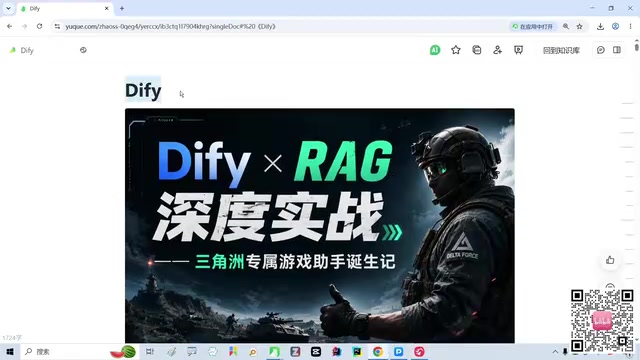
A complete beginner's guide to Dify: from installation to building AI agents with RAG knowledge bases.
This hands-on tutorial walks beginners through the entire Dify workflow—from Docker-based installation and deployment, to building RAG knowledge bases with proper chunking and embedding strategies, to publishing AI agent applications. Using a case-driven approach, it explains core concepts like agents and Retrieval-Augmented Generation, and provides practical tips for tuning retrieval parameters to build high-quality AI applications.
Why Choose Dify to Get Started with AI Workflow Building
For learners with zero technical background, getting started with AI application development often presents a higher barrier than expected. Many people face three layers of confusion when they first encounter AI tools: they've never used a development platform, they don't understand what an Agent actually is, and they have no clue what a RAG knowledge base is really for. Dify was designed precisely to offer this group of people a gentle learning curve.
Dify is an open-source LLM application development platform. Its core value lies in transforming the AI application building process—which traditionally requires extensive coding—into an intuitive, visual experience based on drag-and-drop and configuration. Dify operates in the LLM App Development Platform space, a field that saw explosive growth in the second half of 2023 as large model capabilities rapidly evolved. Similar platforms include LangChain, Flowise, and FastGPT, but Dify's differentiating advantage is that it simultaneously provides a visual orchestration interface and a complete backend service architecture, with a highly active open-source community and rapidly growing GitHub stars. Being open-source means users can freely view, modify, and deploy its source code—an important consideration for enterprise data privacy and custom development. Even if you're not a seasoned LLM engineer or application developer, you can understand how agents work and build usable AI workflows in a relatively short time.
It's worth noting that if you're already an experienced application developer, this introductory content may seem too basic. But for users at the beginner level, the low barrier to entry that Dify provides is exactly the key to unlocking the door to AI applications.
Understanding Agents and RAG Knowledge Bases Through Case-Driven Learning
Explaining concepts in the abstract tends to be dry and hard to absorb. A more effective approach is to use a specific, engaging case study as a learning driver. By actually building a knowledge base hands-on, you'll naturally understand two core concepts along the way: what an Agent is and what RAG is.
What Exactly Is an Agent?
In simple terms, an Agent is an AI system capable of autonomously perceiving, making decisions, and executing tasks. It's not just a passive chatbot that answers questions—it's an intelligent entity that can invoke tools, retrieve information, and carry out a series of actions based on predefined goals.
The concept of agents originates from Agent theory in artificial intelligence research, traceable back to distributed AI research in the 1980s. In the era of large models, agents have been redefined as autonomous systems with LLMs as their core reasoning engine. A typical agent architecture contains four key modules: a perception module (receiving user input), a planning module (breaking complex tasks into subtasks), a tool-calling module (performing searches, calculations, API calls, etc.), and a memory module (maintaining context and long-term memory). OpenAI's Function Calling mechanism and the ReAct (Reasoning + Acting) framework are the two mainstream technical paradigms for agent implementation today.
In Dify, you can quickly build an agent with specific capabilities by configuring prompts, connecting knowledge bases, and integrating external tools—without needing to understand the implementation details of these underlying technologies.
Why RAG Knowledge Bases Matter
RAG (Retrieval-Augmented Generation) is a key focus in learning Dify. Its core logic is straightforward: before the large model generates a response, it first retrieves relevant information from your dedicated knowledge base, then combines that information to produce more accurate answers that are better aligned with your business context.
RAG was first proposed by Meta's (formerly Facebook) research team in 2020. Its complete workflow consists of three phases: Indexing, Retrieval, and Generation. During the indexing phase, documents are split into text chunks, and each chunk is converted into a high-dimensional vector through an embedding model and stored in a vector database. During the retrieval phase, the user's query is similarly converted into a vector, and the most relevant text chunks are found in the vector database using algorithms like cosine similarity or inner product. During the generation phase, the retrieved text chunks are injected into the large model's prompt as context, guiding the model to generate answers based on real data. This mechanism essentially provides the large model with an external, real-time-updatable knowledge source.
This approach addresses two major pain points of large models: first, model training data has a cutoff date and cannot access the latest information; second, general-purpose large models don't understand your internal enterprise documents or domain-specific knowledge. Through RAG, you can import your own documents and materials into the system, allowing the AI to answer based on this real data, significantly reducing "hallucination" problems. "Hallucination" refers to the phenomenon where large models, lacking real information to support their responses, generate content that appears plausible but is actually incorrect based on statistical patterns in their training data. This is particularly dangerous in fields like healthcare, law, and finance where accuracy is paramount.
The Complete Dify Learning Path: From Installation to Deployment
A complete Dify onboarding process typically follows a clear path with step-by-step progression. The overall learning journey can be divided into three phases:
Phase 1: Dify Environment Installation and Deployment
This is the starting point for all hands-on work. Dify supports both local and cloud deployment. Local deployment typically leverages Docker containerization technology to quickly spin up the complete service environment. Docker is an OS-level virtualization technology that packages an application and all its dependencies into a standardized container, ensuring consistent execution across any environment. Dify's local deployment typically uses Docker Compose, an orchestration tool that can simultaneously launch multiple interconnected service containers through a single YAML configuration file, including the web frontend, API backend, database (PostgreSQL), cache (Redis), vector database (such as Weaviate or Qdrant), and more. For beginners, simply installing Docker Desktop and running a few commands is all it takes to deploy the entire environment—no need to manually configure each component.
For beginners, understanding each step of the installation and deployment process is not just about getting the environment running—it's also a crucial step in building your understanding of the overall system architecture.
Phase 2: Building the RAG Knowledge Base
Once deployment is complete, the core task is building the RAG knowledge base. This process includes uploading documents, configuring text chunking strategies, selecting an embedding model, setting retrieval parameters, and more.
The embedding model is one of the core components in a RAG system. Its role is to convert human-readable text into machine-computable numerical vectors. Common embedding models include OpenAI's text-embedding-3-small/large, the BGE series (developed by BAAI), and Jina Embeddings. Different embedding models perform quite differently in Chinese vs. English scenarios, and choosing the right model significantly impacts retrieval quality. Vector databases (such as Milvus, Qdrant, Weaviate, Chroma, etc.) are specifically designed to store and efficiently search these high-dimensional vectors, supporting Approximate Nearest Neighbor (ANN) search algorithms that achieve millisecond-level retrieval responses across millions of documents.
Text chunking is one of the most underestimated yet critically important aspects of RAG knowledge base construction. Common chunking strategies include: fixed character count splitting, paragraph or semantic boundary splitting, and Recursive Character Splitting. Chunks that are too large will cause retrieval results to contain excessive irrelevant information, adding noise for the large model to process. Chunks that are too small may lose contextual semantics, resulting in fragmented retrieval results. Additionally, setting an appropriate overlap interval during chunking can prevent key information from being cut off at chunk boundaries. In practice, different chunking strategies typically need to be selected and repeatedly tested based on the document type (e.g., FAQs, technical manuals, legal texts, etc.).
Every configuration choice directly affects subsequent retrieval accuracy, so iterative tuning through practice is essential.
Phase 3: Building and Publishing Agent Applications
With the knowledge base as a foundation, the next step is integrating it into an agent application. In Dify's visual orchestration interface, you can design complete conversation flows, arrange workflow nodes, test Q&A results, and ultimately publish a production-ready AI application. Dify supports publishing multiple application types, including chat assistants, text generation applications, and Agent applications. Once published, they can be shared with end users by embedding them in web pages, or integrated into existing business systems through API endpoints.
Practical Tips for Zero-Background Learners
For learners hoping to get started with AI application development through Dify, here are a few recommendations worth keeping in mind.
Get hands-on first, understand later—don't get bogged down in theory. The value of Dify lies in letting you produce results first, then understand concepts through usage. Running through a complete case study is far more effective than diving into underlying principles from the start. This "Learning by Doing" approach has been widely validated in technical education as one of the most efficient learning paths.
Invest heavily in RAG knowledge base tuning. Parameters like chunking granularity, retrieval recall count (Top-K, meaning the top K most relevant text chunks returned), and similarity threshold (Score Threshold, which filters out results with low relevance scores) all significantly impact the final output quality. You can also experiment with hybrid retrieval strategies—using both vector search and keyword search (such as the BM25 algorithm) simultaneously, with weighted fusion to improve both recall comprehensiveness and accuracy. Practical experience in this area is the key differentiator for AI application quality.
Maintain a case-driven learning rhythm. Set a real-world need as your goal—such as building an intelligent customer service bot that answers domain-specific questions, or a knowledge Q&A assistant based on your personal documents. Goal-oriented learning tends to be more efficient and easier to sustain.
All in all, Dify, as an open-source, intuitive, and low-barrier AI application development platform, provides an excellent entry point for non-technical users to understand agents and RAG. With about a week of systematic learning—from environment setup to knowledge base construction to agent deployment—you can absolutely build your own AI workflow.
Related articles

DeepSeek V4's First Multimodal Model Goes Open Source: 305B Weights Fully Released Under MIT License
DeepSeek open-sources V4-Flash-Vision-Exp, a 305B multimodal vision model under MIT license. Built on V4-Flash, it surpasses Opus 4.8 on three benchmarks including Agent's Last Exam.
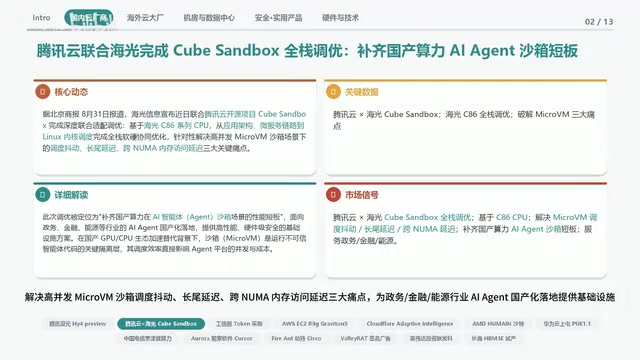
DeepSeek Open-Sources V4 Multimodal Vision Model as China's AI Ecosystem Accelerates Across the Board
DeepSeek open-sources V4-Flash-Vision-Exp multimodal model with 305B MoE params (13B active) under MIT license. Domestic compute, policy procurement, and AI security threats all accelerate.
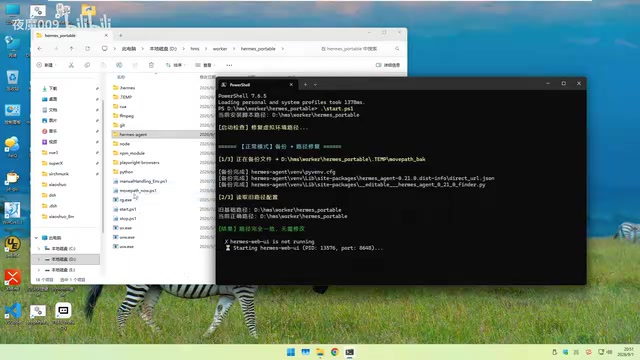
Hermes 0.21 vs DeepSeek Harness Hands-On Comparison: Two AI Agent Evolution Paths Deeply Analyzed
Hands-on comparison of Hermes 0.21.0 multi-Agent collaboration and persistent memory vs DeepSeek Harness 0.1.1 plugin architecture, analyzing two AI Agent evolution paths.