Disco Ball Icon Theme Arrives on Pixel Phones: Google's Boldest Personalization Design Yet
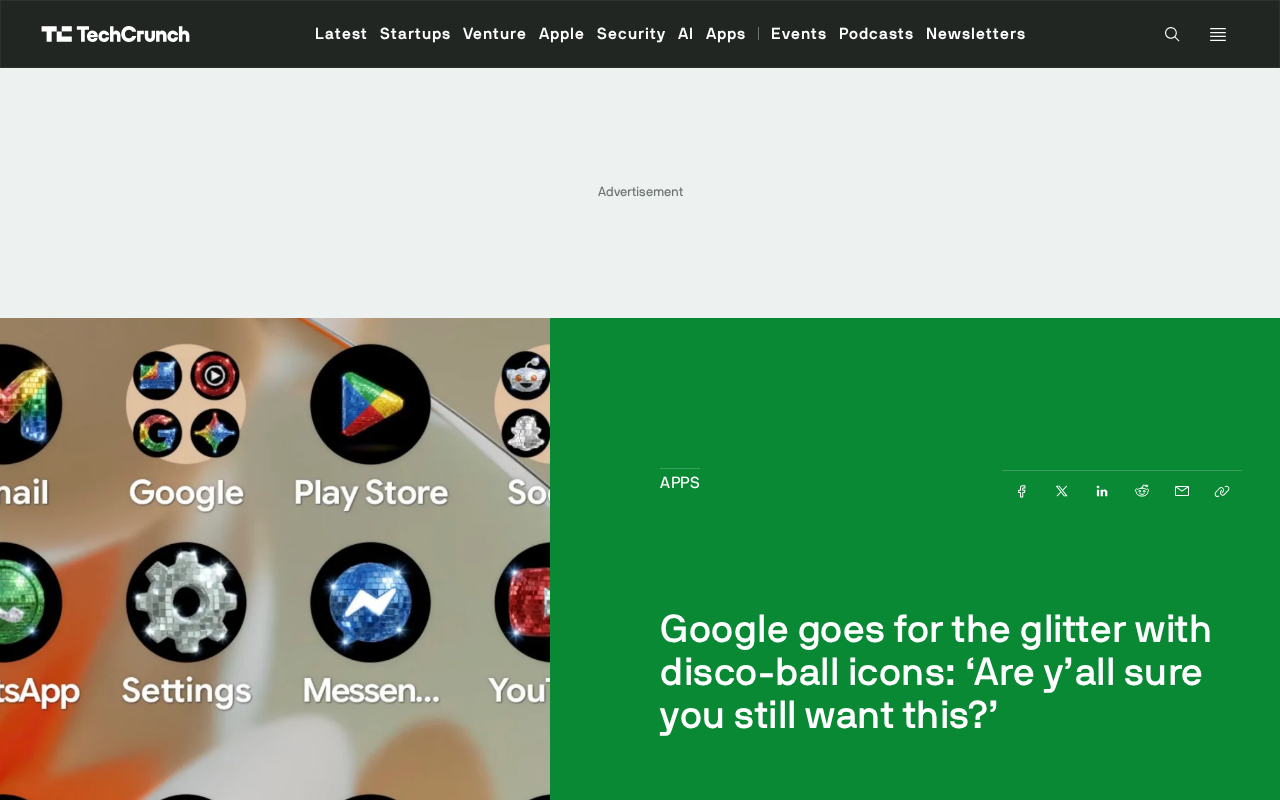
Google launches disco ball icon theme for Pixel phones, reinforcing brand differentiation through playful design.
Google has launched a disco ball-style icon theme for Pixel phones, letting users replace home screen icons with shimmering mirrored sphere designs. Built on Android's Themed Icons mechanism and shader technology, it extends the Material You design system from color into form and texture. As an optional theme, it reflects the industry shift toward emotional interface design and represents Google's strategic move to strengthen Pixel brand differentiation through exclusive personalization experiences amid increasing AI feature commoditization.
Google recently surprised Pixel phone users with an unexpected visual update — a disco ball-style icon theme that transforms the entire home screen into a sparkling "dance floor." This playful design choice has sparked lively discussion in the community, with even Google themselves quipping: "Are y'all sure you still want this?"
What Is the Pixel Disco Ball Icon Theme?
According to Google's official announcement, Pixel users can now replace all app icons on their home screen with disco ball-style designs. Every app icon takes on a mirrored sphere-like shimmering texture, instantly making the entire phone interface dazzling.
This isn't Google's first attempt at personalization themes on Pixel devices. Pixel phones have previously offered various icon themes and wallpaper options, but the disco ball style is undoubtedly the boldest and most visually striking option to date.
The technical implementation behind this theme is noteworthy. Android's icon theming capability relies on the "Themed Icons" mechanism, which was significantly enhanced in Android 13 and opened up via API to third-party developers. It works by compositing the adaptive icon foreground layer provided by developers with system-defined background and mask layers when rendering app icons, allowing uniform changes to icon appearance without modifying the apps themselves. The technical challenge of the disco ball theme lies in achieving the mirror-like reflective texture — this typically requires shaders or pre-rendered highlight maps to simulate light refraction and reflection on a spherical surface, delivering dynamic shimmer effects while maintaining smooth frame rates, which places high demands on GPU rendering pipeline optimization.
Google's Design Philosophy: Balancing Playfulness with Personalization
Google has long invested heavily in Android's personalization capabilities. From Material You's dynamic color system to various themed icon options, Pixel phones have consistently led the Android ecosystem in visual customization.
Material You is Google's next-generation design system officially launched with Android 12 in 2021, representing a major evolution from the earlier Material Design. Its core innovation is the "Dynamic Color" mechanism — the system automatically extracts dominant colors from the user's wallpaper and applies them across the entire system interface, native apps, and even third-party apps that support the feature, achieving true "system-wide theme synchronization." The underlying logic of this design philosophy is transforming the phone interface from a standardized product into a personal extension — theoretically, every Pixel phone's interface is unique. The disco ball icon theme extends this framework further, expanding personalization from the "color" dimension into "form and texture."
The launch of disco ball icons reflects several clear trends in Google's Pixel product design:
- Fun first: No longer confined to traditional flat or skeuomorphic design, boldly embracing more entertaining visual styles
- User choice: Offered as an optional theme rather than a forced update, fully respecting different users' aesthetic preferences
- Brand differentiation: Further widening the experience gap between Pixel and other Android phones through unique customization options
Community Response: Fans and Critics Alike
From Google's self-deprecating tagline "Are y'all sure you still want this?" it's clear that even within Google, opinions on this design vary. This tongue-in-cheek marketing approach is itself conversation-worthy.
Community reactions roughly split into two camps:
- Supporters see it as a fun form of personal expression that breaks the monotony of identical phone interfaces
- Critics feel the flashy disco ball style is too garish and may compromise icon recognition during daily use
However, as an optional feature, this controversy is exactly what Google wants to see — it proves that Pixel's bold personalization experiments genuinely capture user attention and drive discussion.
Industry Trend: Phone Interfaces Moving Toward Emotional Design
The appearance of disco ball icons actually reflects a larger trend in mobile device interface design — a shift from pure functionality toward emotional experiences.
Emotional Design was first systematically articulated by cognitive scientist Donald Norman in his 2004 book of the same name, where he divided design's emotional dimensions into three levels: Visceral, Behavioral, and Reflective. After mobile interface design went through two major style iterations — early skeuomorphism and flat design — it's now entering a new phase that emphasizes "visceral level" experiences, establishing emotional connections between users and their devices through visual pleasure, playfulness, and surprise.
As AI technology becomes deeply integrated into smartphones, the way users interact with their devices is undergoing fundamental changes. In this context, the home screen's role is also evolving: it's no longer merely an app launcher but a space for expressing personality and mood.
Apple's custom lock screens in iOS, Samsung's Good Lock suite, and now Google's disco ball icons are all concrete manifestations of this trend. Major manufacturers are all trying to make phone interfaces carry more emotional value.
For Pixel users, this shiny new option may not become their daily go-to, but it sends a clear signal: Google wants Pixel phones to be not just tools, but fun-filled platforms for personal expression.
Conclusion: Big Strategy Behind a Small Easter Egg
The disco ball icon may seem like just a small visual easter egg, but it reflects Google's ongoing strategic pursuit of differentiation and personalization across the Pixel product line.
Since the Pixel product line launched in 2016, it has faced a core challenge: how to establish unique brand identity among numerous competitors using the same Android system. Early Pixel differentiation relied primarily on computational photography (like Night Sight and Magic Eraser) and the fastest system update delivery. As competitors rapidly caught up in imaging capabilities, Google gradually shifted its differentiation focus to two directions: on-device AI capabilities powered by the Tensor chip (like real-time translation and Call Screen), and the personalization experience ecosystem centered on Material You. The disco ball icon theme belongs to the latter — its functional value is limited, but as a "Pixel-exclusive" experience, its brand value far exceeds its functional value, making it an important component in Google's effort to build Pixel user identity.
In an era where AI features are increasingly commoditized, this unique design language may be exactly what keeps Pixel attractive.
Key Takeaways
- Google has launched a disco ball-style icon theme for Pixel phones, allowing users to replace all home screen icons with shimmering mirrored sphere designs
- Google promoted the feature with a self-deprecating tagline, showing a humorous attitude toward this bold design choice
- The feature is built on Android's Themed Icons mechanism, using shader technology to achieve mirror-like reflective textures
- The disco ball theme extends the Material You design system, expanding personalization from the color dimension into form and texture
- The feature reflects the industry trend of mobile interfaces shifting from functionality toward emotional design, echoing the visceral level in Donald Norman's emotional design theory
- Offered as an optional theme rather than a forced update, it respects users' right to personalization choices
- The disco ball icons are part of Google's Pixel differentiation strategy, with brand value far exceeding functional value, aimed at strengthening Pixel users' sense of identity
Related articles
 Tech Frontiers
A Rare Quiet Day in AI: Recursive Self-Improvement Stirs Beneath the Surface
A rare quiet day in AI sees multiple sources go silent simultaneously. Behind the calm, Recursive Self-Improvement (RSI) research continues. What this means for the industry.
 Tech Frontiers
Reve 2 vs. Ideogram 4: A Deep Dive into Layout Control in AI Image Generation
A deep comparison of Reve 2 and Ideogram 4's layout control capabilities, covering technical approaches, real-world use cases, and industry trends for designers and creators.
 Tech Frontiers
In the Weights: Check Your Influence Score in the AI World
In the Weights is an AI influence search engine that quantifies your presence in the AI world with a score. Explore how it evaluates practitioners and what it means for digital identity.