Disney+ and Hulu Raise Prices by Up to 13% — The Subscription Dilemma After Doubling Profits

Disney raises Disney+ and Hulu prices up to 13% after doubling profits, signaling a shift from growth to ARPU extraction.
Disney has announced price increases of up to 13% for Disney+ and Hulu subscriptions, even as its streaming business has doubled its profits — drawing widespread criticism. This move reflects a broader industry shift from "low-price growth" to "maximizing ARPU," a path already taken by Netflix and Max. As user growth plateaus, price hikes become the most direct tool for improving financials. On the consumer side, rising cumulative costs across multiple platforms are fueling subscription fatigue, pushing users toward rotation strategies or ad-supported tiers. These lower-cost ad tiers are becoming a key commercial pivot, with dual-engine revenue from both subscriptions and advertising now the new industry norm.
The Price Hike: Raising Rates Even After Profits Double
Streaming giant Disney has once again adjusted subscription prices for Disney+ and Hulu, with increases reaching up to 13%. What makes this notable is that the hike comes on the heels of the company's streaming business doubling its profits. In other words, this isn't a reluctant move driven by losses — it looks more like an effort to extract greater willingness-to-pay from users on top of an already significantly improved financial position.
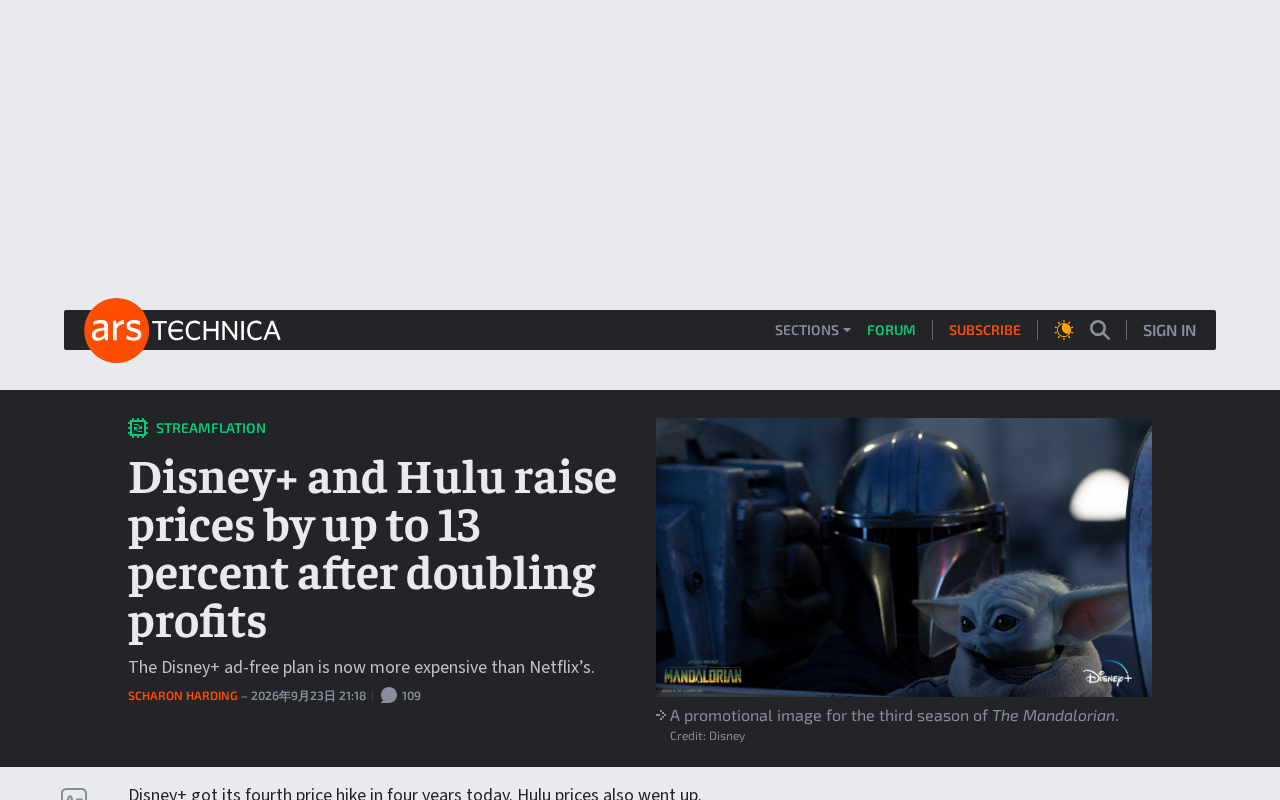
The move sparked discussion on Hacker News, where the post received 62 upvotes and 38 comments. The community was largely critical of the "keep raising prices even when you're profitable" strategy, reflecting how streaming subscription economics are pushing up against the limits of consumer tolerance.
The Shift in Streaming Industry Pricing Logic
For the past decade, streaming platforms broadly followed a "low prices to acquire users, then scale" strategy — burning cash to compete for market share. As growth tailwinds faded, the industry broadly shifted toward a profitability-first mindset, and pricing strategy moved from "capture users" to "increase revenue per user."
Disney choosing to raise prices while simultaneously doubling profits is a textbook example of this logic. When user growth slows and content libraries stabilize, platforms prefer to boost Average Revenue Per User (ARPU) through price increases rather than continuing to rely on expanding their subscriber base. The same pattern can be observed at major competitors like Netflix and Max.
Three Core Drivers Behind the Price Increase
From an industry perspective, price hikes like this are typically driven by a combination of factors: continuously rising content production costs, sustained shareholder pressure for profitability, and increased confidence in paid conversion following crackdowns on account sharing. When a platform confirms that user stickiness is high enough and the cost of canceling is significant, raising prices often becomes the most direct lever for improving financial results.
ARPU (Average Revenue Per User) is one of the most critical financial health metrics for streaming platforms. When user growth slows, increasing ARPU is often more economically efficient than acquiring new subscribers — the marketing cost to acquire a new user (CAC) can be 5 to 10 times higher than retaining an existing one. Netflix's account-sharing crackdown between 2022 and 2023 was, at its core, an ARPU improvement initiative: by forcing "password borrowers" to pay, it significantly expanded the subscription revenue base without needing to add large numbers of new users. Disney's price hike follows the same logic — once a platform uses behavioral data to confirm that core subscribers have low cancellation intent, a direct price increase is the lowest-marginal-cost, most predictable path to profitability.
"Subscription Fatigue" Is Building Among Consumers
For the average user, a 13% increase on a single platform might not seem alarming — but when consumers are simultaneously subscribed to multiple streaming services, the cumulative cost is rising fast. This "subscription fatigue" has become a quiet concern for the industry: users are increasingly rotating between platforms, keeping subscriptions only while they're actively watching a show, then canceling once they're done.
Discussions on Hacker News reflect this trend: many users in the tech community said that faced with repeated price increases, they prefer "subscription rotation" or downgrading to ad-supported tiers — and some users are questioning the overall value proposition of streaming altogether.
Ad-Supported Tiers Emerge as a New Equilibrium
Notably, Disney and its competitors are all aggressively promoting lower-priced, ad-supported subscription tiers. This effectively gives users a "downgrade but pay less" option even as prices rise, allowing platforms to increase overall revenue while reducing churn. The dual-engine model of advertising revenue plus subscription revenue is fast becoming the new normal for streaming monetization.
Ad-supported streaming models (AVOD/FAST) hold a unique commercial advantage: platforms can collect fees from both subscribers and advertisers simultaneously, meaning the actual per-user revenue of a lower-priced ad tier can sometimes exceed that of a pure subscription tier. In Disney+'s case, ad-tier users tend to have longer watch times (with no manual content skipping) and provide the platform with precise viewing preference data, giving Disney stronger pricing power with advertisers. This explains why Disney and other platforms price their ad-supported tiers so aggressively — the low price isn't the end goal, but rather an entry strategy to migrate users away from competitors while activating advertising inventory.
What This Means for the Industry
Disney's latest price increase is a microcosm of the streaming industry's maturation. When the growth story runs out, platforms must find a balance between profitability and user satisfaction. In the short term, price hikes deliver immediate improvements to financial results; in the long term, if content quality can't keep pace with rising prices, user loyalty will eventually erode.
For consumers, rationally managing your subscription portfolio — making smart use of ad-supported tiers and rotation strategies — will become the practical response to ongoing price increases. For industry observers, the pricing moves at Disney+ and Hulu are worth tracking as an important reference case for how streaming platforms navigate the transition to profitability.
Related articles

NVIDIA's 30,000 Developers Use Cursor, Code Commit Volume Triples
Cursor engineer Chris Diaz breaks down five organizational gaps blocking enterprise AI coding scale—strategy, risk tiering, governance, metrics, and operating model. NVIDIA's 30,000 developers use Cursor daily, tripling code commits while defect rates stay flat. The key: rewrite the SDLC, not add tools.

Ponytail: Giving AI Coding Agents a Senior Engineer's Mindset
Ponytail is a free GitHub tool that injects a senior engineer's mindset into AI coding agents, making them ask whether code is even necessary first. According to TamilDeck, it can compress 200 lines of AI-generated code to 30, cutting token costs, with support for Cursor rules and Claude Code skill integration—though security review still requires human oversight.

Complete Guide to Connecting Cursor AI to the GitHub MCP Server
A step-by-step guide to connecting Cursor AI to the GitHub MCP server: create a personal access token, configure mcp.json, store the token in the ENV block, and verify with a PR query.