Driving Hermes Agent with a Claude Subscription: A Direct SDK Plugin Field Guide

A Nous Research plugin uses the official Claude Code CLI as a transport layer, letting a subscription compliantly drive Opus within Hermes Agent.
The article introduces Nous Research's Claude Subscription Direct SDK plugin, which reuses the locally logged-in Claude Code CLI as the transport layer for model requests and responses, letting a Claude subscription work compliantly in Hermes Agent without injecting tokens or going through OAuth. The plugin supports three installation methods, and after installation you can choose models like Opus 5.5 and Haiku 5.5. Architecturally, "Claude is the brain, Hermes is the agent": the agent loop, tool execution, memory, and skills are all controlled by Hermes, with Claude merely providing responses. The essential difference from Claude Code and Buzz is who runs the agent. In same-prompt tests, Hermes was faster with tighter output, but the plugin remains experimental, is sensitive to CLI versions, and Anthropic's policy may change.
Driving Hermes Agent with a Claude Subscription: A Direct SDK Plugin Field Guide
Anthropic once blocked the practice of using Claude subscriptions with third-party agents via auth tokens, forcing many users who liked driving their own agents with the Opus series to switch to GPT, Grok, or local models. According to a YouTube channel, Nous Research's Claude Subscription Direct SDK plugin reopens this path—not by circumventing the rules, but by using the official Claude Code CLI as a transport layer so the subscription works compliantly within Hermes Agent. This article covers how to install the plugin, how it works, and how it fundamentally differs from agent frameworks like Claude Code and Buzz.
What the Plugin Is: The Official CLI as Transport, Not Token Cracking
Released by Nous Research, this plugin positions itself as the official way to connect to a Claude subscription. The author says he has used it for several weeks straight with no stability issues. It differs fundamentally from the earlier, now-prohibited token-injection approach: the plugin doesn't take subscription credentials and call the API directly. Instead, it reuses the Claude Code CLI already logged in on the local machine, treating it as the channel for model requests and responses.
The plugin is still labeled experimental because "replay behavior is sensitive to CLI versions"—in other words, changes to Claude Code can affect how the plugin behaves. The author cautions that Anthropic could change its policy at any time, but as of now, this usage is permitted. That matters: users don't have to worry about account risk while still enjoying the capabilities of the Opus series (the author considers Opus 5.5 clearly ahead of comparable models).
Claude Code CLI is Anthropic's official command-line tool. Users interact with Claude models in the terminal via the claude command, which supports logging in with a subscription account, performing local file operations, and invoking tools. Its login state is stored as OAuth credentials in a local config directory, and the CLI automatically refreshes credentials and signs requests on each call. Because the official program holds and manages the credentials, a third-party tool only needs to reuse this already-logged-in process rather than touching the raw token—keeping usage of subscription quota within compliant boundaries. This is the fundamental dividing line between this plugin and the earlier "grab the auth token and call the API directly" approach: the latter exposes credentials to non-official code, while the former lets the official binary control the entire authentication flow.
Three Installation Methods: Desktop, Terminal, and In-Conversation
The plugin offers multiple installation paths to suit different habits.
Method 1: Desktop Plugin Directory
In the Hermes desktop app, go to the Capabilities tab and open Plugins to see the Hermes agent plugin directory. Under the Models category you'll find Claude Subscription Direct SDK. Click "add to agent" to install it directly, or copy the terminal command it provides and run it manually.
Method 2: Terminal Command Installation
The core command is hermes plugins install claude-subscription-direct-sdk, which installs to the default Hermes config file. To install into a specific profile, include the profile name in the command, e.g. video producer plugins install claude-subscription-direct-sdk. The installation process automatically pulls the GitHub repository and handles the required Python dependencies.
Method 3: In-Conversation Installation
This is the approach the author finds most novel: simply ask the agent in chat to install the plugin. It surfaces a plugin card with an official badge; confirm and click to complete installation without ever leaving the conversation interface.
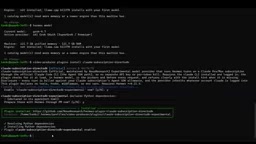
Once installed, the plugin appears in the model selection list, where you can pick specific Claude models, including the then-latest Haiku 5.5 and Opus 5.5. The author specifically notes that Opus 5.5 has a 1-million-token context window, so length is not a concern. There's no OAuth authorization page and no token to paste—the CLI is already logged in, and the plugin simply reuses that session.
How It Works: Claude Is the Brain, Hermes Is the Agent
The key to understanding this plugin is distinguishing who is running the agent.
The workflow is this: Hermes acts as the agent handling overall orchestration, the official Claude CLI acts as the transport layer, and the Claude model acts as the backend. Claude returns text and tool requests; Hermes executes the tools and sends results back. Each model call spawns a temporary CLI process and replays the relevant conversation context.
In a nutshell: Claude is the brain, Hermes is the agent. The agent loop, tool execution, approvals, delegation, memory, skills, session management, and context compaction are all controlled by Hermes, so switching to this plugin doesn't sacrifice any agent-level capability. Claude Code's native tools are not used.
This design also explains why it's compliant: subscription credentials always stay inside the official CLI, and Hermes merely consumes the model's output.
The stream JSON protocol is a structured output mode provided by the Claude Code CLI: when launched with --output-format stream-json, the CLI emits JSON events line by line, covering message deltas, tool-call requests, and final results, so external programs can parse them one at a time without dealing with human-readable terminal text. The plugin uses this protocol to communicate with the CLI—each model call spawns a temporary CLI process, writes the conversation context, and then reads the streaming events returned. Because this protocol is a stable interface exposed by the CLI, the plugin doesn't need Anthropic's Python agent SDK package, but it is more sensitive to CLI version changes; adjustments to protocol fields directly affect replay behavior, which is the technical reason the plugin is marked experimental.
The Fundamental Difference from Claude Code and Buzz
The author raises a question more important than "how do I log in": who is actually running the agent.
In tools like Claude Code and Buzz, Claude itself is the agent—tool execution is handled by Claude's runtime, and the application layer only provides UI, permission controls, and orchestration. Buzz bridges via ACP, and Claude Code uses the agent SDK, but the essence is the same: Claude's runtime is running the agent.
Hermes Direct SDK is the opposite: Claude only handles transport, tool execution and the agent loop belong to Hermes, and the logged-in CLI merely provides model responses.
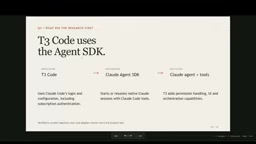
The name "Direct SDK" is a bit misleading. It communicates directly using the native stream JSON protocol, so it doesn't depend on Claude's Python agent SDK package, but it does require an unmodified official Claude Code executable.
ACP (Agent Client Protocol) is an open protocol for connecting editors/clients to agent runtimes, aiming to let different agent backends plug into various frontends through a unified interface. Buzz bridges Claude via ACP, meaning Claude's runtime is still the true agent executor, and Buzz only handles interface presentation and request forwarding. This contrasts with Hermes's approach: ACP solves "how a frontend connects to an agent," while the Direct SDK plugin solves "where the agent loop lives." Understanding this distinction explains why, despite both connecting to Claude, Buzz and Hermes end up with completely different capability boundaries around tool-execution ownership, memory management, and approval flows.
Hands-On Comparison: Response Speed and Output Style
The author ran a same-prompt comparison: asking "what is the Claude agent SDK" simultaneously in Claude Code and Hermes (both using Opus 5.5). Hermes gave the final answer faster and with tighter output; Claude Code's answer was more verbose.
The author attributes part of the style difference to his own skills configuration and SOUL.md file—he prefers short answers—and Hermes also has built-in documentation-query skills. On speed, Hermes wins through fewer intermediate steps rather than a faster model.
Who It's For and What to Watch Out For
This setup suits users who already subscribe to Claude and want to reuse their subscription quota in their own agent, especially those who value Opus 5.5's capabilities and don't want to give up Hermes's memory and skill systems.
Three things to keep in mind: the plugin is still experimental, and CLI version changes may affect stability; Anthropic's policy could change at any time, and being available now doesn't mean it will be long-term; and the plugin depends on a locally logged-in Claude Code, so cross-device or multi-account scenarios require extra checks on login state.
For users who want to dig deeper into agent skills and workflows, the author also recommends his knowledge-base project AgentWikis, available as a standard wiki and a paid Pro subscription.
One-line Summary
A Nous Research plugin uses the official Claude Code CLI as a transport layer, letting a subscription compliantly drive Opus within Hermes Agent.
Paragraph Summary
The article introduces Nous Research's Claude Subscription Direct SDK plugin, which reuses the locally logged-in Claude Code CLI as the transport layer for model requests and responses, letting a Claude subscription work compliantly in Hermes Agent without injecting tokens or going through OAuth. The plugin supports three installation methods—desktop plugin directory, terminal command, and in-conversation—and after installation you can choose models like Opus 5.5 and Haiku 5.5. Architecturally, "Claude is the brain, Hermes is the agent": the agent loop, tool execution, memory, and skills are all controlled by Hermes, with Claude merely providing responses. The essential difference from Claude Code and Buzz is who runs the agent. In same-prompt tests, Hermes was faster with tighter output, but the plugin remains experimental, is sensitive to CLI versions, and Anthropic's policy may change.
Related articles

OpenAI Partners with Shield: How the Astra Agent Revolutionizes IT Troubleshooting
OpenAI and Shield launch the Astra agent, which autonomously logs into computers and legacy systems to fix IT issues in real time, 35-40% faster than traditional models, with humans involved only when judgment is needed.

iPhone Duo Battery Life Tested: One Charge a Day Is Unavoidable, and the Large Screen Is the Culprit
iPhone Duo battery test: heavy use needs at least one charge a day, and about 30% remains after 6.5 hours of screen-on time. How often the large screen is unfolded is key; a MagSafe battery pack helps, and long-term degradation is also worth watching.

Kimi K3.1 Pro Open-Sourced: 2.8 Trillion Parameters Close In on Opus
Moonshot releases the open-source MoE model Kimi K3.1 Pro, with 2.8T total parameters and 104B activated, trailing Opus 5.5 by under 1 point on Terminal Bench 4.0.