Dub Program Marketplace: A One-Stop SaaS Affiliate Marketing Platform

Dub launches a SaaS affiliate marketplace to help creators discover and apply for top programs in one place.
Dub Program Marketplace is a SaaS-focused affiliate program aggregator targeting content creators, influencers, and newsletter operators with existing audiences. It features programs from leading brands like Framer, Superhuman, Granola, Wispr Flow, and CodeRabbit, aiming to solve the fragmentation and friction of traditional affiliate marketing by centralizing browsing, comparison, and applications. Parent company Dub, a link management and distribution tracking infrastructure provider, sees this as a natural product extension. Key unknowns around commission structures and approval criteria remain to be verified.
What Is Dub Program Marketplace
Dub Program Marketplace is a platform that aggregates high-quality SaaS affiliate programs, enabling content creators, influencers, and anyone with an audience to browse and apply for top-tier promotional partnerships. Its core value proposition is straightforward: help you turn your traffic and influence into real income.
The product launched on Product Hunt with 89 upvotes, ranking 9th for the day. While comments were limited (just 4), its focus on the affiliate marketing vertical makes it worth paying attention to.
A Lineup of Leading SaaS Brands
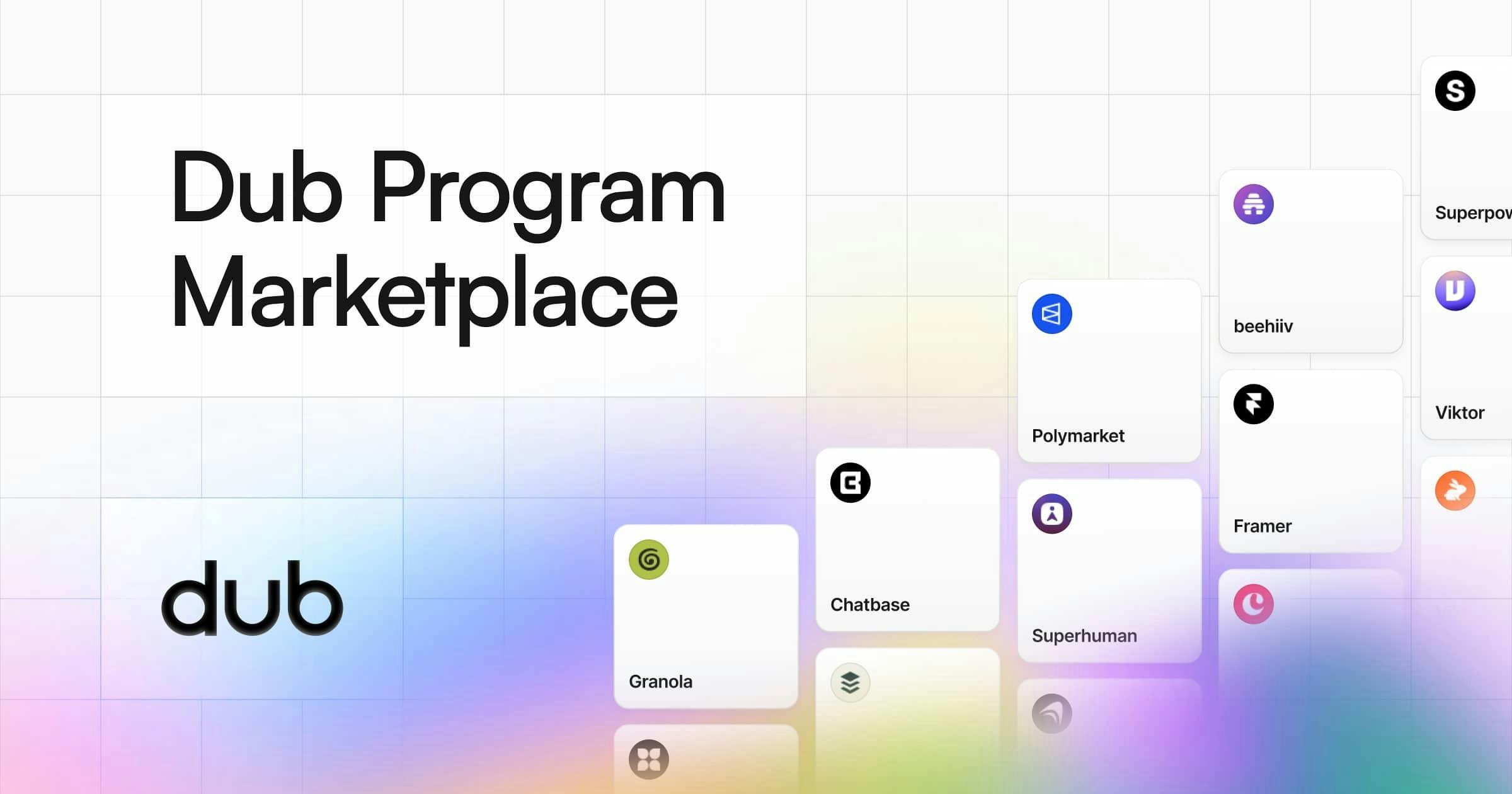
Dub Program Marketplace's biggest draw is the quality of its partner roster. The platform currently features affiliate programs from well-known SaaS companies including Wispr Flow, Framer, Granola, Superhuman, and CodeRabbit.
These names will be familiar to anyone plugged into the current tool ecosystem: Framer is a popular no-code website builder, Superhuman is the premium email client known for speed, Granola and Wispr Flow have made their mark in meeting notes and voice input respectively, and CodeRabbit is an AI-powered code review tool. Bringing together products that are actively in their growth phase under one roof significantly lowers the barrier for creators looking for quality monetization channels.
Why Brand Quality Matters
Affiliate conversion rates are heavily tied to how appealing the product itself is. Promoting tools your audience genuinely wants to pay for is far more likely to generate sustainable commissions than pushing a collection of low-quality products. By pre-screening its partners, Dub effectively handles a round of quality control on creators' behalf.
The core logic of affiliate marketing is simple: promoters drive purchases through unique referral links or promo codes and earn a percentage of each sale. SaaS products, given their subscription-based nature, typically offer recurring commissions — meaning as long as a referred user keeps paying, the promoter continues to receive a monthly or annual cut, rather than a one-time payout. This is fundamentally different from e-commerce affiliate models, which usually only pay out on the first purchase. For creators, this means a single high-quality review or tutorial could generate passive income for years. It's precisely why SaaS affiliate programs have become one of the most popular monetization strategies for tech-focused content creators.
What Problem Does It Solve
For creators, the traditional pain point in affiliate marketing is fragmentation — every company has its own application portal, terms, and dashboard, making the process of finding, comparing, and applying tedious and time-consuming. Dub Program Marketplace aims to standardize this workflow: browse, compare, and apply in a single marketplace.
For SaaS companies, aggregator platforms like this offer an efficient channel to reach potential promoters, creating a two-sided network effect. This also fits naturally into Dub's broader strategy as a link management and distribution infrastructure provider expanding into an affiliate marketplace.
Dub itself is an infrastructure company focused on link management and distribution tracking. Its core product offers short link generation, click analytics, and affiliate tracking — positioning it as a "branded short link + attribution platform" for developers and growth teams. Launching Program Marketplace is a natural extension of its product line: having already built the technical backbone for SaaS companies' affiliate tracking, creating a marketplace that connects brands with promoters forms a closed loop of data and traffic. This "infrastructure → platform → ecosystem" expansion path has clear precedents at companies like Stripe (payments → Stripe Atlas → Stripe App Marketplace).
Who Is It For
- Content creators and influencers: People with an audience who lack a systematic monetization path
- Newsletter and community operators: Can embed recommendations directly into their content distribution
- SaaS reviewers and tutorial creators: Already covering tools, so joining affiliate programs is a natural next step
If your audience heavily overlaps with SaaS, productivity tools, or AI applications, this type of marketplace will be an especially strong fit.
A Brief Assessment
Dub Program Marketplace has a clear value proposition, addressing a genuine pain point in affiliate marketing: difficulty finding good programs and cumbersome application processes. The quality of its partner brands is currently its most compelling differentiator.
That said, most publicly available information focuses on positioning and the partner lineup. Key operational details that creators care most about — commission structures, approval criteria, payout schedules — remain unclear and will need to be verified through hands-on experience. For creators looking to monetize, it's at least worth bookmarking and testing out.
Related articles

Why Does the Tesla Roadster Need to Fly? A Deep Dive into Musk's Wild Demo
Tesla's Roadster launch showed wall-climbing, upside-down driving, and flying stunts—but The Vergecast notes the demo car may lack a battery, the Rocket version is invite-only and not street-legal, and the website terms don't guarantee delivery. After nine years of delays, why does this car still need to exist?

AI Is Not a Replacement: Human-AI Collaboration Through the Lens of Factory Root Cause Analysis
Starting from factory root cause analysis, this article explains how AI accelerates evidence chain construction rather than replacing human experts, exploring the pragmatic implementation logic and business value of 'AI supporting people rather than replacing them.'

AI Agent Decision Auditing: Building an Evidence Chain in Regulated Workflows
Starting from a Reddit discussion, this article analyzes three core issues in AI agent decision auditing within regulated workflows: what fields audit records should contain, how to handle feedback latency for erroneous decisions, and how to continuously calibrate LLM judge consistency with human judgment.