Egoist AI Passport: Making AI Tools Understand You Better While Keeping Your Data Yours
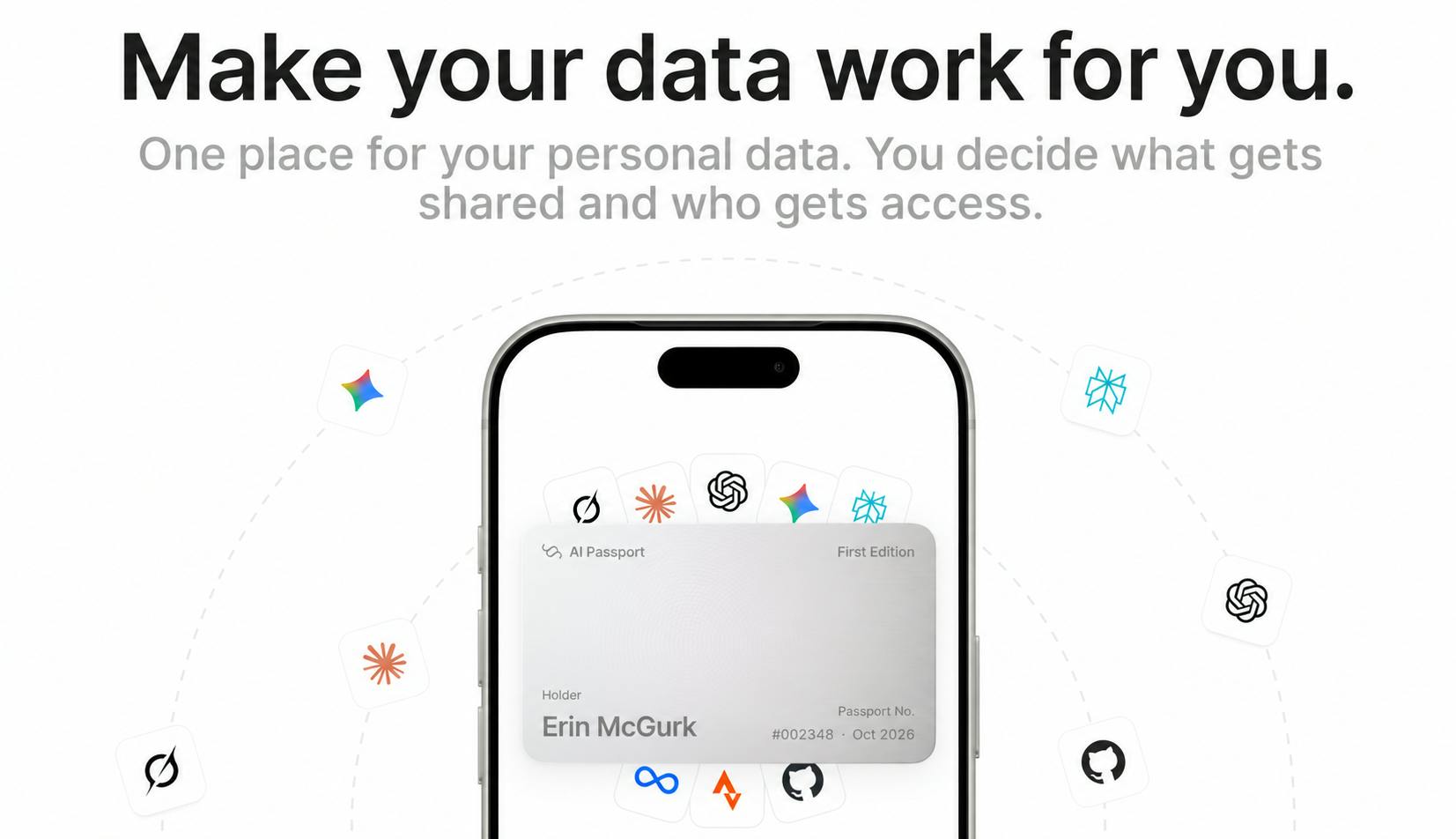
Egoist AI Passport centralizes personal data and grants fine-grained, revocable access to AI tools.
Egoist AI Passport is a privacy tool that centralizes personal data like emails and calendars, letting users grant AI tools (e.g., ChatGPT, Claude) fine-grained, revocable access. It aims to balance personalization with data sovereignty but faces challenges in trust, ecosystem compatibility, and user adoption.
Title
Egoist AI Passport: Making AI Tools Understand You Better While Keeping Your Data Yours
Meta Description
Egoist AI Passport is a personal data privacy tool that securely stores your emails, calendars, and other data, letting AI tools read specified content on demand with revocable permissions—balancing personalization with data sovereignty.
Article Content
The more powerful AI tools become, the more we need to feed them personal information—emails, calendars, chat logs—to get truly personalized responses. But privacy risks come with it. A recent product on Product Hunt, Egoist AI Passport, attempts to resolve this tension: it stores your personal data in a centralized place, then lets you precisely control which AI tools can access which information, with the ability to revoke permissions at any time.
Core Logic: Data Stays Put, Context Flows on Demand
Egoist AI Passport positions itself as a "safe + passport for personal data." It supports connecting Email, Calendar, and common tools like ChatGPT and Claude. You don't need to copy-paste data into every AI application; instead, you authorize AI tools through the Passport to read only the data segments you specify.
The official description is straightforward: "AI Passport securely keeps your personal data in one place, then lets you bring that context into the AI tools you use." The key is "choice"—you decide what to share and what to keep, and you can revoke authorization at any time. This essentially adds a programmable permission middleware layer between AI tools and your private data.
Why This Need Is Growing Stronger
Over the past year, AI assistants have been shifting from "general Q&A" to "personal assistants." For AI to be truly useful, it needs to know your schedule, the emails you've written, and your common expressions. But most AI products either require full authorization (e.g., connecting your entire mailbox) or force you to manually copy-paste—the former is high-risk, the latter is a poor experience.
Egoist AI Passport targets exactly this gap: fine-grained authorization + centralized management. Users no longer need to repeatedly configure data sources in every AI application, nor do they have to give up personalization out of privacy concerns. This "data sovereignty" approach has strong real-world appeal in today's era of rising privacy awareness. The product received 83 upvotes and ranked 9th on Product Hunt, indicating genuine community interest in such tools.
Fine-grained Authorization is a core concept in access control, referring to a system's ability to grant or deny access at a very granular level (such as individual data fields, single records, or specific time ranges), rather than only offering "all-or-nothing" coarse-grained control. In AI personal assistant scenarios, fine-grained authorization means users can specify that a certain AI tool can only read a few specific calendar events, or only access emails from particular senders, rather than the entire calendar or mailbox. This mechanism is typically implemented with Attribute-Based Access Control (ABAC) or policy-based permission models, dynamically binding permissions to data attributes and user intent. For privacy-sensitive applications, fine-grained authorization can significantly reduce the risk of over-exposure of data, but it also places higher demands on the usability of permission management interfaces—the finer the configuration, the higher the user's understanding and operational costs tend to be.
Feature Breakdown: Connect, Select, Revoke
According to the product page, Egoist AI Passport's workflow can be broken into three steps:
Step one: Connect data sources. It supports common personal data sources like Email and Calendar, as well as connecting AI tools like ChatGPT and Claude. This means it's not limited to a single ecosystem but aims to be a cross-application passport.
Step two: Select sharing scope. You can precisely specify which data a particular AI tool can read. For example, allow a scheduling assistant to read your calendar but not touch your email.
Step three: Revoke permissions at any time. This is the key selling point of privacy tools—authorization is not one-time; users can revoke it whenever they want. For users worried about data misuse or secondary distribution, the right to revoke is itself a source of security.
Challenges Worth Watching
From the product description, Egoist AI Passport's vision is clear, but there are several execution-level issues to watch.
Trust. Centralizing personal data into a third-party safe itself creates a new single point of risk. Users need to trust Egoist's security capabilities, and the product page currently doesn't elaborate on technical details (such as encryption methods or data storage locations). For privacy tools, trust is the biggest barrier.
Ecosystem compatibility. The way it connects to tools like ChatGPT and Claude depends on whether these platforms have opened up corresponding data access capabilities. If it can only bridge through browser extensions or clipboard, the experience may suffer.
User mindset. Are ordinary users willing to spend time configuring fine-grained permissions? Many will choose "allow all" for convenience. If the default settings aren't secure enough, the product's original intent may be undermined.
Single Point of Failure in security refers to a situation where a single component's failure or compromise brings down the entire system or all data. Centralizing dispersed personal data—emails, calendars, chat logs—into a third-party "safe" improves management convenience but also concentrates originally dispersed risk into one point: if the service is breached, abused by insiders, or misconfigured, attackers could obtain all of a user's sensitive information at once. Common mitigations for single points of failure include end-to-end encryption (so the service provider cannot read plaintext), zero-knowledge architecture, distributed storage, and regular third-party security audits. For privacy tools, whether these technical details are disclosed and whether users can independently verify security is often the key to building trust.
Who It's For
If you use multiple AI tools simultaneously and frequently need to feed them personal context (schedules, emails, notes), Egoist AI Passport offers a more elegant solution than manual copying and more controllable than full authorization. For privacy-sensitive users and knowledge workers managing multiple AI assistant workflows, this product is worth watching.
Currently, the product is in an early stage on Product Hunt with 83 upvotes and 6 comments, and a small team (two makers). Whether it can become the "identity and data passport" of the AI era depends on future investment in security transparency and ecosystem integration. But at least it raises the right question: how to make AI understand you better while keeping your data yours.
One-line Summary
Egoist AI Passport uses centralized storage and fine-grained authorization to let AI read personal data on demand with revocable permissions.
Paragraph Summary
Egoist AI Passport is a product that attempts to resolve the tension between AI personalization and privacy leakage. It centralizes personal data—emails, calendars, chat logs—as a "safe + passport," letting users precisely control which AI tools (like ChatGPT and Claude) can read which data segments, with the ability to revoke authorization at any time. Its core idea is data stays put while context flows on demand, avoiding full authorization or manual copy-paste. The product received 83 upvotes and ranked 9th on Product Hunt, reflecting genuine community interest in data sovereignty tools. However, the article also points out three major challenges: trust (centralized storage creates a single point of risk), ecosystem compatibility (dependent on platforms' openness), and user mindset (users may allow everything for convenience). Whether it can become the identity and data passport of the AI era depends on future investment in security transparency and ecosystem integration.
Related articles
Open-Source AI Desktop Robot: Built with a Laptop + Android + Pico
Open-source AI desktop robot PAL9000: a MacBook runs MediaPipe vision and llama-cpp dialogue, an Android phone is the animated face, and a Raspberry Pi Pico W drives a 2-DOF pan-tilt head. Modular design, reproducible piece by piece, with a discussion of anthropomorphic design.
Why Did Your Backtest 'Beat' SOTA? The Weather Covariate Leakage Trap
A backtest showed Timestral's MASE dropping from 0.71 to 0.49, seemingly beating SOTA—but it was caused by weather covariate leakage. After correction, it was only 0.66. This article analyzes the leakage, the archived forecast dilemma, and provides a checklist for time series backtesting.
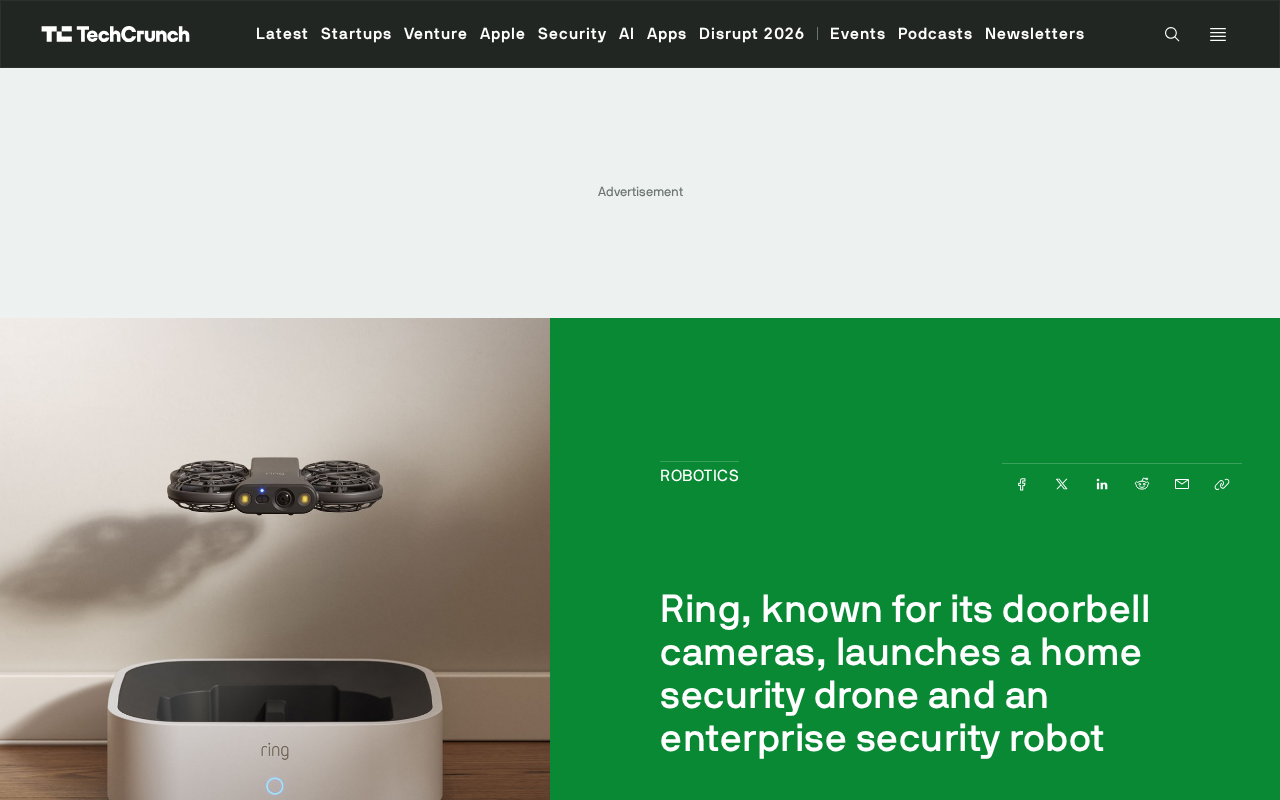
Ring Enters Robotics: Launching Home Security Drones and Enterprise Patrol Robots
Ring enters robotics with a home security drone and an enterprise rolling patrol robot. This article analyzes its product expansion logic, use cases, and practical challenges.