Eight Text-to-Image Models Compared: Which Excels at Realism, Ghibli, and Anime Styles

A hands-on comparison of eight text-to-image models across realistic, Ghibli, and anime styles.
This article compares eight mainstream text-to-image models—including Krea2, Flux2 Clean, Qwen Image, and Z Image—using official original workflows to test core capabilities across four styles: realistic portraits, Ghibli, 3D anime, and Japanese anime, with selection recommendations for each use case.
Technical Background of Text-to-Image Models
Before diving into the comparison, it's worth understanding the shared underlying logic of these models. Text-to-Image models are essentially deep learning systems based on the Diffusion Model. The working principle is as follows: during the training phase, the model learns the process of progressively "adding noise" to a real image until it becomes pure noise; during the inference phase, the model starts from random noise and, guided by the semantics of the text prompt, progressively "denoises" to restore an image that matches the description.
The theoretical foundation of diffusion models can be traced back to the Denoising Diffusion Probabilistic Models (DDPM) that emerged around 2020, whose core ideas drew on stochastic processes from non-equilibrium thermodynamics. A major pain point of early DDPM was slow inference—generating a single image often required hundreds of iterative denoising steps. To address this, the academic community successively proposed accelerated sampling schemes such as DDIM (Denoising Diffusion Implicit Models), compressing the number of steps to a few dozen or even single digits. The Flow Matching technique that has risen to prominence over the past two years fundamentally changed the training paradigm: instead of learning stochastic diffusion trajectories, it directly fits the Optimal Transport Flow path from noise to image, making training more stable and inference paths shorter. This is precisely one of the core reasons the Flux series of models can significantly improve inference efficiency while maintaining high-quality output.
Text encoders such as CLIP and T5 are responsible for converting natural language into vector representations that the model can understand, and they are the key modules determining prompt adherence—which also explains why different models perform so differently in terms of "whether elements are omitted." Specifically, the CLIP encoder is trained via contrastive learning and excels at capturing global semantic alignment between text and images, but handles fine-grained semantics within long sentences (such as multiple parallel attributes) less effectively; text models with autoregressive or encoder-decoder architectures like T5 are better at understanding complex syntactic structures and word-order relationships. The Flux series uses the outputs of both CLIP and T5 encoders for conditional injection, precisely to balance global semantic understanding with fine-grained attribute capture—which is also the technical reason its prompt adherence is relatively well-balanced.
The AI Image Generation Field: A Flourishing of Open-Source Models
In the AI image generation field, open-source models emerge endlessly, from the recently popular Krea2, to Alibaba's Qwen Image series, to Black Forest's Flux series—each model has its own followers. Faced with so many choices, ordinary users often find it difficult to judge: which model suits which style? This article, based on a systematic comparison by a Bilibili content creator, provides an in-depth analysis of the core capabilities of eight mainstream text-to-image models across four major visual styles.
It's worth noting that the current AI image generation ecosystem has formed a three-tier structure: "base model—community fine-tuning—workflow packaging." Base models are trained and released by large labs or tech companies, while the community derives a massive array of LoRA fine-tuned weights, ControlNet control networks, and customized ComfyUI workflows around these base models. This open ecosystem has greatly lowered the barrier for ordinary users to enter AI creation, but it also brings choice difficulty—faced with dozens of community-derived versions of the same base model, choosing the base model with the strongest core capabilities has become a prerequisite for rational decision-making.
The Eight Text-to-Image Models in the Comparison
This evaluation covers nearly all mainstream text-to-image models in the open-source community. The core principle is to use only the official original workflow, without any parameter optimization or complex post-processing, with the goal of purely showcasing each model's core capabilities.

Overview of Mainstream Model Positioning
-
Krea2: One of the hottest models at present, with numerous creators building various workflows around it, such as image repainting and depth maps. This evaluation uses a dual-color (noise enhancement) workflow, which produces more image detail by adding noise. So-called "noise enhancement" essentially retains a higher noise intensity in the initial stages of denoising inference, forcing the model to generate details within a larger exploration space, thereby enriching texture performance—at the cost of potentially introducing slight graininess.
-
Boogu: Focused on the design domain, it can be seen as a simplified version of the well-known design model IDL, performing excellently in text editing, text generation, and prompt adherence. Boogu's high-adherence characteristics stem from the composition of its training data—design-domain datasets typically contain a large number of samples with strong text-image correspondence (such as posters and infographics), giving the model a natural advantage in aligning text with visual elements.
-
Qwen Image: A text-to-image model released by Alibaba with relatively stable quality. It was quite impressive when first launched, but as stronger models have emerged, its performance is now middling. Qwen Image's technical approach is deeply tied to Alibaba's multimodal large model system, giving it a certain advantage in understanding the semantics of Chinese prompts, but it is relatively conservative in internalizing international aesthetic styles.
-
AIO Model: Built on Qwen Image with unrestriction processing applied, and image quality optimization. So-called "unrestriction" refers to technical means of removing content limits by removing safety filtering components or continuing training with uncensored datasets—a typical product of the open-source community's secondary development ecosystem. Unrestriction operations usually bring a double-edged effect: on one hand, content freedom increases; on the other, if the quality of the continued training data is uneven, it may degrade generalization ability for certain styles. This partly explains why AIO failed in the Ghibli style test.
-
DMD: Has maintained popularity since its release, with online generation quality and aesthetics, and is especially good at generating realistic-looking characters. DMD (Distilled Model Diffusion) type models are typically trained via Adversarial Distillation techniques, capable of generating high-quality images with very few sampling steps (or even a single step), offering an order-of-magnitude improvement in inference speed compared to standard diffusion models.
-
Z Image: An unrestricted optimized version based on the original model, supporting NSFW content generation, with simultaneous image quality improvements.
-
Flux2 Clean (F2K): A miniaturized version launched by Black Forest based on Flux2. Black Forest Labs was founded by the former core team of Stability AI, and its Flux series adopts a Flow Matching architecture fusing Transformer and diffusion models—specifically, Flux replaces the UNet backbone in traditional diffusion models with a multimodal Transformer (MMDiT), allowing text and image features to cross-fuse with each other in every attention layer, rather than being unidirectionally injected only at the Cross-Attention layer. This enhances the influence of text semantics throughout the image generation process at the architectural level. F2K compresses model size via Knowledge Distillation technology—i.e., using the output of a large "teacher model" to guide the training of a small "student model"—retaining strong capabilities while reducing inference cost. It is comprehensive in features, supporting tattoo images and image-to-image, with good overall results.
-
Rui Image (Xiaohongshu version): Distilled and trained by Xiaohongshu based on Z Image, with a focus on strengthening text generation capabilities, especially Chinese character generation. Chinese characters have complex strokes and variable glyph shapes, making them a recognized weak point for diffusion models. The fundamental reason is that diffusion models model content through continuous probability distributions in pixel space (or latent space), which is inherently unfriendly to content like stroke structures that require precise discrete topological relationships. Moreover, the proportion of high-quality Chinese character text-image pairs in mainstream training datasets is far lower than that of Latin characters. To address this problem, specialized data augmentation (large amounts of rendered Chinese character images) and targeted loss function design (such as increasing the reconstruction weight of stroke regions) are needed for effective improvement—which is also Rui Image's core differentiation direction.
Realistic Style Evaluation: Krea2 Stands Head and Shoulders Above the Rest
In the realistic character test, Krea2 performed best. The character aesthetics were on point, poses natural, and details such as the art portraits on the background wall, the mottled and aged wall surface at the baseboard, and the correspondence between the character's shadow and image reflections were all handled quite well. However, its bias toward realism meant that dark tones (such as black clothing) were not well represented.

The other models each had their shortcomings: Qwen Image's characters occupied too small a proportion of the frame, with fingers appearing broken; AIO, though enhanced, had a heavy AI feel; DMD fell into the "eternal influencer face" trap, lacking character diversity; Flux2 Clean and Qwen Image went to two extremes—the former's characters occupied too large a proportion, the latter too small. Z Image inherited the influencer face but added diversity, showed some representation of dark tones, and had a slight AI feel.
It's worth mentioning that "broken fingers" is a hallmark flaw of early diffusion models, rooted in the fact that hand structures have far higher representational complexity in training data than other body parts—hands exhibit highly nonlinear deformations at different poses and occlusion angles, and the prior knowledge that the number of fingers is fixed cannot be effectively constrained through simple pixel-level loss functions. Recent models generally mitigate this problem by introducing pose estimation priors (such as OpenPose skeletal points) and specialized hand data augmentation, which is also the deeper reason for the significant differences among models in hand detail. Overall, the first tier for realistic character generation is Krea2 and Z Image.
Ghibli Style Evaluation: Testing the Model's Color Control
The Ghibli style test was entirely controlled through prompts, without adding LoRA, which better tests the model's core capabilities. LoRA (Low-Rank Adaptation) is a parameter-efficient fine-tuning technique proposed by Microsoft Research in 2021. Its core idea is that the update amount to a pretrained large model's weight matrices during fine-tuning has a low-rank property, so the weight change can be approximated by the product of two small matrices (ΔW = A×B, where the ranks of A and B are far smaller than the dimensions of ΔW), thereby compressing the trainable parameter count from billions to millions or even fewer. In the AI image generation community, a LoRA file trained for the Ghibli style is typically only tens to hundreds of MB, yet can significantly change a model's stylistic output tendency. The purpose of deliberately stripping away LoRA is precisely to test whether the model has already fully internalized the style's visual language during the pretraining phase—including Ghibli's signature soft color palette, hand-drawn textural brushstrokes, and delicate expression of natural environments—thereby evaluating its true generalization ability.
This round exposed quite a few problems: although Krea2 had a strong sense of food, its colors were too chaotic when generating Ghibli-style frames, the wall mottling and clothing details were "too dirty," and the shadows on the wall looked strange.
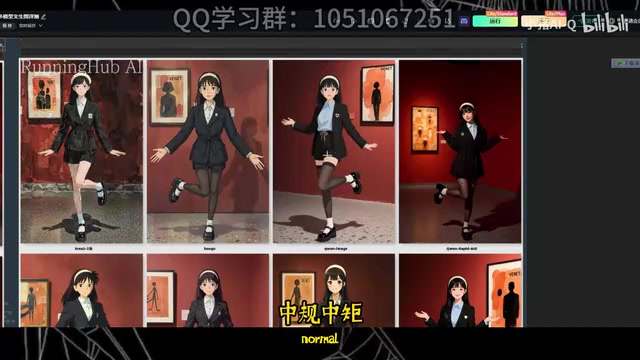
AIO failed outright, producing no Ghibli style at all and outputting a realistic image instead. This result indirectly confirms the concern that "unrestriction fine-tuning" may damage a model's stylistic generalization ability—when the continued training data distribution is too concentrated on realism or specific content types, the model's ability to respond to animation-style prompts degrades. The better performers were Z Image and its variant Rui Image; the Ghibli style was already reflected, the wall generated normally, only the face shape was still the familiar influencer face. Overall, the Z Image series performed commendably in the Ghibli style, Krea2 was middling, and all other models had obvious flaws.
3D Anime and Japanese Anime Style Evaluation: A Two-Way Battle
In the 3D anime style, Flux2 Clean (F2K) unexpectedly stood out, with the 3D effect fully rendered and artistic treatment applied to both the background and wall artwork—only slightly lacking in aesthetics and omitting some elements from the prompt. Krea2 and Z Image remained stable, with the former applying photography-grade blur to the background and the latter well optimized overall.

Flux2 Clean's unexpected advantage in the 3D anime style may be related to the cross-modal attention mechanism of its MMDiT architecture—compared to the traditional UNet architecture, MMDiT can coordinate the light-and-shadow relationships across different image regions within a larger receptive field when handling styles like "3D rendering feel" that require global illumination consistency, thereby producing more three-dimensional output.
In the Japanese anime style segment, Krea2 and Z Image held a clear advantage over the other models. Krea2 performed most comfortably in the light and shadow of the red paint on the wall, the artwork, and clothing color coordination; its only regret was omitting some elements from the prompt, making the image slightly stiff. The image generated by Z Image was highly close to the real Japanese manga style—the influencer face appeared again but the effect was still excellent.
Text-to-Image Model Selection Recommendations
Based on the performance across the four major styles, here are the following selection references:
- Realistic characters: Krea2 first, Z Image second
- Ghibli style: Z Image and the Rui Image variant perform best
- 3D anime: Flux2 Clean is a surprise, Krea2/Z Image are stable overall
- Japanese anime style: Krea2 first; if character diversity is not a concern, Z Image is an option
One point that requires special attention is that there is a natural trade-off between prompt adherence and aesthetic generation ability: high-adherence models (such as Qwen Image and Boogu) tend to implement every keyword as a visual element, which may result in a crowded image; whereas high-aesthetic models (such as Krea2) perform an "artistic reinterpretation" of the prompt, proactively selecting or discarding elements to achieve a more comfortable composition—this is precisely the fundamental reason why Krea2 leads in overall aesthetics yet has a certain deficiency in prompt adherence.
This trade-off has deep roots at the technical level: high-adherence models typically use stronger Classifier-Free Guidance (CFG) weights, greatly amplifying the direction of conditional generation to ensure every semantic element is "forcibly" mapped to an image region; high-aesthetic models tend to use lower CFG values, giving the model greater freedom to make compositional "aesthetic decisions," and their training data often contains more high-quality images filtered by human aesthetics, forming an implicit aesthetic prior.
When making an actual selection, one must weigh according to creative purpose: commercial design scenarios have high requirements for element completeness, so high-adherence models like Boogu should be chosen; artistic creation scenarios can prioritize aesthetic performance.
This evaluation has certain limitations: all models used the official original workflow without optimization. In actual use, through complex workflows such as dual-color noise addition and style control, even ordinary models can produce better images. But evaluating a model should return to its core capabilities, and the results serve only as a selection reference. For AI image generation users, rather than blindly chasing the latest, it is better to choose the model that best matches your own style needs.
Related articles
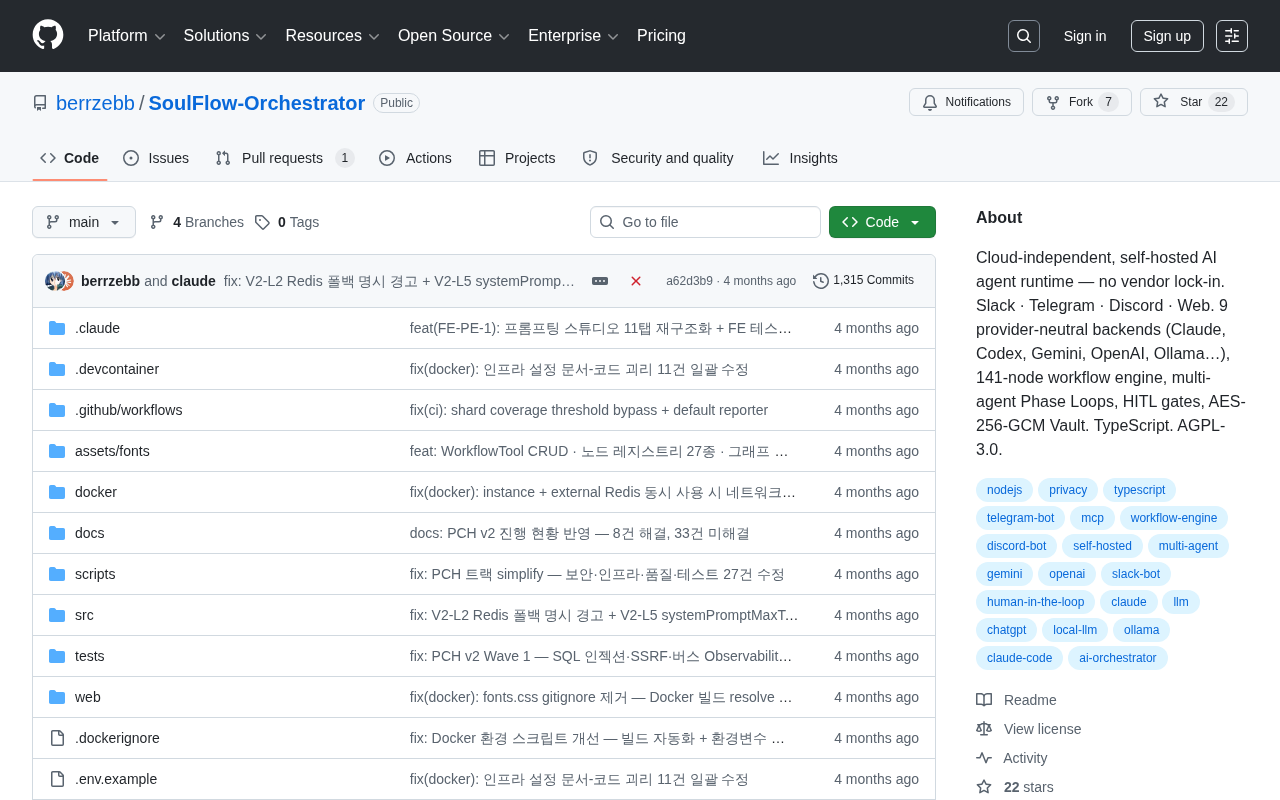
SoulFlow-Orchestrator: A Self-Hosted, Vendor-Lock-In-Free AI Agent Runtime
SoulFlow-Orchestrator is an open-source, self-hosted AI agent runtime with no vendor lock-in. Supports 9 neutral backends (Claude, OpenAI, Ollama), 141-node workflow engine, multi-agent loops, and HITL gates.
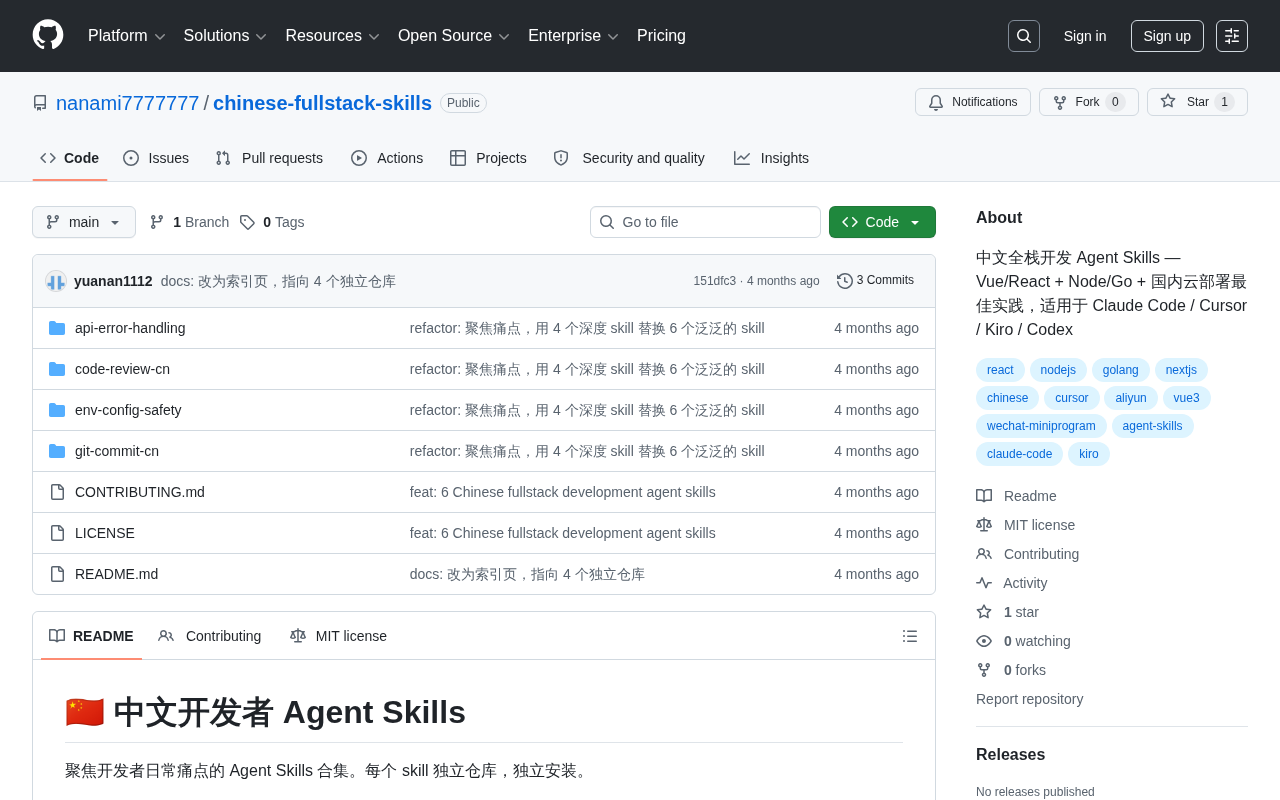
Chinese Full-Stack Agent Skills: A Skill Library Tailored for Domestic AI-Assisted Development
chinese-fullstack-skills is an Agent Skills library for Chinese full-stack development, covering Vue/React, Node/Go, and domestic cloud deployment best practices. Compatible with Claude Code, Cursor, Kiro, and Codex.
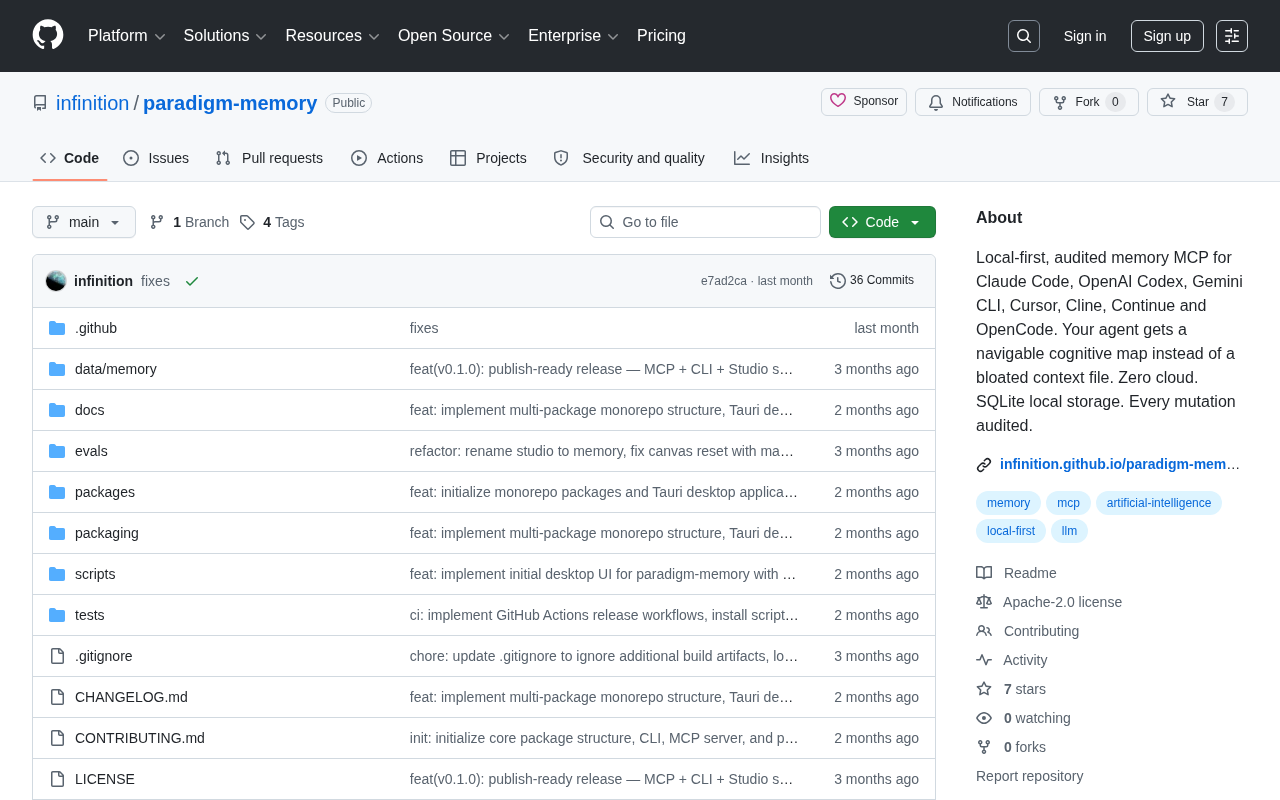
Paradigm Memory: A Local-First Memory System for AI Coding Assistants
paradigm-memory is a local MCP memory tool for Claude Code, Cursor, and Cline. It uses SQLite local storage, zero cloud, full audit trails, and a navigable cognitive map instead of bloated context files.