elect.horse: The Minimalist Puzzle That Set the Tech Community Abuzz

elect.horse gained 350 points on Hacker News with just a domain, sparking tech community discussion about minimalist expression.
elect.horse is a minimalist webpage containing only a domain, which received 350 points and 99 comments on Hacker News. The article argues its popularity stems from the attention-catalyzing effect of information scarcity in an overloaded environment, as well as the interpretive double meaning of elect and horse in the domain. The tech community's long-standing preference for minimalism, hidden information, and Easter eggs led users to spontaneously participate in meaning construction, with the comment section becoming a site of secondary content production. Although high engagement doesn't equal product value, the case reveals that formal restraint can become a focus of discussion—though its success depends on specific community conditions and shouldn't be simply replicated.
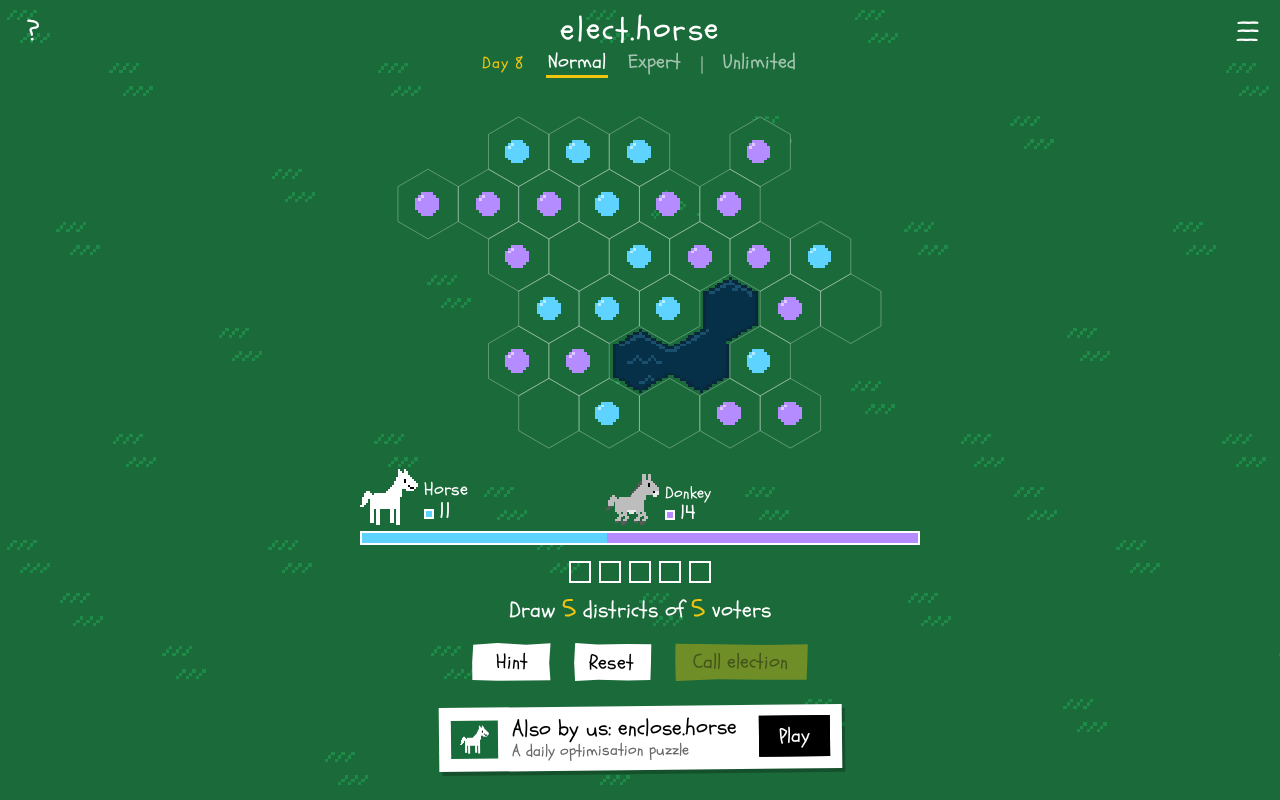
Collective Curiosity Sparked by a Single Name
On the tech news community Hacker News, a link called elect.horse quickly racked up 350 points and 99 comments. From the basic information alone, it comes with no technical description—just a minimalist page address. This phenomenon of "minimal information but notably high engagement" is itself a signal worth pondering in the tech community.
Hacker News's scoring mechanism has always been sensitive to content quality. For a page with no product announcement, no technical whitepaper, and not even an obvious functional description to make it onto the popular list usually means one of two things: either it touched a sensitive nerve that the tech world collectively cares about, or its minimalist form is itself a deliberate statement. elect.horse clearly belongs to the latter.
The Domain Is the Content: The Tension of Combining elect and horse
The combination of the words "elect" and "horse" naturally carries a double meaning in English. "Elect" suggests "election" or "choice," while "horse" evokes horse racing, betting, or some kind of "wager" metaphor. When this combination is used as the domain of a standalone website, it feels more like an open-ended puzzle than a product brand.
Discussion heat in the tech community tends to be proportional to the room for interpretation. The simpler the page, the richer the divergence in the comments—some try to tease out hidden information from the domain's spelling, some guess it's a piece of performance art, and others dive straight into discussing where "minimalist web pages" stand in today's technical aesthetic. This discussion pattern isn't rare on Hacker News, but elect.horse pushes it to the extreme: the page itself offers almost no anchor points, and all meaning is constructed collectively by discussants beyond the domain and the link.
Hacker News's scoring mechanism is based on users' upvote behavior. Each submission's score changes dynamically over time and with votes, and the popular list ranking algorithm also factors in the post's freshness, voting velocity, and other elements. A score of 350 points means the link received a large number of active user endorsements in a short period—typically only content that sparks strong interest or resonance reaches this level. This scoring mechanism allows a link containing only a domain to stand out, which often suggests it struck a collective interest point in the community rather than relying on traditional content completeness.
Why the Tech Community Embraces "Empty Pages" So Readily
Information Scarcity Becomes a Catalyst for Discussion
From a communication perspective, elect.horse's rise to fame validates a counterintuitive phenomenon: in an environment of information overload, scarcity of information itself can translate into attention. Every day, Hacker News features plenty of posts with complete technical documentation, performance comparison data, and open-source repository links. By contrast, a link with only a domain stands out as differentiated.
The volume of 99 comments shows the discussion didn't stop at the surface-level confusion of "what on earth is this." In the absence of official explanation, community members spontaneously formed multiple interpretive paths around this link, which aligns closely with the tech community's long-standing preference for "minimalism," "hidden information," and "technical Easter eggs." Similar phenomena have appeared many times throughout history—a seemingly meaningless page that, because of some detail in its domain, code structure, or interaction, triggers collective puzzle-solving among tech crowds.
From Link to Topic: Participation Matters More Than Content
The elect.horse case reveals a rule at the content-communication level: when the content itself is open enough, users' participation behaviors transform into secondary content production. In this scenario, the Hacker News comment section isn't merely an附属 discussion area—it actually serves the function of "giving meaning to the link." A considerable portion of the 350 points came from user interaction with the comment section rather than repeated visits to the page.
This model offers some reference value for the cold start of tech products. Of course, whether elect.horse is a deliberate marketing experiment cannot be determined from the available information. But what's certain is that it triggered the tech community's spontaneous propagation mechanism without investing in traditional content production.
The Shifting Technical Aesthetic Behind Minimalist Expression
The Return of Single Page, Single Domain, Single Symbol
If we place elect.horse within a longer trajectory of technical aesthetics, it continues the tech community's persistent preference for "less is more." From the minimalist layouts of early personal homepages to the recent resurgence of single-page tool sites, single-character domains, and plain-text interfaces, the tech crowd's appreciation for "subtraction" has never ceased. elect.horse compresses this preference down to a domain plus a link.
That said, this minimalism doesn't conflict with the "functional completeness" that commercial products pursue. It's more like an aesthetic expression and identity marker within the tech community—being able to understand it and participate in the discussion is itself a source of community belonging. Behind those 99 comments is a group of people sharing the same technical-cultural context.
A plain text interface is an interactive form that presents information using only characters and basic formatting (such as line breaks and spaces), without relying on graphics, color, or complex layout. In the tech community, it is often seen as a symbol of efficiency, portability, and anti-consumerism—examples include plain text email, ASCII art, and command-line tools. The recent resurgence of plain text interfaces reflects some tech crowds' fatigue with over-designed web pages and their pursuit of simplicity, accessibility, and durable expression. elect.horse's minimalist form is in line with this trajectory.
Discussion Heat Doesn't Equal Product Value
Objectively speaking, elect.horse's high engagement doesn't directly imply the value of a product or service. Hacker News's scoring is influenced by multiple factors including time windows, user sentiment, and topic freshness. A link getting 350 points reflects more its discussion value within this specific community at this specific moment. For those interested in tech communication, what's worth studying isn't "why it went viral" but "what minimal form it used to trigger community behavior."
From this angle, elect.horse can be seen as an observational sample: when the barrier to content production drops to near zero, how does the tech community's attention allocation mechanism respond? There's no single answer, but the discussion process itself provides enough clues.
Implications for Content Creators and Product People
For those doing tech content or product promotion, the elect.horse case shouldn't be simply copied as "make an empty page and it'll go viral." Its success depends on several hard-to-replicate conditions: a gathering place for high-density tech crowds like Hacker News, the interpretive double meaning built into the domain itself, and the community's long-term preference for minimalist expression. Without these conditions, the same form would most likely not produce the same results.
The more valuable takeaway is this: when content supply is extremely abundant, formal restraint may反而 become a reason to be discussed. This is the exact opposite path from "clickbait" or "information bombardment." elect.horse promised no features and offered no explanation, but it gave the tech community an opening that could be discussed repeatedly. For content producers accustomed to complete narratives, this "leaving blank space" strategy is worth understanding as a comparative case.
One-line Summary
elect.horse gained 350 points on Hacker News with just a domain, sparking tech community discussion about minimalist expression.
Paragraph Summary
elect.horse is a minimalist webpage containing only a domain, which received 350 points and 99 comments on Hacker News. The article argues that its popularity stems from the attention-catalyzing effect of information scarcity in an overloaded environment, as well as the interpretive double meaning of elect and horse in the domain. The tech community's long-standing preference for minimalism, hidden information, and Easter eggs led users to spontaneously participate in meaning construction, with the comment section becoming a site of secondary content production. Although high engagement doesn't equal product value, the case reveals that formal restraint can become a focus of discussion—though its success depends on specific community conditions and shouldn't be simply replicated.
Related articles

Tencent WorkBuddy Hands-On: How AI Agents Crush Traditional Chat Assistants
WorkBuddy vs Doubao tested: how AI Agents directly operate computers to convert PPT to PDF, archive files and more. Analysis of WorkBuddy's low barrier, domestic ecosystem, pricing and plugin marketplace, plus AI Agent selection advice.

Azure Cross-Tenant Attack Chain: Root Cause Analysis of Five Paths
Binary Security analyzes five full cross-tenant compromise paths in Azure, trending 271 points on HN. This article interprets their shared root cause perspective and offers defense recommendations for cloud tenant isolation and reflections on responsibility boundaries.

Recreating a Real Bubble Tea Station in Isaac Sim: Script-Driven Unitree G1 Brews Tea
Developers recreated a real self-service tea station in NVIDIA Isaac Sim, using scripts to drive a Unitree G1 through a five-step tea-brewing process, exploring whether physics simulation can be a source of synthetic robot demonstration data and discussing contact stability and imitation learning.