Engrim: A Local Memory Engine Solution for AI CLI Tools
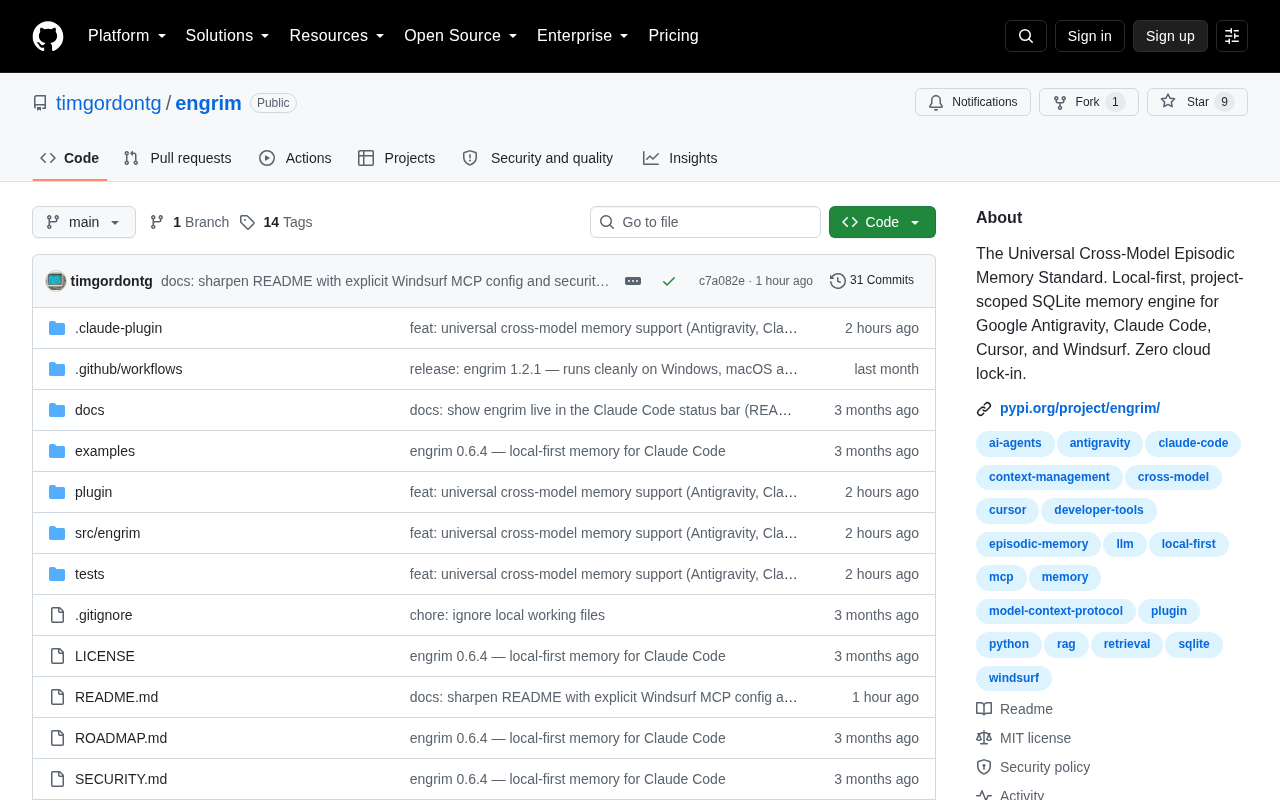
Engrim brings persistent, local-first SQLite memory to AI CLI tools like Claude Code and Aider.
Engrim is an early-stage open-source project that tackles the persistent memory problem in AI CLI tools like Claude Code and Aider. Built on a local-first SQLite architecture, it stores all memory data on-device for privacy and offline use, and acts as a lightweight RAG layer that retrieves relevant context on demand. Its universal design aims to provide a shared memory infrastructure across different AI tools.
The Memory Problem with AI CLI Tools
With the rise of AI-powered command-line coding tools like Claude Code, Aider, and Cursor CLI, more and more developers are integrating large language models into their everyday terminal workflows. These tools all share a common underlying mechanism: every time you interact with the model, all relevant information must be packaged into a "context window" and sent to the model. LLMs are inherently stateless — the model doesn't actively remember previous conversations, and each inference is a fresh forward pass. Historical information must be explicitly passed in by the caller. In practice, the "memory" of a session is maintained and transmitted by the client, not held inside the model itself.
Yet these tools share a common core pain point: the lack of persistent memory. Once a session ends, the model's "memory" of project context, conversation history, and user preferences is effectively wiped. The next interaction requires re-establishing all that background from scratch. This creates repetitive overhead and makes it hard for AI tools to truly integrate into long-running, continuously evolving projects.
The open-source project Engrim, which recently surfaced on Hacker News, targets exactly this problem. It positions itself as a "universal, local-first SQLite memory engine" built specifically for AI CLI tools. While the project is still in its very early stages in terms of visibility, its design philosophy represents a technical direction worth watching.
Engrim's Core Design Features
Local-First Architecture
Engrim's most distinctive characteristic is its local-first architecture. The "local-first software" concept was systematically articulated by the Ink & Switch research team in their 2019 paper of the same name. The core thesis is that the primary copy of data should always reside on the user's local device, with the cloud serving as an optional sync channel rather than the single source of truth. This stands in contrast to traditional SaaS models where "the cloud is primary, local is just a cache." Local-first architectures often use technologies like CRDTs (Conflict-free Replicated Data Types) to handle multi-device sync conflicts — but for single-machine tools like Engrim, local-first is more about privacy control and offline availability than multi-device collaboration.
This means all memory data is stored locally on the user's machine, never uploaded to a remote cloud service. For developers, this brings several direct benefits:
- Controlled data privacy: Sensitive information like code context and conversation logs never leaves the local environment — especially critical for enterprise use cases and confidential projects
- Zero network dependency: Reading and writing memory requires no internet connection, offers fast response times, and won't be disrupted by network outages or service downtime
- No subscription cost: No reliance on third-party hosted services means no ongoing cloud storage fees
In an era of growing awareness around data sovereignty, the local-first positioning aligns well with developers' demands for privacy and control.
SQLite as the Storage Engine
The project's choice of SQLite as its underlying storage layer is a pragmatic and clever technical decision. SQLite is the most widely deployed database engine in the world — it ships on every Android and iOS device, every macOS and Windows system, and countless embedded and desktop applications. Its "zero-configuration, single-file" design philosophy aligns perfectly with the lightweight requirements of AI CLI tools.
Worth highlighting is SQLite's FTS5 (Full-Text Search 5) extension, which provides built-in full-text search based on the BM25 algorithm, enabling keyword-level semantic matching over memory entries. Additionally, SQLite's WAL (Write-Ahead Logging) mode supports concurrent reads and writes without blocking each other — a real advantage when an AI tool is asynchronously writing memories in the background while simultaneously reading from them in the foreground.
- Zero ops overhead: No need to deploy a separate database service — a single
.dbfile holds all memory data - Highly portable: The memory database can be migrated, backed up, and version-controlled alongside the project
- Mature ecosystem: SQLite's support for FTS5 full-text search lays a foundation for semantic memory retrieval
Compared to approaches that pull in a vector database (like Chroma, Qdrant, or Weaviate) or a standalone backend service, SQLite significantly lowers the barrier to adding AI memory functionality. Vector databases are stronger for semantic similarity search, but they require additional embedding model computation and come with noticeably higher deployment complexity.
Universal Design Philosophy
Engrim emphasizes being "universal" — it isn't locked to any specific AI CLI, but aims to be a reusable memory infrastructure layer that multiple tools can share. If this vision materializes, it would address the fragmentation problem in today's ecosystem where "every tool reinvents its own wheel." Developers could share a single memory layer across different AI tools, enabling genuine cross-tool context continuity.
Why AI Memory Matters
The Physical Limits of Context Windows
Even as mainstream models keep expanding their context windows (Claude supports 200K tokens, Gemini 1.5 Pro supports 1M tokens), hard limits still exist, and long contexts bring significant cost and latency penalties. Token count and inference cost scale roughly linearly, and longer contexts also introduce the so-called "attention dilution" problem — the model pays less attention to content in the middle of the context (the "lost in the middle" phenomenon). Stuffing all historical information into the prompt is neither economical nor sustainable.
This is precisely where RAG (Retrieval-Augmented Generation) architecture delivers its core value: storing knowledge in external storage and retrieving only the most relevant fragments at inference time to inject into context, rather than cramming everything into the prompt at once. Engrim is essentially a lightweight RAG memory layer tailored for AI CLI scenarios — a standalone memory engine that retrieves relevant memory fragments on demand and injects only the most pertinent content into the model context, enabling an "infinite memory" effect.
From Tool to Assistant: A Capability Leap
Cognitive science's classification of human memory offers a useful reference for AI memory system design: episodic memory records specific events (e.g., "you fixed the login bug last week"); semantic memory stores general knowledge and concepts (e.g., "this project uses FastAPI"); procedural memory encodes operational skills and habits (e.g., "you prefer using type annotations"). A mature AI memory system should ideally cover all three layers. Academia has explored this space with projects like MemGPT (2023), which simulates hierarchical memory through OS-style virtual context management. On the engineering side, production-oriented memory systems like Mem0 and Zep focus more on integration with real-world environments.
A truly useful AI coding assistant needs to remember "who you are, what project you're working on, and what style you prefer." Memory capability is the necessary condition for evolving from a one-shot Q&A tool into a long-term collaborative partner. Projects like Engrim are foundational components on exactly that evolutionary path.
Project Status and Outlook
One important caveat: Engrim currently has only 5 points on Hacker News and no comments — it's a very early-stage project, and its actual maturity, performance characteristics, and community adoption all remain to be seen. Public information is limited at this point, making it impossible to assess key indicators like retrieval quality and integration breadth with mainstream tools.
That said, from a design direction standpoint, it addresses a real and recurring pain point. The combination of local-first + SQLite + universal memory layer is a lightweight, pragmatic, and easy-to-understand technical approach. For developers who care about AI engineering, privacy protection, and terminal workflow optimization, this is a project worth keeping an eye on.
For interested developers, it's worth following the open-source repository's future iterations — particularly around the memory retrieval mechanism (whether it introduces vector embeddings or relies solely on FTS), multi-tool adapter support, and real-world performance. If this kind of infrastructure can coalesce around a standard, the future AI CLI ecosystem may gain a unified, portable memory layer — much like how LSP (Language Server Protocol) unified the communication protocol between editors and language tooling. A standardized AI memory protocol may well be the next piece of foundational infrastructure worth anticipating.
Related articles
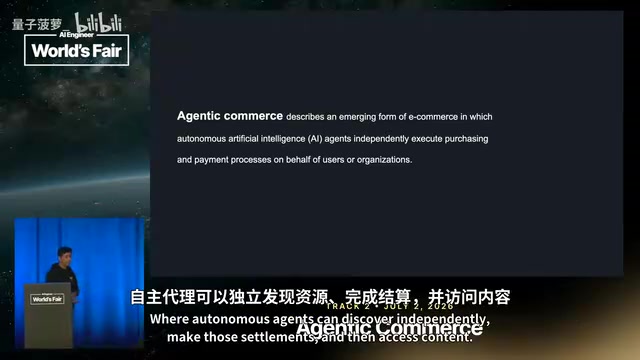
AWS Agent Code Payments Explained: A Complete Guide to AI Agent Autonomous Payment Infrastructure
Deep dive into AWS Agent Code Payments: how AI agents achieve autonomous payments via X402 protocol, wallet security, session budgets, WAF AI traffic monetization, and Coinbase/Stripe integration.

Jensen Huang Declares AGI Has Arrived and Congratulates OpenAI, Sparking Industry Debate
Nvidia CEO Jensen Huang declares AGI has arrived and congratulates OpenAI. Deep analysis of his reasoning, OpenAI's contributions, community pushback, and industry implications.
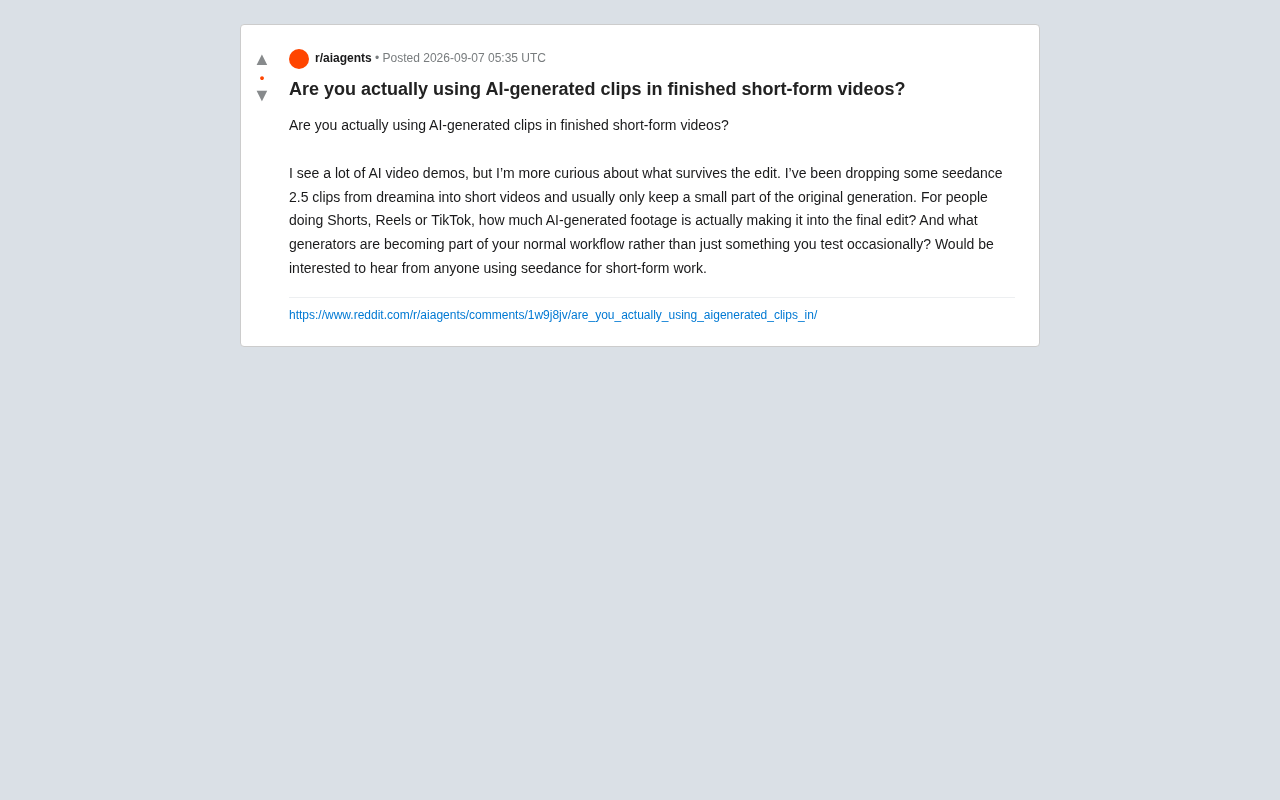
How Short-Form Video Creators Are Using AI Video Generation Tools
Exploring the real-world application of AI video generation tools in short-form video creation. From Seedance to Runway, how do creators integrate AI assets? Revealing the gap between demos and production use.