Enterprise-Grade RAG: A Full-Stack Practical Guide from Retrieval Optimization to Production Engineering

A comprehensive guide to optimizing RAG systems from prototype to enterprise-grade production quality.
This guide dissects the core challenges of deploying RAG at enterprise scale. It covers retrieval, recall, and reranking optimization strategies, multi-turn conversation query rewriting, building quantifiable quality evaluation systems, and production engineering best practices. The article bridges the gap between easily built RAG prototypes and the deep technical work required for reliable, enterprise-grade AI applications.
Why RAG Remains the Most Essential AI Technology for Enterprises
In today's AI wave, the barrier to entry for building large model applications is being driven to near zero. Even coding can now be "done by talking" — tools like Cursor and Copilot have made building AI applications easier than ever before. But ironically, this very "lack of barriers" has become the biggest concern for both individuals and enterprises. When there's no technical moat, it's hard for enterprise products to establish competitive advantages, and equally hard for individuals to stand out in the job market.
A pointed observation worth reflecting on: AI tools have no preference for programming languages, but they still demand technical depth from people. Whether you use Java or Python, AI can write the code for you. But what enterprises are truly willing to pay for are the people who can build applications with depth — to enterprise-grade standards. And RAG (Retrieval-Augmented Generation) is currently the most mature application framework that best demonstrates this kind of technical depth.
RAG (Retrieval-Augmented Generation) was formally introduced by the Meta AI research team in a 2020 paper. Its core idea is to combine information retrieval with text generation to address the inherent limitations of large language models in terms of knowledge currency and factual accuracy. The knowledge stored in a model's parameters has a cutoff date, and models are prone to "hallucinations" — generating content that sounds plausible but is actually incorrect. RAG introduces external knowledge retrieval before generation, allowing the model to generate answers based on real retrieved document fragments, thereby significantly improving factual accuracy. For this reason, this architecture has become the de facto standard for enterprise AI applications.
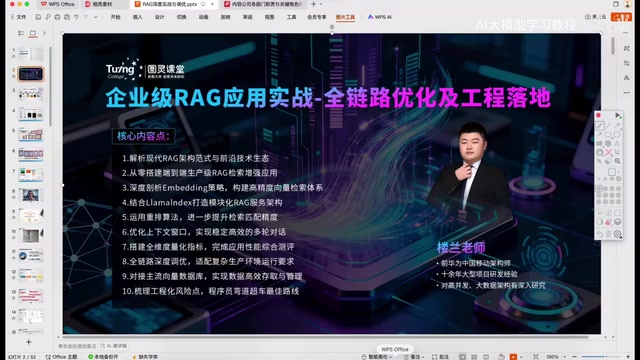
Although the concept of RAG has been around for quite some time — even jokingly referred to as "old-school programming" in internet circles — it remains a genuine core requirement for many enterprises. Based on collaborative practices with multiple companies, the demand for real enterprise-grade RAG solutions remains enormous. This article is distilled from those real-world implementation experiences.
Building RAG Is Easy — Ensuring Retrieval Quality Is Hard
The basic logic of RAG isn't complicated: based on an enterprise's knowledge base, provide customers with intelligent Q&A services. A user asks a question, the system retrieves relevant content from the knowledge base, and then hands it to the LLM to generate an answer. This workflow is simple enough that you can piece together a prototype without even writing code, using off-the-shelf tools.
But the problem lies precisely in the word "quality." Sure, you can throw a few documents at an LLM and it'll answer questions — but how do you guarantee the accuracy of those answers? If the chatbot gives impractical answers or goes off on tangents, no enterprise will sign off on it.
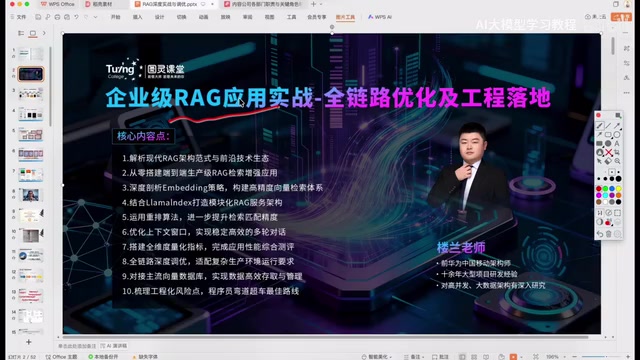
There's a widespread misconception here: many people build a RAG application, test it with a few self-crafted questions, see decent answers, and call it a day. But this is like those short-video bloggers who test LLM capabilities with a handful of college entrance exam questions — the questions you design yourself can never cover the wildly diverse questions real users will ask.
Here's a vivid example: if you're building something like Doubao (ByteDance's AI assistant) that serves millions of users, what kinds of questions will users ask? It's simply impossible to predict. And if you can't predict them, how can you judge your system's real-world performance based on just a few self-test questions? This is the enormous gap between "it runs" and "it works."
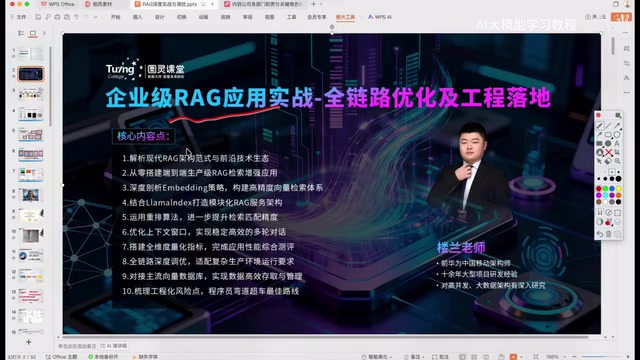
Multi-Turn Conversations: A Classic RAG Engineering Challenge
In the RAG engineering process, multi-turn conversation query rewriting is a quintessential hard problem.
In ordinary chat scenarios, multi-turn conversations rely on a memory system: all previous chat history is sent along with the current question to the LLM, which then understands the context. For example, if you first ask "What's the weather like in Beijing?" and then follow up with just "How about Changsha?", the LLM can infer from context that you're asking about Changsha's weather.
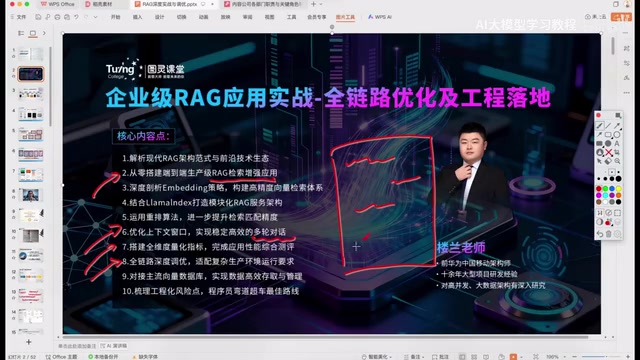
But in RAG scenarios, things get tricky. Because RAG queries need to be used to search the knowledge base. When a user first asks about "Beijing weather" and then asks "How about Changsha?", if you directly use the three words "How about Changsha?" to search the knowledge base, the system has no idea whether the user wants to look up Changsha's weather, economy, or something else entirely. The semantic gap in the retrieval step directly causes recall failure.
This is the essence of the "multi-turn conversation query rewriting" problem: before retrieval, you need to combine historical context to complete vague follow-up questions into full, standalone query statements. The core of Query Rewriting is leveraging LLMs to understand and compress multi-turn conversation context. A typical approach is to design a dedicated Prompt template that passes the last N rounds of conversation history along with the current user input to the LLM, which then outputs a semantically complete, independently searchable query. For example, if a user sequentially asks "What is RAG?" and "What are its drawbacks?", the rewritten query should be "What are the drawbacks of RAG (Retrieval-Augmented Generation)?" More advanced implementations also include intent recognition (determining whether the user is following up or switching topics), coreference resolution (replacing pronouns like "it" or "that" with specific entities), and multi-intent decomposition (breaking compound questions into multiple independent sub-queries for separate retrieval).
From observation, roughly 70%-80% of developers who haven't undergone systematic training have never even considered these issues. Yet this is precisely the critical dividing line between "toy-level" and "enterprise-level" applications.
Core Directions for Full-Stack RAG Optimization
A RAG system that truly meets enterprise engineering standards requires deep optimization in several key directions:
Retrieval, Recall, and Reranking Optimization
From user query to final answer, the process passes through multiple stages including Retrieval, Recall, and Rerank. Each stage offers substantial room for optimization:
-
Document Chunking Strategies: How to properly chunk long documents while preserving semantic integrity. Common chunking methods include fixed-length chunking, paragraph/section-based chunking, recursive character chunking, and semantic chunking. Chunks that are too large introduce excessive noise and reduce retrieval precision; chunks that are too small may break contextual integrity and cause critical information loss. In practice, it's also common to set reasonable overlap windows to ensure contextual information isn't truncated.
-
Vectorization Approach Selection: Choosing the right Embedding model to improve semantic representation quality. Embedding is the process of converting text into high-dimensional numerical vectors so that semantically similar texts are closer together in vector space. Common Embedding models include OpenAI's text-embedding series, the BGE series, and Cohere's embed models. Vectorization quality directly impacts semantic retrieval precision — if the Embedding model cannot accurately capture the semantic features of text, even the best retrieval algorithm won't recall the correct document fragments. Vector databases (such as Milvus, Pinecone, Weaviate, FAISS, etc.) are responsible for efficiently storing and retrieving these vectors, supporting millisecond-level similarity searches.
-
Improving Recall Relevance: Enhancing recall accuracy through techniques like hybrid search. Hybrid Search refers to simultaneously using both sparse and dense retrieval methods, leveraging the complementary strengths of each. Sparse retrieval, represented by the BM25 algorithm, is based on keyword matching and term frequency statistics, excelling at precise matching of specific terms and proper nouns. Dense retrieval is based on Embedding vector semantic similarity computation, excelling at understanding synonymous expressions and semantically similar queries. In real enterprise scenarios, users phrase their questions in endlessly varied ways, and any single retrieval method will inevitably have blind spots. Hybrid search significantly improves both recall rate and accuracy by weighted fusion of both retrieval results, and has become a standard strategy in production-grade RAG systems.
-
Reranking Optimization: Using Rerank models to ensure the most relevant content rises to the top. Initial retrieval typically recalls dozens or even hundreds of candidate document fragments, but not all are highly relevant to the user's query. Rerank models (such as Cohere Rerank, BGE-Reranker, Cross-Encoder, etc.) perform fine-grained scoring of each candidate fragment against the user query, reordering priorities. Unlike the bi-encoder architecture of Embedding models, Rerank models typically use a Cross-Encoder architecture that concatenates the query and document for joint encoding, capturing deeper semantic interactions — but at higher computational cost, which is why they serve as a precision ranking stage rather than the initial retrieval stage.
The optimization quality of these stages directly determines the accuracy and reliability of the final answers.
Context Handling for Multi-Turn Conversations
As discussed above, a robust query rewriting mechanism must be established so the system correctly understands the user's true intent before retrieval, avoiding recall failures caused by missing context. Common approaches include using LLMs to perform intent summarization over conversation history, rewriting vague follow-up questions into standalone queries with complete semantics.
Building a Quality Evaluation System
You can only optimize what you can measure. The range of questions RAG faces is infinite — you must establish a quantifiable evaluation system to continuously identify issues and improve the system. Without evaluation, there's no basis for so-called "optimization."
This is also the step many developers overlook — they settle for "it can answer" without having any objective standard for measuring answer quality. The industry has developed a relatively mature evaluation methodology. Common evaluation frameworks include RAGAS, TruLens, and others, which quantify RAG system performance across multiple dimensions: Context Precision measures the relevance of recalled documents, Faithfulness measures whether generated content is faithful to retrieved facts, and Answer Relevancy measures how well the answer matches the question. Additionally, enterprises typically build Golden Datasets (standard answer datasets) that simulate the diverse questioning patterns of real users, conduct batch automated evaluations, and establish quantifiable quality baselines with continuous improvement feedback loops. Only by building such systematic evaluation mechanisms can you truly drive continuous iteration of RAG systems.
Production Engineering Practices
Enterprises won't chase flashy, unstable new technologies — they need mature, stable solutions that can reliably serve their customers. RAG is now fundamentally mature, but truly deploying it to production still requires substantial, solid engineering work covering system stability, response speed, error handling, version iteration, and more. Specifically, production-grade RAG systems need to consider knowledge base incremental update and index rebuilding strategies, retrieval performance optimization under high concurrency, timeout and retry mechanisms for LLM calls, streaming output for answer generation to reduce perceived user latency, and comprehensive logging and observability systems that enable rapid root cause analysis when bad cases occur.
Conclusion: Technical Depth Is More Valuable Than Ever in the AI Era
The core takeaway is clear: In the age of AI-assisted programming, low barriers to entry don't mean everyone can profit. Precisely because building a RAG prototype is so easy, the people who can deeply tune RAG and bring applications to enterprise-grade standards have become even scarcer — and more valuable.
From retrieval, recall, and reranking to multi-turn conversation query rewriting, quality evaluation, and production engineering — full-stack RAG optimization is currently one of the most competitive technical directions. It reminds every AI practitioner: don't interpret AI programming too narrowly, staying at the level of "assembling apps with tools." The real value lies in understanding the underlying principles and mastering engineering details. That is the key to building your personal competitive moat in the AI wave.
Related articles

Codex Personal AI Knowledge Base System Setup Guide: From Zero to Automated Output
A detailed guide on using Codex CLI AI to connect Obsidian, Notion, and Feishu for building a personal knowledge base with automated content generation.

Agent Skills in Practice: A Complete Tutorial on Building an AI Skill System with OpenCode
Learn the key differences between Agent Skills and MCP. Step-by-step tutorial on configuring OpenCode's official skills library for on-demand AI capabilities like PDF parsing.

How AI Dubbing Breaks Language Barriers: The New Multilingual Paradigm of the Lex Fridman Podcast
Lex Fridman Podcast's first Russian-recorded episode uses ElevenLabs AI dubbing for English, showing how AI voice tech breaks language barriers for global content distribution.