Enterprise-Level Agent Development: Six Core Competencies for Interview Success

Master the six core engineering competencies that determine success in enterprise Agent development interviews.
Enterprise AI positions now demand far more than API proficiency. This guide breaks down the critical engineering challenges that separate junior from senior Agent developers: handling streaming output interruptions while preserving session integrity, architecting for 5000+ concurrent users, implementing secure multi-tenant isolation, and building comprehensive observability systems. These aren't theoretical concepts—they're the real problems interviewers probe to assess production-readiness.
From "Using" to "Building": The Capability Leap
As competition for AI large model positions intensifies, simply knowing how to call LLM APIs or use off-the-shelf tools is no longer enough. Enterprise requirements for AI engineers are rapidly evolving—from "can use" to "can develop" to "can solve engineering challenges." Based on frontline technical insights, this article outlines the core competencies that truly determine offer quality in enterprise-level Agent development.

From "Using" to "Building": The Capability Leap
Many newcomers to the AI large model field share a common misconception: that landing an LLM-related job simply requires knowing how to use AI tools. The reality is far more complex.
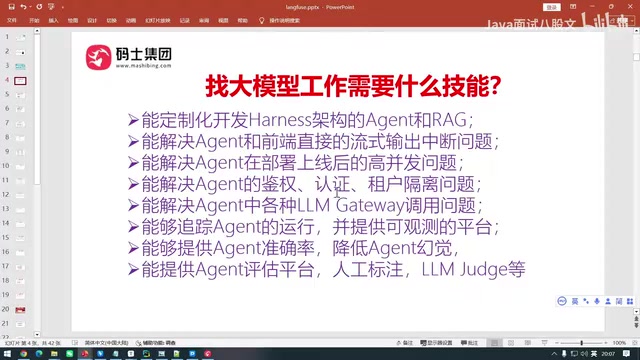
When hiring for AI large model positions, enterprises evaluate a complete capability chain:
- Can use: Proficiency with mainstream LLMs and toolchains—this is the baseline;
- Can develop: Ability to build customized Agents or RAG (Retrieval-Augmented Generation) systems based on real business requirements;
- Can solve engineering problems: This is what separates candidates—covering deployment, concurrency, security, and other enterprise-grade challenges.
Agent Technology Background
Agents are one of the core paradigms in current AI applications. Unlike traditional single-turn Q&A AI, Agents possess goal understanding, task planning, tool invocation, and autonomous decision-making capabilities. A typical Agent system includes three core components: the large language model serves as the "brain" for reasoning and decision-making, the Memory module maintains dialogue context and long-term memory, and the Tools suite enables the Agent to call external APIs, databases, or other services. For example, a customer service Agent can not only answer questions but also query order systems, invoke refund interfaces, and record user preferences. This architecture evolves AI from passive response to proactive problem-solving assistant, but also introduces complex engineering challenges like state management, error recovery, and tool orchestration.
Deep Dive into RAG Technology
RAG (Retrieval-Augmented Generation) is a key technology for addressing knowledge timeliness and hallucination issues in large models. Its working principle: enterprise private documents are converted into vectors through an Embedding model and stored in a vector database (like Pinecone or Milvus). When users ask questions, semantic retrieval first finds relevant document fragments, then injects these fragments as context into the model's prompt to generate answers. This "retrieval + generation" hybrid architecture enables models to answer questions based on the latest, accurate enterprise data rather than relying on outdated training knowledge. However, RAG system performance heavily depends on retrieval quality, chunk splitting strategies, reranking algorithms, and other details—these are precisely the technical barriers in enterprise applications.
Current interview requirements have clearly escalated. Customized development capability alone is insufficient to handle interviewers' probing questions. The real threshold lies in engineering implementation capability.
High-Frequency Interview Topics: 11 Core Themes
According to shared insights, current AI large model interviews typically cover around 11 popular technical topics, with some marked as "extremely important" high-frequency topics. These topics form the standards by which enterprises measure candidates' technical depth.
You may not have noticed, but these topics aren't isolated knowledge points—they revolve around the core proposition of "how to actually deploy an Agent online and keep it running stably." For beginners, tackling these topics one by one requires systematic learning rather than fragmented understanding.
Regarding compensation, the speaker also offered pragmatic views: the widely circulated "2 million annual salary" is nearly impossible to achieve in the current market, typically requiring advanced degrees + big tech background + excellent previous compensation—all three combined. In actual student cases encountered, the highest offer was around 1.4 million, and such high-paying positions have extremely demanding comprehensive capability requirements. This reminds job seekers to maintain realistic market expectations.
Four Engineering Challenges That Determine Offers
If customized development is the entry ticket, then the following engineering problems are the real differentiators.
Interruption Handling in Streaming Output
Nowadays, whether for large models or Agents, nearly all adopt streaming output to return content.
Streaming Output Technical Principles
Streaming output uses Server-Sent Events (SSE) or WebSocket protocols to transmit tokens generated by large models one by one in real-time to clients, rather than returning the complete response all at once. This is crucial for user experience: for a long answer requiring 30 seconds to generate, streaming output lets users see content appearing in the first second, significantly reducing perceived latency. In technical implementation, the server continuously pushes data chunks through yield or async generators, while the client listens and receives via EventSource or WebSocket.
The "interruption problem" refers to this scenario: a user is conversing with an Agent, the model is outputting content word by word, when the user suddenly closes the webpage. At this point:
- The streaming output itself will terminate, which is acceptable;
- But the entire conversation history (session records) must be completely preserved—when users reopen, they should see the complete chat history.
The situation where "stream is interrupted and the entire conversation content is lost" absolutely cannot occur. This requires developers to properly handle the relationship between streaming output and session persistence at the architecture level, ensuring data integrity and consistency. When network interruptions or users close pages occur, how do you ensure already-generated partial content is correctly persisted? This requires maintaining an independent session storage mechanism alongside streaming transmission. This is a seemingly simple but engineering-depth-testing problem.
High-Concurrency Architecture Design
Once an Agent is deployed online, supporting high-concurrency access is a repeatedly asked interview topic.
Typical follow-up questions include:
- How do you achieve 500 to 1000 concurrent connections?
- How do you further achieve 5000+ concurrent connections?
- What specific measures did you take in architecture design?
Key Technologies for High-Concurrency Architecture
Agent systems supporting massive concurrency require multi-layered architectural optimization. First is asynchronous processing: using frameworks like asyncio and Celery to decouple LLM inference tasks from HTTP requests, avoiding main thread blocking. Second is connection pool management: using connection pools for LLM APIs, databases, Redis, and other resources to reduce handshake overhead. Third is load balancing: distributing requests across multiple inference nodes through Nginx, K8s, etc. For 5000+ concurrency scenarios, message queues (like Kafka, RabbitMQ) must be introduced for peak shaving and valley filling, combined with autoscaling for dynamic resource adjustment. Additionally, optimization techniques like prompt caching, result precomputation, and CDN acceleration can significantly improve system throughput.
Such questions test candidates' comprehensive understanding of system architecture, resource scheduling, load balancing, and asynchronous processing—key differentiators between "toy projects" and "production-grade systems."
Authentication and Multi-Tenant Isolation
Enterprise-level Agents are typically multi-user shared systems, making authentication and tenant isolation (multi-tenancy) essential problems to solve.
Multi-Tenant Isolation Architecture Design
Multi-tenancy is a foundational architectural pattern for SaaS applications, especially critical in Agent systems. Common isolation strategies include three types: database-level Schema isolation (each tenant gets an independent Schema), table-level isolation (shared Schema but data distinguished by tenant_id field), and completely independent database instances. For AI applications, you also need to isolate vector database namespaces, session storage key prefixes, and LLM call quota limits. More fine-grained isolation includes: Tenant A's prompt templates cannot be accessed by Tenant B, document retrieval results between tenants must be completely isolated, and even logs and monitoring need permission tiering.
Take tenant isolation as an example: suppose both Zhang San and Li Si are using the same Agent system. The system must ensure their data, sessions, and contexts are completely isolated from each other without interference. This is not only a functional requirement but also the baseline for data security and compliance. Implementing multi-tenant isolation must balance data security with resource utilization efficiency—this is one of the core technical thresholds for enterprise-level Agents. In SaaS-based Agent products, tenant isolation is a foundational prerequisite of architecture design.
Observability and Log Tracing
A mature Agent system also requires complete monitoring and tracing capabilities.
Observability System Construction
Observability includes three pillars: Logs, Metrics, and Tracing. For Agent systems, you need to record the complete prompt and response for each LLM call, parameters and return values for each tool invocation, and reasoning paths at each decision node. At the metrics level, you need to monitor key indicators like API latency, token consumption rate, and error rate. Distributed tracing through standards like OpenTelemetry connects multiple LLM calls, database queries, and external API calls involved in a single user request into a complete call chain.
When an Agent encounters problems in production, developers need to quickly locate: which step had an issue, which segment had excessive latency, which request triggered an exception. When production issues like "Agent gave wrong answer" occur, developers can use trace_id to quickly pinpoint whether the retrieval stage recalled wrong documents, model inference deviated, or tool invocation parameters were incorrect. This end-to-end observability capability is the infrastructure ensuring stable operation of complex AI systems—precisely the pillar guaranteeing long-term system stability.
Practical Advice for AI Large Model Job Seekers
Overall, AI large model positions have fully transitioned from "model users" to "Agent engineers." Job seekers should build their capability system around these directions:
- Solidify Agent development foundations: Master mainstream Agent development frameworks like LangChain, capable of independently completing customized Agent and RAG system development;
- Conquer engineering challenges: Focus on breaking through production-level problems like streaming output interruption, high concurrency, and multi-tenant isolation;
- Establish systems thinking: Upgrade from "running demos" to "launching stable services," understanding the value of observability and log tracing;
- Maintain realistic salary expectations: High-paying positions have extremely high education and background requirements—steadily accumulating project experience is the long-term path.
For beginners, don't be intimidated by these terms. These capabilities can all be gradually mastered through systematic learning and project practice. The key is establishing correct understanding: the core competitive advantage in AI large model work has long ceased to be "can use tools" but rather "can actually build Agents into enterprise-ready products."
Related articles
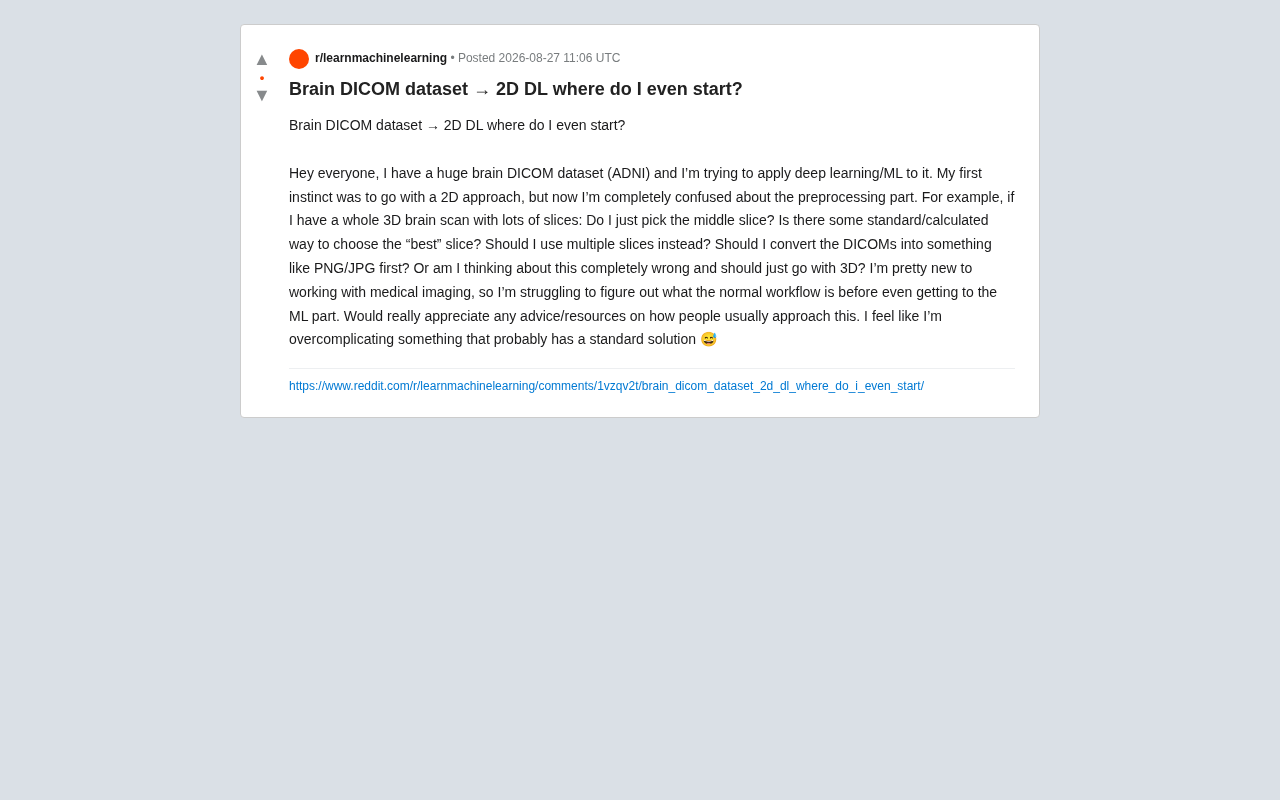
Deep Learning on Brain DICOM Datasets: A Guide to Choosing Between 2D and 3D Approaches
Comprehensive guide to choosing between 2D, 2.5D, and 3D CNN approaches for brain DICOM medical imaging deep learning. Covers ADNI dataset preprocessing workflows including resampling, registration, and skull stripping.
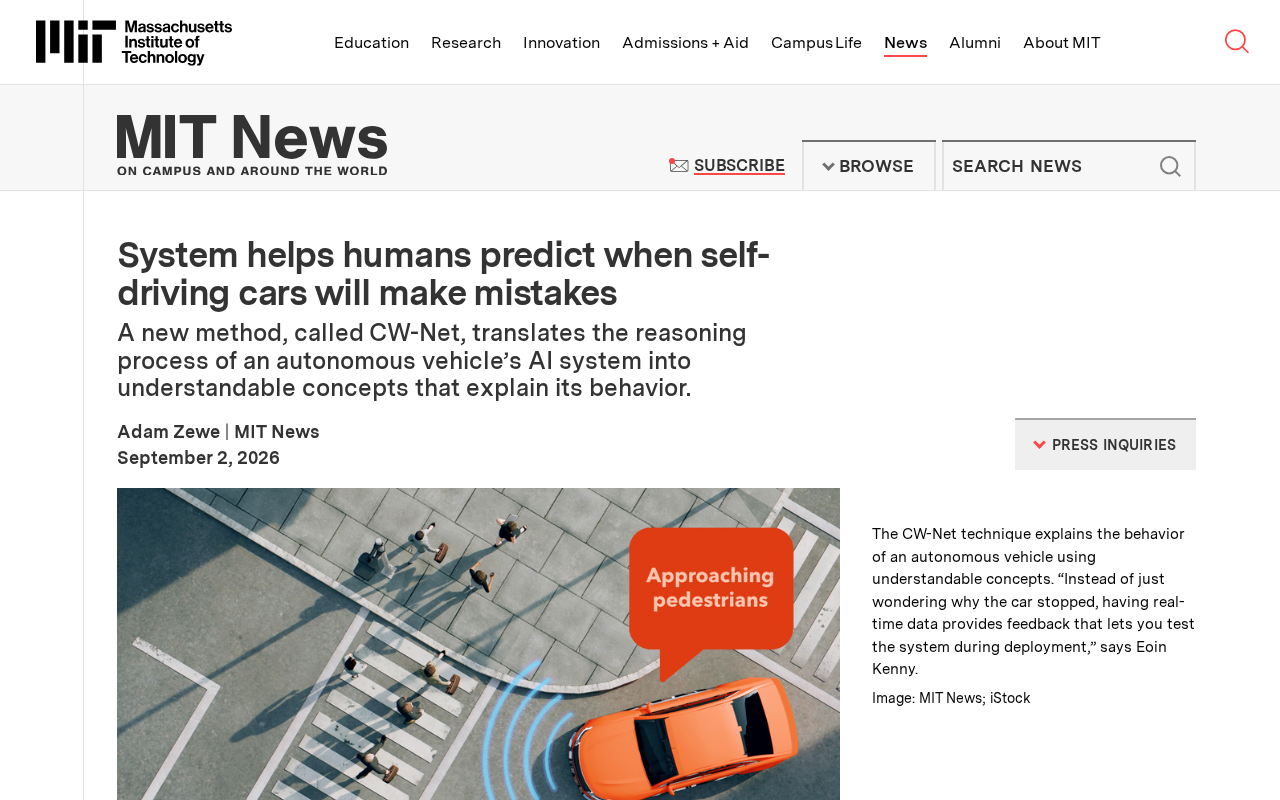
MIT Proposes CW-Net: Making Autonomous Driving AI Decision-Making Explainable and Predictable
MIT researchers propose CW-Net concept warning network, transforming autonomous driving AI's black-box decisions into human-understandable concepts, enabling error prediction and human-machine collaboration. This article analyzes its working principles and practical implications for regulatory compliance, safety redundancy, and public trust.

AI Fatigue: Why Do Learners Feel More Lost as AI Gets Stronger?
As AI crushes top human competitors in math proofs and programming contests, how should tech learners cope with AI fatigue and career anxiety? This article analyzes the nature of capability squeeze and provides a rational framework for addressing AI anxiety.