eSUV Electric Bikes: Can They Really Transition Seamlessly from Trails to City Streets?

eSUV e-bikes aim to conquer both trails and city streets, but versatility comes with inherent performance trade-offs.
eSUV electric bikes are an emerging e-bike category built around wide tires, dual suspension, and practical accessories, positioned between urban commuters and dedicated mountain e-bikes. Their core pitch is versatility — one bike for pavement and dirt alike. But this all-around design involves real engineering trade-offs: wide tires boost off-road grip while raising rolling resistance on pavement, and dual suspension adds comfort off-road while increasing weight and reducing pedaling efficiency on flat roads. eSUVs are best suited for riders with varied terrain and diverse needs, while those focused on a single use case will likely be better served by a purpose-built bike.
What Is an "Electric SUV" Bike?
In recent years, a category known as the "electric SUV" (eSUV) e-bike has been gaining mainstream attention. As the name implies, these bikes aim to replicate the positioning of SUVs in the automotive world — capable of handling everyday city commutes on asphalt while also tackling gravel paths and muddy terrain. They typically feature wide all-terrain tires, front and rear dual-suspension systems, and practical accessories like fenders and racks.
The core selling point of this segment is versatility — the ability to do it all with a single bike. For riders who want a daily commuter but don't want to give up weekend off-road adventures, the eSUV sounds like an ideal compromise. But the real question is: can a design that tries to do everything actually do both things well?
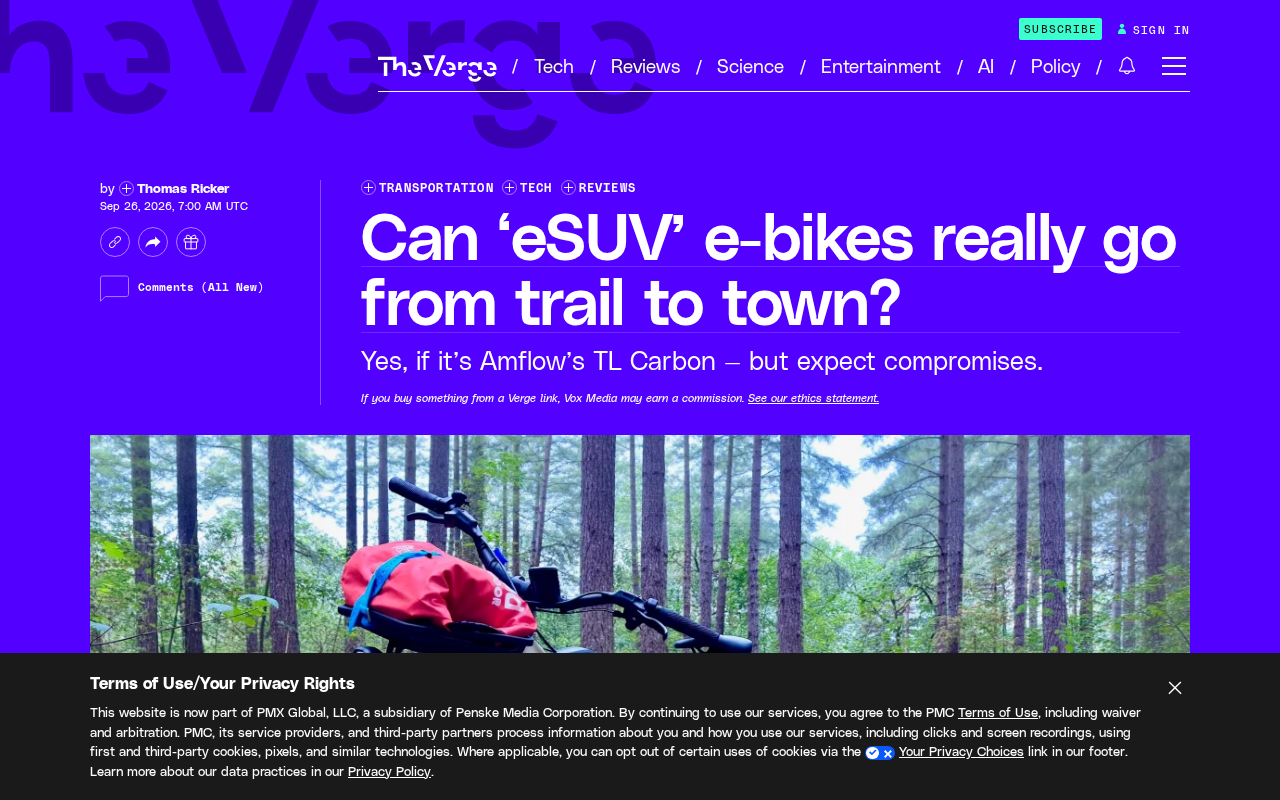
The Design Logic and Trade-offs of eSUVs
eSUVs are positioned between urban commuters and dedicated mountain e-bikes. Wide tires and dual suspension deliver stability and comfort on rough terrain, while fenders, racks, and lighting systems cater to the practical demands of city use.
At its core, this design is an exercise in balance. Wide tires offer better grip on gravel and mud, but they increase rolling resistance on paved roads, reducing range and riding efficiency. Dual suspension improves off-road comfort but also adds weight and cost — potentially overkill for riders who never leave the city streets.
In other words, eSUVs attempt to cover two very different use cases with a single hardware platform. For most users, the value isn't about excelling in any one scenario — it's about avoiding the hassle of owning multiple bikes for different conditions.
From a technical standpoint, eSUVs typically use 27.5-inch or 29-inch wheels paired with tires 2.4 inches wide or wider, featuring pronounced knobby tread patterns for loose terrain. Front fork travel generally ranges from 80 to 120mm, and some models include a full rear suspension system. The overall geometry leans toward a relaxed riding position for long-distance comfort. Motors are usually mid-drive torque-sensing units delivering 60–90Nm of torque, providing consistent power assistance on climbs and soft ground. Battery capacity typically falls between 500Wh and 750Wh — sized to compensate for the extra energy consumption caused by wide tires and suspension systems. Together, these specifications place eSUVs at a deliberate engineering midpoint: neither as nimble and aggressive as a hardtail mountain e-bike, nor as lean and efficient as a dedicated urban commuter.
Can the All-Around Promise Actually Deliver?
The real test is whether the actual riding experience lives up to the marketing claims. All-terrain tires and front-and-rear suspension theoretically give the bike the physical capability to handle multiple scenarios, but factors like ride feel, range, load capacity, and maintenance costs are equally critical.
A few key dimensions worth examining:
- Range and efficiency: Wide tires and a heavier frame reduce range during city commuting, requiring a larger battery to compensate.
- Comfort and handling: Dual suspension is a plus off-road, but on smooth pavement it can create a "power sapping" sensation, reducing pedaling efficiency.
- Practical accessories: Fenders and racks determine whether the bike can handle daily errands and cargo hauling — a key differentiator from pure mountain bikes.
For budget-conscious riders who want one bike for everything, the eSUV's value lies in its flexibility. But for those chasing peak off-road performance or maximum commuting efficiency, a dedicated bike will likely still be the better choice.
There's a commonly overlooked physics principle at play in range loss: tire width and tire pressure directly affect the rolling resistance coefficient (Crr). Wide tires at low pressure offer better grip on trails, but when ridden on pavement at that same low pressure, rolling resistance can be more than twice that of a narrow tire at high pressure — forcing the motor to continuously output more power to maintain the same speed. The "pedal bob" phenomenon in dual-suspension systems also consumes riding energy: some of the force generated by pedaling is absorbed by the rear suspension rather than being fully converted into forward momentum. This results in a noticeable drop in efficiency on flat urban roads. Some eSUVs address this with a rear suspension lockout, but that requires riders to manually switch settings between terrain types, adding operational complexity.
Who Should Buy an eSUV?
eSUVs aren't for everyone. They're best suited for riders with diverse needs, varied terrain, and no desire to fill a garage with multiple specialized bikes. If your life involves both daily city commuting and weekend off-road exploration, this type of bike can significantly reduce the compromises you'd otherwise have to make.
But if your use case is highly specific — pure urban riding or serious mountain biking — a dedicated, purpose-built bike will generally deliver better performance in terms of efficiency, weight, and value.
Ultimately, the eSUV represents the e-bike market's exploration of a true "all-rounder" product. Whether it can genuinely deliver a seamless transition from trails to city streets comes down to the engineering execution of each specific model — and how clearly riders understand their own needs.
Related articles

Reinforcement Learning Takes On Getting Over It: Distributed Training Strategies Behind 63% Progress
A developer uses deep reinforcement learning to tackle Getting Over It. The agent climbs from the bottom to 63% progress but gets stuck at the anvil. The project is open-sourced, using divide-and-conquer training and CPU-only training, seeking community collaboration to break the bottleneck.

Sigma FP2 Released: The World's Smallest Full-Frame Camera Gets Sensor and Screen Upgrades
Sigma launches the FP2 full-frame camera, retaining its smallest-and-lightest design with three key upgrades: improved sensor, articulating LCD screen, and longer battery life—built for portable video creators.

AAAI 2027 Phase 2 Decisions Imminent: Community Debates Review Fairness and Submission Ecosystem
AAAI 2027 phase 2 review results are imminent, with the Reddit community debating reviewer consistency and process transparency. This article examines pre-decision sentiment, structural tensions in top conference review, and practical strategies for authors.