Exoplanets Surpass 6,000: From Total Ignorance to a Cosmic Discovery

Known exoplanets surpass 6,000, covering only a tiny zone near the Sun, marking the arrival of the batch science era.
The number of known exoplanets has surpassed 6,000, while before 1995 humanity knew nothing about planets beyond the solar system. This figure comes from detections in a tiny zone around the Sun and is not a microcosm of the Milky Way's total planet count—hundreds of billions of stars mean confirmed samples are just a fraction. The video creator coined "Generation X-oplanet," binding those born after 1995 to the era of exoplanet discovery. Scientifically, the expanded sample drives research from individual discoveries to planetary population statistics and occurrence rate analysis; goal-oriented observation strategy adjustments are key drivers of rapid progress. As a memorable anchor, 6,000 marks exoplanet research entering the batch science stage.
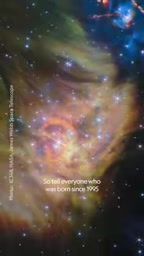
The astronomy world has quietly crossed a milestone: the number of known exoplanets has surpassed 6,000. Behind this figure lies a cognitive leap—from knowing essentially nothing before 1995 to today's "catalog explosion." One science communicator joked in a video: "Tell everyone born after 1995 to declare themselves Generation X-oplanet."
From 0 to 6,000: A Cosmic Hunt Spanning Just Thirty Years
Until 1995, every planet humans knew of existed only in our own backyard—the solar system. At the time, the search for exoplanets was just a hypothesis: if the Sun has eight planets, other stars ought to have their own planetary systems too. The problem was that there was no observational evidence whatsoever.
According to the video, scientists adjusted their experiments and observations specifically to target this goal. "But the hunt was on." That phrase sums up the following three decades of effort—from indirect detection to direct imaging, from ground-based telescopes to space satellites—as the exoplanet catalog gradually expanded until it crossed the 6,000 threshold.

Radial velocity and transit methods: Exoplanets themselves emit almost no light, making direct imaging extremely difficult, so early detection relied mainly on indirect methods. The radial velocity method measures periodic Doppler shifts in a star's spectrum to infer the tiny wobble caused by a planet's gravitational pull; 51 Pegasi b, the first exoplanet found orbiting a main-sequence star in 1995, was confirmed using this method. The transit method monitors periodic dips in a star's brightness to determine when a planet passes in front of it. The Kepler Space Telescope used the transit method to discover thousands of candidates in one fell swoop, pushing the sample size from "single digits" to "thousands." Each method has its biases: radial velocity more easily finds massive, short-period planets, while the transit method places strict requirements on orbital inclination—only by combining the two can we paint a fuller picture of planetary populations.
6,000 Is Just the Tip of the Iceberg: A Tiny Sliver Around the Sun
What's more intriguing is the distribution of these 6,000. The video specifically reminds us: these are only exoplanets within "a tiny little zone" around the Sun. (And by the way, that's only exoplanets in a tiny little zone around the Sun as we continued to explore the universe.)
In other words, 6,000 is not a microcosm of the Milky Way's total planet count—it's just a small step we've taken in exploring the cosmos. The Milky Way contains hundreds of billions of stars, and at current detection efficiency, the confirmed exoplanet count is merely a fraction of the detectable sample. This shift in perspective is more striking than the number itself—it suggests that planets are far more abundant in the universe than we imagined, and humanity's search has only just begun.

Detection bias and the "detectable sample": The 6,000 confirmed planets are not a truly random sampling of the Milky Way's planets, but a "detectable sample" heavily shaped by observational selection effects. Current mainstream methods are most sensitive to nearby, massive, short-period planets, and struggle with Earth-like planets, long-period planets, and distant systems. Therefore, the number 6,000 should be understood as "the number of planets successfully confirmed under current technical conditions within the Sun's neighborhood," rather than an unbiased estimate of planetary abundance. Astronomers are gradually filling in the gaps for cold planets, low-mass planets, and wide-orbit systems through longer observational baselines, higher-precision photometry, and next-generation space telescopes—which also explains why "tip of the iceberg" holds true in a statistical sense as well.
"Generation X-oplanet": A Fun Socio-Cultural Label
The video creator proposed a somewhat joking yet resonant idea: everyone born after 1995 can call themselves "Generation X-oplanet." The cleverness of this label lies in binding the timeline of scientific discovery to generational identity.
Before 1995, humanity was a "blank slate" regarding planetary knowledge; those born after 1995 grew up in an era where exoplanets are constantly being discovered and astronomy textbooks constantly being rewritten. According to the video's perspective, this generational difference is itself a science communication topic worth spreading. It connects abstract astronomical numbers to personal identity and makes the milestone easier for the public to remember.
Why the Number 6,000 Is Worth Noticing
What does surpassing 6,000 exoplanets mean scientifically? From a statistical perspective, the expanded sample allows astronomers to shift from "discovering individual planets" to "studying planetary population distributions"—such as the proportions of hot Jupiters, super-Earths, mini-Neptunes, and the relationship between stellar types and planet occurrence rates.
From a public communication perspective, 6,000 is an easy-to-remember anchor, more impactful than "thousands." It also marks exoplanet research transitioning from "rare events" to "batch science." The video creator also promoted their new book Lost in Space, showing that such data milestones have natural topical value in science communication.
According to the video, the core driver of this discovery process was humanity actively adjusting its observation strategy—"So we tuned experiments and observations to observe precisely that." This goal-oriented research approach is itself the key to the rapid development of the exoplanet field.

Planetary population statistics and occurrence rates: When the sample size is large enough, astronomers no longer care only about "finding another one," but study the proportional distribution of different planet types—how much hot Jupiters, super-Earths, mini-Neptunes, and Earth-like planets each account for, and how these proportions vary with stellar mass, metallicity, and orbital period. This type of research is called occurrence rate analysis, which relies on precise modeling and correction of detection biases. The scale of 6,000 significantly narrows statistical errors and enables model comparison—for example, testing predictions of the "core accretion" and "disk instability" pathways in planet formation theory. This is precisely why the numerical milestone marks a turning point from "collector-style discovery" to "batch science."
Conclusion: Imagination Beyond the Numbers
6,000 exoplanets is a阶段性 number, but its true significance lies in reminding us: a tiny zone around the Sun is already so rich, and the entire Milky Way's planet count will be an astronomical astronomical number. For the generation born after 1995, they happen to stand at the starting point of humanity's cognitive explosion—which is exactly what makes the name "Generation X-oplanet" so fitting.
One-line Summary
Known exoplanets surpass 6,000, covering only a tiny zone near the Sun, marking the arrival of the batch science era.
Related articles

Gemini 4 Argon Hands-On: AI Builds Board Games, Constructs Temples, and Trains Robots Autonomously
Gemini 4 Argon hands-on roundup: AI autonomously builds a desk racetrack and temple in Blender, writes a ray tracing engine, trains a humanoid robot to sink 7 shots, plus API pricing and developer access.

The Magic Octagonal Coin: Why Only 9% of People Can Predict Its Flip?
Only 9% of people can correctly predict the Magic Octagon coin flip. This article explains its spatial rotation mechanism, common cognitive pitfalls, and a new hypothesis based on Relevance Theory, exploring the limits of human spatial reasoning.

Sam Altman: AI Is Entering the Era of Scientific Discovery — Math Breakthroughs Will Replicate in Biology and Energy
Sam Altman says AI is entering the era of scientific discovery — math breakthroughs will replicate in biology, materials science, and energy to help develop new drugs and energy sources.