Fable 5.2 Gray-Scale Test Leaked: Anthropic May Surpass GPT-6 Astra

Leaked gray-scale tests suggest Anthropic's Fable 5.2 outperforms GPT-6 Astra in reasoning, but it's unconfirmed.
Users of Claude Code discovered that Anthropic silently rerouted some requests to an unannounced model, Fable 5.2. Community testers report it significantly outperforms GPT-6 Astra in deep reasoning, 3D modeling, and code generation — but at the cost of slower output and higher inference costs. Opus 5.2 also leaked, drawing praise for complex 3D tasks. Behind the scenes, Anthropic faces mounting IPO pressure as OpenAI regains developer market share, while controversy over AI safety evaluator METR's funding independence continues to brew. All claims remain unconfirmed by Anthropic.
An Accidental Gray-Scale Test Exposure
According to reports from content creators on Bilibili, over the past day a number of users working with Claude Code may have unknowingly interacted with an AI model that Anthropic has yet to officially acknowledge — Fable 5.2. The story started almost by accident: Anthropic quietly launched a gray-scale test, silently redirecting requests that should have gone to Fable 5.1 to the new model in the background.
The first to notice something was off was a tester from Nocast, who spotted a clear shift in response style and immediately began running comparison tests. Under identical inputs and the same deep reasoning mode, Fable 5.2 was described as "a massive leap over the current version," with noticeably higher answer quality than OpenAI's GPT-6 Astra — a conclusion that held up across multi-modal tests.

It's worth emphasizing that all of the above is still based on community tester observations and leaks. Anthropic has not officially confirmed the existence of Fable 5.2. Any conclusion that it "crushes Astra" should therefore be taken with considerable skepticism.
The Cost of Stronger Reasoning: Slow Thinking and Higher Expense
Multiple testers noted that Fable 5.2's performance gains come at a price. According to people close to development, the model uses a deeper "slow thinking" mechanism to push past the limits of logical sequencing and long-horizon reasoning. The direct consequence is slower generation speed and significantly higher inference costs.
This trade-off was confirmed repeatedly in real-world testing. Tester Bavani used a high-difficulty "rocket test" — packing complex physics calculations, spatial logic, and systems engineering design into a single prompt — the kind of task that readily exposes hallucinations and logical flaws in AI models. He tested Fable 5.2 alongside Opus 5.2, which is also in gray-scale testing, and described the results as "frighteningly realistic." Another tester had 5.2 clone Brawl Stars within an hour and publish the result, which promptly ignited the game developer community in the comment section.
Ketan Suwa ran a three-way comparison — Fable 5.2 and Opus 5.2 versus GPT-6 Astra — with every parameter maxed out: maximum resources, deepest reasoning steps, no restrictions. The conclusion was that both Anthropic models delivered noticeably more detailed answers than Astra. Some testers even claimed that Fable 5.2 outperforms Astra at full capacity in "bare metal mode," attributing this to changes in parameter scale and architecture.
A note on "Slow Thinking": Slow Thinking is a major evolution in reasoning paradigms for large language models, contrasted with "Fast Thinking." In fast thinking mode, a model generates output directly from the input — low latency, but prone to errors on multi-step logical chains. Slow thinking makes the model work through explicit intermediate reasoning steps (i.e., Chain-of-Thought) before producing a final answer, and may even involve iterative self-verification and correction. OpenAI's o-series, Google's Gemini Thinking, and Anthropic's Extended Thinking mode all fall into this category. The downside is that slow thinking multiplies the number of reasoning tokens, directly driving up per-call compute costs and response latency. The trade-off between high performance and low cost/low latency is therefore a core engineering challenge that all major labs face today, and the primary dividing line between "flagship reasoning models" and "everyday-use models."
A Clever "Test Group Detection" Method
A small trick for checking whether you've been switched to a new model has also been circulating in the community: select Fable 5.2 or Opus 5.2, ask it whether it knows a specific person, and explicitly tell it not to search the web.
The older Fable 5.1 or Opus 5 would get confused, fabricate information, or simply admit it doesn't know — because the relevant period falls outside its training data. But if you've been quietly switched to the new model, it will give an accurate answer immediately, without any tools. This method incidentally reveals that the new model's training data timeline has been updated.
On a related note, Opus 5.2 — internally codenamed "Opus Next" — had its own little episode. Influencer Leo tested it in Roblox Studio and described its performance on complex 3D tasks as "impressively good," surpassing both Fable 5.1 and Astra, while being cheaper and faster, and even proactively adding a navigation system to the game. Then Anthropic pulled the plug without warning in the middle of the night — active accounts in the test group went to zero instantly, and Leo was forced to halt the project.
The Labs' Quiet War
The strangest part is this: despite no major lab making any official announcement, with Silicon Valley apparently calm on the surface, multiple models are simultaneously running secret tests and leaking data.
Beyond the Fable 5.1-to-5.2 transition and the Opus 5.2 exposure, rumors also involve renaming within the GPT series, Elon Musk's Grok versions, and Google Gemini models running tests under different codenames. There are reports that Anthropic may skip 5.1 entirely, because the new model's capabilities in front-end development, 3D modeling, and game design represent a far larger jump than a minor version increment would suggest. People also noticed that Anthropic quietly reshuffled its rankings, moving Opus to the top above Fable — no small thing for either flagship model.
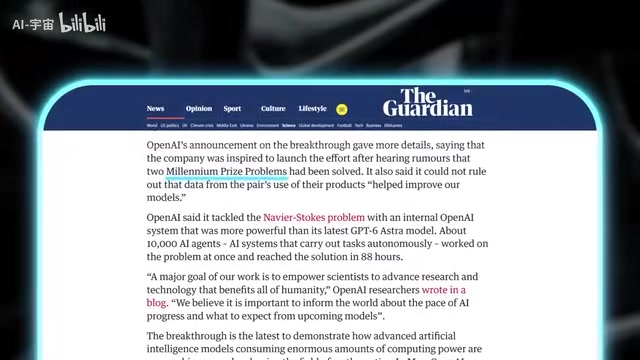
There's also a claim that deserves extreme skepticism: reportedly, some of the top models' logical reasoning abilities are approaching unsolved problems in modern mathematics, with development teams citing mathematicians' work in their solutions. This claim currently lacks credible supporting evidence and is mentioned here only for reference.
Commercial Maneuvering Under IPO Pressure
Why is Anthropic in such a hurry to push a new model right now? A Reuters report offers a more grounded answer: it's directly tied to competitive pressure ahead of a potential IPO.
GPT-6 Astra has impressed on capabilities like computer operation, and enterprise adoption has been swift. According to reports, on enterprise platform Ramp, Astra accounts for roughly 13% of enterprise AI spending, while Claude/Fable accounts for only 8%. On OpenRouter, which routes developer traffic, OpenAI's spending share surpassed Anthropic's for the first time in two and a half years. This has caused IPO-minded investors to question whether Anthropic is truly leading the enterprise market as anticipated.

From a purely financial standpoint, Anthropic still looks strong — its annualized revenue exceeded $6.5 billion by the end of July (the source figure is uncertain; reported here as stated), with significant projected growth through 2028. But open-source models — especially Chinese open-source models — are driving down costs and increasing pressure on enterprises to build in-house, which is seen as a more serious threat than OpenAI itself. Meanwhile, major client Meta is pushing to reduce dependency through in-house development. As for timing, Sam Altman has confirmed OpenAI will not go public in 2026, while Anthropic's IPO may be pushed back to after the U.S. midterm elections.
A note on OpenRouter: OpenRouter is a model-routing aggregation platform that allows developers to access models from Anthropic, OpenAI, Google, and other providers through a unified API, billed by actual usage. Because it aggregates genuine call traffic from a large number of developers, its spending-share data for each model is considered an important reference for measuring real developer preferences — a more accurate reflection of competitive strength in actual development scenarios than officially published subscription user counts. The report that OpenAI's spending share on OpenRouter surpassed Anthropic's for the first time in two and a half years — if accurate — would signal a structural shift in developer preferences, carrying significant market signal value for Anthropic, whose core business depends on enterprise and developer clients.
The Safety Narrative and the Battle Over Incentive Structures
Beyond the technology race, a debate is brewing over the AI safety narrative. This section is highly contentious, involving accusations and rebuttals from multiple sides — readers should draw their own conclusions.
The controversy was sparked by a researcher's resignation letter claiming that major labs "don't understand how powerful AI has become" and are putting humanity at risk — a post that reportedly exceeded 170 million views. A blogger subsequently published a long-form critique arguing that Anthropic, while advocating for AI regulation, also holds a firm grip on the regulatory narrative. For example, METR — a model evaluation organization that spun out of Anthropic's research ecosystem — has been designated as an "independent third party," yet its funding sources reportedly overlap with Anthropic's investors.
Critics describe a "vicious cycle": rising valuations → the safety ecosystem profits → catastrophe narratives amplify public fear → demand for independent evaluation surges → funding and power flow back to the same group. But rational counterarguments point out that overlapping funding sources don't equal fraud — this more likely reflects the fact that the field has "always been small and tightly knit." This raises a core question that no one can definitively answer: what is the true standard for evaluating independence? How much funding disclosure is enough?
A note on METR: METR (Model Evaluation & Threat Research) is a nonprofit organization focused on evaluating the capabilities of frontier AI models, founded by former Anthropic researchers. Its work primarily covers alignment capability testing and dangerous capability assessments. Under the voluntary safety commitment frameworks signed by the U.S. government and major labs, METR has been designated multiple times as a "third-party independent evaluator," participating in pre-launch safety reviews for flagship models including GPT-4o and Claude 3. The core of the controversy here is this: if the investors funding METR's operations overlap with Anthropic's investors, the practical meaning of its "independence" becomes worth questioning. This problem is not unique to AI — academic peer review and financial credit rating agencies face similar structural conflicts of interest. How to balance funding transparency with institutional operational sustainability remains an unsolved institutional design challenge in AI governance.
Final Thoughts
Taken together, the leaks around the Fable 5.2 and Opus 5.2 gray-scale tests suggest a potential leap in Anthropic's reasoning capabilities, while also reflecting a complex picture of intertwined IPO pressure, enterprise market competition, open-source disruption, and battles over the AI safety narrative.
One final reminder: the vast majority of the model performance claims, financial figures, and safety controversies discussed in this article come from community tester observations and media reports — none of it has been officially confirmed. Until a real launch announcement appears, all of these conclusions should be treated as "rumors," not established facts. Tonight, everything could change.
Related articles

Apple Opens Multiseat Subscription Purchasing: App Subscriptions Can Now Be Sold in Bulk to Businesses and Schools
Apple opens multiseat purchasing for auto-renewable subscriptions: businesses and schools can bulk-buy via Apple Business and Apple School Manager, adding or removing seats anytime. Enabled by default in App Store Connect—developers should verify settings; group purchasing sandbox testing opens October 2026.

X-Hinges: Giving Everyday Objects Sensing Capabilities Through 3D Printing
X-Hinges is a design software that automatically embeds sensors into 3D-printed objects, enabling lamps, gloves, and other everyday items to sense human contact and respond adaptively. This article covers its core features, design approach, and potential limitations.

Meta's Clause Revision Still Fails to Stop AI Scraping? Legal Experts Say News Sites' Risks Persist
Meta revised its business terms to remove AI training language, but legal experts say the phrase "related to your product or service" still leaves loopholes, and news sites' content scraping risks remain.