FastMCP: The Go-To Framework for Python Developers Building MCP Servers and Clients
FastMCP: The Go-To Framework for Pytho…
FastMCP lets Python developers build MCP servers and clients with decorators and minimal boilerplate.
FastMCP is a high-level Python framework by PrefectHQ that simplifies building MCP (Model Context Protocol) servers and clients. Using a decorator-driven, Pythonic API powered by Pydantic, it automatically converts type-annotated functions into MCP tools, resources, and prompts — eliminating JSON-RPC boilerplate. With 26,000+ GitHub stars, it's ideal for AI agent development and enterprise tool integration.
What Is FastMCP
As large language models (LLMs) continue to push the boundaries of capability, one of the central challenges in the AI application ecosystem is how to let models call external tools and data sources in a safe, standardized way. Anthropic's MCP (Model Context Protocol) was created to address exactly this problem — aiming to become the "USB-C port" connecting LLMs to the outside world, unifying the way models interact with tools, resources, and prompts.
MCP was officially open-sourced by Anthropic in November 2024. Built on the JSON-RPC 2.0 communication protocol, it defines three core primitives: Tools (executable actions), Resources (readable data sources), and Prompts (reusable prompt templates). The protocol supports two transport layers — stdio and HTTP+SSE — the former suited for local inter-process communication and the latter for remote network calls. This architecture allows MCP services to run as embedded local processes or be deployed independently as microservices, adapting flexibly to applications of different scales.
However, building servers and clients directly on top of the raw MCP protocol typically involves a lot of boilerplate — including JSON-RPC message serialization/deserialization, handshake flow management, and manual maintenance of parameter schemas. FastMCP, developed by the PrefectHQ team, was built specifically to address these pain points. With "fast and Pythonic" as its core philosophy, it lets developers build fully functional MCP servers and clients with minimal code.
The project has already earned over 26,000 stars and 2,151 forks on GitHub, with momentum continuing to grow — a clear testament to its popularity in the developer community.
Core Design Philosophy: Pythonic First
Decorator-Driven Development
FastMCP's greatest strength lies in its design, which closely aligns with Python developers' instincts. Decorators are one of Python's core language features — essentially higher-order functions that enhance a function's behavior without modifying its source code. Flask uses @app.route() to define routes; FastAPI uses @app.get() to define endpoints. FastMCP follows this same proven pattern, letting developers expose ordinary Python functions as MCP Tools, Resources, or Prompts via decorators like @mcp.tool() and @mcp.resource().
This design means developers don't need to deeply understand the underlying JSON-RPC message format, handshake flow, or serialization details of the MCP protocol — they can focus entirely on business logic. Under the hood, FastMCP leverages Pydantic and Python's type annotation system (Type Hints) to automatically convert function signatures into JSON Schema-compliant parameter descriptions. For example, def search(query: str, limit: int = 10) will automatically generate a schema with field types, required fields, and default values — enabling LLM clients to correctly construct call parameters without any manual interface documentation. Docstrings automatically become tool descriptions, dramatically lowering the barrier to entering the MCP ecosystem while keeping code well self-documented.
Bidirectional Server and Client Support
FastMCP is more than just a server framework — it also provides complete client capabilities. Developers can use it both to build MCP servers that expose tool services and to write client programs that call other MCP services. This bidirectional support is especially valuable in multi-agent architectures, where different agents need to share tool capabilities and collaborate with one another. MCP solves the "tool discovery and invocation" problem through standardized interfaces: agents can dynamically list available tools (tools/list), retrieve tool descriptions, and then decide whether to invoke them. FastMCP's client capabilities allow one MCP server to act as a tool caller for another server, enabling the construction of complex agent networks with cascading tool chains — making it a powerful infrastructure foundation for multi-agent systems.
The Value and Ecosystem Position of MCP
Why MCP Deserves Attention
The MCP protocol aims to solve a long-standing fragmentation problem in AI application development. Without a unified standard, integrating each new tool or data source requires custom adapter logic — leading to duplicated effort and tool capabilities that can't be reused across different AI applications. By defining standardized interface specifications, MCP decouples tool providers from consumers. A tool service that conforms to the MCP specification can in theory be directly invoked by any MCP-compatible client — including Claude Desktop, various AI IDEs, and developer tools like Cursor and Windsurf — realizing the vision of a "build once, use anywhere" tool ecosystem.
FastMCP's Role in the Ecosystem
Within the broader MCP ecosystem, FastMCP plays a critical role in lowering the barrier to entry. The official MCP SDK provides low-level capabilities, but for teams looking to quickly validate ideas, build prototypes, or deploy production services, a high-level abstraction framework like FastMCP is invaluable. It carries forward PrefectHQ's deep expertise in data workflow orchestration — PrefectHQ is the company behind Prefect, a well-known open-source Python data engineering project. Prefect is recognized for modern workflow orchestration and, compared to traditional scheduling tools like Apache Airflow, is known for its code-first approach, dynamic DAGs, and elegant developer experience. This deep experience in workflow abstraction and Python tooling design directly shaped the API design decisions in FastMCP, naturally carrying forward a DNA centered on developer experience.
Use Cases and Practical Recommendations
Typical Application Scenarios
- Enterprise internal tool integration: Quickly wrap existing Python business functions as MCP tools for AI assistants to call — such as database queries, report generation, or internal API calls.
- AI agent development: Build agents with real operational capabilities, enabling LLMs to read resources, execute actions, access dynamic data, and support tool sharing and collaboration across multiple agents.
- Rapid prototype validation: When exploring LLM integration with external systems, spin up a working demo in minimal time and leverage the automatic schema generation from type annotations to iterate quickly on interface design.
Getting Started
Since FastMCP is built entirely within the Python ecosystem and uses the widely familiar decorator pattern, developers with basic Python experience can typically stand up their first MCP server in very little time. Pydantic-powered type annotations and automated docstring processing keep the code readable and maintainable, while automatically generating standards-compliant tool schemas — eliminating the tedious work of writing JSON descriptor files by hand.
Summary and Outlook
FastMCP's rising popularity reflects a broader industry trend: the MCP protocol is gradually moving from an emerging specification toward mainstream adoption. As one of the most developer-friendly frameworks in the MCP ecosystem, it effectively bridges the gap between protocol standards and real-world engineering — encapsulating the complexity of JSON-RPC behind decorators, and turning the overhead of maintaining JSON schemas into the type annotation habits developers already know.
As more AI applications, IDEs, and agent platforms begin natively supporting MCP, high-level frameworks like FastMCP will only become more valuable. Whether you want to make Python code "callable by AI" or build AI applications that can operate in the real world, FastMCP is a quality open-source tool well worth adding to your tech stack.
Project URL: github.com/PrefectHQ/fastmcp | Current Stars: 26,346
Related articles
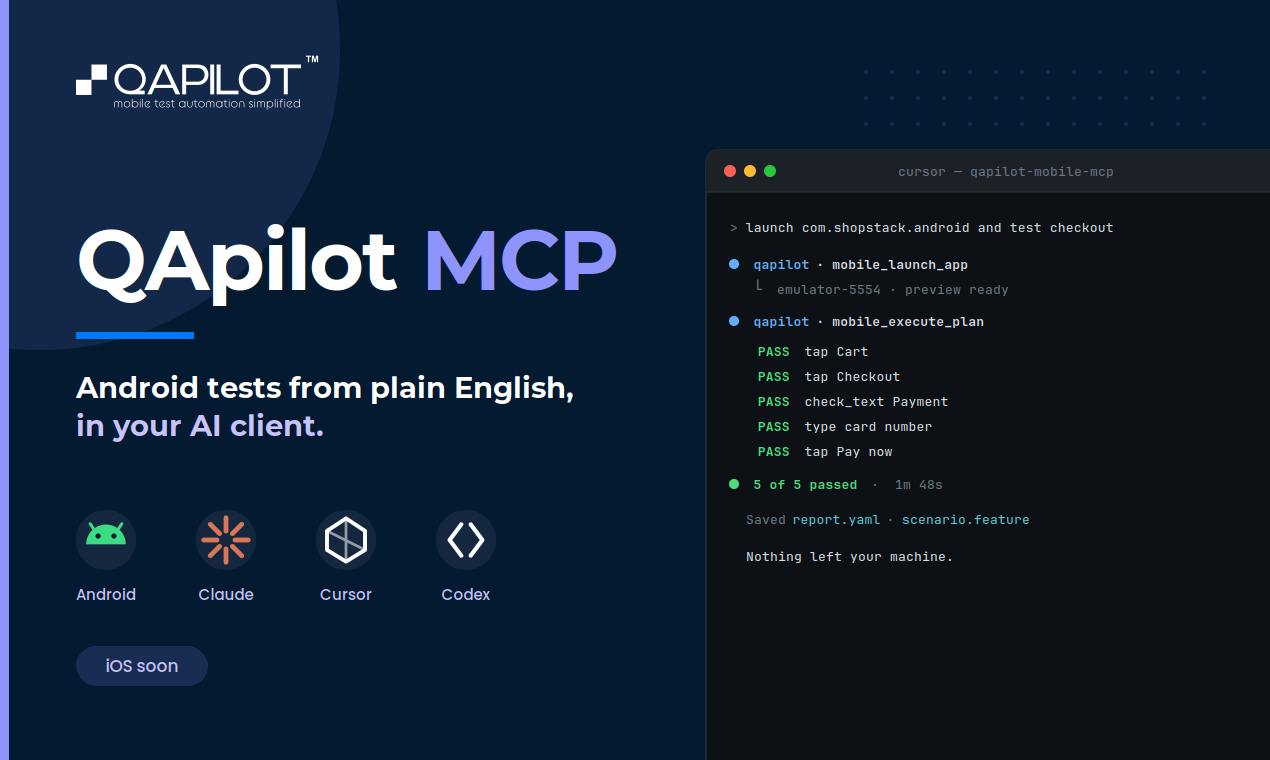
QApilot MCP: Test Android Apps in Natural Language Inside Your AI Coding Assistant
QApilot MCP lets developers test Android apps in natural language inside Claude, Cursor, and Codex — no Appium code needed. Auto-generates reusable Gherkin test cases.
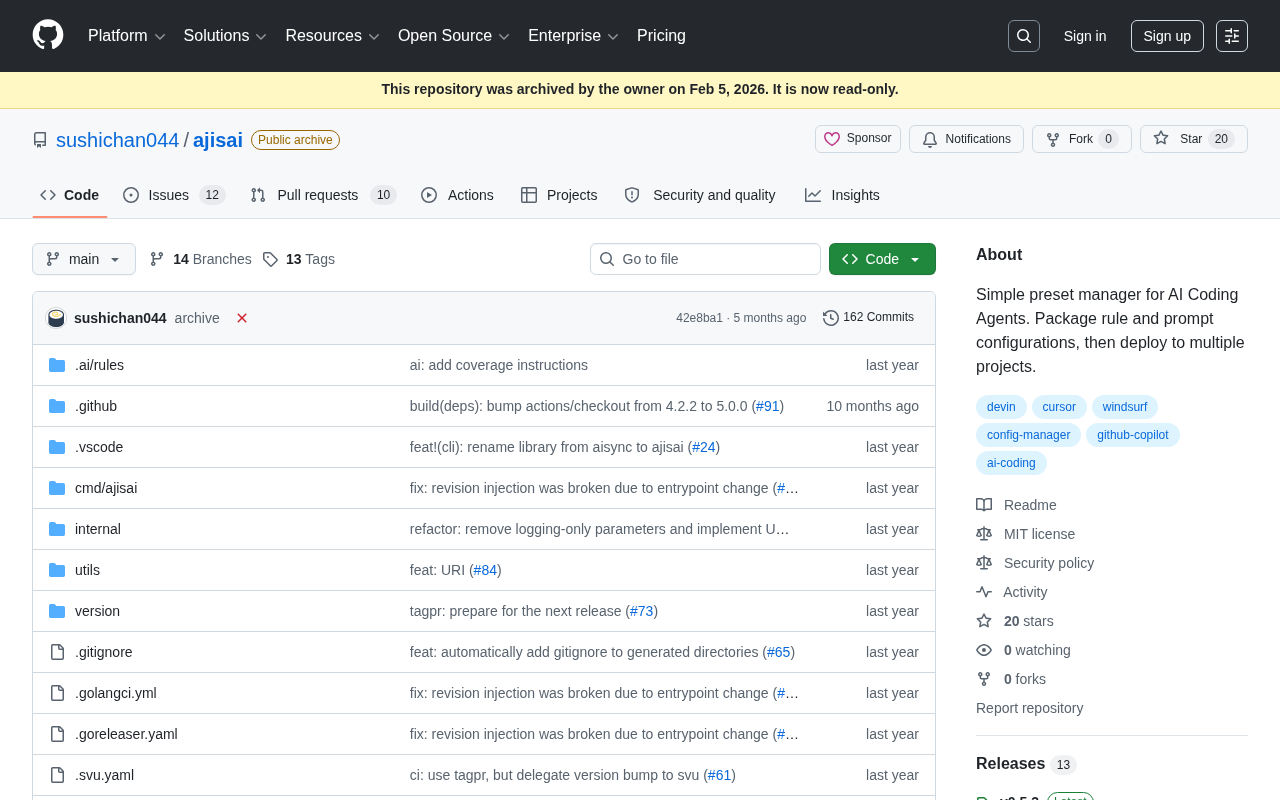
ajisai: A Preset Management Tool for Unifying Rules and Prompts Across AI Coding Assistants
ajisai is a Go-based preset manager for AI coding assistants like Cursor and Claude Code. Package rules and prompts once, deploy everywhere. Early-stage but promising.
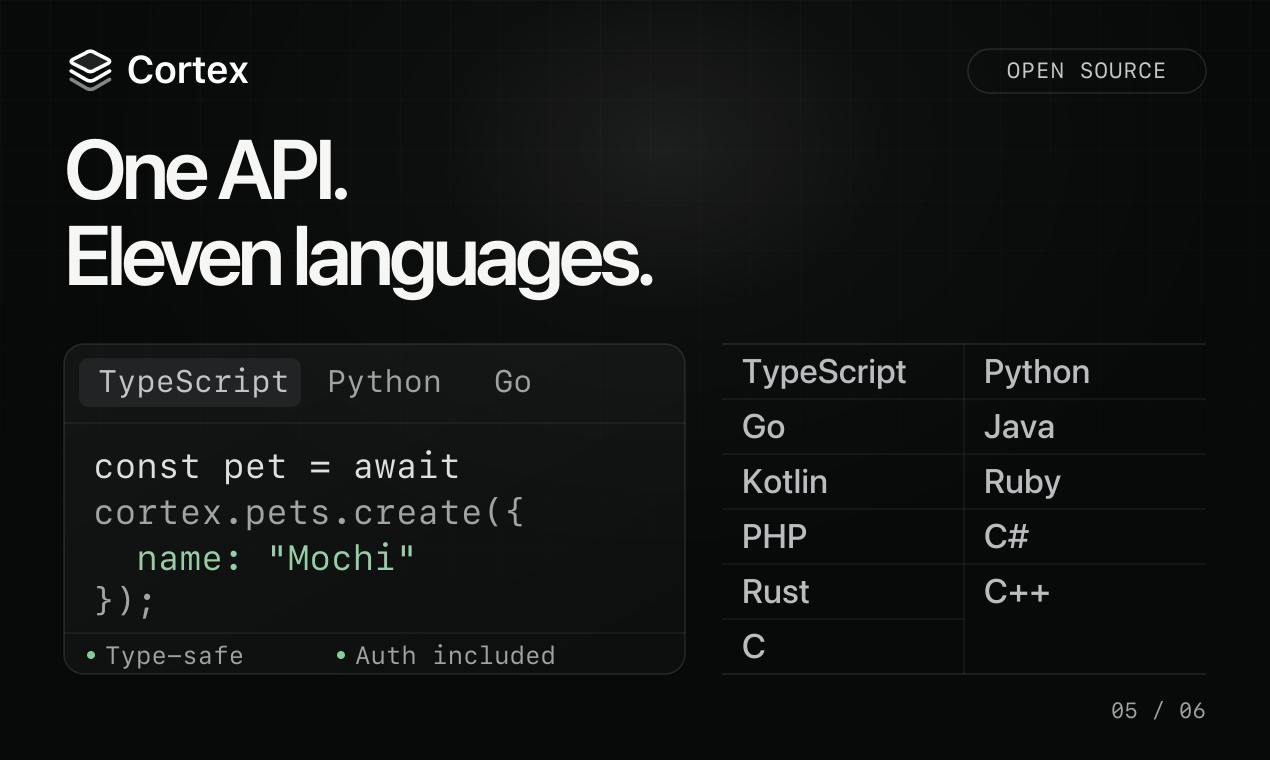
Cortex: Convert API Specs into Docs, SDKs, and MCP Servers in One Click
Cortex is an open-source tool that converts OpenAPI, GraphQL, gRPC and more into interactive docs, typed SDKs in 11 languages, and MCP servers for AI agents.