FBI Alert: How the Open-Source AI Tool ARTEX Threatens Your Bank Account

FBI warns open-source AI tool ARTEX lets ordinary people auto-attack enterprises with English commands; over 1,600 consoles exposed globally.
Based on an FBI flash cybersecurity advisory, the article explains how the open-source AI framework ARTEX "democratizes" advanced attacks: plain English commands let it auto-discover and exploit vulnerabilities. Over 1,600 ARTEX consoles are exposed across 20+ countries; a South Korea operation stole ~67,000 records, ConnectWise affected 2,250+ Microsoft 365 tenants, and India found 62 exposed consoles. It also covers supply chain image backdoors, the asymmetry between $79/month attacks and costly SIEM defenses, RBI compliance pressure on SMBs, and three protections: asset inventory, least privilege, official repositories.
FBI Alert: How the Open-Source AI Tool ARTEX Threatens Your Bank Account
A single simple English command could put your bank account and phone data at risk. According to a warning published on a YouTube channel, the FBI has issued a flash cybersecurity advisory about an open-source AI tool called ARTEX (spelled variously as ARTEX/AR-TEX/Artix in the original). The danger lies in this: an attacker only needs to issue a command in plain English (for example, "steal data from a Microsoft 365 tenant"), and the tool will automatically discover vulnerabilities and carry out the exploitation.
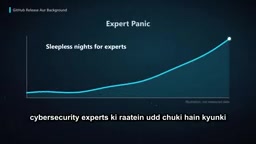
What Exactly Is ARTEX, and Why Did It Trigger an FBI Alert
ARTEX is described as an open-source AI framework that, for the first time, "democratizes" advanced attack capabilities—anyone who doesn't know how to code can use it to launch attacks on large corporate servers. The FBI's flash alert explicitly states that this tool is spreading rapidly like "a fire in a coal mine."
According to FBI data cited in the video, more than 1,600 ARTEX consoles are exposed on the public internet across more than 20 countries. Censys statistics from November 4 show that of 1,465 exposed consoles, about 815 were deployed in different ways. These servers lack password or security wall protection, and anyone can access them through a single script.
FBI Flash Cybersecurity Advisory (FLASH) is a rapid notification mechanism issued by the cyber division of the U.S. Federal Bureau of Investigation, used to give the private sector and the public immediate warning when a threat is still evolving and full intelligence has not yet been assembled. FLASH advisories usually do not include complete technical attribution; instead they focus on "what the threat is, who it affects, and what to do about it," with publication cycles measured in hours or days rather than the weeks of traditional security bulletins. They complement CISA emergency directives and vendor CVE advisories: the latter emphasize vulnerability details and patches, while FLASH emphasizes actionable behavioral guidance. Precisely because of this, the appearance of a specific tool name like ARTEX in a FLASH means the FBI judges its spread has exceeded the capacity of decentralized reporting—it is a "preventive callout" rather than after-the-fact accountability.
Real Attack Cases: From South Korea to ConnectWise
The source material presents two alarming cases. In one attack operation in South Korea, about 67,000 personal data records were stolen at once. In another ConnectWise Cloud Backup breach, more than 2,250 Microsoft 365 tenants were accessed. These figures show that ARTEX is not a laboratory toy but an attack tool already deployed in real-world operations.
Microsoft 365 tenant is a set of independent identity and resource boundaries an organization has in Microsoft's cloud, including user accounts, mailboxes, SharePoint sites, Teams data, and Azure AD app registrations. Once an attacker obtains tenant-level credentials (such as a global administrator or service account key), they can laterally access all of the organization's collaboration data through a single entry point without compromising individual endpoints one by one. This is also why tools like ARTEX prioritize tenants over individual machines: a tenant is the "master key" of the cloud era, and a single successful exploitation can be replicated across hundreds or thousands of downstream customers—especially dangerous in managed service provider (MSP) scenarios. The ConnectWise incident affecting more than 2,250 tenants is a typical manifestation of this "one-to-many" leverage effect.
Supply Chain Risk: The Invisible "House Key"
Even more disturbing is the supply chain attack. If a developer or small business indiscriminately obtains container images from third parties and deploys them on their own servers, they are essentially handing their house key to the enemy. The source material mentions that a Docker image containing an unauthenticated root shell backdoor was downloaded thousands of times without any obstruction. When such components circulate in the open-source market, security teams can hardly verify every line of code.

Container image is a read-only template that packages an application and its dependencies (libraries, runtime, system tools), from which platforms like Docker launch containers. Images are usually built in layers, and developers often pull base images directly from public repositories without auditing each layer. The problem is that once a backdoor (such as an unauthenticated root shell) is implanted in an image, it enters the production environment with deployment and inherits the container's network and permission context. More insidiously, image tags can be overwritten and digests can be forged, allowing supply chain attackers to persist for a long time without touching the application code. This is the technical root of "obtaining an image from a third party equals handing over the keys," and also why security teams emphasize using official repositories and verifying image digests.
India Is Not a Safe Island: 62 Exposed Consoles
The video specifically reminds Indian users not to assume "this only happens abroad." According to a Business Standard report on November 6, 62 exposed ARTEX consoles were found inside Indian financial companies and fintech institutions. Indian enterprises rely heavily on payment gateway APIs, cloud services, and digital lending. Once attackers obtain weak API credentials or execute automated transfers at machine speed, funds can disappear before the bank notices—especially during long weekend holidays or at night.
Low-Cost Attacks vs. High-Cost Defense
ARTEX's Pro version sells on the market for $79 per month (about 6,300 rupees). For attackers or small hacker groups, obtaining such a dangerous tool at such low cost is a huge advantage. By contrast, Indian SMEs or startups simply cannot afford to hire large cybersecurity firms.

The Reserve Bank of India (RBI)'s new regulations require all commercial banks and regulated fintech companies to mandatorily implement multi-factor authentication, continuous patching, and secure configuration. Non-compliant entities face severe regulatory penalties. But compliance requires purchasing expensive SIEM tools and cloud security suites, a heavy burden for small businesses—regardless of whether attacks are stopped, security spending has become a rigid cost.
SIEM (Security Information and Event Management) is a platform that centrally collects logs, performs correlation analysis, and triggers alerts, commonly used to meet compliance audit and incident response requirements. It requires continuous data ingestion, rule tuning, and dedicated analysts, and licensing fees plus labor costs pose a significant barrier for small businesses. The multi-factor authentication, continuous patching, and secure configuration required by the RBI's new regulations often depend on SIEM and cloud security posture management (CSPM) tools to prove compliance. This creates a structural asymmetry: attackers gain automation capability for a $79 monthly subscription, while defenders bear long-term expenses for platform licensing, integration, and operations—and compliance itself does not equal effective protection.
Actionable Protection Recommendations
Based on guidance from the FBI and Censys, users can take the following steps:
- Build an inventory of internet-facing assets: Map out all internet-facing applications and immediately lock unnecessary open ports behind the local network.
- Strict access control: Apply the principle of least privilege to cloud management panels and limit the permissions of employees and API keys.
- Use only official repositories: When downloading Docker images or open-source tools, use only official and verified repositories, and do not run scripts or links of unknown origin.
These seemingly minor steps could help you avoid huge losses. In the digital world, caution itself is the most reliable line of defense. ARTEX proves that AI is no longer just a chat tool but is becoming the fastest-growing weapon in automated cybercrime. Without proactive hardening and strict access control, your digital infrastructure will always be at risk.
One-line Summary
FBI warns that the open-source AI tool ARTEX lets ordinary people automatically attack enterprises with English commands, with over 1,600 consoles exposed worldwide.
Paragraph Summary
Based on an FBI flash cybersecurity advisory, the article explains how the open-source AI framework ARTEX "democratizes" advanced attack capabilities: an attacker only needs to issue commands in plain English, and the tool automatically discovers and exploits vulnerabilities. More than 1,600 ARTEX consoles are exposed on the public internet across more than 20 countries; one operation in South Korea stole about 67,000 personal records, the ConnectWise incident affected over 2,250 Microsoft 365 tenants, and 62 exposed consoles were also found in India. The article further analyzes the risk of supply chain image backdoors, the asymmetry between low-cost attacks at $79 per month for the Pro version and high-cost defenses such as SIEM, and the pressure that new RBI compliance rules place on small businesses, before offering three protection recommendations: asset inventory, least privilege, and official repositories.
Related articles

Nothing CMF Buds 2A Drops to $17.89 on Black Friday: A New Low for ANC Earbuds
Nothing CMF Buds 2A wireless earbuds Black Friday deal: just $17.89 on Amazon, about $11 off retail and a record low. ANC earbuds at an entry-level price.

When AI Creation Gets Accused of "Spitting": Hacker News Heats Up Over the Glaude Controversy
A Hacker News post, "Spitting in the Face of Glaude," sparks debate on AI creation transparency and attribution ethics. This analysis examines the blurred creator identity behind the controversy and offers practical advice for AI content production.

Akai Embraces Custom Firmware: MPC Sample 1.4 Lets Users AI-Program Their Sampler
Akai embraces the modding community with MPC Sample 1.4 firmware, supporting vibe-coded custom firmware and effects. We analyze the impact of this open strategy on music hardware and AI-assisted programming.