Follow the Light: How Light-Triggered ASMR Commands Your Attention

Command-based ASMR builds an attention game with a pen light and otoscope, turning passive listening into active-following relaxation.
Using Bilibili creator Veda's ASMR video as a sample, the article analyzes how ASMR is diversifying from pure whispers and tapping toward "interactive relaxation experiences." Dense but minimal visual commands like "follow the light" keep viewers' visual attention occupied, leaving no room for the mind to wander or grow anxious. The pen light and otoscope, both with clinical-examination connotations, build a "being examined" scenario and a difficulty gradient for visual tracking. Such highly structured interactive scripts can serve as a reference template for future AI-generated immersive content.
ASMR content is diversifying: from pure whispers and tapping toward "interactive relaxation experiences" with explicit command structures, visual guidance, and prop-driven narratives. This ASMR video by Bilibili creator Veda is a textbook example of that trend—using a pen light and an otoscope to turn the viewer's gaze into a multi-minute attention game.
From Passive Listening to Active Following: The Attention Mechanism of Command-Based ASMR
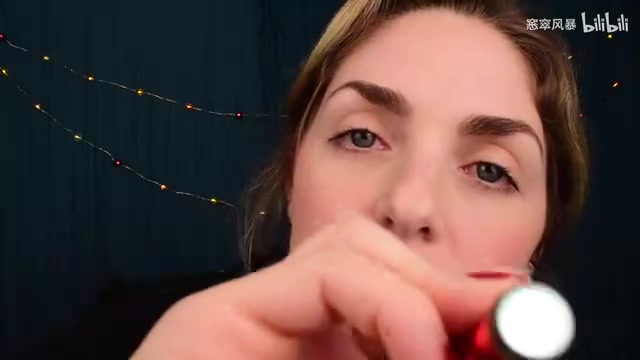
The video's opening isn't complicated: the creator invites viewers to "follow the light, follow my instructions." What follows is a repeating loop of visual tasks—look at my eyes, look at my mouth, look at the light, follow the pen light, follow the otoscope.
Unlike traditional ASMR, which relies on sound texture to create relaxation, the core of this format is continuously occupying the viewer's visual attention. Every "look here" is a tiny attentional anchor; the viewer's gaze is constantly being guided, yet always kept at a low cognitive load. A mild sense of task replaces passive listening, and relaxation actually comes more naturally—because the brain has no spare capacity to wander or grow anxious.
One detail worth noting: the video makes heavy use of negative commands like "don't look at the light, look at my eyes" and "don't move your head, just your eyes." This isn't random—it creates a gentle sense of resistance: you're asked to suppress one instinctive response while completing another action. This light self-control exercise closely mirrors the logic of attention training.
ASMR (Autonomous Sensory Meridian Response) refers to the tingling sensation on the scalp and back of the neck, along with deep relaxation, that some people experience when hearing specific sounds such as whispers, tapping, or page-turning. Traditional ASMR creation centers on sound texture, with representative forms including whispers, trigger sounds, and role-play. In recent years, ASMR has increasingly merged with other sensory channels, spawning variants like visual triggers, light tracking, and interactive commands, shifting viewer participation from passive listening to active following. This evolution is closely tied to short-video platforms' demand for visual appeal, and has also given rise to more complex scripted production.
Prop Narrative: How the Pen Light and Otoscope Build an "Examination" Scenario
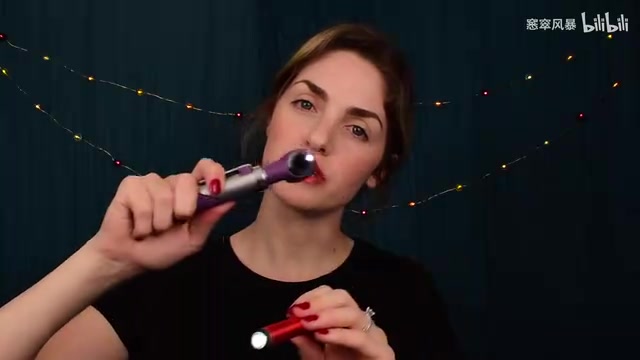
The two core props that recur throughout the video are the pen light and the otoscope. These aren't random choices—both carry strong clinical-examination connotations.
The creator keeps switching commands between the two: "follow the otoscope," "follow the pen light," "ignore the pen light, just follow the otoscope." This alternation not only creates a difficulty gradient for visual tracking but also quietly builds a "eye or ENT examination" scenario framework. Viewers unknowingly step into the role of being examined and guided, while the creator plays the guide.
Based on how the video is presented on Bilibili, this prop narrative turns ASMR from a "sound product" into an "experience scene." The otoscope's inclusion is especially key: it's larger than the pen light and has a more complex movement trajectory (the video specifically mentions that "the otoscope will move diagonally"), providing richer variables for visual tracking.
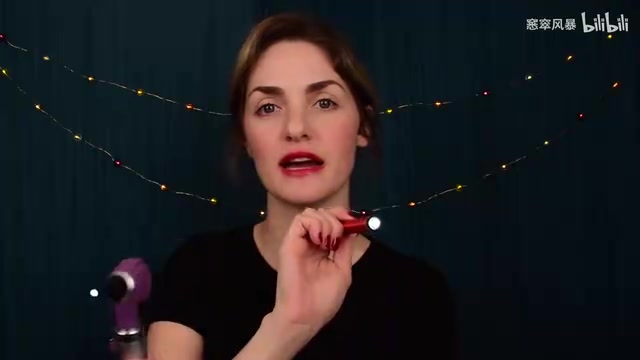
An otoscope is a clinical instrument used by ENT doctors to examine the external ear canal and tympanic membrane. It typically consists of a handle, a lens, and a disposable funnel-shaped speculum; during examination, the speculum is inserted into the ear canal and illuminated by a side light source. In the ASMR context, the otoscope has become a common "medical role-play" prop due to its professional medical associations and distinctive appearance. Medical ASMR is an important subgenre of ASMR, in which creators simulate eye, ear, or dental examination procedures, leveraging viewers' contradictory feelings of tension and trust toward medical scenarios to create an immersive experience of being cared for and attended to. The otoscope's bulk and movement trajectory happen to provide more complex variables for visual tracking than the pen light.
The Paradox of Visual Tracking and Relaxation: Why "Keeping You Busy" Is Actually More Relaxing
An intuitive question: doesn't making viewers constantly move their eyes to follow light points make them more tired?
Judging by the video's actual pacing, the answer may be the opposite. Throughout the experience, although the command density is high, each command is extremely simple—no thinking, no memorizing, no decision-making required. All viewers have to do is "look"—a highly structured form of mental emptying. Cognitive resources are occupied by the lowest-level visual tracking, which in turn blocks the space where distracting thoughts would arise.
This is exactly the same logic as "focusing on the breath" in mindfulness practice: give attention a simple anchor so it has no chance to drift toward stressors. The difference is that ASMR replaces the anchor with dynamic light and shadow plus human voice commands—lower barrier to entry and more entertaining.
Mindfulness originates from Buddhist meditation traditions and entered psychology and medicine after secularization by figures such as Jon Kabat-Zinn. Its core is "consciously and non-judgmentally aware of the present moment." Mindfulness practice often uses the breath as an anchor, gently bringing attention back when it drifts, thereby training attentional stability and reducing anxiety. The "follow the light" task in command-based ASMR essentially provides attention with an external visual anchor, similar in mechanism to the breath anchor: a single low-cognitive-load task occupies working memory and reduces the space for rumination and anxious thoughts. The difference is that a visual anchor is more dynamic, more entertaining, and has a lower barrier to entry.
The Balance of Interactivity: Commands, Choices, and the Illusion of "Being Attended To"
There's an easily overlooked design in the middle of the video: the creator asks viewers to "pick a light" and asks "do you prefer following the pen light or the otoscope?" This is pseudo-interaction—the viewer's choice isn't actually received, but it creates a sense of participation at the experiential level.
More crucial are the frequent "look into my eyes" and "I'm looking into your eyes" commands. These build an illusion of mutual gaze, making viewers feel they are being attended to and cared for. For users watching alone, this sense of being looked at is one of the core sources of emotional value in the ASMR experience.
From a content-design perspective, this video demonstrates a viable direction for ASMR creation: using simple props and a clear command structure to upgrade sound-based relaxation into an engaging attention game. It requires no complex equipment or high-cost production—what it tests is pacing arrangement and grasp of the viewer's attention curve. For those interested in the intersection of AI applications and content creation, this kind of highly structured interactive script is precisely a template worth borrowing for future AI-generated immersive content—clear commands, immediate feedback, self-consistent scenarios.
One-line Summary
Command-based ASMR uses a pen light and otoscope to build an attention game, turning passive listening into an active-following relaxation experience.
Paragraph Summary
Using Bilibili creator Veda's ASMR video as a sample, the article analyzes how ASMR content is diversifying from pure whispers and tapping toward "interactive relaxation experiences." Through dense but minimal visual commands like "follow the light" and "look at my eyes," the video continuously occupies viewers' visual attention, leaving the brain no room to wander or grow anxious—achieving relaxation through a mild sense of task rather than passive listening. The pen light and otoscope, two props with clinical-examination connotations, alternate to build a "being examined" scenario framework and create a difficulty gradient for visual tracking. Negative commands provide gentle self-control exercise, while pseudo-interactive design creates a sense of participation and being attended to. The article argues that such highly structured interactive scripts can serve as a reference template for future AI-generated immersive content.
Related articles
Satirical Viral Hit "Rich Girl's Christmas Haul": A Consumption Frenzy or an Isolated Case?
A Bilibili satirical rich-girl Christmas haul video sparks debate. This article breaks down the consumption symbols in its gift list, analyzes the blurred line between showing off and gratitude, and explores the narrative template of wealth-flaunting content on platforms and its impact on teenagers' wealth perception.
Before You Get Your Ears Pierced: A Professional Piercer Explains Placement, Pain, and Aftercare
A professional piercer explains the full ear piercing process: why a max of three per session, pain ratings and healing times by location, 18K gold vs. pure silver, hollow needles vs. piercing guns, and aftercare.
Classic Fairy Tales for Bedtime: Enjoying VEDA's Soothing Read-Aloud Video
Veda's bedtime fairy tale read-aloud video uses a gentle tone to tell classics like Jack and the Beanstalk, Snow White, and The Three Little Pigs—perfect for sleep and relaxation.