Forge Launch: A Proprietary Knowledge Training System for Enterprise Frontier AI Models
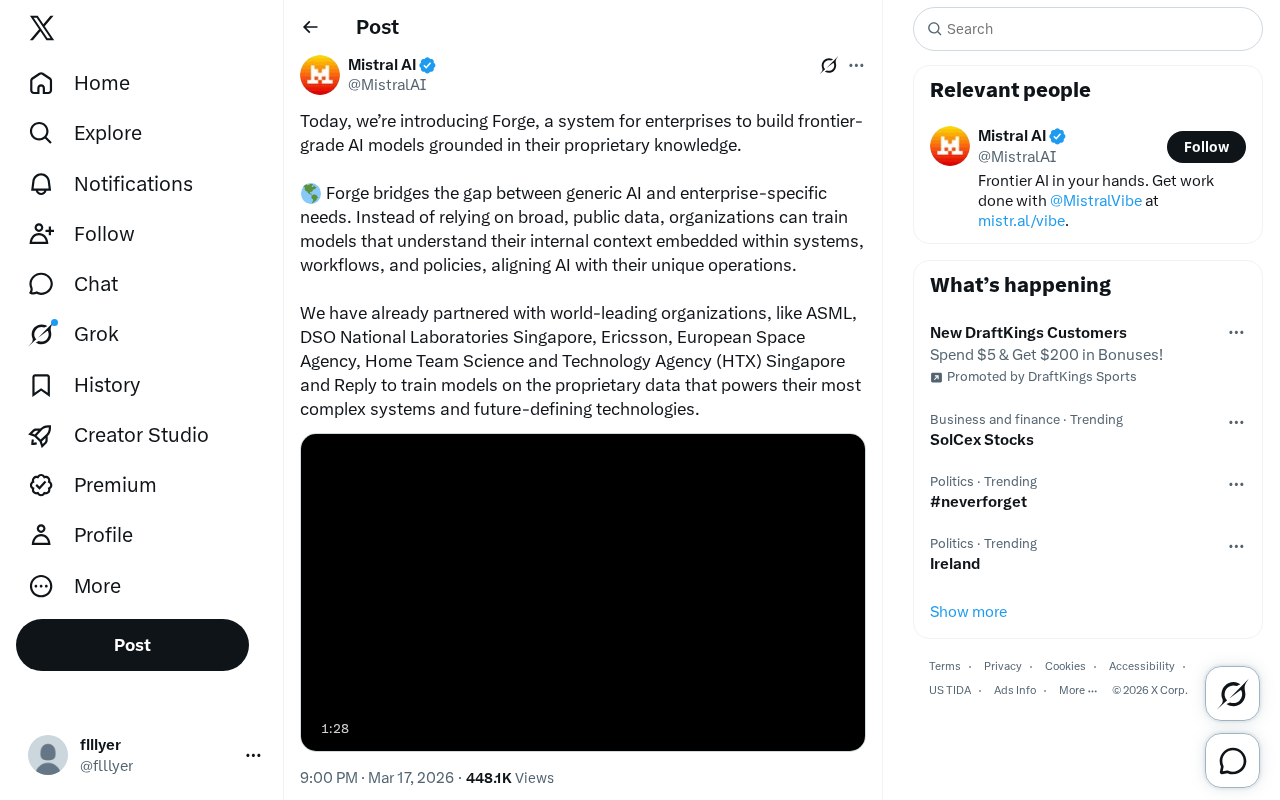
Forge helps enterprises build frontier-grade AI models trained on their own proprietary knowledge and internal data.
Forge is a newly launched system that helps enterprises build frontier-grade AI models grounded in their internal proprietary knowledge, directly addressing the longstanding gap between general-purpose LLMs and company-specific processes, terminology, and policies. Its core value lies in enabling models to deeply align with an organization's structured and unstructured data, workflows, and compliance requirements. Launch partners include ASML, Ericsson, the European Space Agency, Singapore's DSO and HTX, and Reply — spanning semiconductors, telecom, aerospace, and defense. Forge signals a broader industry shift from "calling general-purpose APIs" toward "deeply internalizing proprietary data" as the new competitive moat in enterprise AI.
What Is Forge: A Frontier AI Model System Built for Enterprises
A new system called Forge has officially launched, positioning itself as a platform that helps enterprises build frontier-grade AI models grounded in their own proprietary knowledge. Unlike general-purpose large models trained on public data, Forge aims to solve a persistent pain point in enterprise AI adoption — the gap between generic AI capabilities and an organization's specific needs.
For most organizations, models trained on publicly available internet data are powerful, but they don't understand how a company actually operates: the tacit knowledge embedded in business systems, workflows, and internal policies is often the core of competitive advantage. Forge's approach enables enterprises to train models on this proprietary context, so AI can genuinely align with an organization's unique way of working.
"Frontier-grade" is an industry term used to describe the capability tier of today's most advanced large models — typically referring to models like GPT-4, Claude 3, and Gemini Ultra that reach or approach human expert performance on reasoning, coding, multimodal, and other tasks. Training such models requires tens to hundreds of billions of parameters, massive high-quality corpora, and enormous compute investment, making the barrier to entry extremely high. By using "frontier-grade" to describe its output, Forge is signaling that it helps enterprises build not capability-limited small fine-tuned models, but systems with top-tier reasoning and generation capabilities within an enterprise's proprietary context — a qualitative departure from the "simple fine-tuning on top of a general base model" approach that has been common in enterprise AI.
Core Value: From General Intelligence to Enterprise Context Alignment
Forge's defining phrase is "grounded in proprietary knowledge" — meaning the model learns not from broad public corpora, but from the structured and unstructured data an organization has accumulated internally.
The significance of this approach lies in:
- Understanding internal context: The model can recognize company-specific terminology, process nodes, and decision logic, rather than defaulting to generalized answers.
- Aligning with workflows: AI outputs map directly to actual business processes, reducing "off-target" responses or situations requiring heavy manual rework.
- Adhering to internal policies: Model behavior can be constrained within a company's compliance and policy frameworks — especially important for regulated industries.
In short, Forge aims to transform AI from a generalist that "knows a little about everything" into a specialist that "deeply understands your specific organization." This is a textbook example of how enterprise AI is moving from general capability toward vertical depth.
Enterprise data typically falls into two categories: structured data (tables and records in databases and ERP systems) and unstructured data (internal documents, emails, tickets, operations manuals, technical specifications, etc.). Traditional machine learning methods handle structured data well, but the implicit process knowledge and institutional memory embedded in unstructured data has long been difficult for AI to utilize effectively. The rise of large language models has made understanding unstructured data feasible — a key reason why the "train on proprietary knowledge" direction is technically viable now. Retrieval-Augmented Generation (RAG) is currently the most common enterprise AI deployment pattern, dynamically retrieving documents at inference time to fill in model knowledge gaps. Forge's "training internalization" approach, by contrast, attempts to encode knowledge directly into model weights. The two paths involve different trade-offs across cost, real-time relevance, and depth of understanding.
World-Class Partner Organizations
Notably, Forge disclosed a set of world-class partners at launch, spanning high-complexity domains including semiconductors, communications, aerospace, and defense research:
- ASML: The critical supplier of lithography systems globally, whose machines rank among the most complex in all of manufacturing.
- DSO National Laboratories (Singapore): Singapore's national defense science and technology research institute.
- Ericsson: A global leader in communications infrastructure and telecom technology.
- European Space Agency (ESA): A leading organization in space engineering.
- Home Team Science and Technology Agency (HTX, Singapore): Singapore's Ministry of Home Affairs science and technology agency.
- Reply: A prominent European technology consulting and systems integration firm.
This partner list sends a clear signal: Forge is not targeting everyday enterprise office use cases, but rather the organizations that drive the most complex systems and cutting-edge technologies. These institutions share a common trait — they hold vast, highly specialized, and deeply sensitive proprietary data. This is precisely the kind of data that general-purpose large models cannot access, and where customized training delivers the most value.
Industry Significance: Enterprise AI Enters the "Proprietary Data" Competition Era
From a broader perspective, Forge's emergence reflects a pivotal shift in enterprise AI development. Early enterprise AI adoption was largely about calling general-purpose model APIs for retrieval-augmented search or Q&A. Today, a growing number of organizations recognize that real differentiation doesn't come from which foundation model they use, but from whether they can make a model deeply absorb their proprietary knowledge.
This shift raises a set of practical considerations:
- Data sovereignty and security: Training models on proprietary data means enterprises need stronger data governance and privacy protection mechanisms.
- Training cost and barriers: Building frontier-grade models demands enormous compute and engineering capability — Forge's positioning as a "system" is fundamentally about lowering that barrier.
- Sustainable competitive moats: When a model has internalized a company's unique processes and knowledge, competitors cannot easily replicate it — creating a new form of defensibility.
For knowledge-intensive industries like semiconductors, aerospace, defense, and telecom, transforming the most critical proprietary data into AI capability may well become a decisive factor in future technological competition.
Data sovereignty refers to an organization's right to control, own, and determine how its data is processed and used. For defense research institutions (such as DSO), space agencies (such as ESA), and companies with core manufacturing technology (such as ASML), sending proprietary data to third-party cloud platforms for training carries significant compliance and security risks. This explains why positioning Forge as a "system" rather than a "service" matters deeply to these customers — on-premises or private deployment capability is often a prerequisite for such institutions to adopt AI. At the same time, regulations like GDPR, national data localization laws, and defense export controls all practically constrain AI procurement decisions in high-sensitivity industries, forming the core access barriers of the market segment Forge is targeting.
Conclusion
Forge represents an evolutionary direction for enterprise AI — moving beyond the "good enough" of general intelligence toward a model that truly "knows your business" at a deep level. The information publicly available so far focuses primarily on product positioning and partner announcements; specific technical implementation, training methodology, and deployment details are yet to be disclosed. But given the caliber of its target customers, this system is clearly aimed at the highest-value, hardest-to-crack segment of the enterprise AI value chain.
Related articles
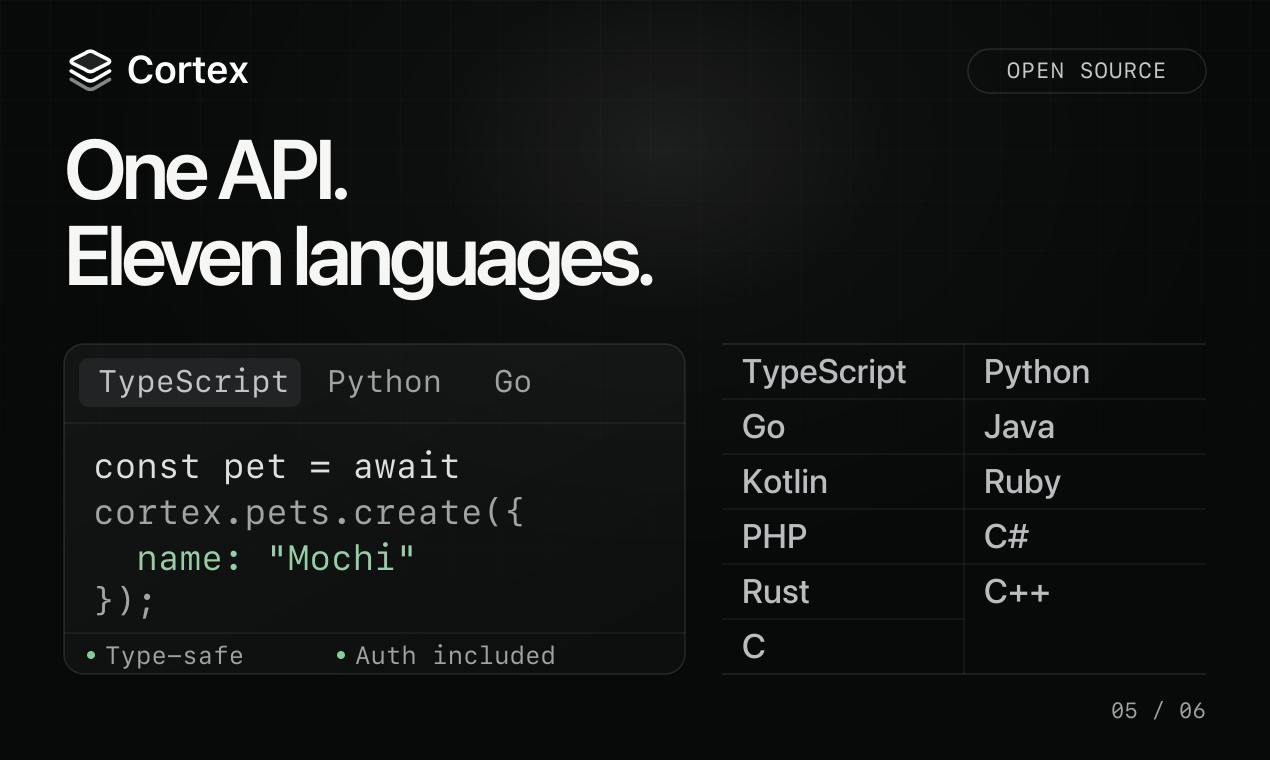
Cortex: Convert API Specs into Docs, SDKs, and MCP Servers in One Click
Cortex is an open-source tool that converts OpenAPI, GraphQL, gRPC and more into interactive docs, typed SDKs in 11 languages, and MCP servers for AI agents.

ABrush: An AI Studio Built for Digital Artists
ABrush is an AI studio for digital artists, ranked #4 on Product Hunt. It embeds leading AI models into existing workflows to remove repetitive tasks, speed up iteration, and keep artists in control.
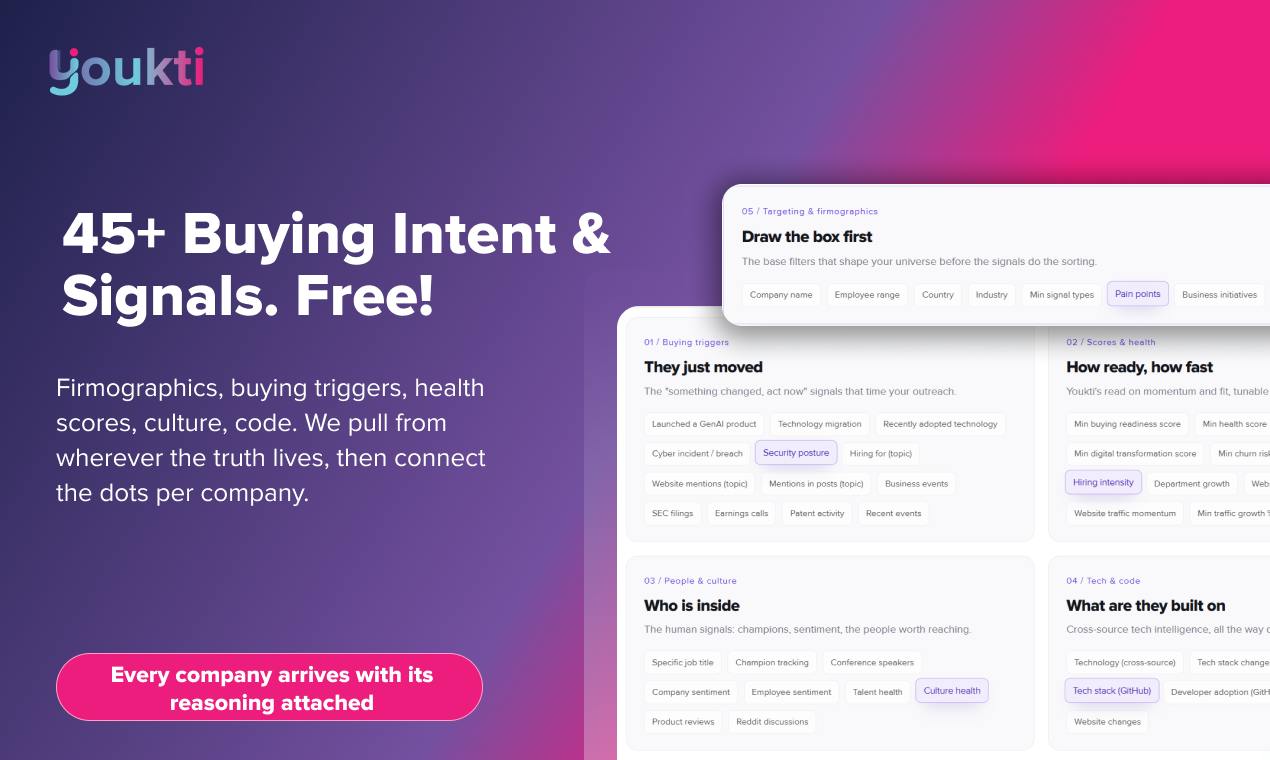
Youkti: An AI That Remembers Every Deal and Tells Your Sales Team What to Do Next
Youkti is an AI sales assistant that hit #2 on Product Hunt. It remembers every account, conversation, and deal — then tells your team exactly what to do next. Contact data, buying signals, and intent data are all free.