Four Conditions for Falling Asleep: Temperature, Heart Rate, Thinking, and Body Awareness

Falling asleep requires four physiological and psychological conditions: temperature drop, slowed heart rate, stopping thoughts, and forgetting limbs.
The article breaks down four physiological and psychological conditions for falling asleep. First, core body temperature must be on a downward trend—achievable by lowering room temperature, sticking out a foot, or taking a hot bath before bed. Second, heart rate must slow down; deliberately extending exhalation activates the parasympathetic nervous system. Third, you can't directly stop thinking—redirect attention to environmental sounds or bodily sensations to occupy cognitive resources and suppress rumination. Fourth, forgetting limb position means body awareness naturally fades and the brain no longer prioritizes bodily signals. The four conditions work synergistically: temperature and heart rate form the physiological base, attention redirection clears cognitive load, and the disappearance of limb awareness is the natural result. Sleep isn't an act of will but a process that happens when conditions are met.
Sleep is the cornerstone of mental health, physical health, and daily performance—critical from birth to the end of life. But many people overlook the fact that falling asleep isn't just about "lying down"; it requires satisfying four physiological and psychological conditions. A popular science video from YouTube clearly breaks down these four elements—no mysticism, just actionable mechanisms.
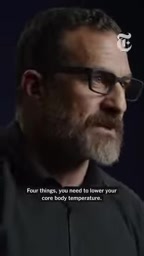
1. Core Body Temperature Must Drop
The video states upfront: core body temperature needs to be on a downward trend—this is the first prerequisite for falling asleep. You can lower the room temperature, or stick one foot out from under the covers—these are low-cost and effective ways to cool down physically. If conditions allow, using technology that cools the bed environment also works, but that requires extra spending.
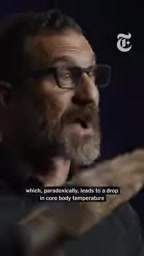
A counterintuitive but practical trick: take a hot shower or hot bath before bed. After drying off, your core body temperature goes through a cooling-down process that恰好 mimics the natural temperature change before sleep. The video mentions the mechanism is complex and can't be fully explained in the time available, but the effect is real. If you don't even have time for a shower, applying a warm towel to your face can achieve a similar partial effect.
The key isn't "cold" itself, but the trend of temperature decline. The body needs to receive the signal that it's "cooling down" in order to initiate the sleep program.
2. Heart Rate Must Slow Down
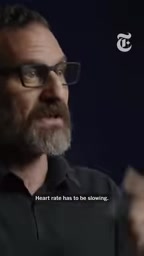
The second condition is a slowed heart rate. The video offers a very specific method: deliberately extend your exhalation. Slow, deep exhalation activates the parasympathetic nervous system, which helps lower heart rate.
This aligns with the principle behind many breathing exercises—the focus isn't on inhalation but on exhalation. When you place your attention on lengthening the exhale, the body switches from "fight or flight" mode to "rest and digest" mode. No complex equipment or apps needed—you can do it lying in bed.
The parasympathetic nervous system is one of the two major branches of the autonomic nervous system, opposing the sympathetic nervous system responsible for the "fight or flight" response, and governs the "rest and digest" state. Its activation lowers heart rate, slows breathing, promotes digestion, and reduces blood pressure. Extending exhalation works because respiratory rhythm is coupled with autonomic nervous activity: sympathetic activity is relatively enhanced during inhalation, and parasympathetic activity is relatively enhanced during exhalation. Therefore, deliberately lengthening the exhalation time (e.g., inhale for 4 seconds, exhale for 6-8 seconds) can increase parasympathetic tone and help lower heart rate. This is also the physiological basis of sleep aids like the "4-7-8 breathing technique"—the focus is always on exhalation, not inhalation.
3. Stop Thinking: Redirect Rather Than Suppress
The third condition sounds the hardest: stop thinking. The video candidly points out a fact—you cannot directly "stop" thinking. When you wake up at midnight with racing thoughts, commanding yourself to "stop thinking" only backfires.
A viable strategy is redirecting attention: guiding your mind to a sound in your current environment, or better yet—bodily sensations. Notice the texture of your toes, the weight of the blanket, the rise and fall of your abdomen as you breathe. This isn't meditation mysticism; it's using concrete sensory input to occupy cognitive resources so that rumination has no space to continue.
The video emphasizes that "bodily sensations" are superior to "environmental sounds" because bodily feelings are more direct and harder for thoughts to interrupt. When attention is anchored in the body, the brain's "default mode network" activity decreases—exactly the cognitive state needed for sleep.
The Default Mode Network (DMN) is a set of interconnected brain regions active when a person is awake but not focused on external tasks, mainly including the medial prefrontal cortex, posterior cingulate cortex, and angular gyrus. When the DMN is active, people tend to fall into self-referential thinking—recalling the past, worrying about the future, repeatedly chewing over emotions—which is the neural basis of midnight racing thoughts. Research has found that when attention is anchored to concrete sensory input (especially bodily sensations), DMN activity significantly decreases while brain regions related to present-moment experience become more active. This explains why redirecting attention to the sensation of your toes or the rise and fall of your breath is more effective than "commanding yourself not to think": the former inhibits the rumination circuit at the neural level, while the latter is merely futile resistance.
4. Forget Where Your Limbs Are
The fourth condition is the most subtle: forget where your limbs are. This sounds a bit abstract, but the logic is clear—if you can clearly perceive the position of your arms and legs, it means your body awareness is still active and your brain is still processing bodily signals.
To "forget" limb position, the prerequisite is not thinking about bodily sensations. This creates an interesting tension with the third condition: redirecting attention to bodily sensations helps stop thinking, but the ultimate goal is for body awareness itself to fade out. The video's phrasing is that you need to enter a state where you're not deliberately focusing on any bodily sensation, the boundaries of your limbs naturally dissolve, and sleep follows.

Proprioception is the sensory system by which the body perceives the position, movement, and force of its parts, relying on receptors in muscles, tendons, and joints that continuously send signals to the brain. When awake, proprioception lets us know where our hands and feet are without looking; during the process of falling asleep, the brain's integration of bodily signals gradually weakens, and the "clarity" of proprioception declines accordingly. This is why it's harder to fall asleep when you can clearly perceive the position of your limbs—it signals that the brain is still actively processing bodily input. When body awareness naturally fades and limb boundaries dissolve, it means the brain is no longer prioritizing these signals and the sleep program is启动. This phenomenon is related to the common pre-sleep experiences of "floating" or "feeling heavy."
How These Four Conditions Work Together
Each condition isn't complex on its own, but they're interrelated: temperature drop and heart rate slowing create the physiological foundation for the body, attention redirection clears cognitive load for the brain, and the disappearance of limb awareness is the natural result of the former two working together.
The video doesn't promise "instant sleep" but offers a framework that follows physiological laws. Rather than anxiously counting sheep in bed, check whether these four conditions are in place: Is the room too warm? Is your breathing too shallow? Is your mind still in a meeting? Are your hands and feet still too "present"?
Sleep isn't an action accomplished by willpower but a process that happens naturally when a series of conditions are met. Understanding this may be more valuable than any sleep aid technique.
Related articles

Far-Future Children: When Parents Can Design Their Kids, Where Does Childhood Go?
When artificial wombs, gene editing, and 500-year lifespans become real, how are childhood, family, and humanity redefined? A far-future ethics deep dive.

Brown Bears, Salmon, and Glaciers: Wilderness Lessons from Lake Clark National Park
National Geographic ventures into Alaska's Lake Clark National Park to document brown bears digging razor clams, sockeye salmon runs, carnivorous plants, and Dena'ina salmon ceremonies—revealing how volcanoes and glaciers sustain this roadless wilderness and the threat of warming.

Heart-Rate-Synced Treadmill: 30% Incline + 12.4 mph, Training Enters the Adaptive Era
A treadmill with 30% incline and 12.4 mph top speed uses a heart rate strap for Zone Sync auto speed adjustment to keep training in your personal heart rate zone. Features a large touchscreen, built-in streaming apps, subscription-free casting, and screen rotation, available in T5 Max, T5 Plus, and T5 Ultra.