Free AI Tool RIA Goes Viral: Reverse Engineer Any App with One Click

Open-source RIA uses AI to reverse engineer apps, sites, and games, and explicitly flags what it can't parse.
RIA (Reverse Engineer Anything) is a top-trending open-source GitHub project that wraps reverse engineering into an AI workflow: users give it an app, website, or game, and the AI infers its structure, data flow, and logic. Its standout feature is an explicit "unresolved" list that curbs model hallucination. Free, one-command deploy, with community cases like rebuilding an open-source accounting app. But legality is up to the user.
An open-source project has recently topped the GitHub trending charts, and its name says it all—RIA, short for Reverse Engineer Anything. Its mission is to equip AI with a set of "disassembly tools," enabling the model to analyze what an app, website, or game actually does and output an understandable structure and logic. More importantly, it explicitly tells you which parts it couldn't figure out, rather than confidently making things up.
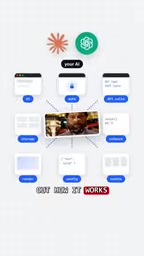
What RIA Is: Letting AI Take Apart Apps
Based on the project description, RIA is not a traditional decompilation tool but rather an AI-oriented workflow wrapper. You hand it a target—an app, a website, or even a game—and it has the AI infer how the thing works: what the interface is made of, how data flows, and how the logic is organized.
According to the project, it supports one-command deployment, making the barrier to entry very low. What really pushed it to the top of the GitHub trending charts is that it packages "reverse engineering"—something that originally required considerable professional background—into a process that ordinary people can pick up.
Decompilation typically refers to restoring compiled machine code or bytecode into readable source code or an intermediate representation. Tools like IDA Pro, Ghidra, and JD-GUI fall under the category of static analysis; reverse engineering is broader—besides decompilation, it also includes dynamic debugging, protocol packet capture, behavioral observation, and other methods, with the goal of understanding a system's structure, data flow, and design intent. Traditional reverse engineering relies heavily on expert experience, requiring familiarity with assembly, file formats, network protocols, and other low-level knowledge. RIA's difference is that it does not directly provide a disassembler or debugger; instead, it uses a large model as a reasoning engine, letting the AI "infer" what the system is doing based on information collected by tools, with output leaning toward high-level structural and logical descriptions. The advantage of this approach is low barrier to entry and high readability; the disadvantage is that inferences may be imprecise, which is why it needs to explicitly list "unresolved" parts.
Core Design: Admitting "I Don't Know"
RIA has a design in its technical attitude that deserves special mention: it outputs a list of "unresolved" items.
When asked to explain an unfamiliar system, large models can easily generate content that sounds plausible but is actually wrong. By explicitly exposing uncertainty, RIA essentially adds a layer of anti-hallucination constraint at the workflow level. For people doing technical analysis, this is more practically valuable than a tool that "answers anything boldly"—you know which conclusions you can use directly and which still need manual verification.
What the Community Has Already Built
After the project went viral, use cases from the community began to circulate. According to examples mentioned in the video, someone targeted QuickBooks and ultimately produced their own open-source accounting app; another person used it to rebuild an old arcade game. The authenticity and completeness of these cases are hard to verify one by one, but they point in the same direction: RIA is being used as a starting point for "understanding existing software and rebuilding on that basis," not as an endpoint.

The imagination behind this kind of play is that when many small and medium teams or individual developers face mature commercial software, the biggest obstacle is not writing code but failing to understand the other side's product structure. RIA attempts to lower this cognitive cost.
Things You Must Think Through Before Use
RIA is free, open-source, and installable with a single command, but the video includes a crucial reminder: you need to check the box for the scope of software you are "permitted to analyze." In other words, the tool itself does not judge legality; the responsibility for judgment lies with the user.
The legal boundaries of reverse engineering vary greatly across jurisdictions, and they are especially sensitive when commercial software is involved. Use for learning, security research, and interoperability development is fundamentally different in nature from directly copying someone else's product. RIA lowers the technical barrier, but it does not—and cannot—lower the legal barrier.
The legality of reverse engineering differs significantly across jurisdictions. In the United States, for example, Section 1201 of the Digital Millennium Copyright Act (DMCA) in principle prohibits circumventing technological protection measures, but provides several exceptions; interoperability development, security research, and encryption research may qualify for exemptions when conditions are met. The EU Software Directive permits decompilation for interoperability purposes, but specific prerequisites must be satisfied. China's Copyright Law and related judicial interpretations do not specifically address reverse engineering; in judicial practice, judgments are usually made by comprehensively considering purpose, means, and consequences. Overall, the nature of use for learning, security research, interoperability development, and similar purposes is completely different from directly copying someone else's product and commercializing it. The tool itself does not include legality judgments, so users need to confirm on their own whether the target software's user agreement, license terms, and local laws permit the relevant analysis.
What This Kind of Tool Means
RIA topping the GitHub trending charts reflects a broader shift: AI is moving from "generating content" to "understanding systems." When models gain the ability to take apart existing software, the competitive logic of the software industry may partly shift—the moat is no longer just the code itself, but also data, services, ecosystem, and the speed of continuous iteration.
For developers, the most practical value of such tools is learning efficiency. When facing an unfamiliar codebase or an old system with no documentation, having a tool that first sketches out the structure and then flags questionable areas saves far more time than guessing from scratch. How far it can go depends on whether the community can continuously fill in those "unresolved" parts.
Background
Large model hallucination refers to a model generating plausible-sounding but factually incorrect content when it lacks evidence. This is especially common when explaining unfamiliar systems, because models tend to fill unknown details with common patterns from their training data. Common mitigation methods include retrieval-augmented generation (RAG), requiring models to cite sources, introducing external verification tools, and having models explicitly express confidence. RIA's strategy falls under "explicit uncertainty": rather than having the model give a definitive conclusion for every module, it separately lists the parts that cannot be inferred from the collected information for manual review. In engineering terms, this amounts to dividing the model's output into two categories—"evidence-based inferences" and "hypotheses to be verified"—which reduces the risk of users blindly trusting the output, but also requires users to have the basic ability to judge which conclusions are credible.
One-line Summary
Open-source project RIA uses AI to reverse engineer apps, websites, and games, and explicitly lists what it couldn't parse.
Paragraph Summary
RIA (Reverse Engineer Anything) is a recently top-trending open-source GitHub project positioned as an AI-oriented reverse engineering workflow wrapper: users give it an app, website, or game, and the AI infers its interface composition, data flow, and logic organization, then outputs an understandable structural description. Its most notable design is the explicit "unresolved" list, which constrains the large model's tendency to confidently fabricate at the workflow level. The project supports one-command deployment, is free and open-source, and the community already has cases such as rebuilding an open-source accounting app and recreating an arcade game. However, the tool itself does not judge legality, so users must confirm whether the target software is within the permitted scope for analysis. The article argues this reflects the trend of AI moving from generating content to understanding systems.
Related articles

Gemini 4 Argon Hands-On: AI Builds Board Games, Constructs Temples, and Trains Robots Autonomously
Gemini 4 Argon hands-on roundup: AI autonomously builds a desk racetrack and temple in Blender, writes a ray tracing engine, trains a humanoid robot to sink 7 shots, plus API pricing and developer access.

The Magic Octagonal Coin: Why Only 9% of People Can Predict Its Flip?
Only 9% of people can correctly predict the Magic Octagon coin flip. This article explains its spatial rotation mechanism, common cognitive pitfalls, and a new hypothesis based on Relevance Theory, exploring the limits of human spatial reasoning.

Sam Altman: AI Is Entering the Era of Scientific Discovery — Math Breakthroughs Will Replicate in Biology and Energy
Sam Altman says AI is entering the era of scientific discovery — math breakthroughs will replicate in biology, materials science, and energy to help develop new drugs and energy sources.