Free Claude Code: Tutorial on Using Opus Model for Free via GitHub Student Verification

Open-source project converts GitHub Copilot credits to API, giving students free Claude Opus access
An open-source project built on AnyGuardianManager uses the Adapter Pattern to convert GitHub Copilot subscription credits into a standard OpenAI-compatible API, enabling users to call top-tier models like Claude Opus directly in tools like Claude Code. Students can get free Copilot Pro subscriptions through GitHub's education verification, achieving zero-cost access. However, users should be aware of monthly credit limits, compliance gray areas, and uncertain long-term stability.
Project Background: How to Convert GitHub Copilot Credits into Usable API
Recently, an open-source project built on AnyGuardianManager has attracted widespread attention in the developer community. Its core concept is quite clever — it converts GitHub Copilot's model usage credits into a standard API interface, allowing you to call top-tier models like Claude Opus directly in tools like Claude Code, all without any additional cost.
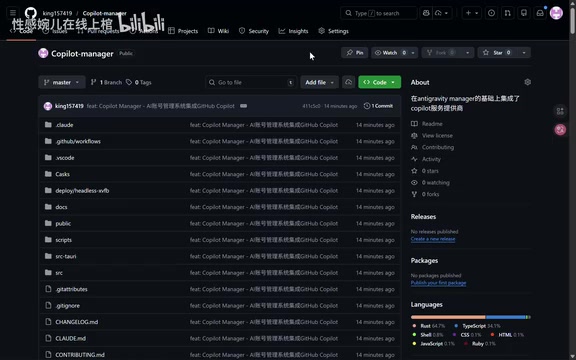
For students, this solution is particularly attractive. GitHub offers an education verification program for enrolled students (GitHub Student Developer Pack). Once verified, you can get a free GitHub Copilot Pro subscription. GitHub Student Developer Pack is a comprehensive benefits package from GitHub for enrolled students. Applicants need to provide a valid school email or student documentation. Once approved, they receive free access to development tools worth hundreds of dollars, including Copilot Pro, JetBrains full suite, Namecheap domains, and more — Copilot Pro alone normally costs $10/month. What this project does is essentially "activate" these credits that many people aren't fully utilizing.
Core Mechanism: The Complete Pipeline from Copilot to Claude Code
What Exactly is AnyGuardianManager?
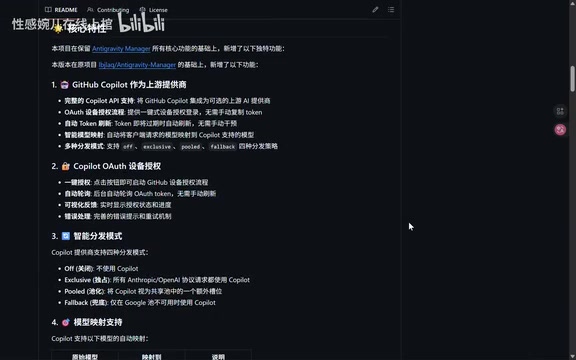
AnyGuardianManager is an API gateway and proxy management tool that unifies different AI model providers under a single management layer and exposes services through a standardized API format. API Gateway is a core component in microservice architecture, responsible for request routing, protocol conversion, authentication, and traffic management. AnyGuardianManager's core value lies in achieving "unified abstraction of multi-source heterogeneous AI interfaces" — converting various vendor-specific API specifications (Anthropic format, Gemini format, Copilot format, etc.) into a unified OpenAI-compatible format. This design pattern is known as the "Adapter Pattern" in engineering — a classic solution for interface incompatibility issues. The project integrates GitHub Copilot as a new Provider on top of this foundation, establishing the following call chain:
GitHub Copilot subscription credits → AnyGuardianManager proxy conversion → Standard OpenAI-compatible API → Direct Claude Code invocation
In plain terms, it acts as a "protocol translation layer." Model credits that were originally only usable through Copilot plugins in IDEs like VS Code are converted into a universal interface callable by any tool compatible with the OpenAI API format.
It's worth noting that GitHub Copilot is essentially a code assistance service built by Microsoft/GitHub on top of OpenAI and multiple AI vendor models. Its underlying infrastructure connects to multiple model providers through a unified API gateway, including the OpenAI GPT series, Anthropic Claude series, and more. Copilot's API layer actually follows an OpenAI-like REST interface specification — this is precisely the technical feasibility basis that allows third-party proxy tools to achieve "protocol compatibility."
Why Can You Access the Opus Model?
The GitHub Copilot Pro subscription includes access to multiple premium models, and Claude's top-tier model Opus is among them. Claude Opus is Anthropic's most capable flagship model, excelling in complex reasoning, long-text comprehension, code generation, and multi-step task planning. Compared to Claude Sonnet (balanced) and Claude Haiku (lightweight and fast), Opus has a larger context window and deeper reasoning capabilities, but the cost per call is also the highest — approximately $15/million tokens for input through Anthropic's official API. Under normal circumstances, these models can only be used through Copilot's IDE plugin or Chat interface, severely limiting usage scenarios.
But through this project's proxy conversion, you can call the Opus model directly in command-line tools like Claude Code. Claude Code is Anthropic's official command-line AI programming assistant that supports code generation, debugging, refactoring, and project-level code comprehension directly in the terminal. Unlike IDE plugins, Claude Code runs in Agent mode, capable of autonomously reading file systems, executing commands, and iteratively modifying code — making it more suitable for complex engineering tasks. Its underlying communication with models uses the standard OpenAI-compatible API, which is the technical prerequisite for seamless integration with the AnyGuardianManager proxy layer. Whether it's code generation, project refactoring, or complex reasoning tasks, you can leverage the capabilities of top-tier models.
Target Audience and Practical Usage Recommendations
Core Benefits for Students
The biggest beneficiaries of this solution are undoubtedly developers who have already completed GitHub student education verification. Specific advantages include:
- Completely zero cost: The GitHub Student Developer Pack itself is free to apply for, and Copilot Pro subscription is automatically granted upon approval
- Unlimited access to top models: You can call multiple premium AI models including Claude Opus
- No scenario restrictions: No longer limited to IDE plugins — Claude Code, custom scripts, automation workflows, and more are all covered
Three Critical Risk Points to Note
Before using this type of solution, there are several key issues to understand in advance:
- Monthly credit caps: GitHub Copilot Pro has limited call quotas, and premium models (like Opus) typically have even fewer available credits. It's recommended to reserve Opus for tasks that truly require strong reasoning capabilities, and use models like Sonnet for simple daily needs
- Compliance gray area: GitHub Copilot's terms of service explicitly restrict "large-scale automated calling" and "commercial resale." Converting Copilot credits to general API usage through a proxy layer falls in a gray area — GitHub hasn't explicitly banned such personal use, but hasn't explicitly authorized it either. Historically, similar "credit arbitrage" projects (like early Bing Chat proxies) all became ineffective as platform policies tightened. It's recommended for personal learning and technical research only, not for commercial use
- Long-term stability is uncertain: As a community-driven open-source project, how long it remains functional depends on whether GitHub adjusts its API strategy or blocks this pathway
Step-by-Step Configuration Guide: Connecting to Claude Code from Scratch
The project is fully open-source with code hosted on GitHub. Follow these four steps to complete the configuration:
- Complete student verification: Go to the GitHub Education page to submit student identity verification, then activate the Copilot Pro subscription after approval
- Clone the project code: Pull the latest code from the AnyGuardianManager project's GitHub repository
- Configure the proxy service: Follow the project documentation to deploy AnyGuardianManager and add GitHub Copilot as a Provider
- Connect Claude Code: Configure the generated API endpoint address and key into Claude Code's environment variables, and you're ready to start
The entire process takes approximately 30 minutes for developers with basic technical skills.
Summary: A Free Top-Tier AI Model Solution for Student Developers
This project fully demonstrates the creativity of the open-source community — through an elegant proxy conversion layer using the "Adapter Pattern," it completely unlocks the dormant model credits within GitHub Copilot subscriptions. For student developers with limited budgets who want to experience top-tier AI models like Claude Opus, this is indeed one of the most cost-effective solutions available today.
However, it's important to stay clear-headed: plan your monthly credits wisely and keep monitoring GitHub's platform policy changes to make this free pathway last longer and more reliably.
Related articles
 Tutorials
ChatGPT Plus Subscription Guide: Are GPT-5.5, image-2, and Codex Worth the Upgrade?
A detailed look at ChatGPT Plus features — GPT-5.5, image-2, and Codex — with a Plus vs Pro comparison and a complete step-by-step subscription guide for users outside the US.
 Tutorials
Harness AI Engineering in Practice: Using Claude Code to Master Enterprise-Level E-Commerce Development
Deep dive into Harness AI Engineering: master enterprise e-commerce development with Claude Code using the Rules, Skills, Wiki, and Changes framework.
 Tutorials
Cursor + Codex Dual-IDE Collaboration: A Practical Methodology for Open-Source Project Customization
A complete methodology for open-source project customization based on real-world experience, detailing the Cursor+Codex dual-IDE workflow, seven-stage process, MVP validation, and AI source code reading techniques.