Frequent Arctic Wildfires Threaten Permafrost Carbon Stocks

Arctic wildfires are intensifying due to climate warming, threatening permafrost carbon stocks and creating a positive feedback loop of greenhouse gas release.
Using a 2021 wildfire near the University of Alaska Fairbanks campus as a starting point, the article reveals intensifying fire activity in the Arctic. Warming dries tundra and boreal forest organic matter, increases lightning, and extends the fire season. When fires disturb the vast permafrost carbon pool, thaw may accelerate, releasing CO2 and methane in a positive feedback loop. Remote locations, limited roads, and satellite monitoring gaps make firefighting and data collection extremely difficult, so more realistic approaches include stronger early warning and satellite monitoring, fuel management around critical infrastructure, and integrating fire risk into permafrost protection and climate adaptation frameworks.
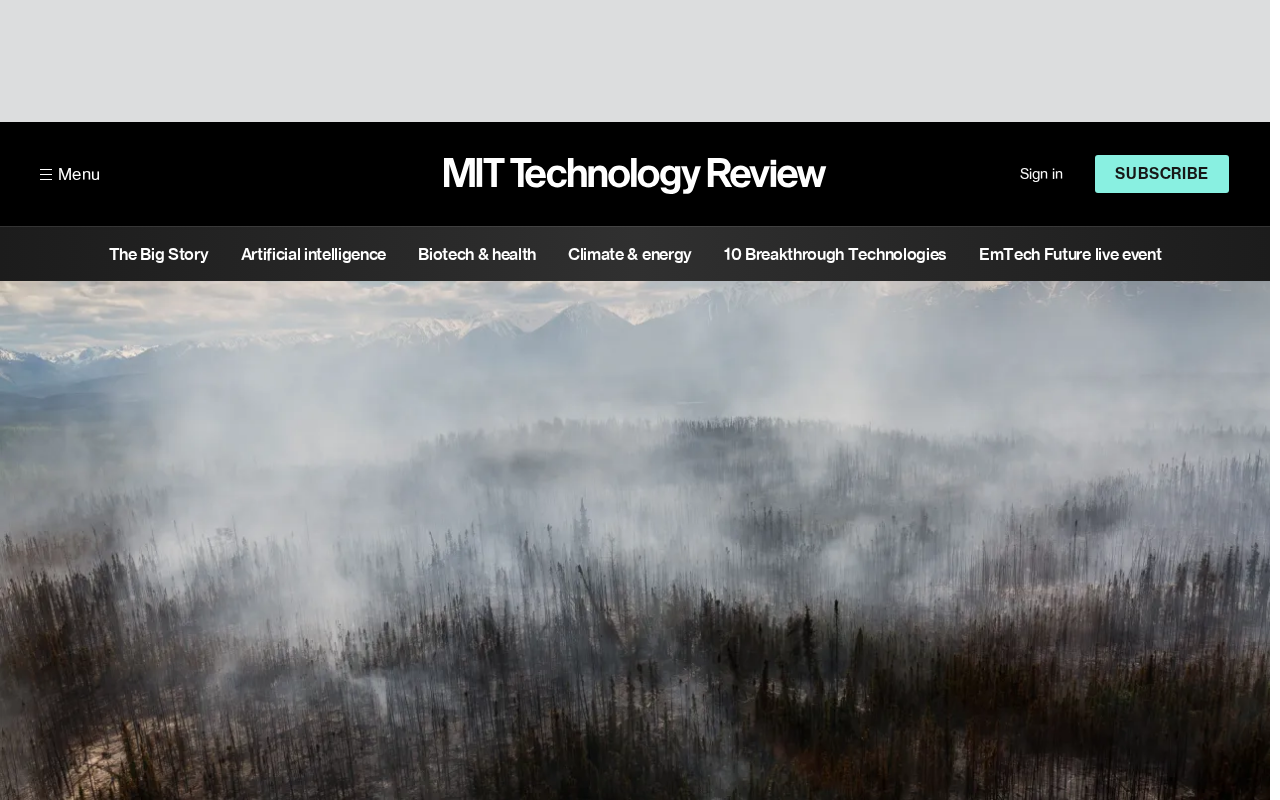
Arctic wildfires are becoming an underestimated amplifier of the climate crisis. According to the RSS article Inside the quest to combat Arctic fires and save the planet's frozen carbon, in July 2021, a wildfire broke out in a stand of black spruce and paper birch on the north campus of the University of Alaska Fairbanks, likely ignited by lightning. The flames spread across dry moss and lichen layers and then climbed into the tree canopy. This is not an isolated case but a microcosm of intensifying fire activity in the Arctic.
Why the Arctic Is Becoming a New Fire Frontline
The Arctic is traditionally cold and humid, where fires are uncommon. But warming trends in recent years are changing this pattern. Rising temperatures dry out organic matter in tundra and boreal forests, increase lightning activity, and extend the fire-risk window. The article notes that the 2021 fire occurred during an "especially warm July," hinting at a direct link between climate conditions and fire occurrence.
The deeper issue lies in the permafrost carbon pool. Arctic soils store vast amounts of organic carbon that decomposes slowly under cold conditions. Once wildfires burn off surface organic matter and alter the soil's thermal regime, permafrost thaw may accelerate, releasing carbon dioxide and methane and creating a positive feedback loop. The "frozen carbon" in the article's title refers precisely to this frozen carbon reservoir.
Permafrost refers to soil or rock layers with temperatures below 0°C for more than two consecutive years that contain ice, covering about a quarter of the Northern Hemisphere's land area. The upper layer of Arctic permafrost is an active layer that thaws in summer, while the lower layer remains permanently frozen. Organic carbon in permafrost comes from the slow accumulation of plant residues over tens of millions of years under low-temperature, oxygen-poor conditions, totaling roughly twice the carbon in the atmosphere. Permafrost is not a monolithic block: ice wedges and thermokarst landforms make it extremely sensitive to temperature changes. When wildfires destroy the insulating surface organic layer, summer heat penetrates underground more easily, accelerating permafrost degradation; the water and carbon released by degradation in turn alter surface conditions—this is the mechanistic basis of what the article calls a "positive feedback loop."
Boreal forest, also known as taiga, encircles high-latitude regions of the Northern Hemisphere and is dominated by spruce, fir, pine, and birch, serving as the main fuel载体 for Arctic fires. Unlike temperate forests, boreal forest floors accumulate thick layers of moss, lichen, and coniferous litter that ignite easily when dry, and fires often persist for weeks or even through the entire winter as deep-burning (smoldering) fires, continuing to smolder beneath snow cover and reigniting into open flames after spring snowmelt. This "overwintering fire" phenomenon makes monitoring and accounting of boreal forest fires particularly complex.
The Dual Challenge of Firefighting and Research
Responding to wildfires in the Arctic is very different from temperate or tropical regions. Remote locations, limited road networks, and extremely short growing-season windows all make traditional firefighting strategies difficult to deploy. The fire described in the article was located north of the university campus, relatively close to human activity areas, which is why it could be noticed and recorded. More fires deep in the wilderness may never be monitored at all.
Another difficulty researchers face is monitoring and data. Fire monitoring across vast Arctic regions relies on satellite remote sensing, but small-scale, short-duration fires are easily missed. Meanwhile, quantifying permafrost carbon release requires long-term observation, and research on burn scars is often constrained by seasonal and logistical conditions.
Satellite remote sensing monitoring is the primary means of detecting Arctic fires, with commonly used data sources including MODIS (spatial resolution of about 1 km) and VIIRS (about 375 m) sensors, which identify fire points through thermal anomaly detection. However, such sensors easily miss fires smaller than the pixel scale, short-duration fires, and fire points obscured by clouds, and their overpass frequency is limited, making it hard to capture rapidly changing fire conditions. Moreover, thermal anomaly detection can only provide fire location and radiative power; it cannot directly distinguish open flames from smoldering, let alone quantify the burning depth of soil carbon. This is the technical background behind the article's emphasis that "more fires deep in the wilderness may never be monitored at all," and the practical motivation for developing higher-resolution, higher-frequency Arctic fire monitoring systems.
From Reactive Response to Proactive Management
Faced with Arctic fire risk, relying solely on firefighting is unrealistic. More feasible directions include strengthening early warning and satellite monitoring coverage, managing fuels around critical infrastructure, and incorporating fire risk assessment into permafrost protection strategies. The research exploration presented in the article seeks precisely to understand how fires affect the permafrost carbon cycle, thereby providing a basis for decision-making.
For the global climate, the stability of the Arctic permafrost carbon pool is crucial. The role wildfires play here is not only direct emissions from combustion but also disturbance to permafrost structure. Protecting this "frozen carbon" requires integrating fire management into a broader climate adaptation framework.
Related articles

Gemini 4 Argon Hands-On: AI Builds Board Games, Constructs Temples, and Trains Robots Autonomously
Gemini 4 Argon hands-on roundup: AI autonomously builds a desk racetrack and temple in Blender, writes a ray tracing engine, trains a humanoid robot to sink 7 shots, plus API pricing and developer access.

The Magic Octagonal Coin: Why Only 9% of People Can Predict Its Flip?
Only 9% of people can correctly predict the Magic Octagon coin flip. This article explains its spatial rotation mechanism, common cognitive pitfalls, and a new hypothesis based on Relevance Theory, exploring the limits of human spatial reasoning.

Sam Altman: AI Is Entering the Era of Scientific Discovery — Math Breakthroughs Will Replicate in Biology and Energy
Sam Altman says AI is entering the era of scientific discovery — math breakthroughs will replicate in biology, materials science, and energy to help develop new drugs and energy sources.