From Civil War to the Brink of World War: Sarah Paine on the Escalation Logic of the Korean War

Sarah Paine dissects how the Korean War escalated from civil conflict to the brink of global war.
Military historian Sarah Paine traces the Korean War's escalation through two recurring fatal miscalculations: aggressors oversimplify complex conflicts as bilateral contests and underestimate outside intervention, while victors overshoot the "culminating point of victory" instead of stopping at the right moment. Kim Il-sung expected a controllable two-party fight but triggered US and UN intervention, sending costs skyrocketing; MacArthur, flush from Inchon's success, pushed toward the Chinese border and brought in hundreds of thousands of Chinese troops. Both miscalculations compounded each other, turning a peninsula civil war into a near-global catastrophe — and Paine's analysis offers a practical framework for understanding the universal dynamics of conflict escalation.
Military historian Sarah Paine, in a brief but remarkably insightful analysis, traces how the Korean War evolved from a peninsula-wide internal conflict to the very edge of global war. Though compact in scope, her account pinpoints several decisive turning points in the escalation process and highlights the classic pitfalls that recur time and again in military decision-making.
A Civil War Misjudged as a "One-on-One" Fight
Paine notes that when Kim Il-sung launched his invasion of the South, he was calculating a "twosome" — a two-party contest. So long as the conflict remained between North and South, he was confident he could win. And in the early stages, he was right. Northern forces swept down the peninsula with striking speed, and victory seemed almost within reach.
This opening move reveals a common pattern among those who start wars: reducing a complex international conflict to a bilateral matchup and calculating the odds accordingly. When the balance of power appears clear and outside intervention seems unlikely, the temptation of a quick victory is enormous. Yet it is precisely this optimistic assumption about the "limits" of a conflict that plants the seeds of the disasters that follow.

"Third-Party Intervention from Hell"
Paine uses a vivid phrase to describe what happened next: Kim Il-sung triggered "third-party intervention from hell" — the entry of the United States and its United Nations partners. At that moment, the war changed in fundamental character.
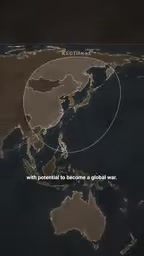
She emphasizes that once a third party steps in, what began as a civil war instantly escalates into a regional conflict with the potential to become a global one. Even more significant is the dramatic shift in costs: "You're in a completely different race, with costs much higher." This captures the brutal logic of escalation — once a conflict expands in scale, the resources committed, the risks assumed, and the prices paid by all parties rise by orders of magnitude, almost always exceeding what the original decision-makers anticipated or prepared for.
The Inchon Landing and the "Culminating Point of Victory"
Turning to the American side, Paine invokes a classic concept from military theory — the "culminating point of victory." MacArthur's amphibious landing at Inchon, deep in the middle of the peninsula, was a spectacular success. And it was precisely that success that gave MacArthur new ambitions: if the military situation allowed it, why not seize the moment and reunify the entire peninsula?
Here Paine identifies a strategic mistake that plays out again and again: after a great victory, the winning side finds it nearly impossible to stop at the right moment, and instead tends to push its gains further and further. The concept of "exceeding the culminating point" refers to the critical threshold at which an advancing army has stretched its supply lines, spread its forces thin, and eroded its advantages to the point where continued offensive action becomes self-defeating. Push past that point, and the tide can reverse with startling speed.

Approaching the Chinese Border and Entering "A World of Hurt"
When American forces advanced too close to the Chinese border, China intervened. Paine describes this moment as entering "a world of hurt." China committed hundreds of thousands of troops, and the war was transformed once again — what the United States now faced was an entirely different conflict.
She mentions that there is "a whole other story" behind China's decision to enter the war, but time does not allow for it. Even so, the point is made: MacArthur's miscalculation of the culminating point directly triggered yet another massive third-party intervention, pushing the conflict into even more dangerous territory. Not long after, MacArthur himself was cashiered.

The Recurring Logic of Escalation
Breaking down Paine's analysis, a clear escalation chain emerges: bilateral miscalculation in the civil war phase → third-party intervention (U.S./UN) → war escalates to regional and near-global risk → the winning side pushes past the culminating point → a second third-party intervention (China) is triggered → the conflict spirals further out of control.
The value of this chain lies not just in revisiting the Korean War, but in the universal dynamics of international conflict it reveals. Those who start wars tend to underestimate the probability of outside intervention; those who win tend, in the flush of success, to lose their judgment about when to stop. When both miscalculations compound each other, you have the mechanism by which a localized conflict is repeatedly pushed toward far greater catastrophe.
Paine delivers all of this in compact, conversational language, distilling weighty strategic theory into just a few minutes. For readers interested in geopolitics, military history, and strategic decision-making, her account offers a practical framework for understanding escalation — and for understanding why so many wars end up far larger than anyone imagined when they began.
Background Notes
The concept of the "culminating point of victory" originates with the Prussian military theorist Clausewitz in On War. Clausewitz argued that an attacking force's strength is progressively consumed as it advances — supply lines lengthen, forces are dispersed, logistical pressure multiplies — until it reaches a critical threshold: beyond that point, continued offense not only yields no further gains but leaves the attacker more vulnerable than the defender. Ideal strategy calls for voluntarily halting before that point is reached, converting existing advantages into favorable negotiating or ceasefire terms. The Inchon landing, executed in September 1950, dramatically reversed American and UN fortunes from the desperate Pusan Perimeter, severing North Korean supply lines and forcing a massive retreat. Widely regarded as one of the most brilliant military operations of the twentieth century, its very brilliance led MacArthur to believe the momentum could be extended indefinitely — a conviction that drove his decision to cross the 38th parallel and push toward the Yalu River, ultimately triggering a far larger new round of war.
The legal basis for American intervention in the Korean War was established through UN Security Council resolutions. In June 1950, the Soviet Union was boycotting the Security Council to protest the Republic of China's occupation of China's seat — an unexpected absence that allowed the United States to push through resolutions authorizing military action, bypassing a Soviet veto. The resulting "UN Command," led by the United States with participation from 16 nations, formally entered the conflict. The shift in the cost structure of intervention was felt across multiple dimensions: the United States not only had to commit large-scale ground forces (American casualties exceeded 36,000 killed during the war), but also bore significant political risk — should the conflict expand into direct confrontation with the Soviet Union, the specter of nuclear war loomed at every turn. The Cold War context meant that any local conflict carried the potential to set off a chain reaction of global consequences, and this is precisely the deeper meaning behind Paine's observation that the costs became "much higher."
Related articles

AI Writes Code, Will Programmers Lose Their Jobs? The Truth About Devin's Autonomous Programming
Devin and other autonomous AI coding agents are changing software development: from Copilot-assisted coding to fully automated engineering agents, the programmer's role shifts from writing code to system design and oversight. This article analyzes the impact of AI programming on employment, code security, and junior developer training, as well as the real direction of programmer demand under the efficiency paradox.

Citigroup's 14,000 Engineers Use Devin, Slashing Tech Outsourcing Bill by 30%
Citigroup's 14,000 engineers used AI coding agent Devin to cut its tech vendor bill by 30% and speed releases 30-40%, while JPMorgan says AI gains aren't in earnings yet.

AGENTS.md in Practice: Making Coding Agents Actually Work
AGENTS.md and CLAUDE.md can boost coding agent performance, but research shows misuse raises costs 20%. Here's what to write, what to delete, the 200-line and 32KB limits, monorepo nesting rules, and a security warning.