From Figma to React: Observations on AI-Generated Admin Dashboards
Claude Code converts Figma designs into a React admin dashboard, revealing the current boundaries of AI-driven frontend development.
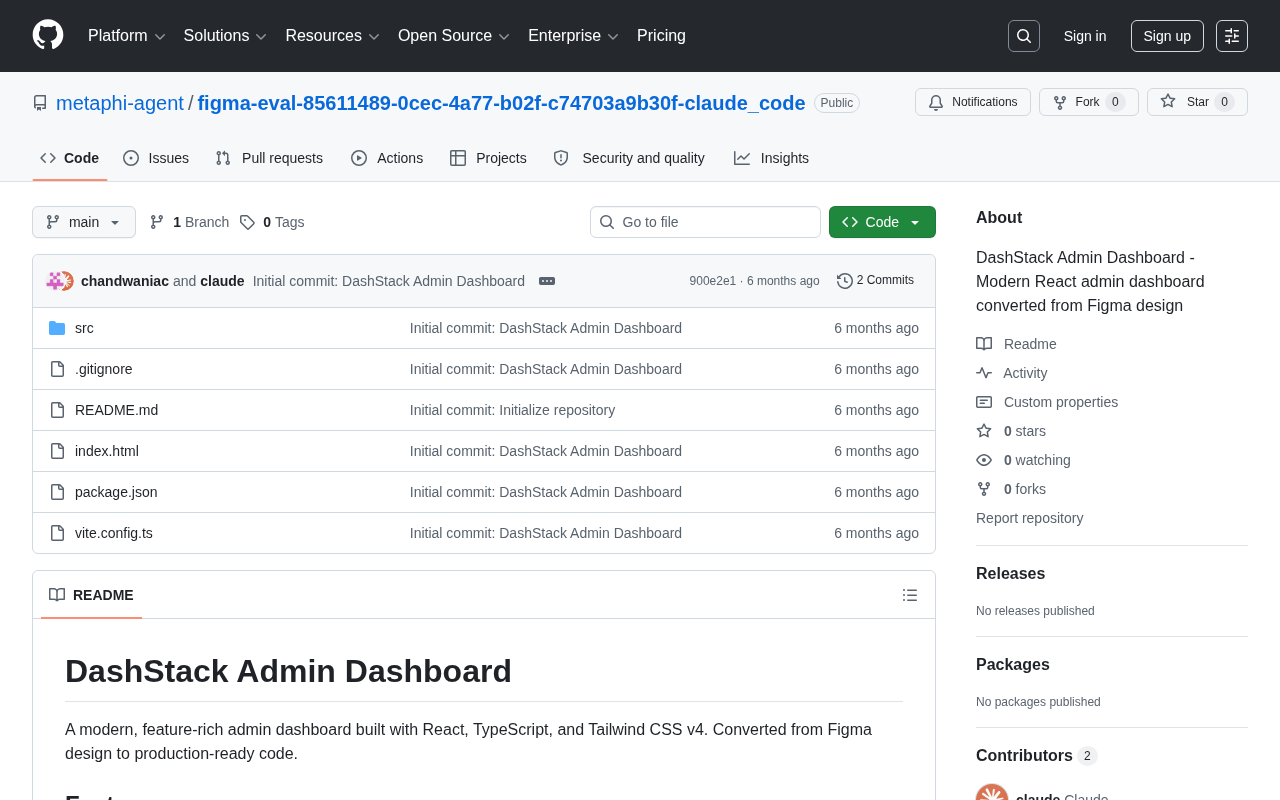
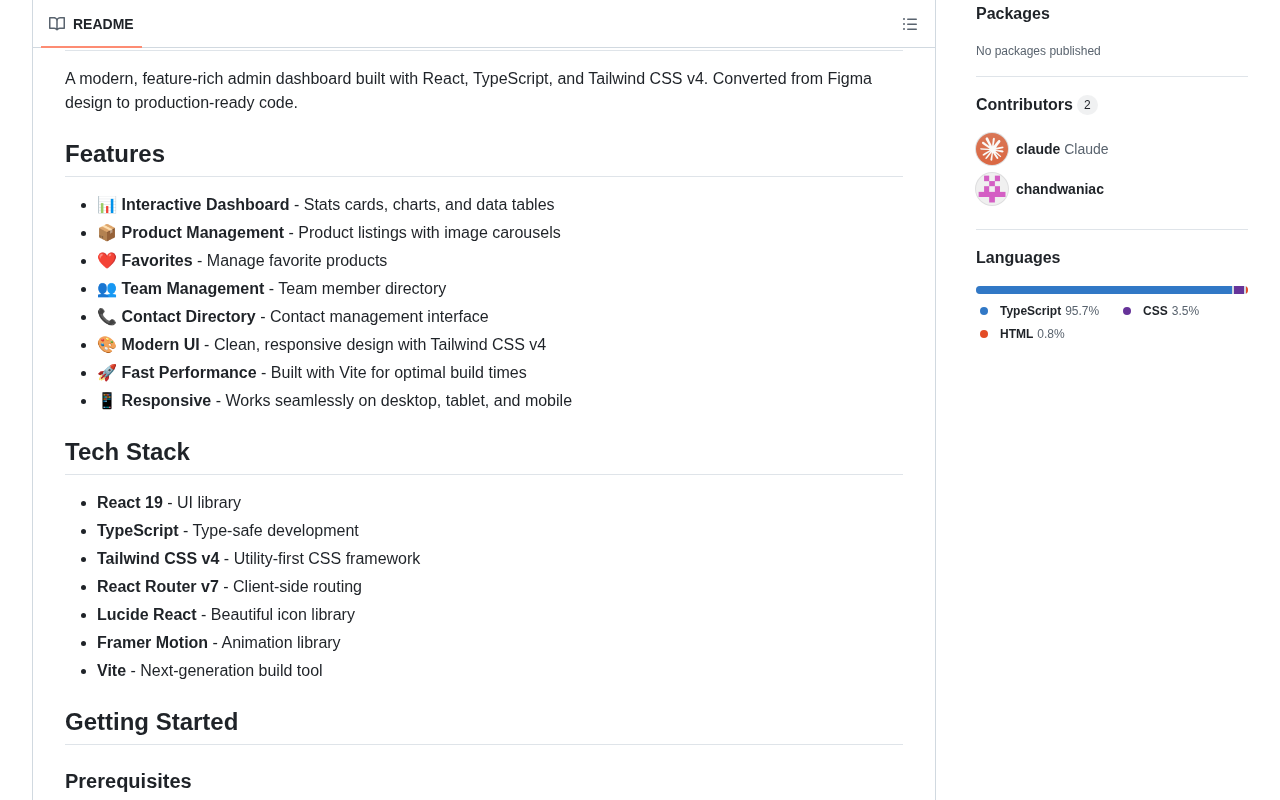
DashStack Admin Dashboard is one of the `figma-eval` repositories on GitHub, automatically converted from a Figma design into a TypeScript + React admin panel using Claude Code. Its hash-based naming and the `metaphi-agent` organization account reveal it as a batch output of an automated eval pipeline, not a community-maintained project. With zero Stars and zero Forks, it's not production-ready, but it validates AI's ability to auto-generate standardized UIs and offers developers a first-hand look at how AI organizes components and type definitions. The real value lies in what this eval system reveals about the current boundaries of AI programming capability.
An Admin Dashboard Project Generated by AI Conversion
A wave of repositories prefixed with figma-eval has recently appeared on GitHub, and metaphi-agent/figma-eval-...-claude_code is one of them. The project, named DashStack Admin Dashboard, has a clear purpose: a modern React-based admin panel that originated from a Figma design file and was automatically converted to code using Claude Code.
Looking at the repository details, the project is written in TypeScript, with zero Stars and zero Forks — a typical output of an evaluation (eval) run. The naming convention, with figma-eval and claude_code, reveals its true nature: this is not a mature open-source project maintained by a community, but rather an automated benchmark sample testing the capability of "design-to-code" conversion.
Why "Figma to Code" Deserves Attention
Converting design files into working frontend code has long been one of the most labor-intensive and repetitive tasks in frontend engineering. After a designer finalizes layouts, color schemes, and component definitions in Figma, engineers must manually reproduce every spacing value, font, and interaction state. This process is time-consuming and prone to pixel-level discrepancies.
In recent years, as large language models have grown more capable at coding, tools like Anthropic's Claude Code and various AI agents have begun bridging this gap — reading Figma's design structure and directly outputting structured React + TypeScript components. Admin dashboards like DashStack are ideal test subjects: they contain highly patterned UI elements such as sidebars, data cards, tables, and charts. They're complex enough to be meaningful, yet structured enough to allow fair evaluation of AI conversion accuracy and code quality.
Claude Code is an AI programming tool launched by Anthropic in 2025. It runs as a command-line Agent, capable of reading project context, calling external tools, and executing multi-step programming tasks. Unlike traditional code completion tools, it can accept high-level instructions (such as "convert this design file into React components"), autonomously break down tasks, generate files, and even run tests — making it a viable path toward end-to-end "design-to-code" automation. On the Figma side, the official REST API and plugin ecosystem allow structured information from design files — including layer trees, style variables, and component constraints — to be exported as JSON. AI Agents use this as input to map visual intent into concrete HTML/CSS/React code structures.
Reading the Evaluation System Behind the Naming Convention
The organization name metaphi-agent, combined with the hash-based repository naming (e.g., 85611489-0cec-4a77-...), strongly suggests this is the output of an automated pipeline running at scale. Each hash corresponds to an individual conversion task, and the claude_code suffix identifies the generation engine used.
This organizational approach is quite common in AI Agent evaluations: different models or tools are given the same set of design files to process, and the generated code is then compared across dimensions such as runnability, visual fidelity, and readability — providing a side-by-side measure of each tool's "design-to-code" capability. For developers interested in the real-world performance of AI programming tools, these repositories serve as first-hand samples for observing where AI engineering currently stands.
This type of evaluation system is commonly referred to as a "Benchmark" or "Eval Pipeline" in the AI field. The core logic is straightforward: fix the inputs (the same batch of Figma design files), fix the evaluation dimensions (visual fidelity, code runnability, readability, etc.), then have different models or Agent tools process them independently, and compare results using quantitative metrics. Hash-named repositories make it easy for scripts to automatically track the inputs and outputs of each task, avoiding ambiguity from manual naming. Organization accounts like metaphi-agent are typically "bot accounts" for evaluation platforms — repositories are automatically created and code is committed by the pipeline, with no human intervention required. This large-scale automated evaluation approach is becoming one of the mainstream methods for measuring the real-world capabilities of AI programming tools.
Practical Reference Value for Developers
It's worth being objective here: this repository is not suitable for direct use in production. Zero Stars, zero Forks, and a purely eval-oriented purpose mean it lacks documentation, test coverage, and any long-term maintenance commitment. But its value lies in the process, not the product:
- Proof of feasibility: It demonstrates that standardized UIs like admin dashboards can already be generated automatically by AI with reasonable quality;
- Code reference: The TypeScript + React output structure lets developers observe how AI organizes components and type definitions;
- Workflow inspiration: Designers and frontend engineers can use it to think about how to better standardize Figma files to improve AI conversion success rates.
For teams looking to apply a "Figma to React" workflow in real projects, the more pragmatic approach is to treat these eval repositories as a reference point for current capability ceilings — not as ready-to-use templates.
Conclusion
DashStack Admin Dashboard is itself an eval sample with limited information, but it reflects a rapidly evolving trend: AI is gradually taking over the most mechanical parts of frontend development. Tools like Claude Code are steadily compressing the distance between a design file and runnable code. What's truly worth tracking isn't any single repository, but the boundaries of AI programming capability revealed by the entire automated evaluation and generation system behind it.
Related articles
Geopolitical Bias Compared Across Three AI Models: GPT-5.2, Claude, and Qwen Tested
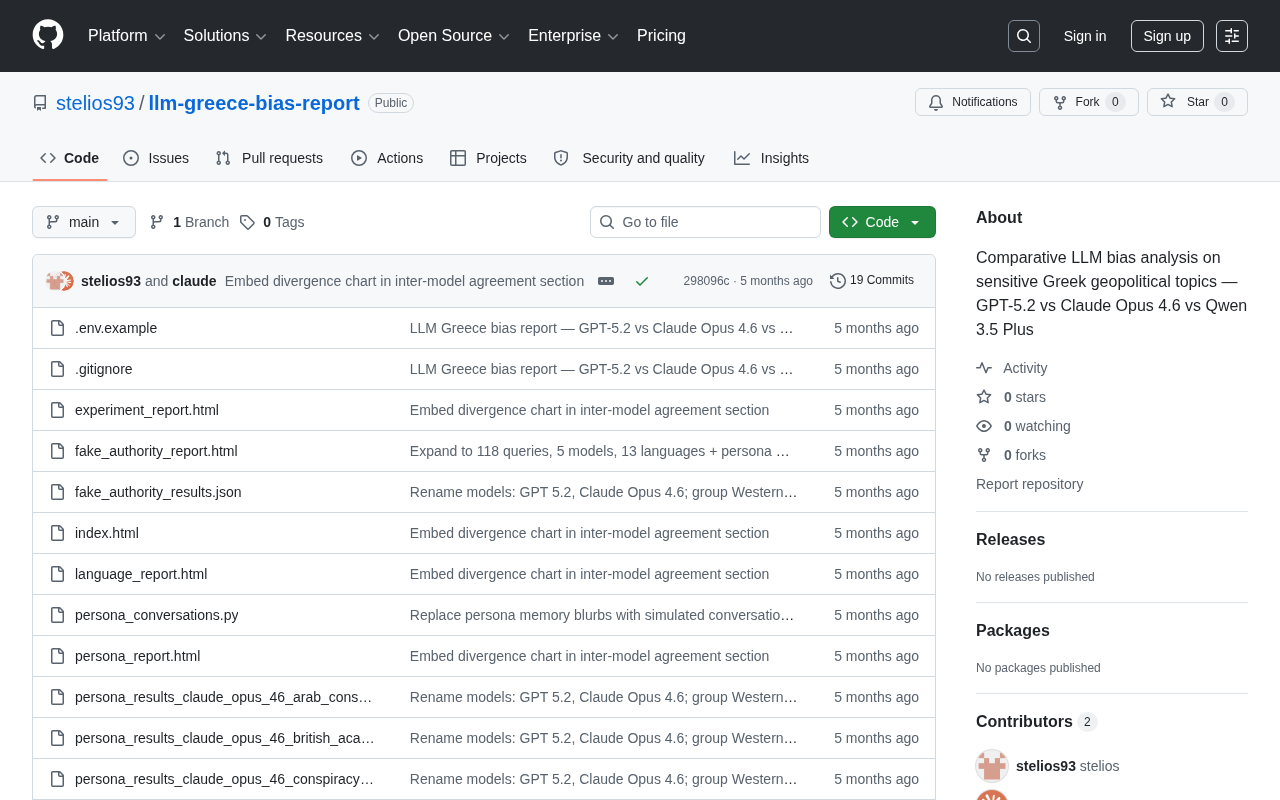
An open-source project compares GPT-5.2, Claude Opus 4.6, and Qwen 3.5 Plus on sensitive Greek geopolitical topics. We break down its methodology, limitations, and why LLM neutrality audits matter.
Sam Altman: An IPO in the Near Term Would Be 'Ill-Advised' for OpenAI
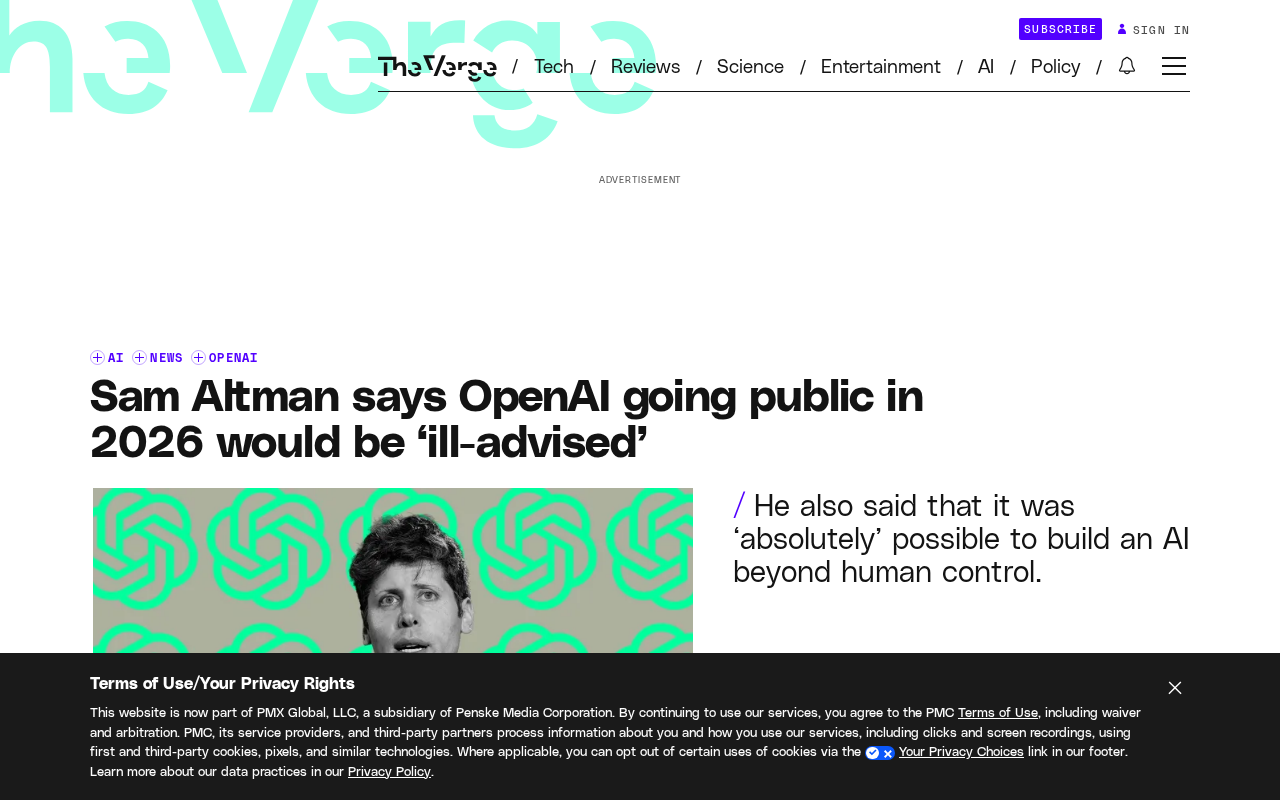
OpenAI CEO Sam Altman tells Fortune that an IPO in the near term would be "ill-advised," while also addressing recursive self-improvement risks and the Hugging Face hack.
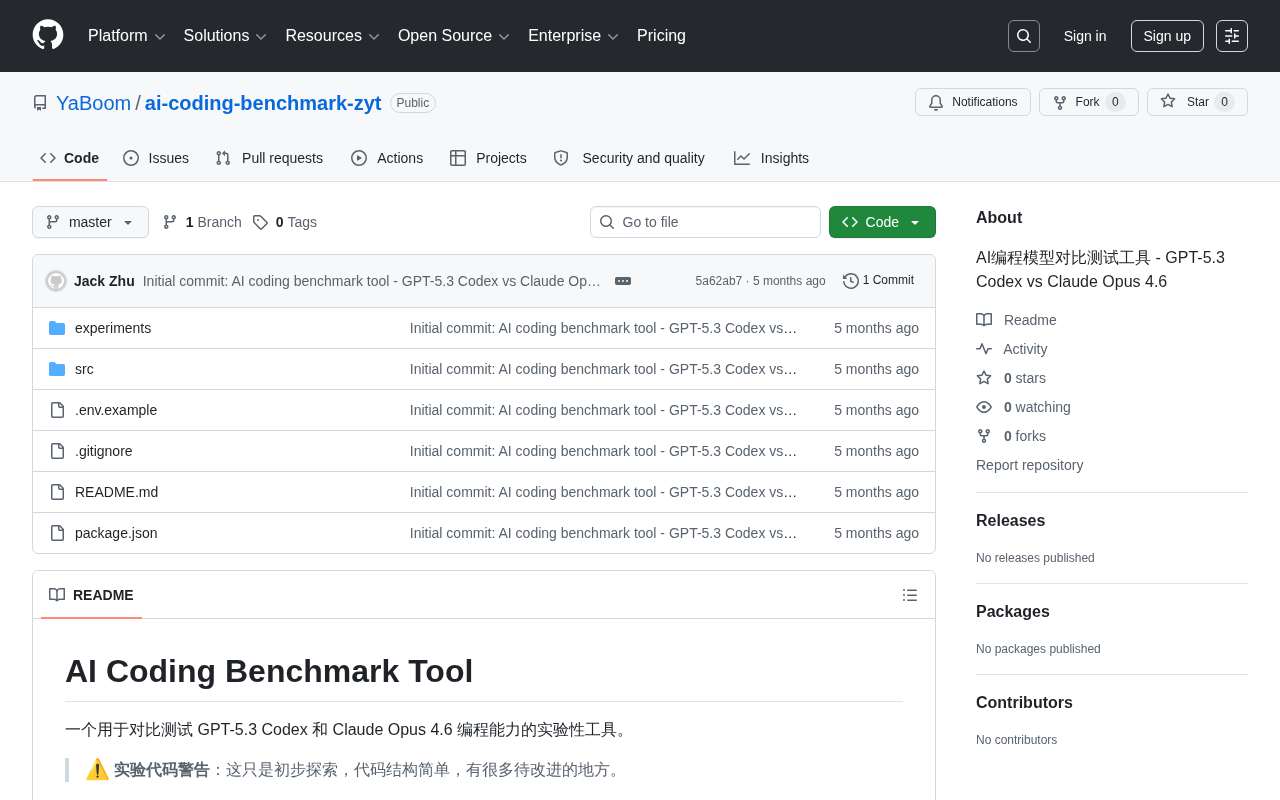
AI Coding Model Benchmark Tool: GPT-5.3 Codex vs. Claude Opus 4.6 — Which One Wins?
The open-source project ai-coding-benchmark-zyt benchmarks GPT-5.3 Codex vs. Claude Opus 4.6. This article explores its methodology, value, and developer guidance.