From Full-Stack to AI Agent Developer: A Reusable Transition Roadmap
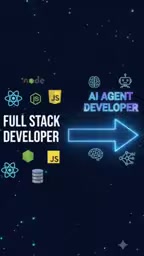
A capability breakdown and resource selection guide for full-stack developers transitioning to Agent development in one month.
The article discusses a YouTube creator's roadmap for full-stack developers to transition to Agent development in one month. The author agrees with its core judgment — Agent development is not an entirely new track but a recombination of backend API calls, state management, and frontend interaction capabilities, with the real increment lying in understanding model behavioral boundaries. However, for the one-month timeframe, the article offers a more pragmatic positioning: completing the loop from concept to a runnable prototype rather than reaching employable proficiency, split into three stages: understanding the Agent loop, integrating tool calling and failure retries, and completing an end-to-end small project. On resource selection, the author emphasizes timeliness over view counts, focusing on whether resources cover tool calling protocols, context management, evaluation and observability, and whether they include failure cases. Finally, it suggests driving learning with repetitive parts of existing business and using real constraints to work backward to gaps, while noting that the roadmap is based on a single source and has not been cross-validated.
AI Agent developers are in growing demand, but the question truly worth discussing isn't "should I switch" — it's "for someone who already has full-stack capabilities, in what order should I fill in the gaps?" In a video, a YouTube creator proposes that full-stack developers can transition to Agent development within a month, and has put together a timeline-based list of learning resources to that end. Whether this timetable is realistic is debatable, but the underlying approach to breaking down capabilities offers a useful reference for developers who are still on the fence.
Why a Full-Stack Background Is Actually an Advantage
The core judgment of the video is that Agent development is not a new track starting from zero, but a recombination of full-stack capabilities. The API calls, state management, and error handling familiar to backend developers, together with the interaction design familiar to frontend developers, happen to form the two ends of an Agent system — tool calling and the user interface.
The value of this view lies in correcting a common misconception: that Agent development requires an entirely new body of knowledge. In reality, the underlying layer of most Agent frameworks is still HTTP requests, JSON serialization, and asynchronous task scheduling — exactly the daily work of full-stack developers. The real increment lies in understanding the behavioral boundaries of models — which tasks are suitable to hand over to the model for decision-making, and which parts must be backed up by deterministic code.
Tool Calling / Function Calling is the core mechanism through which an Agent interacts with the outside world: developers use JSON Schema to describe a function's name, parameters, and purpose; the model determines during reasoning whether a call is needed and generates parameters that conform to the schema; then deterministic code actually executes the call and passes the result back to the model. It is essentially a structured HTTP/JSON interaction, so the routing, authentication, serialization, and timeout handling familiar to full-stack developers can be reused almost directly. What requires extra attention is parameter validation and idempotency design — the model may generate parameters that are correctly formatted but semantically wrong, and may also repeatedly call the same operation. These must be handled defensively on the code side rather than relying on the model to constrain itself.
Context windows and context management determine how much information an Agent can "remember." A model's context window is the upper limit of tokens that can be held in a single inference; beyond that, earlier information is truncated or compressed. During multi-turn tool calls, an Agent continuously accumulates history and can easily hit the ceiling, so mechanisms such as trimming strategies, summary compression, and external memory (vector stores or structured storage) need to be designed. Treating context as a finite resource to be scheduled is one of the most important mindset shifts a full-stack developer needs to establish when moving from "writing APIs" to "designing Agents."
The Realism of the One-Month Roadmap
The creator gives a timeframe of one month and, in an accompanying video, breaks it down into "what to learn when, and which YouTube channel to learn it from."

This timeline needs to be viewed objectively. A reasonable positioning for one month is "completing the loop from concept to a runnable prototype," not "reaching employable proficiency." Set the goal as: in the first week, understand the basic Agent loop (perception—decision—execution); in the second and third weeks, get hands-on with tool calling and handle failure retries; in the fourth week, complete an end-to-end small project. This pace is feasible for people with existing engineering experience, but the premise is consistent daily time investment.
The video's advice on "which channel to learn from" carries a strong personal preference. Learners should focus more on whether the resources cover the essential modules — tool calling protocols, context management, evaluation, and observability — rather than on the channel itself.
The basic Agent loop is often summarized as the ReAct (Reasoning and Acting) pattern: the model first outputs a reasoning process, then decides to execute an action (call a tool), observes the returned result, and continues reasoning, looping until the task is complete or the step limit is reached. The key to understanding this loop is recognizing its non-determinism — the same input may take different tool-calling paths, so a maximum step limit, loop detection, and termination conditions are essential. Failure retries involve distinguishing retryable errors (network timeouts, rate limiting) from non-retryable errors (invalid parameters, insufficient permissions), and setting limits on retry counts and backoff strategies; otherwise it is easy to fall into an ineffective loop. These engineering constraints are exactly the parts where full-stack experience transfers directly.
Resource Selection Matters More Than the Roadmap
The creator mentions having made a detailed video organizing the resource list and invites viewers to leave comments to request it.

Here is a criterion that is easily overlooked: the tech stack in the Agent field iterates quickly, so the timeliness of tutorials matters far more than in other directions. When choosing resources, prioritize the publication date and whether they involve current mainstream tool calling interfaces, rather than view counts. Another practical filtering method is to check whether a tutorial includes failure cases — content that only covers the success path often cannot be reused in real projects.
Evaluation and observability are the watershed between an Agent demo and a usable Agent. Evaluation refers to using a set of tasks with standard answers or scoring criteria to quantify an Agent's success rate, tool-calling accuracy, and average number of steps; observability refers to recording every model call, tool input and output, token consumption, and latency, so that failure causes can be located. Without these two capabilities, Agent iteration can only rely on "it feels better," and there is no way to judge whether a change to a prompt or tool description is an improvement or a regression. For full-stack developers accustomed to writing unit tests and reading logs, this part has the lowest conceptual barrier, yet it is the part most often skipped by beginner tutorials — pay special attention to whether a tutorial covers it when filtering resources.
What You Can Do After the Transition
At the end of the video, the creator mentions that they themselves also take on mobile app and business application development requests.

This points to a pragmatic way to land the transition: the first application scenario for Agent capabilities is often right in the business you already have at hand. Rather than waiting to "learn it all before doing it," pick a highly repetitive part of a full-stack project — customer service Q&A, data organization, first drafts of content — refactor it in an Agent way, and use real constraints to work backward to the technical gaps that need filling. This project-driven learning path deposits transferable experience more effectively than linearly watching tutorials to the end.
It should be noted that the roadmap discussed in this article is based on a single video source, and its recommendations regarding timeframe and specific resources have not been cross-validated; readers should adjust them according to their own foundations.
Related articles
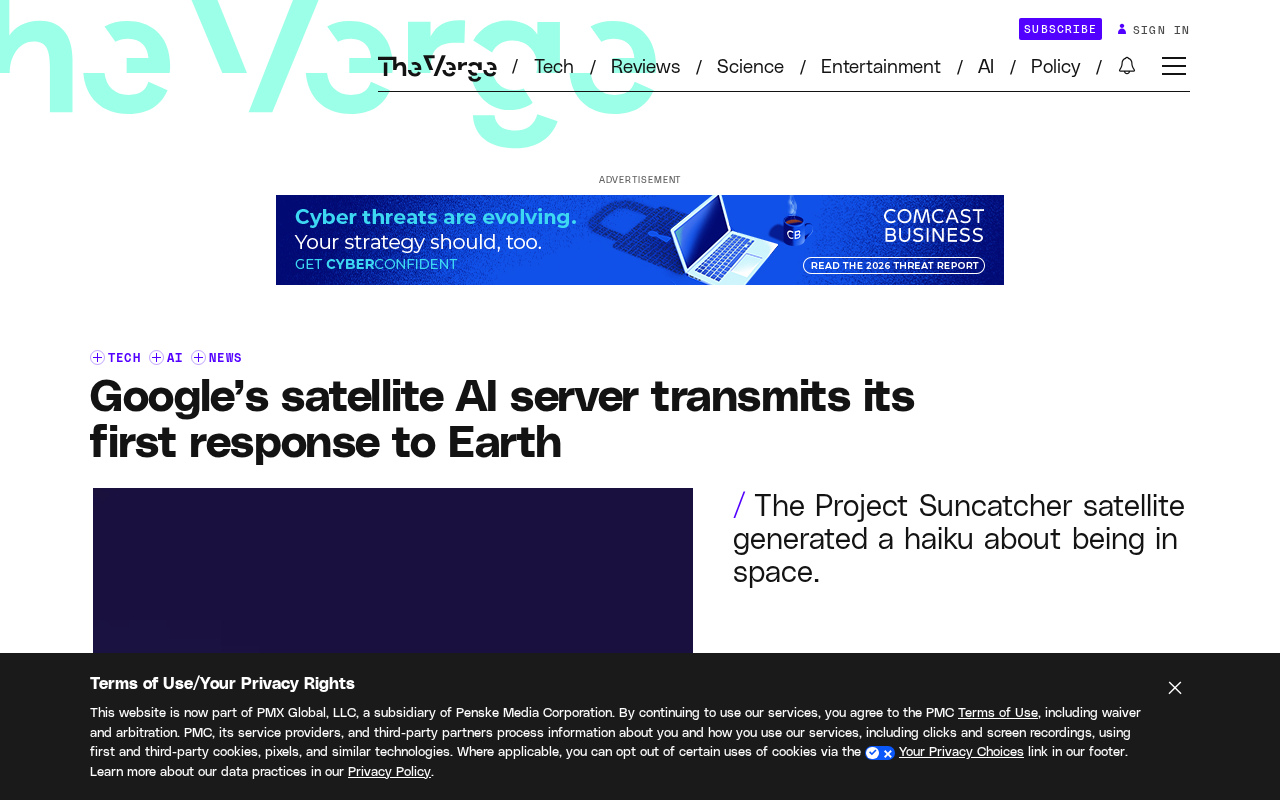
Google's Satellite AI Server Reaches Orbit: Gemma Model Generates First Reply in Space
Google's TPU-equipped satellite powers up in orbit, with the onboard Gemma 4 model generating the first reply from space. This article analyzes the technical path, real-world constraints, and implications for edge computing and satellite remote sensing.
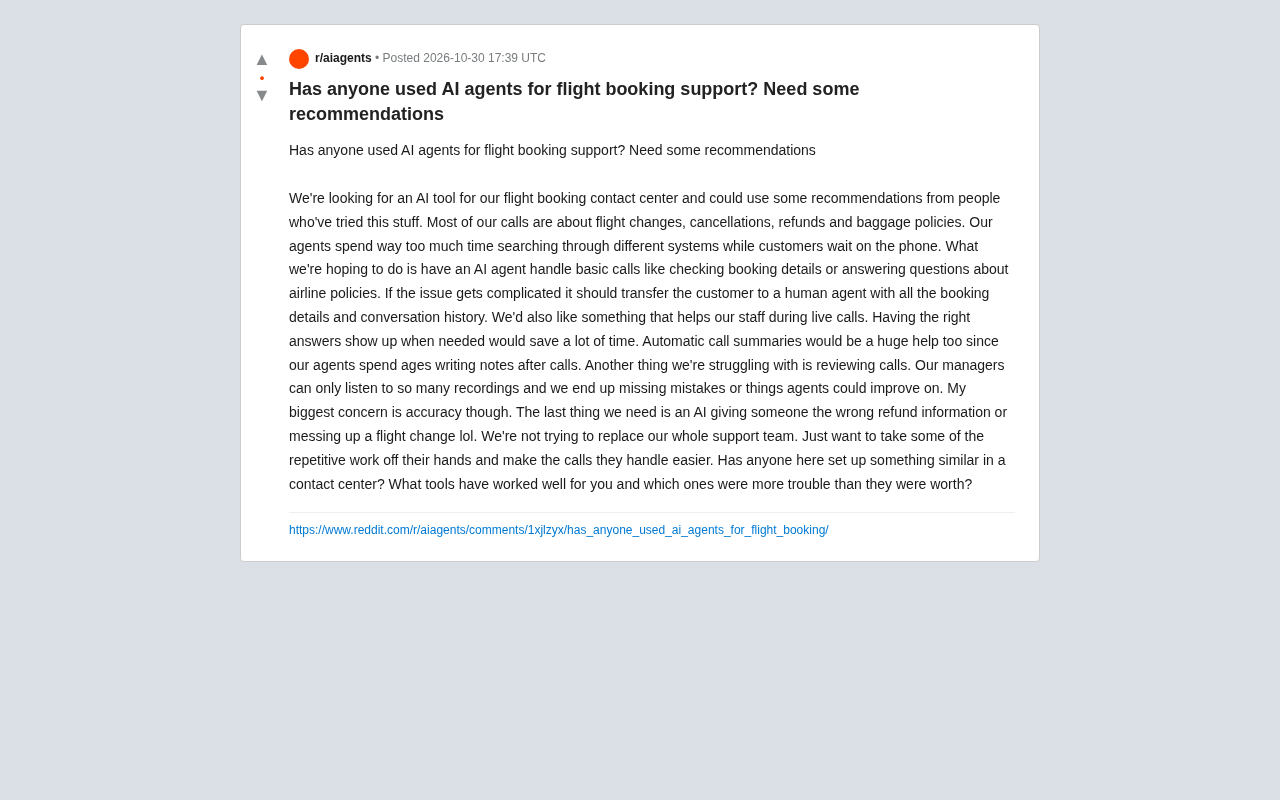
AI Agents for Flight Booking Customer Support: Real Needs and Implementation Challenges
Starting from a real Reddit question, this article breaks down four needs for introducing AI Agents into flight booking call centers: basic Q&A, agent assist, call summarization, and quality inspection, and analyzes accuracy concerns and handoff boundary design.
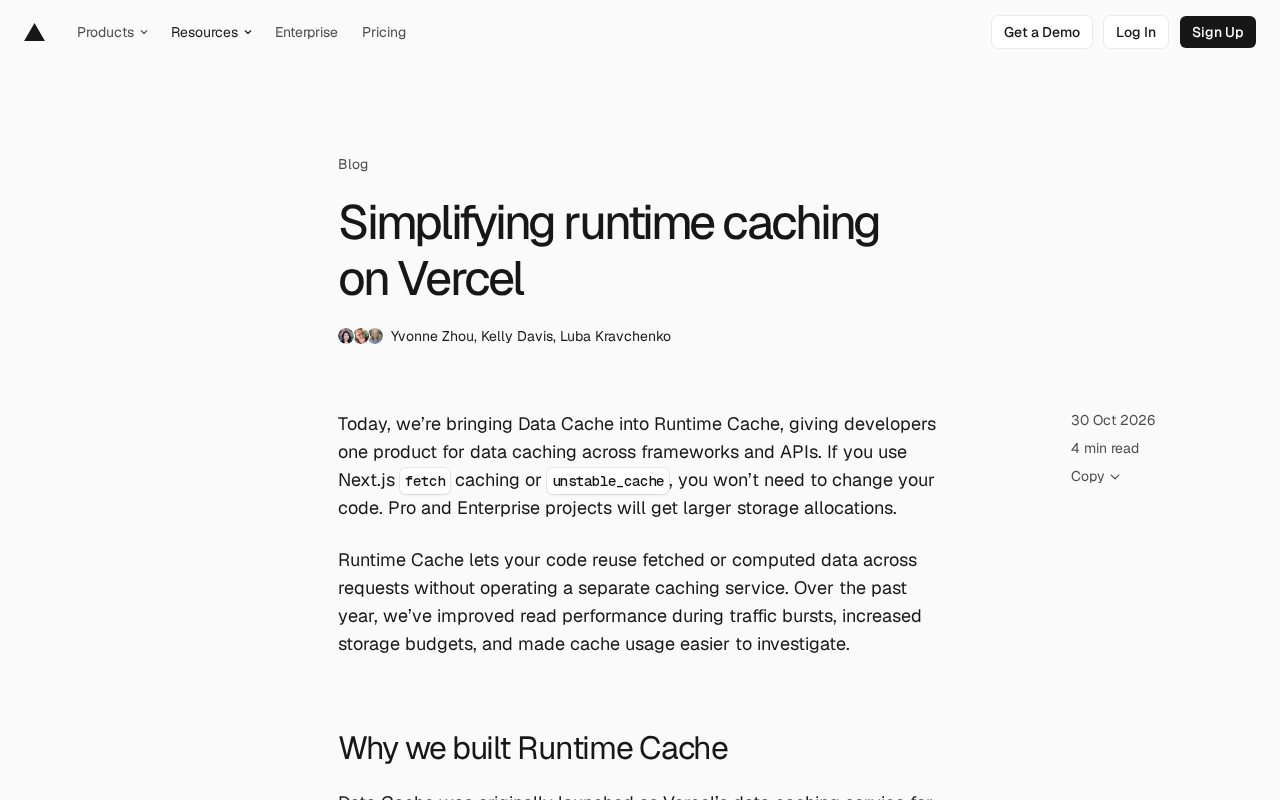
Vercel Unifies Runtime Cache: Data Cache Merges into Runtime Cache
Vercel merges Data Cache into Runtime Cache, unifying storage quotas and billing for Next.js fetch cache, unstable_cache, getCache, and use cache: remote. Pro and Enterprise projects get more storage, and cache reads/writes are now billed at Runtime Cache pricing.