From the White House to the Front Line: How the U.S. Military's "By, With, and Through" Command Chain Works
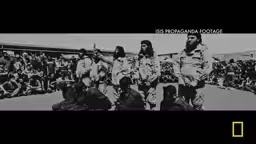
The documentary traces the U.S. command chain from the White House to Mosul, revealing how the "by, with, and through" strategy operates and what it costs.
National Geographic's Chain of Command Episode 1 centers on the Battle of Mosul to lay out the U.S. wartime command chain: from U.S. Central Command in Tampa and air bases in Qatar and the UAE to a school-turned-operations center on the Mosul front, topped by the White House and Chairman of the Joint Chiefs Gen. Dunford. The title "By, With, and Through" captures a restrained strategy of fighting through local partners while the U.S. provides only training, advice, and air support—designed to avoid inflaming local tensions with a large footprint, though partner abuses and civilian casualties pose risks.
National Geographic's documentary series Chain of Command, in its first installment By, With, and Through, captures the full operation of a wartime command chain: from U.S. Central Command in Tampa, Florida, to air bases in Qatar and the UAE, and finally to a school-turned-operations center on the front lines of Mosul. At the top of this chain sits the White House; at its start, a captain staring at a screen.
A Decision Chain Spanning the Globe
The documentary's core setting is the Battle of Mosul in Iraq. The camera follows Army Capt. Quincy Baylor into a neighborhood in eastern Mosul, where—less than a thousand yards from the front—he stares at drone feeds, repeatedly confirming whether a target is a militant or a friendly.
His superior is the Army colonel responsible for the entire city; above him is the general overseeing the Iraq and Syria theater; and above him, the four-star commander at U.S. Central Command in Tampa, Florida. At the very top of the chain is Gen. Joseph Dunford, Chairman of the Joint Chiefs of Staff, in the Pentagon.
Dunford lays out the logic of this chain in the film: clear communication must run from the president and the secretary of defense all the way down to the lowest-ranking soldier on the front line. Soldiers must understand not only the specific mission but also the intent behind it and the larger objective.
"By, With, and Through": A Restrained Way of War
The title itself summarizes the current U.S. counterterrorism strategy—by, with, and through: working by, with, and through local partners to achieve objectives. In Dunford's words, defeating this enemy requires a global network of allies and partners; the United States provides training, advice, and assistance, and in some cases accompanies operations, but "at the end of the day, we cannot succeed without a strong coalition effort."
This strategy manifests directly in force size. Col. Brett Sylvia commands 1,700 U.S. ground troops in Iraq. His unit deployed nine months ago and will wrap up its mission in a few weeks. He stresses that the operational plan is entirely Iraqi—the U.S. only provides support: "They're the ones on the front lines, not us."
An official responsible for strategy formulation also explains the other side of this restraint: a large-scale U.S. presence could actually inflame local radicalization, making partner forces the more viable path. But the risks are equally clear—some partners may abuse force and cause mass civilian casualties, which in turn undermines the entire operation. So "choosing the right partners" itself becomes a strategic problem.
The Strategic Brain: T2C2 and "Building an Airplane from Iron Ore"
The documentary offers a rare look inside an entity called the Transregional Threat Coordination Cell (T2C2). Composed of about 50 military and civilian experts, it functions much like a think tank, advising the Chairman of the Joint Chiefs on global strategy. Never before had cameras been allowed into its discussions.
One expert offers a vivid metaphor: current efforts are like digging iron ore out of the ground and saying you'll turn it into an airplane. Taking Mosul is just extracting the ore; defeating violent extremism is the airplane's first flight—and there's a long way to go between the two.
This captures the structural difficulty of the entire war. Military victories have clear milestones—eastern Mosul liberated, units rotated home, soldiers going home. But strategic objectives are far more nebulous. As another official in the film puts it, the military end state is never the true end state; the true end state is security and stability.
Chairman of the Joint Chiefs of Staff is the highest-ranking military position in the U.S. armed forces, appointed by the president and confirmed by the Senate for a four-year term. The position does not directly command combat forces—the operational chain runs from the president through the secretary of defense to the combatant commanders—but the chairman is the principal military advisor to the president and the secretary of defense, responsible for cross-service coordination, strategic planning, and recommendations on global force employment. Dunford's Pentagon office in the documentary is precisely the hub of this "advisory-coordinating" function: he must translate the White House's political objectives into executable strategic frameworks for each theater, then transmit them downward through the combatant commands. Understanding this role is essential to grasping why strategic cells like T2C2 serve the chairman's level directly rather than any specific theater.
Air Power and the Counter-Drone Challenge
Another key form of U.S. support for Iraqi forces is air power. Several bases in the Middle East—including two critical ones for the Mosul campaign, located in Doha and Abu Dhabi—lead a 20-nation coalition. Lt. Gen. Jeffrey Harrigian commands "the most complex air power ever held by a single general in the history of warfare," encompassing drones, fighter jets, bombers, tankers, and reconnaissance aircraft.
The documentary was granted first-ever access to film inside an F-22 cockpit during a mission. The pilot's description is blunt: they develop target lists a month in advance—weapons depots, command-and-control nodes, vehicle-borne IED factories—and destroy them one by one. They also bomb roads to prevent suicide vehicles from passing or at least to slow them down for real-time strikes. In his words: "If they're out there driving around, they should be afraid, because we're looking for them."
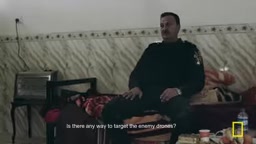
But technological advantage is not one-sided. ISIS buys small commercial drones, rigs them with explosives, and drops them from the air—a new threat on the front lines. At the Combined Air Operations Center in Doha, commanders discuss footage of commercial quadcopters fitted with battery packs and online videos of "a classroom of young people learning to fly drones." One commander admits: "This problem isn't going away. There will be something else, and something else after that." Countering it requires a comprehensive approach covering sourcing, training, launch sites, and more.
The Combined Air Operations Center (CAOC) is the command hub for a multinational air campaign, typically based at a fixed installation within the theater. It develops and executes the air tasking order (ATO), coordinating sorties for drones, fighters, bombers, tankers, and reconnaissance aircraft. The CAOC in Doha depicted in the documentary leads the air power of a 20-nation coalition; its daily work involves fusing intelligence, evaluating targets, allocating forces, and monitoring execution in real time—the organizational foundation that enables what Lt. Gen. Harrigian calls "the most complex air power." The CAOC's existence also explains how a captain's strike request on the Mosul front can be answered relatively quickly: the request travels up the ground command chain, the CAOC matches available platforms and issues the mission, closing the loop from screen to cockpit.
Daily Life and Costs on the Front Line
The documentary's tension comes from the details of daily battlefield life. Capt. Baylor brews espresso on the Mosul front with coffee beans sent by his wife; for those ten seconds, he says, he is "just a guy making coffee." The next second, the crack of a 120mm mortar brings him back to reality.
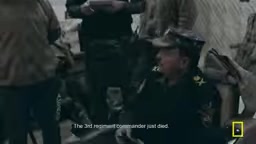
Rotation is equally real. A new company from the 82nd Airborne Division takes over the school operations center, with 30-year-old Capt. Mark Sorktas replacing Baylor. During the handover comes word: the commander of 5th Battalion, 20th Brigade, has just been killed.
Civilian casualties are another thread running through the film. Baylor sees women and children moving in and out of a compound where militants are gathering on screen; he says, "One civilian casualty is a mission failure for us." And during the retreat, ISIS leaves snipers behind, civilians are trapped in their homes, and Iraqi forces go door to door to get them out.
The numbers at the film's end are heavy yet restrained: in eastern Mosul alone, more than 3,000 Iraqi soldiers were killed or wounded. Col. Sylvia puts it plainly: "This is their country. They own it." What the U.S. can do is help them govern after they have shed blood to earn credibility.
The documentary's true value lies not in showcasing weapons but in rendering an abstract command chain into concrete people—the president, the four-star general, the colonel, the captain, the Iraqi battalion commander, the trapped civilians. Each bears a small segment of responsibility along the chain, and every link can determine who lives and who dies.
The 82nd Airborne Division is a renowned rapid-deployment unit of the U.S. Army, headquartered at Fort Bragg, North Carolina, known for its ability to deploy globally on extremely short notice. Its brigade combat teams frequently rotate into Iraq, Afghanistan, and elsewhere to train local security forces and assist in operations. The documentary's new company taking over the Mosul school operations center, with Capt. Sorktas replacing Baylor, epitomizes this rotation mechanism: units enter and exit the theater on fixed cycles, and command relationships and intelligence handovers must be completed within days—and the handover period is often a window of heightened security risk. The news of the 5th Battalion, 20th Brigade commander's death arriving at precisely this moment underscores the tension between rotation tempo and battlefield uncertainty.
Related articles

Hermes Agent Beginner's Guide: Hands-On with a Self-Evolving AI Agent
A beginner's guide to Hermes Agent, the open-source self-evolving AI agent that gained 41.7K GitHub stars in two months—covering Harness Engineering, the learning loop, three-layer memory, WSL installation, and hands-on configuration.

AI Agent in Action: Building a Smart Office Assistant with WorkBuddy
A practical case study shows how Tencent WorkBuddy batch-converts and archives files, compares chat LLMs with AI Agents, and analyzes WorkBuddy's credit system, use cases, and positioning for office automation selection.

From Single-GPU Bottlenecks to Hundreds of Billions of Parameters: 6 Key Questions in Large Model Distributed Parallelism
Based on a Bilibili tutorial, this article organizes core knowledge of large model distributed parallelism: starting from decoder-only architecture's token-by-token generation and the essence of X times W computation, it analyzes six key questions including data parallelism, tensor parallelism, and pipeline parallelism under single-GPU bottlenecks. Suitable for learners in private deployment and model training scenarios to build systematic understanding.