From Vibe Coding to AI Engineering: A Complete Guide to Enterprise-Grade Development

A complete engineering roadmap from Vibe Coding to SDD spec-driven development for enterprise-grade AI programming.
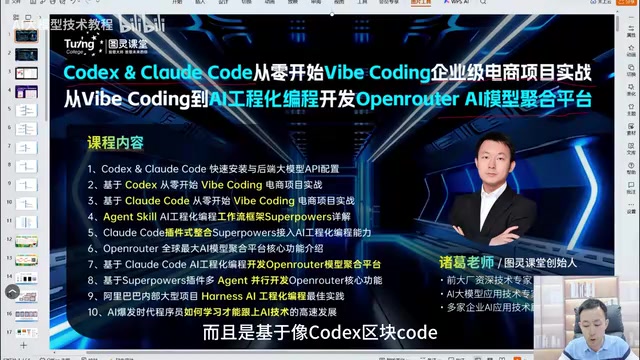
This article distills a technical course on AI programming, explaining the full engineering path from Vibe Coding to SDD spec-driven development. It covers Claude Code vs. Codex tool selection, domestic LLM comparisons, the SuperPower plugin, the Harness system used by big tech, and the business logic behind profitable model aggregation platforms like OpenRouter.
AI Programming Has Become an Essential Skill for Developers
From Claude Code and Codex to Cursor, and domestic tools like CodeBuddy and Zhipu Code, various AI programming tools have thoroughly permeated daily development workflows. Based on a technical course on Bilibili about Vibe Coding and enterprise-grade project practice, this article distills the core methodology and hands-on experience within, helping readers understand the complete development path from "toy-level demos" to "enterprise-grade projects."
The instructor's core viewpoint is unambiguous: The key to AI programming lies not in the tools themselves, but in the underlying model capabilities and whether you've mastered the methodology of engineering-driven development. Relying purely on "Vibe Coding" can only produce small utilities—real enterprise-grade projects require a systematic engineering workflow to support them.
Tool Selection: Model Capability Comes First
Comparing the Strengths of Claude Code and Codex
Currently, the two tools widely recognized as having the strongest AI programming capabilities globally are Claude Code and Codex.
Claude Code was launched by Anthropic in late 2024, and it is a terminal-native AI programming tool built on the Claude 3 series of large language models. Understanding the technical significance of "terminal-native" requires reviewing the evolutionary path of AI programming tools: early tools like GitHub Copilot were embedded into IDEs as editor plugins, working primarily within single-file contexts; whereas terminal-native tools can perceive the entire repository's file structure, dependency relationships, and runtime state at the process level, and combined with shell command execution capabilities, achieve truly multi-step autonomous task planning. This architectural difference produces dramatically different results when handling complex tasks like "cross-file refactoring," "dependency upgrades," and "automated test generation."
Unlike editor plugins such as Cursor, Claude Code is centered on the command-line interface, capable of directly reading and writing the file system, executing shell commands, and invoking Git operations—achieving "agentic programming" in the truest sense. So-called agentic programming refers to AI no longer passively responding to single prompts, but autonomously decomposing tasks, planning execution steps, invoking external tools, and dynamically adjusting strategies based on intermediate results—essentially upgrading large language models from "Q&A systems" to "autonomous execution agents." It internally integrates an engineering-driven programming system called Harness AI—this system is not a single product, but broadly refers to an engineering framework that embeds AI capabilities into the software engineering pipeline, encompassing professional engineering practices such as static code analysis, test coverage tracking, code review, automated test suggestions, context-aware refactoring, and CI/CD process automation. This elevates AI from a "code generator" to an "engineering collaborator," performing significantly better than ordinary conversational AI when handling complex codebases, making it the top choice for professional programmers.
However, the instructor also candidly acknowledged Claude Code's real-world dilemma: Anthropic's account-banning policy is strict, and once an account is banned, getting it back is "a huge hassle," leading to increasingly cautious use in production environments. By comparison, with the release of the latest GPT versions and continuous internal optimization, Codex's capabilities have rapidly improved, and its actual usage frequency is actually increasing.
Comparing Domestic LLMs: Which Is Better Suited for AI Programming
The core competitiveness of AI programming tools lies in the backend model, not the tool shell. The instructor offered hands-on evaluations of domestic large language models:
- Zhipu GLM: Currently the "first tier" domestic model with the best experience, boasting powerful programming capabilities
- DeepSeek: The best value for money—inexpensive with solid code generation capabilities
- Kimi, MiniMax, MiMo, Tongyi, Hunyuan: All are capable of handling AI programming scenarios
Domestic models have already caught up to a practical level in code generation capabilities, and hold obvious advantages especially in cost-sensitive enterprise scenarios. Notably, domestic models often perform more naturally than overseas models in generating Chinese comments, understanding Chinese technical documentation, and code completion for mainstream domestic frameworks (such as the Java ecosystem including Spring Boot and MyBatis). This localization advantage should not be underestimated in real-world engineering.
The Boundaries of Vibe Coding: Why It Can Only Build Toy Projects
The Essence and Limitations of Vibe Coding
The term Vibe Coding was formally introduced by OpenAI co-founder Andrej Karpathy in a tweet in February 2025. Karpathy described a brand-new programming experience: developers fully immerse themselves in their intent, entirely delegating code details to the AI, sometimes not even reading the AI-generated code itself, focusing only on the final running result—the developer plays more the role of "requirement describer" and "result acceptor."
The feasibility of this paradigm rests on a qualitative leap in large language models' code generation capabilities. To understand the magnitude of this technical leap, one needs to be familiar with two important code capability benchmarks: HumanEval is a standard code generation benchmark released by OpenAI in 2021, containing 164 Python programming problems that test a model's ability to complete implementations based on function signatures and docstrings—it was the mainstream metric for measuring LLM programming capabilities in the early days. Meanwhile, SWE-bench, which better reflects real-world engineering difficulty, was released by Princeton University in 2023, containing 2,294 GitHub Issues from 12 real open-source projects, requiring models to autonomously locate problems within a complete repository context, modify code, and pass test suites for verification—this design makes it currently the closest AI programming benchmark to real software engineering scenarios. Claude 3.5 Sonnet solved over 49% of problems on SWE-bench Verified, while GPT-4 in early 2023 scored only around 1.7%—it was precisely this order-of-magnitude technical leap that turned "describe the requirement and get the code" from concept into reality, laying the technical foundation for the rise of Vibe Coding.
Models like GPT-4o and Claude 3.5 Sonnet have already surpassed most human programmers on the aforementioned programming benchmarks. This concept quickly sparked widespread discussion in the developer community—supporters believe it has greatly democratized software creation capabilities, while critics point out its obvious limitations in engineering scenarios. Notably, Karpathy himself also emphasized that this model is better suited for personal projects and prototype validation, and is not a substitute for enterprise-grade engineering practice.
However, Vibe Coding has fatal, unavoidable limitations:
- Poor code maintainability: AI-generated code often lacks architectural design, and slightly larger projects degenerate into "spaghetti mountains"
- Severely insufficient debugging capability: Once a bug appears after a project goes live, people without a technical background find it hard to effectively direct the AI to fix it, easily falling into dead loops
- Extremely low complexity ceiling: When facing enterprise-grade architectural needs like high concurrency, distributed systems, and microservices, pure Vibe Coding is almost powerless
Early on, many non-technical AI influencers claimed they had "replaced programmers with Vibe Coding," but upon close scrutiny, their output mostly consisted of extremely simplified projects like fill-light mini-apps, Pomodoro timers, and cross-border e-commerce mini-websites. Vibe Coding is suitable for quickly validating ideas, but fundamentally cannot support real enterprise-grade systems.

AI Engineering-Driven Programming: The Right Path for Enterprise-Grade Projects
The Progressive Capability of Three Development Modes
For developers with different foundations, the course designed three progressive hands-on modes:
- Beginner Mode (Vibe Coding): Rapidly generate an e-commerce demo project in minutes—suitable for getting started
- Plan Mode: Invoke the Plan mode built into Claude Code and Codex to handle moderately complex requirements
- Engineering Mode (SuperPower): An engineering pipeline based on real enterprise workflows, supporting the full lifecycle of enterprise-grade projects
The SuperPower Plugin and SDD (Spec-Driven Development)
The course focused on a solution being adopted by numerous small and medium-sized enterprises—Claude Code's SuperPower plugin. It is essentially a collection of AI engineering-driven Skills, encompassing a dozen or even dozens of Skills, spanning the complete enterprise-grade project workflow: requirements analysis → architecture design → coding implementation → test verification → deployment and launch.
This approach aligns closely with the industry-popular SDD (Spec-Driven Development). SDD evolved from the "Design by Contract" concept in classical software engineering—systematically proposed by Bertrand Meyer, the creator of the Eiffel language, in the 1980s. This concept emphasizes that a function's preconditions, postconditions, and class invariants should be clearly defined before coding, thereby catching contract-violating behavior at compile time or runtime. This idea profoundly influenced the later unit testing culture, API-First Design, and today's AI spec-driven development paradigm. In the AI programming era, SDD's core specification carriers are OpenAPI/Swagger interface descriptions and JSON Schema data models. The OpenAPI specification was created by SmartBear in 2011 (then called Swagger), and was formally renamed after being donated to the OpenAPI Initiative under the Linux Foundation in 2016; it has become the de facto standard for describing RESTful APIs. The key value of providing such specification documents to AI lies in: the model can infer the interface's input/output constraints, authentication methods, and error code systems, thereby generating type-safe, boundary-clear code implementations rather than guessing interface contracts out of thin air. This drastically compresses the "hallucination risk" of AI code generation down to the business logic layer, while architectural-level correctness is guaranteed by the specification documents themselves.
SDD is reinterpreted as: providing the AI with structured specification documents (including OpenAPI/Swagger interface descriptions, JSON Schema data models, PRD product requirement documents, API contracts, and use-case scenario descriptions) so that AI-generated code naturally conforms to architectural constraints, fundamentally guaranteeing code quality and maintainability. This shares a similar philosophical foundation with Test-Driven Development (TDD)—both advocate establishing verifiable constraint boundaries before implementing code, except that SDD extends the carrier of constraints from test cases to a more macro-level technical specification system. Compared with casual Vibe Coding, SDD is precisely the key watershed for crossing from "toy projects" to "enterprise-grade systems."
Engineering Practices at Leading Tech Giants
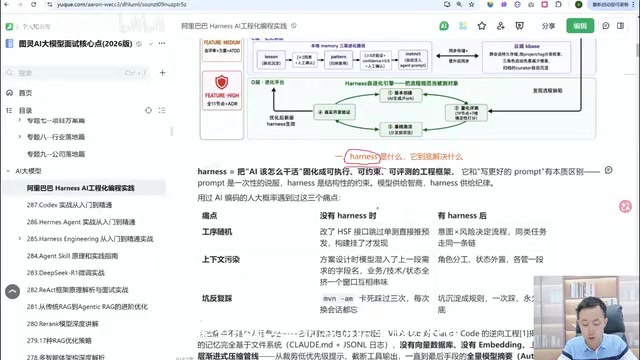
Domestic leading tech giants (such as Alibaba) are internally promoting an AI engineering-driven programming workflow based on the Harness system, building a self-contained continuous evolution mechanism. The Harness system deeply integrates software engineering stages such as requirement documents, test cases, code reviews, and deployment pipelines with AI capabilities, forming an "AI-driven, human-supervised" development paradigm that achieves continuous quantitative tracking and automatic optimization of code quality. Specifically, this system typically contains the following loop: AI generates code → static analysis tools scan (such as SonarQube, PMD) → automated tests execute → coverage reports fed back to the AI → the AI iteratively corrects the code based on feedback. This "feedback-driven self-correction loop" is the core that distinguishes the Harness system from simple code generation tools, and is the engineering foundation for its ability to continuously improve code quality. This demonstrates that engineering-driven AI programming is not empty theory, but a best practice already truly implemented at leading tech giants, holding important reference value for small and medium-sized teams as well.
Industry Insights: Who Is Really Making Money in the AI Wave
Beyond hands-on techniques, the course also offered a valuable industry perspective: Those truly turning a profit in the current AI field are not the consumer-facing AI applications.
Consumer-facing AI applications like Doubao and Tencent Yuanbao are generally in a cash-burning phase. The truly profitable segments are concentrated in:
- Compute power and hardware: Infrastructure such as memory chips and semiconductors, with related stock prices already climbing significantly
- Token sales: Giants like Zhipu and Tencent charging via API interfaces
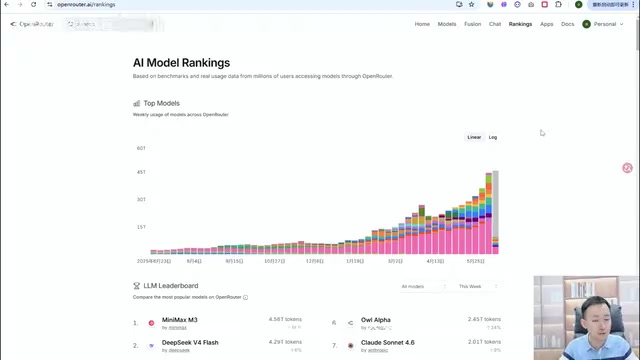
- AI model aggregation platforms: Such as OpenRouter, a globally leading large-model aggregation service
OpenRouter was founded in 2023 and is headquartered in San Francisco. It is currently the most mainstream large language model aggregation API platform in the world. To understand its business logic, one first needs to understand its technical architecture: OpenRouter's core design includes two key layers—first, a unified OpenAI Chat Completions API compatibility layer, allowing developers to switch models without modifying business code; second, a real-time model capability and pricing comparison database that supports automatic routing by dimensions such as latency, cost, and context window. Its design decision to be compatible with the OpenAI interface standard carries profound ecosystem significance: OpenAI's Chat Completions API format had de facto become the "industry-standard interface" for large model invocation during 2022–2023, and the vast majority of domestic and overseas model vendors (including Anthropic, Google, DeepSeek, etc.) provide adaptation layers compatible with this format. OpenRouter leverages precisely this standardization dividend to integrate hundreds of model endpoints at extremely low integration cost. Through API resale agreements signed with model vendors like Anthropic, OpenAI, Google, and Meta, it provides downstream developers with a unified interface format, supporting access to dozens of mainstream models including Claude, GPT, Gemini, and DeepSeek. Developers can flexibly switch between different models through a single interface—without separately managing multiple SDKs and API keys—and pay flexibly by model or by token.
Its profit mechanism typically involves adding a 5%–15% service fee on top of the model vendor's original API price, while also providing value-added services such as rate-limit management, usage statistics, and fallback disaster recovery. The scale effect of this model manifests as: the larger the request volume the platform aggregates, the greater the bulk discount room in negotiations with model vendors, so the marginal profit margin continuously increases with scale. As of early 2025, OpenRouter had integrated over 200 model endpoints and served over 500,000 monthly active developers. The deeper logic behind the formation of this market lies in: different models each have their own strengths and weaknesses across dimensions such as code generation, long-text understanding, multilingual support, and cost efficiency, and enterprise customers need to dynamically route to the optimal model based on specific tasks—while the cost of maintaining multiple SDKs far exceeds that of integrating with a single aggregation platform. Such "model routing" services form an asset-light, high-margin business model. Similar domestic platforms include SiliconFlow and ByteDance's Volcano Ark, all adopting similar business logic.
According to the instructor, a friend's small team of a dozen or so people, relying solely on building a model aggregation "wrapper website," achieved annual revenue of one to two hundred million yuan. This is precisely the practical basis for the course listing "OpenRouter-style AI model aggregation platforms" as a core hands-on project—the technical barrier is relatively manageable, yet the commercial value is quite considerable.
Conclusion: Engineering Mindset Is the True Moat
The AI era is reshaping the development tool ecosystem. IntelliJ IDEA, which once dominated Java and Python development, is gradually giving way to VS Code and next-generation IDEs built upon it, such as Cursor.
IntelliJ IDEA was released by the Czech company JetBrains in 2001, and long dominated the enterprise-grade Java development market thanks to its deep Java semantic analysis and intelligent refactoring capabilities. Its core advantage lies in deep code understanding based on the AST (Abstract Syntax Tree), enabling it to provide precise refactoring suggestions, data flow analysis, and cross-module dependency tracking without running the code. VS Code was open-sourced by Microsoft in 2015, adopting the Electron framework and the LSP (Language Server Protocol) architecture. The historical value of LSP is often underestimated: before it appeared, each editor needed to develop a separate intelligent completion plugin for every programming language, causing a serious "M×N problem" (M editors × N languages); LSP was proposed by Microsoft in 2016 and promoted along with VS Code, decoupling language intelligence from the editor core through a standardized JSON-RPC communication protocol, simplifying the problem to "M+N"—each language only needs to implement one Language Server, and each editor only needs to implement one LSP client. This architectural innovation is the technical foundation enabling VS Code to support hundreds of languages within just a few years and surpass established IDEs. Combined with its vast Marketplace plugin ecosystem, VS Code has become the world's most widely installed code editor (according to the Stack Overflow 2024 survey, accounting for over 74%).
Cursor was founded in 2023 by a team of former MIT researchers, deeply customizing the open-source VS Code codebase. Its core innovation lies in introducing "Codebase Indexing" capability: by performing vector embedding on the entire repository (using text-embedding-type models to convert code snippets into high-dimensional vectors) and building a semantic retrieval index, the model can dynamically recall relevant cross-file context when generating code, breaking through the token limitations of the conversation window. This design essentially introduces Retrieval-Augmented Generation (RAG) technology into the code editor scenario—embedding multi-file context awareness and codebase-level question-answering and generation capabilities into the editor's core interaction layer, giving it a structural advantage over ordinary conversational AI when handling large codebases. Cursor's funding valuation has exceeded $2.5 billion, representing the first truly successful commercialization model for AI-native development tools. "VS Code + Claude Code plugin / Codex" has become the mainstream hands-on combination recommended within the industry.
For developers, the core takeaway is: Tools will continuously iterate, but an engineering mindset is the true moat. Only by mastering the complete capability system from Vibe Coding to SDD spec-driven development can one gain a solid footing in the AI programming era, rather than forever remaining at the level of building toy demos.
Key Takeaways
- Model capability comes first: The core difference in AI programming tools lies in the backend large model, not the front-end interface or editor shell
- Vibe Coding has boundaries: Vibe Coding is suitable for prototype validation, but has systematic limitations in maintainability, debugging capability, and architectural complexity
- SDD is the key to crossing the chasm: Constraining AI output through structured documents like OpenAPI specifications and JSON Schema is the core methodology for moving from toy projects to enterprise-grade engineering
- The Harness system represents big-tech practices: A closed-loop pipeline that deeply integrates static analysis, automated testing, CI/CD, and AI has already been truly implemented at leading tech giants
- Model aggregation platforms are the current profit sweet spot in AI: Asset-light, high-margin, with manageable technical barriers—the OpenRouter model deserves focused attention from startup teams
- The tool ecosystem continues to evolve: The LSP architecture laid the foundation for VS Code's ecosystem advantage, and Cursor's RAG-style repository indexing represents the evolutionary direction of AI-native IDEs—developers should continuously track toolchain changes
Related articles

WebMCP in Practice: How MakeMyTrip Is Reshaping the Travel Booking Experience
India's largest OTA platform MakeMyTrip uses WebMCP to standardize AI Agent interactions with web apps, replacing fragile DOM scraping with natural language-driven test automation and simplified complex booking scenarios.

Deep Dive into the EYG Programming Language: A New Portable Programming Paradigm Designed for Humans
Deep analysis of the EYG programming language's core design, including algebraic effects, program state persistence, and cross-platform portability, exploring how it addresses modern software fragmentation.

WebMCP in Practice: How MakeMyTrip Is Reshaping the Travel Booking Experience
India's largest OTA platform MakeMyTrip uses WebMCP to standardize AI Agent interaction with web apps, solving DOM scraping fragility, enabling natural language test automation, and simplifying complex international flight bookings.