From Vibe Coding to Engineered AI Programming: A Practical Guide to Enterprise Development

Why enterprise development needs Engineered AI Programming, not casual Vibe Coding.
AI coding tools lower the barrier to writing code but not engineering complexity. This article contrasts Vibe Coding with Engineered AI Programming, examining security risks (~40% defect rates), technical debt, and Codex vs Claude Code tool selection — revealing why engineering mindset remains the true competitive edge in enterprise development.
AI Programming Is Changing How We Develop — But the Truth Isn't Simple
Today, nearly every programmer uses AI-assisted coding. Whether it's Cursor, Trae (ByteDance), Tencent Q8, Codex, or Claude Code, AI programming tools have become deeply woven into daily development workflows. Yet along with them come all kinds of controversy and confusion.
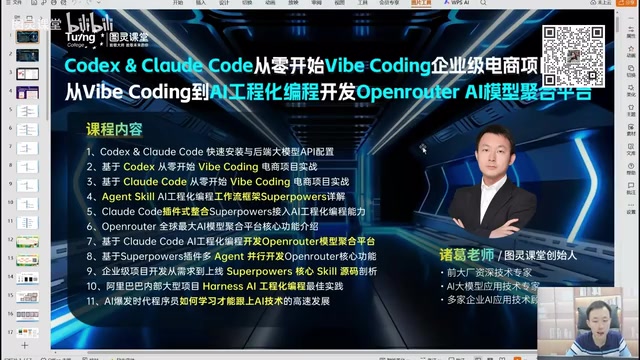
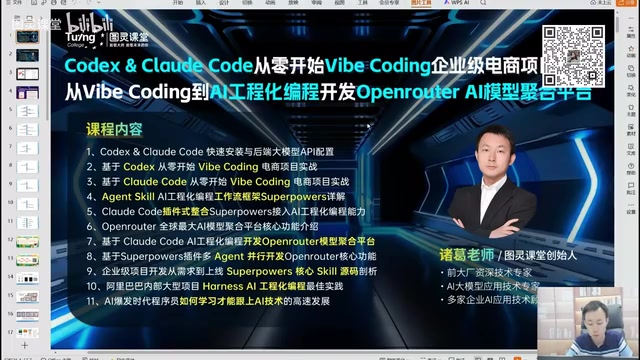
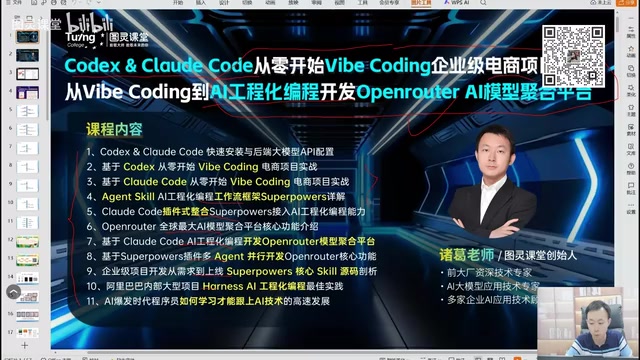
A tech content creator on Bilibili (Teacher Zhuge), in his enterprise-focused hands-on course, dives deep into a core proposition centered on two mainstream tools — Codex and Claude Code: the gap between casually writing code in "Vibe Coding" style and truly deploying "Engineered AI Programming" is not merely technical, but an entire system of engineering mindset.
Based on the content of that course, this article lays out the real dilemmas and solution paths of AI programming in enterprise scenarios.
Is "Non-Techies Replacing Programmers" a False Proposition?
The Gap Between Social Media Narrative and Reality
You've surely come across content like this: "I'm a non-technical newbie, and using AI Vibe Coding I built an amazing project — programmers are going to lose their jobs."
It's worth first understanding the origin of the concept "Vibe Coding": it was proposed by OpenAI co-founder Andrej Karpathy in early 2025, describing a programming style that relies entirely on AI-generated code, where developers barely review code details in depth. Developers simply describe requirements in natural language, and the AI generates complete code — the developer "feels the vibe" rather than "controls the logic."
The emergence of this concept reflects a qualitative turning point in the code-generation capabilities of large language models. Models like GPT-4 and Claude 3, through pretraining on massive open-source code repositories (GitHub, Stack Overflow, etc.) and RLHF alignment, can now generate syntactically correct, structurally complete code snippets across multiple languages, and can even understand natural-language requirements and automatically select appropriate design patterns. RLHF (Reinforcement Learning from Human Feedback) refers to a training paradigm where human reviewers score model outputs, and reinforcement learning algorithms then optimize the model toward higher-scoring outputs — it is precisely this technique that enables code-generation models to align with the human preference of "what constitutes good code." When these models can generate hundreds of lines of structurally complete, syntactically correct code, "vibe-based programming" becomes genuinely feasible from a technical standpoint. However, the inherent limitations of this approach are equally clear: AI models are fundamentally statistical-probability-based text generators, lacking true understanding of business semantics, and they have systematic blind spots in security auditing, defensive programming, and global architectural consistency.
Karpathy himself also explicitly noted that this approach is only suitable for personal projects or prototype validation, because AI-generated code often lacks defensive programming, error handling, and security auditing — and once it involves production environments, it introduces unpredictable risks. This approach dramatically lowers the barrier to programming, but it also inherently breeds hidden problems such as uncontrollable code quality and hard-to-diagnose security vulnerabilities — precisely the parts deliberately ignored in the social media narrative.
The content creator raised a clear challenge to this. He suggests taking a close look at the projects these bloggers actually build — either simple little websites, wrapper relay stations, mini-programs, or small games. These projects have simple business logic and low technical barriers, with almost no real commercial value, let alone being handed over to a team for ongoing operation and maintenance.
What Actually Counts as an "Enterprise-Level Project"?
A genuine enterprise-level project has the following characteristics:
- Highly complex business logic
- Considerable technical difficulty: high concurrency, microservices architecture, distributed architecture, massive-data architecture
- Requires long-term team collaboration and maintenance
It's necessary to understand the engineering implications behind these three dimensions: High concurrency means the system can handle a large volume of requests simultaneously (e.g., tens of thousands of orders per second during an e-commerce sales event), requiring a whole set of underlying mechanisms such as load balancing, connection pool management, and asynchronous processing. Microservices architecture breaks a monolithic application into independently deployable small services, facilitating team division of labor and independent scaling, but it also introduces new complexities such as service discovery, API gateways, and distributed tracing. Distributed architecture spreads data and computation across multiple nodes to ensure high availability and horizontal scalability, but it must contend with the constraints of the CAP theorem — proposed by computer scientist Eric Brewer in 2000, which states that no distributed system can simultaneously guarantee all three of Consistency, Availability, and Partition tolerance. Engineers must make explicit trade-offs in specific business scenarios. For example, an e-commerce inventory system often prioritizes availability and partition tolerance, accepting brief inventory-data inconsistencies, whereas a financial transfer system must prioritize strong consistency.
The system complexity produced by stacking these three together involves deep engineering problems such as inter-service communication protocol design, cross-service data consistency guarantees, and circuit-breaking recovery from cascading failures. Take microservices architecture as an example: when a system consists of dozens of independent services, response latency in any single service can propagate and amplify through synchronous call chains, evolving into a global cascading avalanche — this is precisely the engineering background behind Netflix open-sourcing the Hystrix circuit-breaker library and Alibaba open-sourcing the Sentinel rate-limiting framework. For these systemic failure modes, an oversight in any single link can trigger catastrophic-level impact — something that AI generating code with one click can hardly cover.
The content creator put it bluntly: "Having a newbie use AI Vibe Coding to build this kind of large, complex project is absolutely impossible — at least I haven't seen any such case yet."
AI programming lowers the entry barrier, but it doesn't eliminate engineering complexity — it merely shifts the complexity to another dimension. This is something every practitioner should ponder deeply.
The Real Pain Points of Vibe Coding
Even professional developers commonly encounter the following problems when using AI programming:
No Confidence in Security and Quality
In the course, a student gave this feedback: "AI writes code too fast — I don't have time to read all of it, and I have no confidence about whether it can actually go live." This is a highly representative pain point. The speed at which AI generates code far exceeds the speed of manual review, leaving developers with little control over code quality and security.
This problem is especially prominent at the security level, and it's backed by systematic research. A study published by Stanford University in 2022 found that developers using GitHub Copilot were more likely to write insecure code than a control group not using AI assistance. Subsequent studies further showed that AI-generated code has a vulnerability rate of around 40% for common security defects such as SQL injection protection, insecure random number generation, hardcoded sensitive information, and incomplete input validation. The root cause of this phenomenon is that models learn a large amount of historically inherited insecure code patterns from their training data, while the context of secure coding standards is often missing during code completion. Notably, the three vulnerability types — SQL injection, hardcoded secrets, and insufficient input validation — have long ranked among the OWASP (Open Web Application Security Project) Top 10 security risks, precisely the entry points most frequently exploited by attackers. AI unknowingly reproducing these historical vulnerabilities means security risks in production environments are being systematically underestimated.
From an attacker's perspective, this problem is even more severe: the large-scale proliferation of AI-generated code means the same category of security defects may appear synchronously across tens of thousands of independent projects, creating a "batch vulnerability" effect. Attackers need only develop automated scanning tools targeting common AI output patterns to achieve batch penetration of a large number of targets — with harm far exceeding that of a single-point vulnerability. This data reminds developers: AI-generated ≠ securely generated. Code Review and static application security testing (SAST) should not be weakened in the AI programming era, but rather solidified and strengthened as mandatory checkpoints in the engineering pipeline.
More critically, there's the question of accountability: once a serious bug appears after going live, the one who ultimately bears responsibility is still the developer who directed the AI to write the code — the large model won't take the blame for you.
Non-Standard Code Makes Projects Hard to Maintain
When a single person uses AI programming, there's a lack of standardization constraints, making it impossible to do engineered or team-collaboration-level development. The content creator used a vivid analogy:
"The more you write with AI programming, the higher the 'pile of crap' grows in the later stages of the project — until it eventually becomes unmaintainable, and one day it might just die outright."
The "pile of crap" here corresponds to the concept of technical debt in software engineering — proposed by software engineer Ward Cunningham in 1992, a metaphor for the "debt" incurred by sacrificing code quality for short-term delivery speed. This metaphor profoundly reveals a universal law in software development: debt doesn't disappear; it only accumulates with compound interest. The "interest" on technical debt manifests as: needing more time to understand existing code when adding new features, a higher frequency of production failures, and a steeper onboarding curve for newcomers. The research organization CISQ (Consortium for Information & Software Quality) estimates that productivity losses in the U.S. software industry due to technical debt exceed $300 billion annually, of which about 23% stems from cross-module code duplication and inconsistency — and these two are precisely the high-frequency defects of unconstrained AI-generated code.
AI-assisted programming, without standardization constraints, significantly accelerates the accumulation of technical debt: AI-generated code snippets often lack global design considerations, tending to solve local problems rather than achieve systematic design; as requirements iterate and stack up, inter-module coupling becomes extremely high, and a change in one place ripples throughout the whole system; inconsistent naming, missing comments, and duplicated logic scattered everywhere ultimately make the entire codebase hard to maintain, or even necessitate a complete rewrite. This is the inevitable outcome of "eyes-closed swimming" style development — short-term efficiency gains, long-term technical debt explosion.
It's worth adding that technical debt has a multiplier effect in team collaboration scenarios: when 5 developers simultaneously commit code to the same AI-assisted codebase lacking standardization constraints, the cost of conflict resolution, code comprehension, and style unification is not linearly additive but grows exponentially. This is precisely the fundamental reason why enterprise-level projects must place engineering standards above AI efficiency.
Engineered AI Programming: The Key Path to Solving the Problem
Faced with the pain points above, the core answer the content creator gives is: Engineered AI Programming.
He emphasizes that through engineered AI programming, the vast majority of the problems mentioned earlier can be resolved. This isn't simply "using a tool to write code," but rather incorporating AI into a standardized, collaborative, and maintainable engineering system — including unified code style conventions (such as automated format checks via ESLint, Prettier, etc.), modular design principles (high cohesion, low coupling), version control workflows (Git branching strategies and Code Review mechanisms), automated test coverage (unit tests, integration tests, end-to-end tests), and clear Prompt engineering standards (providing AI with sufficient contextual constraints so its output conforms to the project's existing architectural style).
Among these, the Prompt engineering standard deserves special elaboration: in engineered AI programming, a prompt is no longer an arbitrary natural-language description, but a structured instruction carrying explicit engineering constraints — including the project's tech stack description, naming conventions, error-handling templates, and a list of anti-patterns to avoid. Research shows that prompts carrying sufficient engineering context can improve the compliance rate of AI-generated code by more than 30%, making prompt writing itself an engineering skill requiring systematic training rather than simply "asking questions." In practice, some teams have begun to include prompt templates in their code repositories under version control, evolving them in sync with code files to ensure AI-generated code remains consistent with project standards at all times.
The core logic of this system is: to transform AI from a "black box producing random outputs" into a "predictable, reviewable, standard link in the engineering pipeline." When every output from the AI must pass through checkpoints such as ESLint static analysis, unit test coverage verification, and the Code Review process, the quality of AI-generated code gains engineering-level backstop guarantees, rather than relying solely on the developer's personal judgment. This is precisely why Vibe Coding and Engineered AI Programming produce fundamentally different results in practice.
A Practice-Oriented Teaching Approach
A major feature of the course is that it emphasizes hands-on practice and downplays theory, with the methodology of "starting from practice and then feeding back into theory." It demonstrates two distinctly different development paradigms by building two projects from scratch:
- E-commerce project — using the Vibe Coding approach to demonstrate rapid development
- OpenRouter AI model aggregation platform — using the Engineered AI Programming approach to reproduce a real enterprise development workflow
This comparative teaching allows learners to intuitively experience the vast differences between the two approaches in terms of code standardization, maintainability, and team collaboration. The choice of OpenRouter as the second hands-on project is quite representative — as a middle-layer platform aggregating the APIs of multiple AI models, it naturally involves enterprise-level engineering problems such as multi-interface adaptation, rate limiting, billing, and error handling, perfectly testing the implementation capability of engineered AI programming in complex business scenarios. From an architectural perspective, OpenRouter is essentially an API aggregation gateway: it uniformly receives developer requests upstream and dynamically routes them downstream to the API endpoints of different AI vendors, while handling cross-cutting concerns such as authentication and authorization, request rate limiting, billing accounting, and error degradation. Such cross-cutting concerns in enterprise software architecture are typically governed uniformly through AOP (Aspect-Oriented Programming) or middleware mechanisms, avoiding repeated implementation of the same logic in each business module — which is precisely a typical application scenario of the "high cohesion, low coupling" principle in engineered AI programming. Such gateway systems are extremely common in enterprises (e.g., payment routing gateways at financial institutions, CDN scheduling systems on content platforms), and their engineering complexity far exceeds that of presentation-layer applications, making them an ideal testing ground for evaluating engineered programming capabilities.
Tool and Model Selection: Lessons from Practice
How to Choose Between Codex and Claude Code?
The course primarily revolves around two tools, which represent two different technical paths for AI programming tools:
-
Claude Code: A command-line AI programming assistant launched by Anthropic, deeply integrated into terminal workflows, supporting multi-file context understanding and codebase-level operations. After its official release in 2025, it quickly became the top choice for professional developers. Its core advantage lies in long-context processing capability — the Claude 3 series supports a context window of up to 200K tokens, meaning it can make cross-file modifications based on an understanding of the entire large project's code structure, rather than merely "seeing" the currently open file. For reference, GPT-3.5's context window was only 4K tokens, while 200K tokens is roughly equivalent to 150,000 lines of code or a medium-length technical book — this order-of-magnitude difference gives Claude Code a qualitative advantage when handling large codebases, not merely a quantitative improvement. This feature emphasizes "deep understanding," which is especially critical in scenarios such as refactoring, debugging, and cross-module dependency analysis, making it the most widely used AI programming tool among professional programmers in enterprises.
-
Codex: OpenAI's programming-specialized product based on the GPT series of models, initially released in 2021 and powering GitHub Copilot. In 2025, a cloud-based Agent version was launched, supporting autonomous execution of programming tasks in a sandbox environment. The Codex Agent version represents a paradigm leap from "line-level code completion" to "task-level autonomous execution" — the Agent can receive high-level task descriptions (such as "write a complete test suite for the user login module"), autonomously plan steps, invoke tools, execute commands, and verify results, greatly reducing the frequency of developer intervention, and emphasizing "autonomous execution." The technical foundation of this capability is the ReAct framework (Reasoning + Acting) — the Agent completes complex tasks through iterative cycles of "think → act → observe," where the result of each action feeds back into the next round of reasoning, enabling the Agent to self-correct and progressively converge on its goal, which is fundamentally different from traditional "one-shot code generation." It should be noted that the Agent's autonomous execution capability also introduces a new dimension of risk: when the Agent is authorized to directly execute file writes, command-line operations, and even database modifications, a single erroneous inference could lead to irreversible destructive operations. Therefore, when deploying Agents in enterprise environments, sandbox isolation and the principle of minimal operational privileges are crucial. After integrating the latest GPT versions, Codex delivers excellent capabilities and stronger user-friendliness, making it suitable for a broader audience.
The two paths are often complementary rather than mutually exclusive in real engineering scenarios — Claude Code is suited for refactoring and debugging tasks that require deep codebase understanding, while Codex Agent is suited for delegating standardized, repetitive development tasks to the AI for autonomous completion. Using them in combination can cover a broader range of engineering scenarios. The content creator's personal workflow primarily uses the combination of VS Code + Claude Code plugin + Codex. He also notes that tools like Cursor, ByteDance Trae, and Tencent Q8 are all capable — the key lies in personal preference.
A Tiered Usage Strategy for Large Models
The current AI large-model market presents a landscape of "multiple strong players coexisting, with rapid iteration": Anthropic's Claude series is renowned for long-context processing and code reasoning, consistently leading in multiple programming benchmarks (such as HumanEval and SWE-bench); OpenAI's GPT series continues to invest in multimodal understanding and tool-calling ecosystems, with its Function Calling mechanism having become the de facto standard for AI Agent development; domestically, DeepSeek has rapidly risen with its high cost-performance ratio and open-source strategy, with its R1 reasoning model rivaling top-tier closed-source models on math and code reasoning tasks, and its open-source weights allowing enterprises to deploy privately, avoiding data security concerns; Zhipu GLM focuses on Chinese-context understanding and enterprise-grade API stability, offering clear engineering-deployment advantages in domestic compliance environments. This landscape gets reshuffled every few months due to new version releases — precisely the real-world basis for a "flexible tiered scheduling" strategy. Notably, the design logic of the two benchmarks HumanEval and SWE-bench differs sharply: HumanEval tests a model's ability to generate function-level code directly from natural-language descriptions, while SWE-bench simulates real GitHub issue-fixing scenarios, requiring the model to locate and fix defects within the context of a complete codebase — the latter is generally considered closer to real engineering value, and therefore better reflects the true gap between models in enterprise-level programming scenarios.
On model selection, the content creator shares a pragmatic "tiered scheduling" strategy:
| Problem Complexity | Recommended Model |
|---|---|
| Very complex problems | Claude (strongest overall capability) |
| Moderately complex problems | Zhipu GLM, DeepSeek |
| Bug fixing, issue resolution | GPT + Codex (can locate issues via screenshots, convenient to operate) |
A detail worth mentioning about the barrier to using Claude: because Anthropic imposes strict usage restrictions domestically with extremely high network-environment requirements, switching proxy tools may lead to account bans, and recovering an account is extremely troublesome. Therefore, the course actually primarily uses the domestic Zhipu GLM, while also making extensive use of the latest DeepSeek versions and GPT.
The content creator particularly cautions: model capability rankings change over time, and flexibly switching at different stages is the correct approach — there's no need to blindly trust a single model.

Conclusion: In the AI Era, Engineering Mindset Matters More Than Tools
The core insight of this course isn't about teaching you which tool to use or which model to tune, but about revealing a truth obscured by the social media narrative:
AI programming makes writing code easy, but makes "building good projects" require even more engineering capability.
It's not hard for a non-technical newbie to build a toy project with AI, but genuine enterprise-level development — involving complex business logic, high-concurrency architecture, team collaboration, and long-term maintenance — still cannot do without professional engineering thinking. Engineered AI programming is precisely the bridge that combines AI's high efficiency with engineering standards; it solves the old problem of Vibe Coding being "fast but unstable." Technical debt won't automatically disappear because AI generates code — it will only accumulate faster due to a lack of engineering constraints.
Every historical leap in programming productivity tools never eliminated the need for engineers, but rather redefined the boundaries of an engineer's value: from assembly to high-level languages, compilers took over the work of machine-code translation, and engineers' value moved up to algorithm design; from waterfall development to agile methodologies, toolchain automation took over process-management costs, and engineers' value shifted toward rapid iteration and integrating user feedback; from monolithic architecture to microservices, containerization and orchestration tools (Docker, Kubernetes) took over environment configuration work, and engineers' value shifted toward service governance and system observability. The proliferation of AI programming tools follows this same law: it eliminates mechanical, repetitive code-entry work, while engineering judgment, system design capability, and quality-control awareness become even scarcer and more precious in the AI era. In economics, this phenomenon is called Skill-Biased Technological Change — new technology tends to increase the productivity of high-skill workers while replacing low-skill repetitive work, leading to a rise in the skill premium rather than overall unemployment. MIT economist Daron Acemoglu's empirical research shows that in every wave of automation, those who benefit most are always the workers able to convert new technology into higher-level output — in the AI programming era, this means developers who can command AI tools and impose engineering constraints, rather than passive users driven by AI tools. AI programming tools are the latest embodiment of this law in the software industry: what it amplifies is engineering judgment, and what it replaces is mechanical entry — and the dividing line between the two is precisely the essential difference between Vibe Coding and Engineered AI Programming.
Rather than being anxious about "whether you'll be replaced by AI," it's better to think about "how to command AI for engineered development" — this, perhaps, is the true core competitiveness of the AI era.
Key Takeaways
- Vibe Coding has clear boundaries: suitable for personal prototype validation, not for enterprise-level production environments — a vast chasm of engineering complexity lies between the two
- AI-generated ≠ securely generated: about 40% of AI-generated code contains common security defects; Code Review and SAST scanning should be strengthened, not weakened, in the AI era
- Technical debt accumulates faster: AI-assisted programming without standardization constraints is an amplifier of technical debt, and engineering standards are the only systematic solution
- Tool selection serves engineering goals: Claude Code suits deep-understanding tasks, Codex suits autonomous-execution tasks, and tiered scheduling is superior to reliance on a single tool
- Engineering mindset is the true moat: what gets eliminated in the AI era is mechanical, repetitive code entry, while engineering judgment and system design capability become even scarcer and more precious when empowered by AI
Related articles

Alibaba Launches Happy Shrimp: AI-Powered One-Click Complete Song Generation
Alibaba launches Happy Shrimp, an AI music generation tool that creates complete songs with lyrics, melody, arrangement, and vocals from natural language descriptions. In-depth analysis of its core features, differentiation from competitors like Suno, and industry impact.
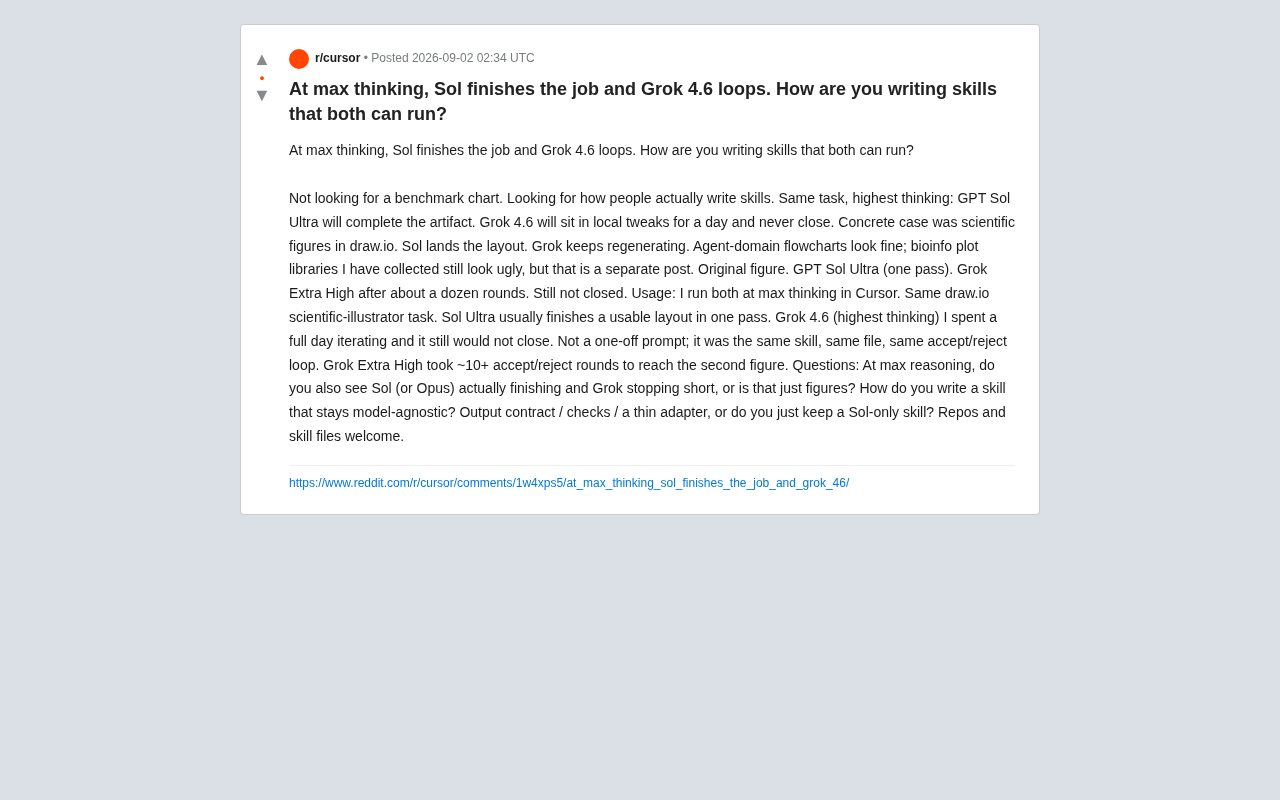
GPT Sol Ultra vs Grok 4.6: Real-World Task Completion Benchmark in Reasoning Mode
Developer benchmark reveals GPT Sol Ultra completes draw.io scientific diagrams in one iteration while Grok 4.6 fails to converge despite maximum reasoning mode, exposing that reasoning depth ≠ task delivery capability.

OpenAI Authorship Dispute: The Battle Over Academic Boundaries in the AI Era
OpenAI disputes authorship with mathematician Tristan Buckmaster over Navier-Stokes research, raising ethical questions about AI involvement in science.