game-superpowers: A Game Development Skill Library for AI Coding Tools
An early-stage open-source skill pack adding game dev workflows to AI coding CLI tools like Claude Code.
game-superpowers is a game development skill pack for AI command-line coding tools, delivering reusable workflows for auditing, polishing, and repairing game projects within Claude Code, Codex, and Gemini CLI. Its core value lies in codifying game development expertise into structured processes, giving general-purpose AI assistants a more systematic methodology for game projects. Built primarily in Shell and designed for cross-tool compatibility, it embodies the emerging "AI coding tool + domain skill pack" paradigm — though with 0 Stars and 0 Forks, it remains a proof of concept whose production readiness is yet to be proven.
Project Overview
game-superpowers is an open-source toolkit designed for AI coding assistants. Its goal is to extend command-line AI coding tools — like Claude Code, Codex, and Gemini CLI — with specialized game development capabilities. Through a set of reusable workflows, it helps developers audit, polish, and repair game projects.
This is not a game engine or a full game framework. Think of it as a "skill pack" — one that encapsulates common game development checks and optimization processes into scripts and prompt combinations that AI CLI tools can invoke directly. The project is primarily implemented in Shell scripts, making it a classic lightweight developer tool.
The Problem It Aims to Solve
Popular AI coding CLI tools (such as Claude Code, Codex, and Gemini CLI) perform well at general-purpose code generation, but they often lack a structured methodology when dealing with the specific demands of game projects. Game development involves a range of specialized concerns — asset management, performance optimization, logic fixes, and more — and relying on a model's improvised responses rarely guarantees quality.
game-superpowers addresses this by codifying these concerns into distinct "skills":
- Audit: Conduct structured inspections of existing game projects to identify potential issues.
- Polish: Refine details and improve quality once core functionality is in place.
- Repair: Execute structured workflows to fix known defects.
The underlying idea behind this "reusable workflow" design is to layer domain knowledge on top of AI coding tools — giving general-purpose assistants specialized capabilities tailored to game development scenarios.
Compatibility Across Multiple AI CLI Tools
One notable aspect of this project is that it isn't locked to a single platform. It supports Claude Code, Codex, and Gemini CLI simultaneously. This means developers don't have to rewrite their workflows when switching between underlying models or toolchains — the skill pack is reusable across tools.
This cross-platform compatibility reflects a broader trend in the AI coding ecosystem: as more AI CLI tools become available, the "skills," "plugins," and "workflow templates" built around them are emerging as a new middleware layer. Developers are increasingly inclined to codify reusable domain expertise rather than describing requirements from scratch every time they interact with a model.
Current State and a Realistic Assessment
Based on publicly available data, the repository is at a very early stage — 0 Stars, 0 Forks, and primarily written in Shell. This indicates the project has just launched and has not yet been validated at any community scale. Its practical usability and coverage remain to be seen.
For developers curious enough to try it, it's best approached as a proof of concept or a starting template. Its value lies more in the idea it represents — how to package game development expertise into AI-callable workflows — rather than as a mature, production-ready toolset. If you're using any of the aforementioned AI CLI tools for game development, it's worth keeping an eye on future iterations, or using its structure as a foundation to build out skills tailored to your own projects.
Summary
game-superpowers points to an interesting direction: using reusable workflows to equip AI coding tools with game development domain capabilities, while maintaining cross-tool compatibility. Although it's still in its early stages with no community traction yet, the "AI coding tool + domain skill pack" combination it represents may well be a preview of how developer workflows will evolve in the future.
Related articles
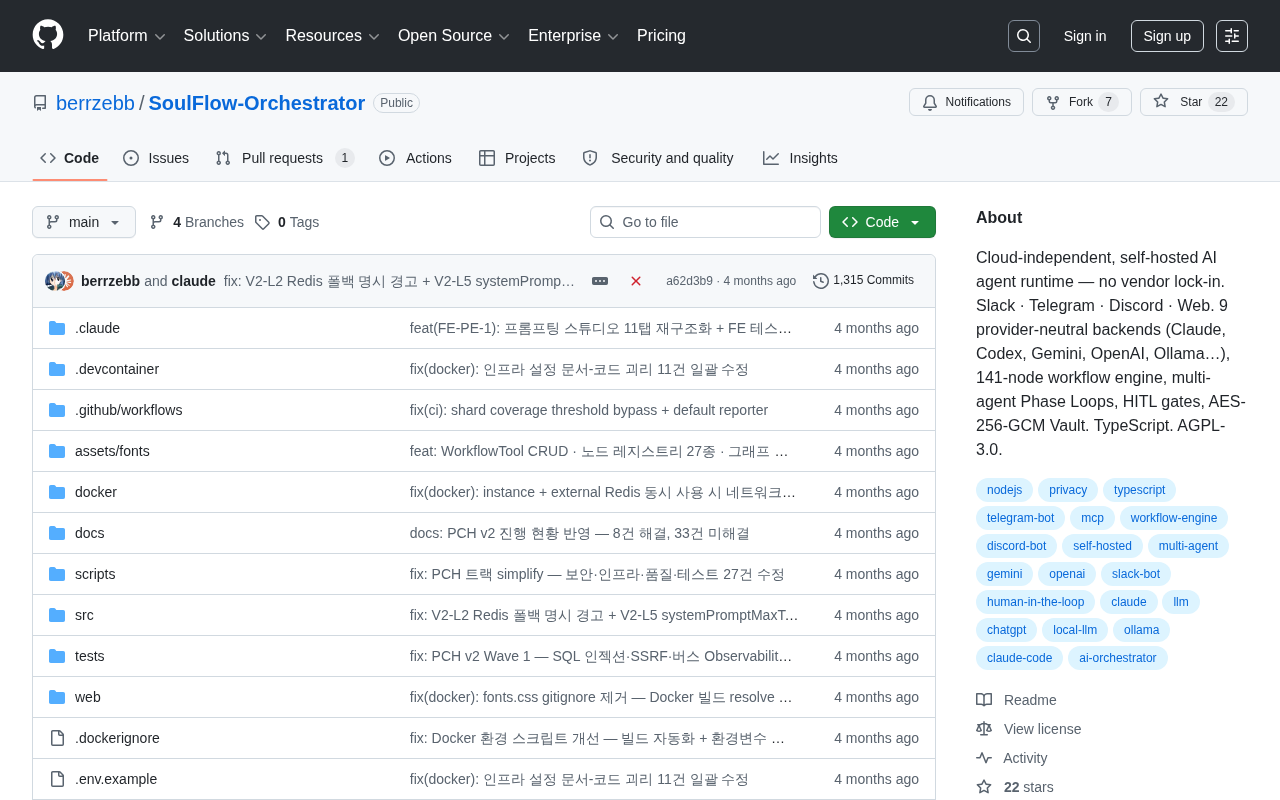
SoulFlow-Orchestrator: A Self-Hosted, Vendor-Lock-In-Free AI Agent Runtime
SoulFlow-Orchestrator is an open-source, self-hosted AI agent runtime with no vendor lock-in. Supports 9 neutral backends (Claude, OpenAI, Ollama), 141-node workflow engine, multi-agent loops, and HITL gates.
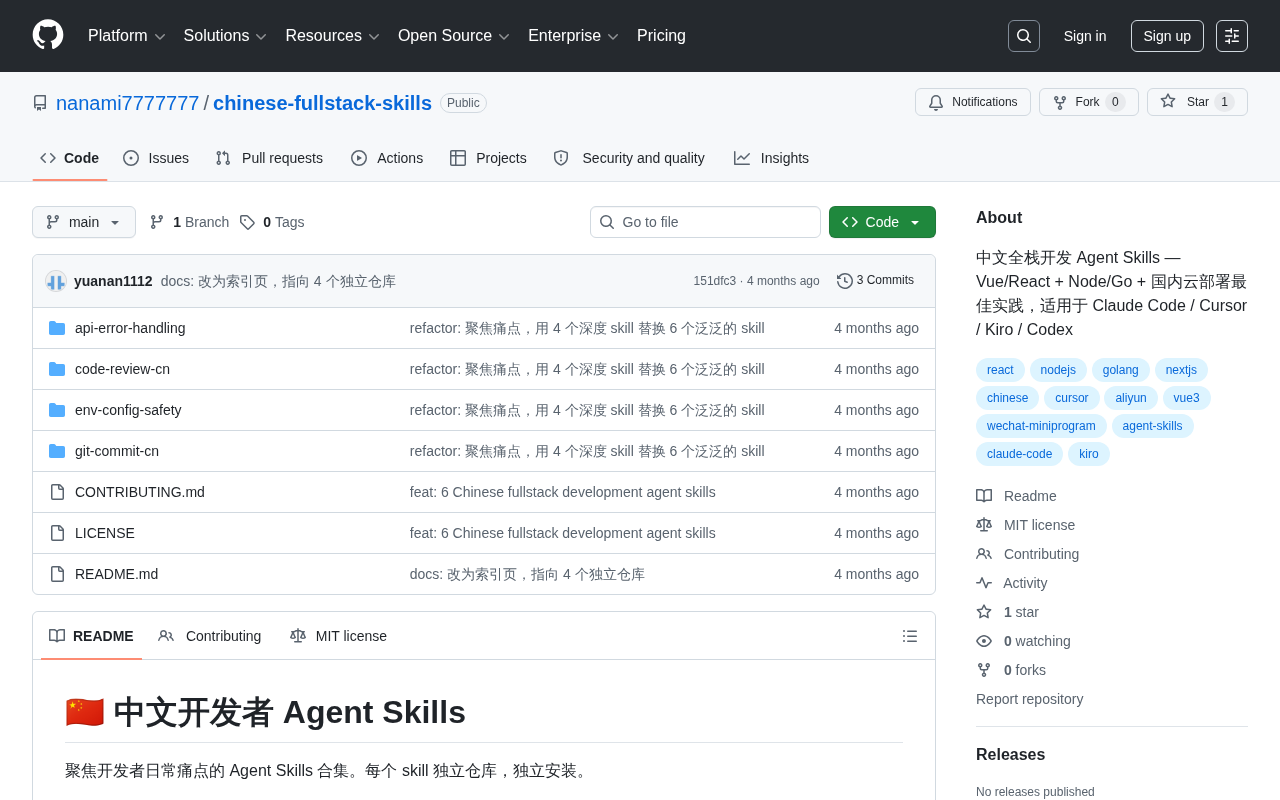
Chinese Full-Stack Agent Skills: A Skill Library Tailored for Domestic AI-Assisted Development
chinese-fullstack-skills is an Agent Skills library for Chinese full-stack development, covering Vue/React, Node/Go, and domestic cloud deployment best practices. Compatible with Claude Code, Cursor, Kiro, and Codex.
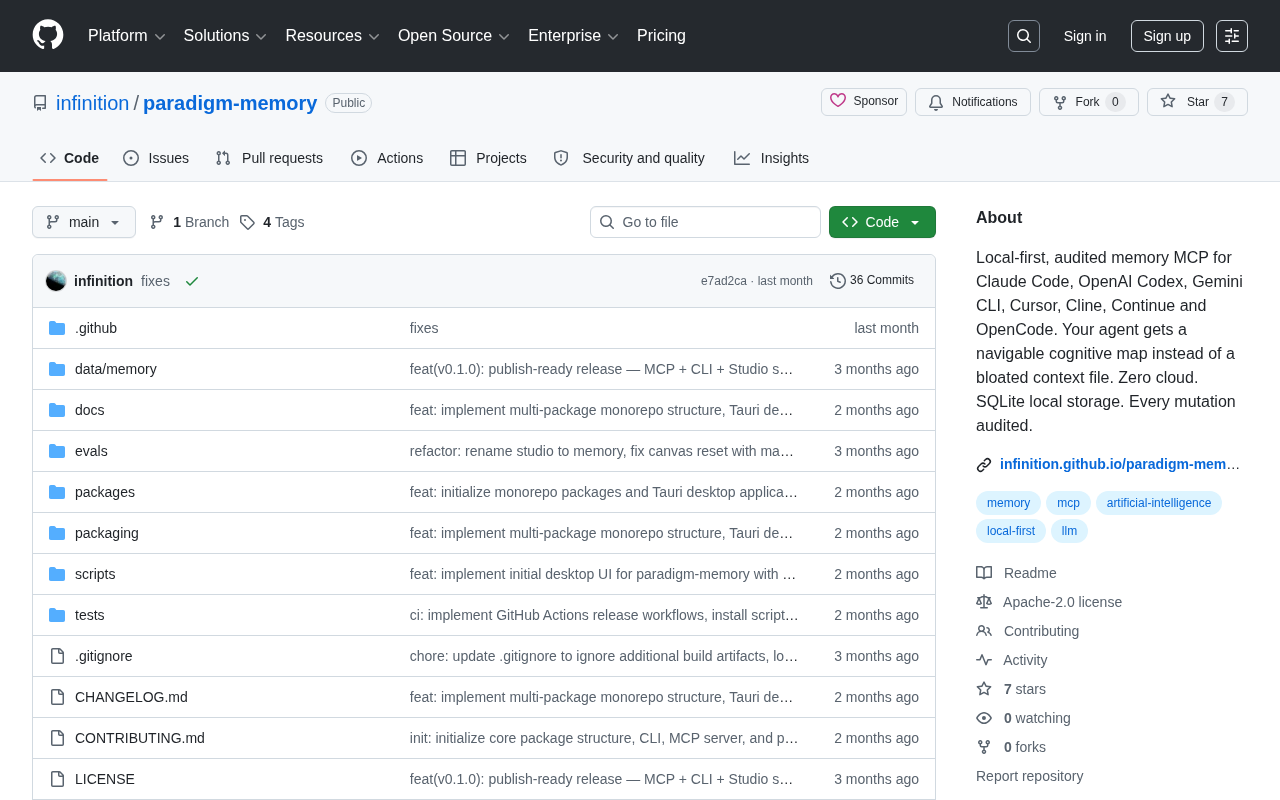
Paradigm Memory: A Local-First Memory System for AI Coding Assistants
paradigm-memory is a local MCP memory tool for Claude Code, Cursor, and Cline. It uses SQLite local storage, zero cloud, full audit trails, and a navigable cognitive map instead of bloated context files.