Gemini 4 and Anti-Gravity Build a Surf Clock in Three Days: A New Paradigm for Hardware Development

With Gemini 4 and Anti-Gravity, a surf clock hardware prototype was completed in three days for $25.
A surfer friend needed a device to judge local beach conditions. The maker, unsure how to build it, turned to Gemini 4 and Google Anti-Gravity to complete everything from design to firmware. AI directly operated Blender, wrote Python and OpenSCAD code for 3D modeling, provided an electronics list and wrote firmware, and even generated a video assembly guide. The design emphasized minimalism and manufacturability, such as extruded letters to avoid painting and snap-fit connections to eliminate screws. The surf clock prototype was completed in three days with about $25 in materials, demonstrating AI's potential to compress cycles and lower barriers in hardware development.
From Idea to Physical Product: A Three-Day, $25 Surf Clock
A surfer friend, Tom, wanted a fun way to tell which local beach had the best waves—or whether it was even worth getting in the water. So a physical device called the "Surf Clock" was born: it uses hands to directly show the surf quality at each local beach. According to a Bilibili video, the entire project went from zero to finished in just three days, with about $25 in material costs.
Surprisingly, the maker initially had no idea how to build the product. They decided to ask Gemini 4 for help and used Google Anti-Gravity to complete everything from design to firmware. This wasn't a simple Q&A—it was deep human-AI collaboration: the AI not only offered suggestions but directly operated Blender, wrote Python and OpenSCAD code, and even generated an assembly video.
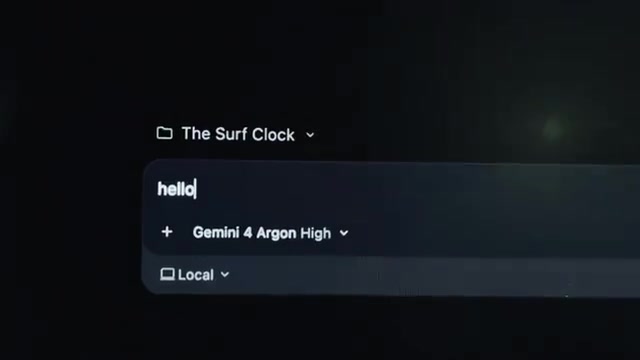
How AI Took Over the Hardware Design Workflow
Design Exploration and 3D Modeling
The project began with style exploration. The maker favored 1960s functionalist home objects and wanted the finished product to be both practical and beautiful. Gemini 4 generated multiple design concepts and iterated quickly. It then used a mix of Blender, Python, and OpenSCAD tools to create the 3D files. The video shows a key moment: Gemini directly operated Blender on the maker's computer, adjusting the model in real time.
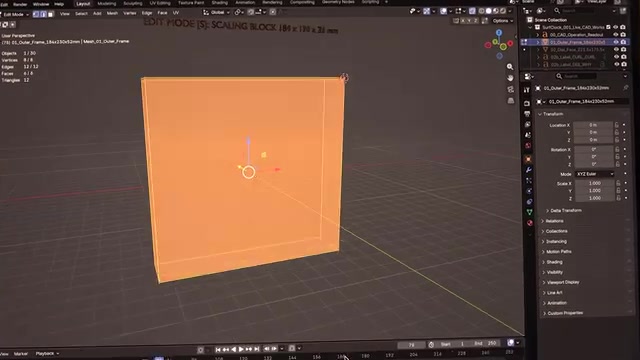
Gemini designed the shape of every part—the dial, hands, frame, motor mount—and chose the colors. It also designed a snap-in housing so the electronics could be embedded directly without screws.
OpenSCAD is a script-based 3D modeling tool where users define geometry by writing code (rather than dragging a mouse), making it especially suited to parametric design and rapid iteration. Blender is a full-featured open-source 3D creation suite supporting polygon modeling, rendering, and animation. Combining the two lets the AI leverage OpenSCAD's precise parametric capabilities and Blender's flexible shaping abilities to efficiently generate manufacturable mechanical structures. Python serves as the glue language here, automating calls to these tools' APIs for batch modifications and exports. This hybrid workflow is the technical foundation that enables AI to "directly operate" design software.
Minimalism and Manufacturability
The maker repeatedly asked: can it be simpler? Can we remove more parts? Gemini offered effective suggestions. For example, extruding the letters directly onto the dial surface avoided painting—hand painting often turns out poorly. All parts used snap-fit connections, eliminating screws. These decisions greatly reduced assembly difficulty and material costs.
A snap-fit housing is a common plastic-part connection method that uses elastic deformation of geometric shapes to secure parts together without screws or glue. Its design requires precise calculation of the cantilever length, thickness, and interference fit of the snap, otherwise it may break or come loose. In 3D printing or injection molding, snap fits can significantly reduce part count and assembly steps, lowering costs. For hardware prototypes, snap-fit designs also make installing and replacing electronics more convenient, especially suited to small-batch rapid validation.
Electronics Selection and Firmware Development
Gemini then provided a shopping list of electronic components, including a controller and stepper motors. It also wrote custom software and firmware to drive the hardware and fetch surf data. In the video, the maker discusses how to obtain data to improve wave-condition assessment and mentions sensor concepts such as "barometry."

A stepper motor is a motor that converts electrical pulses into precise angular displacement, commonly used in devices requiring precise position control, such as clock hands. Unlike ordinary DC motors, stepper motors rotate by step angle via a driver and can achieve open-loop positioning without an encoder. In the Surf Clock, stepper motors may be used to drive the hands to point at surf-condition ratings for different beaches. When selecting a stepper motor, torque, step angle, and drive voltage must be considered, and the firmware must generate the correct pulse sequences to control speed and direction.
Assembly Guide and Final Implementation
When it came to assembly, the maker didn't know where to start. Gemini generated a video assembly guide, step by step demonstrating how to push the dial into the mounting area and insert the snap-in motor and the optical drive side panel. The final product worked successfully, and the maker marveled: "Still hard to believe you can now do this directly in Gemini 4."
Multi-Source Perspectives and Industry Implications
According to the Bilibili video, this project demonstrates AI's potential in hardware prototyping: from concept design, 3D modeling, and electronics selection to firmware writing and assembly guidance, AI was involved in almost the entire workflow. Although the video provides no performance data or user feedback, the fact that it was completed in three days at a cost of $25 is enough to show the efficiency gains.
This workflow has reference value for hardware entrepreneurs and small teams: AI lowers the barrier to embedded development and mechanical design, enabling non-experts to quickly validate product ideas. However, it still relies on humans to provide creative direction and aesthetic judgment; AI plays more of an executor and advisor role.
Google Anti-Gravity is an AI-assisted development environment (or toolchain) launched by Google, designed to let large models interact directly with local software—for example, operating Blender, running code, and generating videos. Unlike a simple chat interface, it provides "hands-on" automation capabilities, enabling AI to perceive screen content and perform mouse and keyboard operations. This deep integration lets non-experts complete complex design tasks using natural language, but it also places higher demands on AI reliability and safety.
Conclusion
The Surf Clock project isn't about showing off—it's a lightweight solution to a real need. It proves that combining large models with professional toolchains (like Anti-Gravity) can substantially compress hardware development cycles. For makers and product managers, this kind of case is worth watching: next time you have a hardware idea, maybe ask AI first.
Related articles

Gemini 4 Neon Leak: A Potential Strong Contender Against Opus 5.5
A Hacker News thread suggests Gemini 4 Neon looks like an Opus 5.5 competitor. This article unpacks the product positioning behind this community signal, shifts in the top-model competitive landscape, and what it means for developers' model selection strategy.

Claude Fable 5.2's Self-Authored Short Film 'Fable' Sparks Discussion
A short film 'Fable,' credited to Claude Fable 5.2 for script, visuals, and directing, appears on Hacker News. This article analyzes the significance of full-pipeline AI creation, community reactions, and what it means for content creators.

Anthropic IPO Pricing: A Signal of AI Giants Going Public
Anthropic's IPO pricing draws attention. This article analyzes its potential impact on AI industry valuation, commercialization paths, and the competitive landscape, and highlights public-market expectations and challenges for AI companies.