Gemini 4 Argon Deep Dive: Self-Reported Benchmarks Lead, but External Validation Tells a Different Story
Gemini 4 Argon leads on Google's own benchmarks, but self-reported numbers and limited access leave the verdict open.
Google released Gemini 4 Argon with a focus on coding performance, claiming a Deep SWE score near 78% — roughly 4 points ahead of GPT-6 Astra and Claude Opus 5.5 in its own charts. However, Argon's score is self-calculated while competitors' numbers come from third parties, and the model doesn't appear on DataCurve's independent leaderboard at all. External validation is mixed: VALS Index ranks it first overall, but Claude Sonnet 5.5 edges it out on coding subtests. Pricing matches Sonnet 5.5 at launch but will double afterward. Most critically, the model is only available to Fairwind program partners for now — general developers and even most paying subscribers cannot access it yet.
Google just released Gemini 4 Argon, positioning it around coding performance — with benchmark scores that reportedly beat GPT-6 Astra. But there are two important caveats: those leading numbers were run by Google on their own model, and the model is currently only available to vetted cybersecurity defenders, not general developers.
Is Google truly back on top, or is this just a case of flattering self-assessment? This article breaks down what the release data actually tells us.
Google's Own Charts: A Lead, but a Narrow One
Argon's headline claim rests on the Deep SWE benchmark. This test evaluates a model's ability to complete long-form coding tasks from scratch on real open-source projects. Because the tasks are newly constructed, no model has seen the answers before — making it theoretically harder to game.
In Google's published charts, Argon scores close to 78% on Deep SWE, while Claude Opus 5.5 and GPT-6 Astra sit just above 74%. This is Google's first new flagship model since last November, after the Pro model released in May reportedly never fully launched.
The issue is the source of the data. Google's methodology PDF explicitly states that Argon's Deep SWE results are self-calculated; GPT-6 Astra's numbers come from the DataCurve public leaderboard; and Claude's numbers come from Anthropic's own system card. In other words, the tallest bar in the chart is one Google drew for itself.
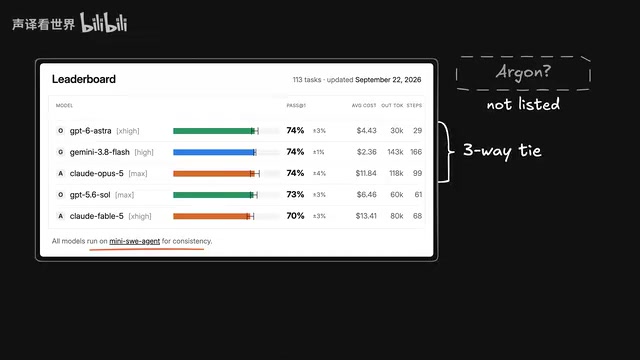
On the DataCurve leaderboard — where all models actually run under the same agent setup — Argon doesn't appear at all. The top of that board shows three models tied at 74%, one of which is Google's own Gemini 3.8 Flash. Given that the gap between top scorers on that leaderboard can reach 4 points, and Argon's lead in Google's chart is less than 4 points, the significance of that "lead" deserves some skepticism.
Deep SWE is a benchmark designed to evaluate how well large models perform on real-world software engineering tasks — full name: Deep Software Engineering Benchmark. Unlike traditional coding problem tests, it pulls tasks from real open-source repositories, requiring models to understand existing codebases, write new features that match the project's conventions, or fix actual bugs, and then pass the project's existing test suite. Because tasks come from new commits to public repos, it theoretically reduces the risk of models "memorizing" answers from training data — making it considered more representative of real development than synthetic benchmarks like HumanEval. That said, the benchmark is still in early stages, and different organizations set up agent frameworks differently (e.g., number of tool calls allowed, search capabilities), meaning the same model can score very differently across evaluators. This is precisely why the distinction between "Google's self-test" and "DataCurve's unified framework" matters.
Wins and Losses: Google Listed Both
To Google's credit, they didn't only cherry-pick flattering results. Across 18 benchmark rows, Argon leads in 12 — but Google also honestly reports where it fell short.
In the four agentic coding tests, Argon won two, while the other two (Frontier SWE and Terminal Bench) put it at the bottom. Presenting a mixed record is more credible than a chart where everything is green.
Security is where Argon shines. CWE Bench gives a model a codebase with a hidden vulnerability and requires it to find and patch the flaw while ensuring the exploit no longer works and existing tests continue to pass. Argon ties for first place here at 68%, alongside GPT-6 Astra and Grok 4.7 — consistent with Google's decision to prioritize access for cybersecurity defenders.
External Validation: Highlights and Soft Spots
On launch day, at least two independent labs tested Argon — more meaningful than self-reported numbers.
On VALS AI's composite ranking, the VALS Index, Argon came in first out of 41 models. That's Google's best news, and it's not Google's own number.
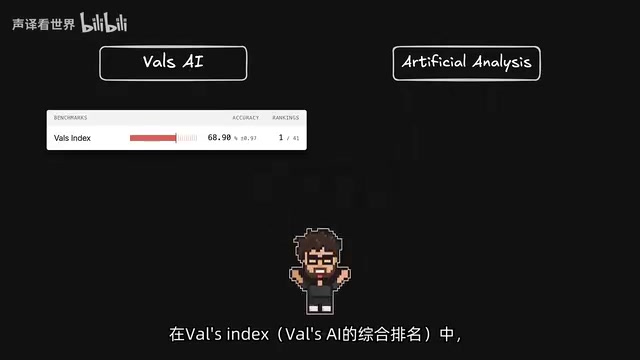
But the picture is mixed. Artificial Analysis placed Argon eighth in its index of 223 models at a comparable price tier. And in VALS's coding-specific subtests, Argon didn't dominate cleanly: Claude Sonnet 5.5 edged it out on Vibe Code Bench (92.4 vs. 91.9) and also led on code migration tasks. Notably, Sonnet 5.5 doesn't appear in Google's comparison table at all.
Pricing and the Extremely Long Context Window
Argon launches at $2 per million input tokens and $10 per million output tokens — exactly matching Sonnet 5.5, and just one-fifth the price of GPT-6 Astra.
But note the phrase "introductory pricing." Google hasn't specified when the period ends, and after it does, prices will double to $4 per million input and $20 per million output — directly on par with Claude Opus 5.5.
The core value proposition at this price is massive output capacity. Argon can generate up to 1 million tokens in a single response, compared to 64,000 tokens in early Gemini models, and the 128K range for Claude Opus and Sonnet. At launch pricing, though, a single full-length response would cost roughly $10 in output alone — not cheap in practice.
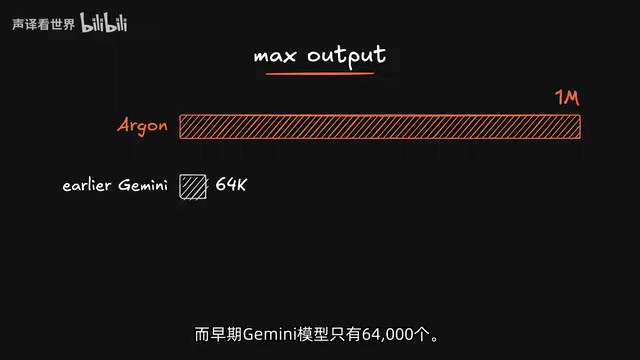
Context Window refers to the maximum amount of text a model can process in a single conversation or task, measured in tokens — roughly equivalent to words in English or characters in other languages (10,000 tokens ≈ 7,500 English words). A 1-million-token output limit means the model could theoretically generate the equivalent of several technical manuals in a single request. This has real value for scenarios like refactoring an entire large codebase, generating complete API documentation, or processing very long legal documents. However, longer contexts mean higher inference costs — which is why a full 1-million-token output at launch pricing costs exactly $10 in output fees. In practice, few tasks ever approach that ceiling.
Most Users Can't Access It Yet
This is the biggest practical obstacle: Argon is currently only available to select partners in Google's Fairwind program — vetted cybersecurity defenders, government agencies, telecom companies, and a small number of trusted testers.
Paid Gemini API customers and Google AI Ultra subscribers are on the waitlist — note: Ultra subscribers, not regular subscribers. Google's timeline for broader rollout is a vague "as soon as possible."
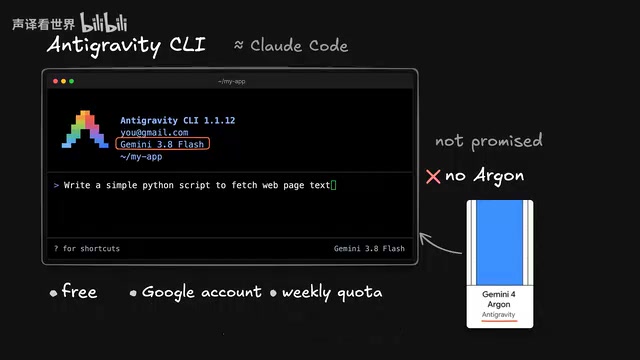
So what can regular developers use today? Google's Claude Code competitor, the Anti-Gravity CLI, is available for free with weekly quota refreshes — but it runs on Gemini 3.8 Flash and the models tied for first on the DataCurve leaderboard. Argon is not among them. Since Argon's CWE Bench scores were run inside Anti-Gravity, it may eventually land there — but the launch announcement made no explicit commitment.
If you exceed the free tier, the subscription tiers closely mirror the competition: Google AI Pro at $19.99/month vs. Claude Pro at $20; Google AI Ultra and Claude Max both offer tiers around $100 and $200. Paying primarily buys higher usage limits, so the sensible approach is: use the free tier first, then pay when you hit a wall.
Google's Project Fairwind is a controlled-access program for government agencies, critical infrastructure operators, and security-vetted partners — similar in logic to tiered access mechanisms like GovCloud. The idea is to deploy the model in a trusted, traceable closed environment before broader public release, allowing Google to monitor potential misuse risks and collect high-quality feedback from security use cases. This kind of phased rollout strategy isn't unusual for high-risk AI applications, but it means that even paying subscribers may not get access right away — and the opportunity to independently evaluate the model's real capabilities remains limited for most developers.
Bottom Line: Close on Paper, No Knockout Punch
Is Google back? On paper, it's genuinely close — leading in 12 of 18 rows in its own table and topping the VALS Index.
But the chart that actually matters is the one you run on your own codebase. Until then, this looks like a very promising — but largely self-reported — story. The model isn't widely available, the key leading numbers are self-assessed, and external benchmarks show a split verdict. Those three factors together mean the "comeback king" narrative is premature. For most developers, the more practical move is to watch when Argon actually enters accessible channels, then judge it against real projects.
Background Notes
CWE (Common Weakness Enumeration) is a software security vulnerability classification system funded by the U.S. Department of Homeland Security and maintained by MITRE. It covers hundreds of common code flaw types including buffer overflows, SQL injection, and path traversal. CWE Bench is an evaluation set built on this taxonomy, requiring models to automatically locate and fix CWE-classified vulnerabilities in real codebases — without human prompting. Scoring enforces both a security dimension (the exploit must be neutralized) and a functionality dimension (existing tests must remain intact). This dual constraint makes it more challenging than simple code completion tests and more reflective of real-world security audit scenarios — which explains why Google chose to prioritize access for the cybersecurity community with Argon.
Related articles

Gemini 4 Argon Hands-On: AI Builds Board Games, Constructs Temples, and Trains Robots Autonomously
Gemini 4 Argon hands-on roundup: AI autonomously builds a desk racetrack and temple in Blender, writes a ray tracing engine, trains a humanoid robot to sink 7 shots, plus API pricing and developer access.

The Magic Octagonal Coin: Why Only 9% of People Can Predict Its Flip?
Only 9% of people can correctly predict the Magic Octagon coin flip. This article explains its spatial rotation mechanism, common cognitive pitfalls, and a new hypothesis based on Relevance Theory, exploring the limits of human spatial reasoning.

Sam Altman: AI Is Entering the Era of Scientific Discovery — Math Breakthroughs Will Replicate in Biology and Energy
Sam Altman says AI is entering the era of scientific discovery — math breakthroughs will replicate in biology, materials science, and energy to help develop new drugs and energy sources.