Gemini 4 Argon Tested: Crushes Opus on Benchmarks, But Stumbles in Real-World Use?

Gemini 4 Argon beats Opus 5.5 on benchmarks, but loses on visual quality and completeness in real-world tests.
Google's Gemini 4 Argon comprehensively outperforms Fable 5.1, Opus 5.5, and even Astra on official benchmarks, but a YouTube creator ran unfiltered tests with three real projects: a chess game, a custom MCP Server, and PPT generation. Results: Argon is faster and more proactive with tool calls, and solid at building MCP Servers, but clearly inferior to Opus 5.5 in chess game animation quality and PPT layout logic. The creator notes that benchmarks struggle to capture comprehensive capabilities like tool coordination, aesthetic judgment, and code organization quality—when choosing a model, weigh speed versus completeness, and treat benchmarks as reference only.
Google has finally released the long-awaited Gemini 4 Argon, and official benchmarks show it beating Fable 5.1 and Opus 5.5 across multiple tests—even edging out Astra. But good benchmark scores don't equal usability. A YouTube creator put it through an unfiltered test with three real projects: a chess game, a custom MCP Server, and PPT generation. The results were somewhat surprising.
Benchmark King, But Not Necessarily King in Practice
According to the creator's hands-on testing in the video, Gemini 4 Argon completed a chess game with an Egyptian-themed board in Cursor in just about 25 minutes, straight from a single prompt—and along the way it autonomously called browser screenshots and Blender tools to verify its work. Opus 5.5 took 40–50 minutes and consumed noticeably more tokens.
But speed doesn't equal quality. The creator displayed both models' chess games side by side and asked viewers to guess which one Argon made—most commenters would likely guess wrong. Opus 5.5's version was clearly superior in animation smoothness, scene lighting, and sound design coordination, and could even auto-generate a "cinematic replay" of match highlights. Argon's version was logically correct, but its visuals were described as "pretty good, but a notch below."
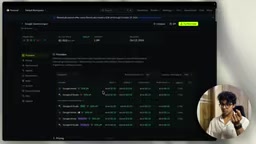
You may not have noticed: Argon is currently available through a Google AI Pro or Ultra subscription, with API pricing at $2 input / $10 output (limited-time 50% off), putting it in the same price range as the Fable series and Opus. The creator specifically noted: to use the Anti-Gravity desktop app, you must have an Ultra subscription—regular Pro users can only go through the API or third-party platforms.
Chess Game Showdown: Speed Can't Beat Quality
Both chess games support switching between multiple themed arenas—classical, Japanese, Indian, American, and Egyptian. After Opus 5.5's version switched to the Japanese theme, the kill animations for piece movements were described by the creator as "absolutely beautiful," with characters that slide-step and react with lighting, giving the whole thing a visual style reminiscent of Solo Leveling.
Argon's version also has theme switching and animations, but the creator's verdict was "the characters and animations are fine, but something's missing." This gap is hard to measure with benchmark scores—it's about aesthetic judgment, detail density, and an intuitive sense of "completeness."
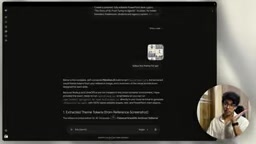
This exposes a key issue: Argon did demonstrate powerful tool-calling abilities in Cursor—it proactively took screenshots, opened a browser to perform click operations, and even tried to call Blender for 3D rendering. But there's still a gap between being able to do things and doing them well.
MCP (Model Context Protocol) is an open protocol introduced by Anthropic in late 2024, designed to standardize how large language models connect to external tools and data sources. It uses a client-server architecture: the model acts as the client, calling MCP Servers implemented by developers through a unified JSON-RPC interface, which encapsulate concrete capabilities like file systems, databases, and APIs. The test in the article required the model to generate an MCP Server with 28 tools from scratch—essentially assessing the model's understanding of the protocol spec, its ability to define tool schemas, and its engineering implementation of Python server code. MCP's value lies in decoupling—the model doesn't need to adapt to each tool individually; it just follows the same protocol to extend its capabilities plug-and-play.
MCP Server Test: Argon's Comfort Zone
The third test was having the model build a custom MCP Server from scratch. Argon delivered a solution with 28 tools: image info reading, format conversion, scaling/rotation/flipping, watermark removal, background removal, upscaling, black-and-white conversion, and more. After configuring it in Cursor, the creator directly had Argon call its own generated tools to process thumbnails—watermark removal, flipping, and background removal all executed successfully.
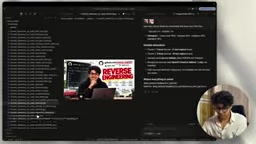
Argon performed solidly in this segment; the generated Python scripts ran properly, and the MCP protocol connection had no issues. The creator believes that if you need to quickly set up a backend service with multiple tools, Argon is up to the job. But Opus 5.5 also completed this task, just with higher time and token consumption.
PPT Generation: The Most Obvious Gap
The biggest disappointment for the creator was PPT generation. He gave both models the same prompt: generate a 16-page presentation on "AI from Turing to Agents," with specified themes and visual references.
Argon's PPT output was described as "usable, but with alignment issues and rough padding handling." Opus 5.5's version was clearly better in chart connection logic, information hierarchy, and overall cleanliness. The creator's exact words: "Opus 5.5's quality is far better than Argon 4."
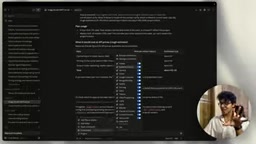
An interesting detail: after Argon generated the PPT code, it couldn't execute it directly within the Gemini platform, so the creator had to copy the code into StackBlitz (an online IDE under Bolt) to run it and get the final .pptx file. Opus 5.5's workflow was smoother.
StackBlitz is a browser-based online IDE that uses WebContainers technology under the hood to run a complete Node.js environment inside the browser, so projects can start without local dependency installation. The article mentions the creator copying Argon-generated PPT code into StackBlitz to execute it precisely because the platform can quickly provide a runnable front-end/Node environment to run scripts that generate .pptx files (such as PptxGenJS and other libraries). This exposes a practical workflow problem: if the model-generated code can't be executed directly within the chat platform, users need an external sandbox environment to complete the "last mile," adding operational friction and affecting the perceived efficiency of output.
The Rift Between Benchmarks and Experience
At the end of the video, the creator posed a sharp question: Argon comprehensively beats Opus 5.5 on benchmarks, so why does it feel the opposite in actual use? His guess is that benchmarks may not fully reflect the comprehensive capabilities needed in real development scenarios—tool-calling coordination, aesthetic judgment, code organization quality—dimensions that are hard for standardized tests to capture.
This doesn't mean Argon is bad. It has strengths in speed, proactive tool calling, and MCP building, and its pricing is competitive. But if what you're after is "one-shot" output quality, Opus 5.5 won two out of three rounds in the creator's tests.
Which model to choose depends on whether you care more about speed or completeness. Benchmarks can serve as a reference, but don't treat them as the conclusion.
Related articles

A Single Prompt Triggers a Global PHP Security Storm: Is AI a Savior or a Hidden Risk?
A single AI prompt triggered a global PHP security crisis affecting Wikipedia and the Internet Archive. This article reviews the incident, analyzes the OpenAI-Amazon controversy, and explores the security paradox of lowered vulnerability discovery barriers in the AI era and developer response strategies.

When AI Is Taken Away: How Reliance on Shortcuts Undermines Your Problem-Solving Resilience
A study of 1,222 people found that after using AI to answer questions, once AI was removed, people gave up on more problems than a control group that never used AI. The article analyzes the impact of AI reliance on learning resilience and metacognition, and explores design implications for AI learning tools.

Carta and NewView Partner to Let Startup Employees Cash Out Equity Early
Carta and NewView Capital partner to simplify startup tender offers, helping employees sell equity early. Analysis of the mechanism, liquidity pain points, and impact.