Gemini 4 Hydrogen In-Depth Review: Outperforming Its Tier to Replace Argon, Teaming Up with Carbon for Collaboration
Gemini 4 Hydrogen punches above its Flash tier, emphasizing speed and collaborative task division.
Google's Gemini 4 Hydrogen, finale of three models released in three days, is now live. Per Bilibili creator DPGem9, this Flash-tier model excels in speed and latency, stable for daily use, and can replace Gemini 4 Argon and 3.8 Flash. Weaknesses include limited deep reasoning and family-wide zero-caching issues. Priced at 3.8 Flash's quota ×2 with no launch discount, it pairs with Ocar Strata mode to save ~24% quota.
Google has released the finale of three models launched over three consecutive days—Gemini 4 Hydrogen is now officially live. According to a roundup video by Bilibili creator DPGem9, this Flash-tier model demonstrates the ability to punch above its weight in real-world testing, even capable of replacing its bigger sibling Gemini 4 Argon. This article draws on the first-hand experience data from that video to break down Hydrogen's real-world performance across three dimensions: performance, pricing, and working modes.
Performance: Flash Positioning, Above-Tier Experience
Hydrogen's base specs are quite competitive within its tier, with official benchmarks targeting Sonet 5.5 and 6.1 Terra. But after testing, the creator offered a more aggressive assessment: actual performance may "graze the tail of Soul." This evaluation combines the measured data shown in the video with subjective impressions.
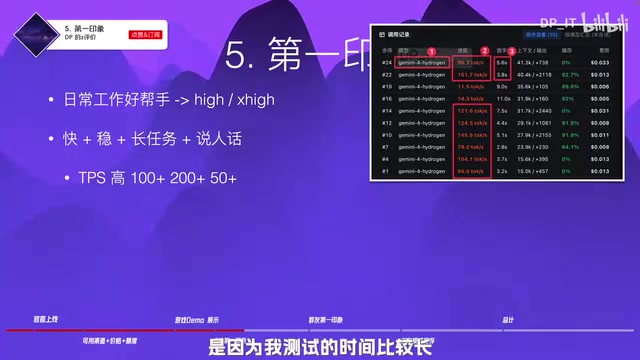
For everyday use, the creator's first impression is that it's a "handy helper for daily work," recommending Hi or XHi thinking intensity as the go-to setting—characterized by being fast, stable, suited to routine tasks, and plain-spoken. Time-to-first-token and TPS are both at usable levels. However, during the test period, TPS on the same account dropped from 100+ to 50+, which the creator suspects is related to compute constraints.
Strengths and Weaknesses Coexist
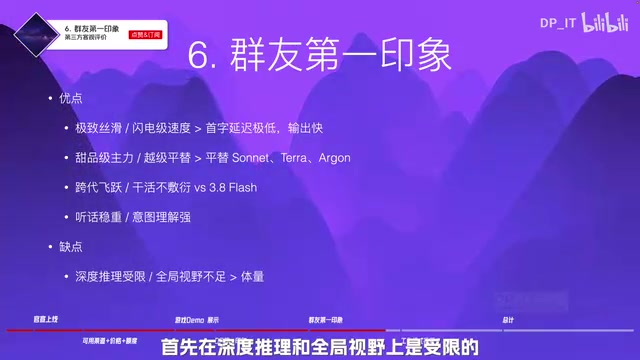
Strengths center on the experience: very fast, excellent first-token and latency control, and satisfying output speed. Many community members believe it can serve as a primary model, capable of replacing Sonet, Terra, and Argon. Compared to 3.8 Flash, it represents a "qualitative leap"—it doesn't cut corners and is willing to understand the task.
Weaknesses are equally clear. As a Flash-tier model, deep reasoning and global perspective are limited, and 3D and graphics capabilities are somewhat weakened. Text ability is strong, but hallucinations appear in details. The creator also notes it inherits the Gemini 4 family's trait of "advancing while ailing," with issues like zero-caching still unresolved.
Pricing and Quota: A Confidence Signal with Launch at Full Price
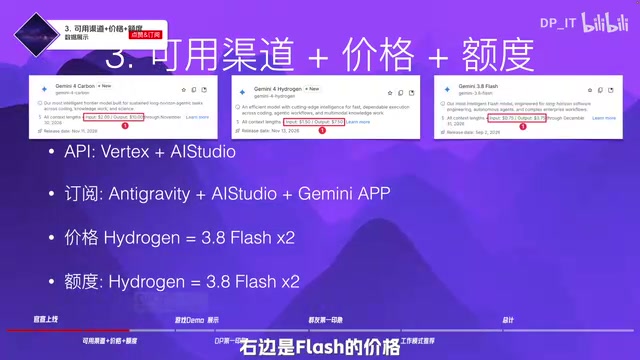
On pricing, it can be simply understood as 3.8 Flash's quota multiplied by 2. From the pricing chart shown in the video, Hydrogen is priced identically to Flash, but Flash has a half-price promotion running through December 31, while Hydrogen launched at full price. Carbon on the left is priced not far from Hydrogen, placing the overall lineup in a mid-range position.
No launch discount, in the creator's view, reflects Google's strong confidence in this model—and hands-on feedback has indeed been positive. But quota pressure is a real issue—with pricing doubled, quota consumption noticeably accelerates.
Working Modes: The Collaboration Logic Between Carbon and Hydrogen
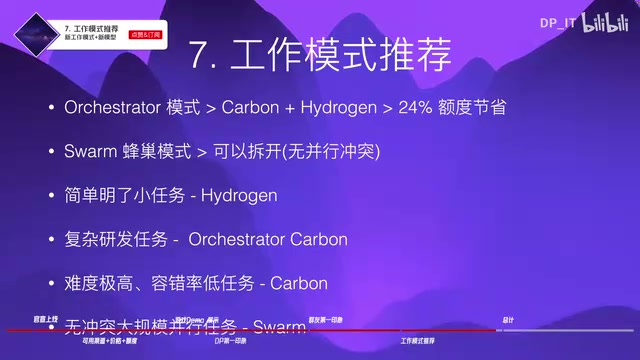
The officially introduced Ocar Strata working mode is the key part of this update. It lets Carbon and Hydrogen automatically switch within a single conversation: Carbon handles thinking through problems and fallback checks, while Hydrogen, as the cheaper model, does the rapid execution work—saving quota. According to official figures, this mode can save 24% of quota.
Another new mode is the Swim slot-based mode, suited for decomposable tasks without parallel conflicts, letting multiple models work together like busy bees.
The creator's usage recommendations are clearly tiered: for small daily tasks, use Hydrogen directly with Hi or X-Hi; for complex R&D tasks, use Ocar Strata's Carbon mode—be sure it's Carbon, not Argon, since the performance gap between the two is significant; for ultra-complex tasks with extremely low fault tolerance, prioritize using Carbon throughout; for parallelizable conflict-free tasks, then consider the slot-based mode.
The technical logic of Ocar Strata mode: This mode is essentially a model cascade strategy, where the system automatically dispatches models at different cost tiers based on task phase. Carbon, as a high-reasoning-capability model, handles complex planning, verification, and fallback; Hydrogen takes on large volumes of repetitive execution work at lower per-token cost. Switching between the two is transparent to the user, with unified context preserved in the conversation record. The official claim of 24% quota savings is an estimate based on the reduced share of high-cost model calls in typical workloads; actual savings depend on task nature—planning-intensive tasks see limited savings, while execution-intensive tasks see more noticeable savings.
Ecosystem Positioning and Outstanding Issues
Hydrogen's significance lies in solving two replacement problems at once: it replaces the previously commonly used 3.8 Flash and also directly replaces its bigger sibling Gemini 4 Argon. The creator believes that with the emergence of the Carbon and X-Hydrogen combination, Google's Gemini family has secured the world's second position among models—one could even say "the Gemini 4 era has officially arrived." As for OpenAI, the creator didn't directly say it has fallen to third, but raised the question: where exactly are the new models?
Outstanding issues remain numerous: insufficient quota, compute constraints, persistent stability problems—zero-caching, unexpected stops, and other defects are especially pronounced on the Carbon model. The creator also corrected a claim from a previous video—Google One Ultra has no monthly payment option, but if annual payment appears in the future, caution is still advised.
One notable signal: Google released three models over three consecutive days, with Hydrogen being the third, and the creator judges there won't be a fourth. This dense release cadence itself indicates that the Gemini 4 family's product matrix has essentially taken shape.
On the "zero-caching" issue: The article repeatedly mentions the Gemini 4 family's lingering "zero-caching" problem, which refers to the model's inability to reuse cached state from identical or similar prompt prefixes, causing every request to recompute the entire context. For long conversations or scenarios requiring repeated reference to the same material, this significantly increases latency and token consumption. By comparison, competitors' Context Caching mechanisms can bill cache-hit portions of repeated prefixes at discounted rates. This flaw is not unique to Hydrogen but a family-wide issue, and a pain point the creator repeatedly cites across multiple models.
One-line Summary
Gemini 4 Hydrogen delivers above-tier replacement performance at Flash positioning, emphasizing speed and collaborative division of labor.
Paragraph Summary
Gemini 4 Hydrogen, the finale of three models Google released over three consecutive days, is now officially live. According to Bilibili creator DPGem9's hands-on roundup, this Flash-tier model excels in speed and time-to-first-token, is stable and reliable for daily use, and can even replace its bigger sibling Gemini 4 Argon and 3.8 Flash. Drawbacks include deep reasoning and global perspective limited by its positioning, plus hallucinations and family-wide issues like zero-caching. Pricing is 3.8 Flash's quota multiplied by 2, with no launch discount—reflecting Google's strong confidence in the model. The accompanying Ocar Strata mode has Carbon handle fallback and Hydrogen execute rapidly to save about 24% quota. The creator judges the Gemini 4 product matrix has essentially taken shape, with the family securing the world's second position.
Related articles

Samsung Tests Recompose Feature: Change the Viewing Angle After Taking a Photo
Samsung One UI 9.5 beta code reveals a Recompose feature based on the existing Move tool that may let users adjust a photo's viewpoint after capture. We analyze its technical logic, user value, and launch prospects.

Nimble's Detachable Power Bank Drops $20 — Is It Worth Buying?
Nimble SharePower 10,000mAh detachable power bank drops to $59.96, a $20 discount and all-time low. We analyze its detachable design, pricing, and buying advice across all four colors.

An Author Under a Gag Order: Sarah Wynn-Williams on 'Careless People'
Sarah Wynn-Williams, author of Careless People, discusses living under a gag order in a Guardian interview, exploring its impact on writers and platform power.